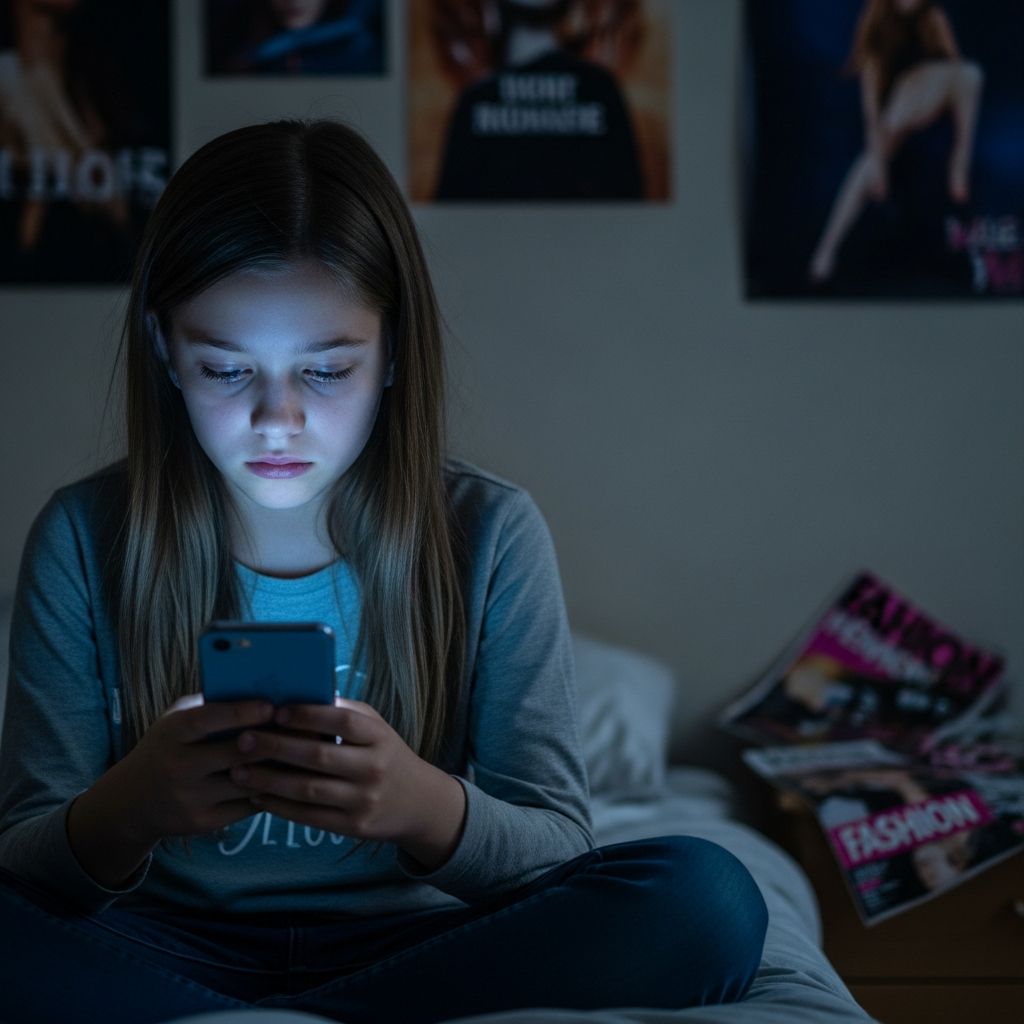
Digital platforms have reshaped how adolescents perceive themselves, with visual-heavy sites like Instagram driving widespread issues in body image and self-worth among girls. Research consistently links prolonged exposure to curated content with increased self-criticism and diminished confidence, particularly affecting those spending over three hours daily on such apps.
The Rise of Filtered Realities in Teen Culture
Today’s youth navigate a world saturated with flawless online personas, where filters, edits, and algorithms amplify unattainable beauty standards. Girls aged 13-19, in the throes of identity formation, internalize these images, leading to heightened dissatisfaction with their natural appearances. Studies show that visual platforms exacerbate this by promoting upward social comparisons, where users measure themselves against seemingly perfect peers.
Adolescents’ developing brains make them especially susceptible. The reward system activated by likes and comments reinforces validation-seeking behaviors, tying self-esteem to digital metrics rather than intrinsic qualities. This dynamic fosters anxiety, as constant scrolling bombards users with idealized faces, bodies, and lifestyles.
Key Psychological Impacts on Developing Minds
Excessive social media engagement correlates strongly with mental health challenges in teen girls. Key findings include:
- Higher self-criticism: Daily use exceeding three hours elevates self-critical thoughts across all ages, with young users showing pronounced effects from beauty and fitness content.
- Body dissatisfaction: Exposure to edited images leads to poorer body image satisfaction, particularly in females who edit their own photos more frequently under societal pressure.
- Low self-esteem: Teens using platforms over two hours daily report lower self-worth compared to lighter users, with Instagram’s visual focus intensifying this trend.
- Mental health risks: Links to depression, anxiety, sleep disruption, and eating disorders stem from comparison culture and cyberbullying prevalent on these sites.
Unlike boys, girls face amplified pressures around appearance, with platforms reinforcing thinness and flawless skin ideals that fuel dysmorphic concerns.
Dissecting the Data: Usage Patterns and Outcomes
Quantitative insights reveal clear thresholds. A study of Spanish users found those spending over three hours on Instagram had significantly higher self-criticism scores than those under one hour, independent of age groups. Another review of 37 articles confirmed Instagram’s dual role: while it enables creativity and connections, overuse triggers loneliness and social anxiety, especially in females.
| Daily Usage | Self-Criticism Level | Body Dissatisfaction Risk | Source |
|---|---|---|---|
| <1 hour | Low | Low | |
| 1-3 hours | Moderate | Moderate | |
| >3 hours | High | High |
This table summarizes risk escalation, highlighting how time compounds negative effects. Literature reviews targeting teen females underscore that greater than two hours daily markedly lowers self-esteem versus minimal use.
Why Girls Bear the Brunt: Gendered Vulnerabilities
Societal beauty norms disproportionately target females, amplified by social media’s emphasis on aesthetics. Girls engage more in photo editing and appearance-focused content, perceiving stronger pressures to conform. Perfectionism surges as they compare to influencers, leading to weight dissatisfaction and eroded confidence.
Brain science explains further: adolescent females show heightened neural responses to social feedback, making likes feel like lifelines. This vulnerability peaks during puberty, when body changes clash with online ideals, steering some toward harmful diets or disorders.
Beyond the Screen: Real-World Consequences
The ripple effects extend to daily life. Girls with Instagram-induced body dissatisfaction often withdraw socially, skip meals, or chase trends like extreme fitness challenges. Cyberbullying compounds this, with anonymous comments shattering fragile self-views.
Long-term, these patterns predict persistent issues: eating disorders, chronic anxiety, and even reduced academic performance. Yet, not all impacts are negative—platforms can foster body positivity communities, offering support and reducing isolation when curated mindfully.
Parental Strategies to Counter Digital Pressures
Parents play a pivotal role in mitigation. Start with open dialogues about image manipulation, demonstrating editing tools to demystify perfection. Monitor usage without invading privacy, setting app limits via device controls.
- Encourage offline pursuits like sports or arts to build genuine self-efficacy.
- Co-browse feeds to discuss unrealistic portrayals critically.
- Promote diverse role models emphasizing inner strengths over looks.
- Model healthy habits: limit your own scrolling and prioritize real connections.
Research supports family interventions; involved parents correlate with resilient teens less swayed by online ideals.
Building Digital Resilience in Daughters
Empower girls through education on algorithms that prioritize sensational content. Teach media literacy: question sources, recognize filters, and value authenticity. Programs fostering self-compassion—mindfulness apps or journaling—counter self-criticism effectively.
Schools can integrate curricula on healthy online habits, while platforms bear responsibility for transparent labeling of edits. Collective action amplifies protection.
Positive Potentials of Social Media
Not all is dire. Instagram enables self-expression, friend reinforcement, and mental health advocacy. Body-positive movements gain traction, helping girls embrace varied body types. Balanced use—under two hours, focused on uplifting content—can enhance well-being without the pitfalls.
Frequently Asked Questions (FAQs)
How much Instagram time is safe for teens?
Under one hour daily minimizes risks like self-criticism and body issues; over three hours significantly heightens them.
Does social media affect boys the same way?
Boys experience impacts but girls show higher rates of problematic use, editing, and appearance anxiety due to gendered norms.
Can body-positive Instagram accounts help?
Yes, they promote self-love and community, countering negatives when prioritized over idealized content.
What if my daughter shows signs of low self-esteem?
Discuss openly, limit screen time, seek professional help if anxiety or eating issues arise, and encourage real-world activities.
Are filters the main culprit?
Filters contribute by distorting reality, but comparison culture and time spent amplify the harm.
Navigating Forward: A Call for Balance
As social media evolves, so must our approaches. By blending awareness, boundaries, and positivity, parents can shield girls from digital pitfalls while harnessing tech’s upsides. Prioritizing mental health fosters confident, resilient youth ready to thrive offline and on.
References
- Exploring the Relationship Between Instagram Use and Self-Compassion, Self-Criticism, and Body Dissatisfaction — JMIR. 2024-01-15. https://www.jmir.org/2024/1/e51957/
- Navigating Instagram’s influence on adolescent mental health — NIH/PMC. 2024. https://pmc.ncbi.nlm.nih.gov/articles/PMC11940074/
- The Impact of Social Media on Teenage Females Self-Esteem — Minnesota State University. 2021. https://cornerstone.lib.mnsu.edu/etds/1104/
- Exploring the effect of social media on teen girls’ mental health — Harvard T.H. Chan School of Public Health. 2023. https://hsph.harvard.edu/news/exploring-the-effect-of-social-media-on-teen-girls-mental-health/
- Time Spent on Instagram and Body Image, Self-esteem — NIH/PMC. 2023. https://pmc.ncbi.nlm.nih.gov/articles/PMC10131713/