Dealing with leftover adhesive from bandages can be frustrating, especially when it clings stubbornly to sensitive skin. Whether from a child’s scraped knee or an adult’s post-surgery dressing, this sticky residue often causes discomfort or pulls hairs painfully during removal. Fortunately, simple household remedies and targeted products make it easy to dissolve and wipe away without harming the skin barrier. This guide explores practical, step-by-step approaches drawn from nursing best practices and everyday solutions, ensuring minimal irritation while promoting quick recovery.
Why Bandage Adhesive Sticks and How It Affects Skin
Bandages use pressure-sensitive adhesives (PSAs) designed to stay secure during movement and moisture exposure. These adhesives bond to skin proteins and oils, creating a strong hold that’s great for wound protection but tough to remove. When peeled off abruptly, they can cause medical adhesive-related skin injury (MARSI), including redness, tears, or blisters, particularly on delicate areas like children’s skin or elderly patients. Understanding this helps in choosing gentle detachment methods that prioritize skin support over forceful pulling.
Key factors influencing residue include adhesive type (acrylic, silicone, or rubber-based), skin type (oily vs. dry), duration worn, and removal technique. Low-angle peeling or distortion of the backing reduces force needed, preserving skin integrity. Always test methods on a small area first, especially for sensitive or wounded skin.
Household Oils: Nature’s Soft Solvents for Adhesive
Oils break down adhesive polymers by infiltrating the bond, loosening it without harsh chemicals. They’re ideal for home use due to availability and skin-moisturizing benefits.
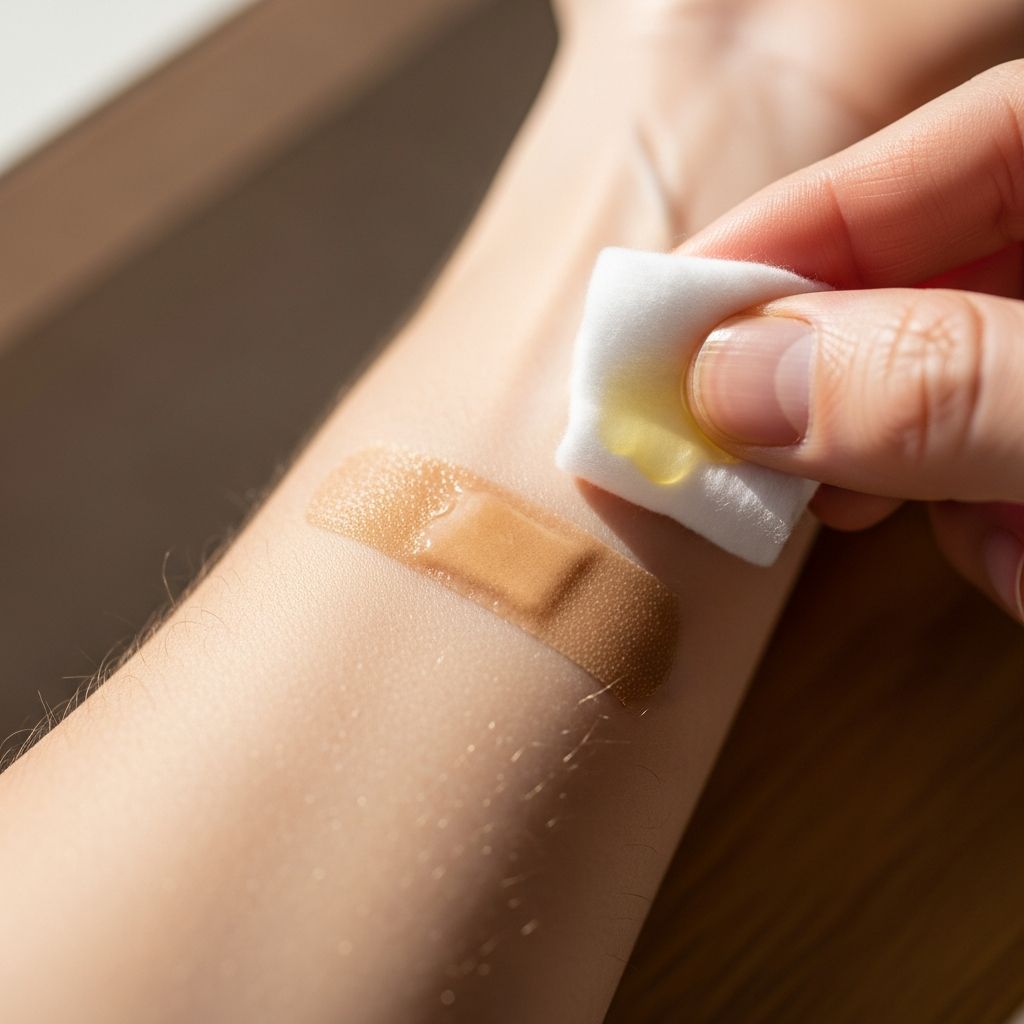
- Baby or Coconut Oil: Apply generously to residue, let sit 5-10 minutes, then wipe with a soft cloth. The fatty acids dissolve stickiness gently.
- Vitamin E or Jojoba Oil: These mimic skin’s natural sebum, sliding off residue effortlessly. Massage in circular motions for best results.
- Petroleum Jelly: Its thick consistency clings longer; spread on, wait 10 minutes, then rub off with warm water.
Post-removal, rinse with mild soap to avoid clogged pores. Oils suit all ages, making them parent favorites for kid-friendly care.
Alcohol-Based Solutions: Quick-Dissolving Power
Isopropyl alcohol (rubbing alcohol) solubilizes adhesives rapidly by evaporating solvents within the bond.
- Saturate a cotton ball with 70-90% rubbing alcohol.
- Press on residue for 30 seconds to penetrate.
- Gently roll off; repeat if needed.
Caution: It dries skin, so follow with moisturizer. For enhanced effect, combine with chlorhexidine antiseptic. Avoid open wounds to prevent stinging.
Commercial Adhesive Remover Products: Professional Precision
Specially formulated wipes and liquids outperform DIY options for efficiency and safety. They contain silicone or citrus solvents tailored for skin.
| Product | Key Ingredient | Best For | Pros |
|---|---|---|---|
| TacAway Wipes | Silicone-based | Small residues | Portable, no mess |
| Unisolve Liquid | Acetone-free solvent | Large areas | Highly effective on tapes |
| Goo Gone Bandage Remover | Citrus extracts | Hairy skin | Gentle pull, wash-off |
Usage: Apply to edge of tape first for easier lift-off, then residue. Always wash afterward. These are hospital-recommended for reducing MARSI.
Temperature Tricks: Heat and Cold for Easy Release
Manipulating temperature alters adhesive properties without additives.
- Warm Compress: Soak cloth in warm (not hot) water, apply over oil-treated residue for 2-3 minutes. Heat softens bonds for painless wiping.
- Cold Method: Ice pack for 1-2 minutes makes adhesive brittle; crack and peel gently. Ideal for hairy areas to minimize pulling.
- Bath Soak: Submerge bandaged area 10-15 minutes; water weakens grip naturally.
Combine with oils for amplified effect, ensuring water isn’t too hot to avoid burns.
Safe Removal Techniques to Prevent Residue Buildup
Prevention starts during bandage application and removal. Nurses advocate “low and slow” peeling: anchor skin with one hand, pull backing horizontally at a shallow angle. This shears adhesive evenly, reducing residue by 50% compared to vertical pulls.
- Support exposed skin to counter stretch.
- Remove post-bath when hydrated.
- Choose silicone adhesives for gentler release on repeat use.
Skin Care After Adhesive Removal
Residue removal can strip natural oils, leading to dryness or itchiness. Restore with fragrance-free moisturizers containing ceramides. If irritation persists (redness >24 hours), consult a doctor—could indicate allergy or infection. For wounds, clean with saline before re-bandaging.
Special Considerations for Children and Sensitive Skin
Kids’ thinner skin amplifies risks. Opt for oil or wipes over alcohol; distract with play during process. Elderly or diabetic skin benefits from silicone products to avoid tears. Test for allergies: 24-hour patch test recommended.
Common Mistakes to Avoid
- Abrupt Yanking: Causes pain and trauma.
- Harsh Scrubbing: Damages epidermis.
- Skipping Rinse: Leaves solvents irritating pores.
- Acetone Nail Polish Remover: Too drying; use only if labeled skin-safe.
Frequently Asked Questions
Is it safe to use cooking oil for bandage residue?
Yes, olive or coconut oil works well as a mild solvent, but rinse thoroughly to prevent greasiness.
Can I use adhesive removers on open wounds?
No, stick to saline or physician-approved options; others may sting or delay healing.
How long should oil sit on sticky skin?
5-15 minutes allows penetration without over-moisturizing.
What if residue won’t budge after trying oils?
Escalate to alcohol or commercial removers, then moisturize.
Are there hypoallergenic adhesive options?
Yes, silicone tapes reduce residue and irritation for frequent use.
Choosing the Right Bandages to Minimize Future Hassles
Opt for breathable, silicone-based dressings that release easier. Waterproof versions often use stronger adhesives—balance protection with removability. Stock remover wipes for preparedness.
In summary, mastering adhesive removal empowers confident wound care at home. By selecting methods matching skin needs and following best practices, you ensure comfort and health for everyone.
References
- How to Remove Bandage Adhesive From Skin: Tips, Tricks, and Products to Try — SaveRite Medical. 2023. https://www.saveritemedical.com/blogs/news/how-to-remove-bandage-adhesive-from-skin-tips-tricks-and-products-to-try
- A guide for adhesive removal: Principles, practice, and products — American Nurse. 2023-10-24. https://www.myamericannurse.com/adhesive-removal/
- How to Remove Adhesive from Skin — YouTube (Video Transcript). 2023. https://www.youtube.com/watch?v=9JdUHCDm3U8
- Goo Gone For Use On Skin — Goo Gone. 2024. https://googone.com/goo-gone-for-skin
- How to Remove Bandage Adhesive Residue from Skin with Oil — Jojoba Company. 2023. https://jojobacompany.com/sticky-residue-removal/