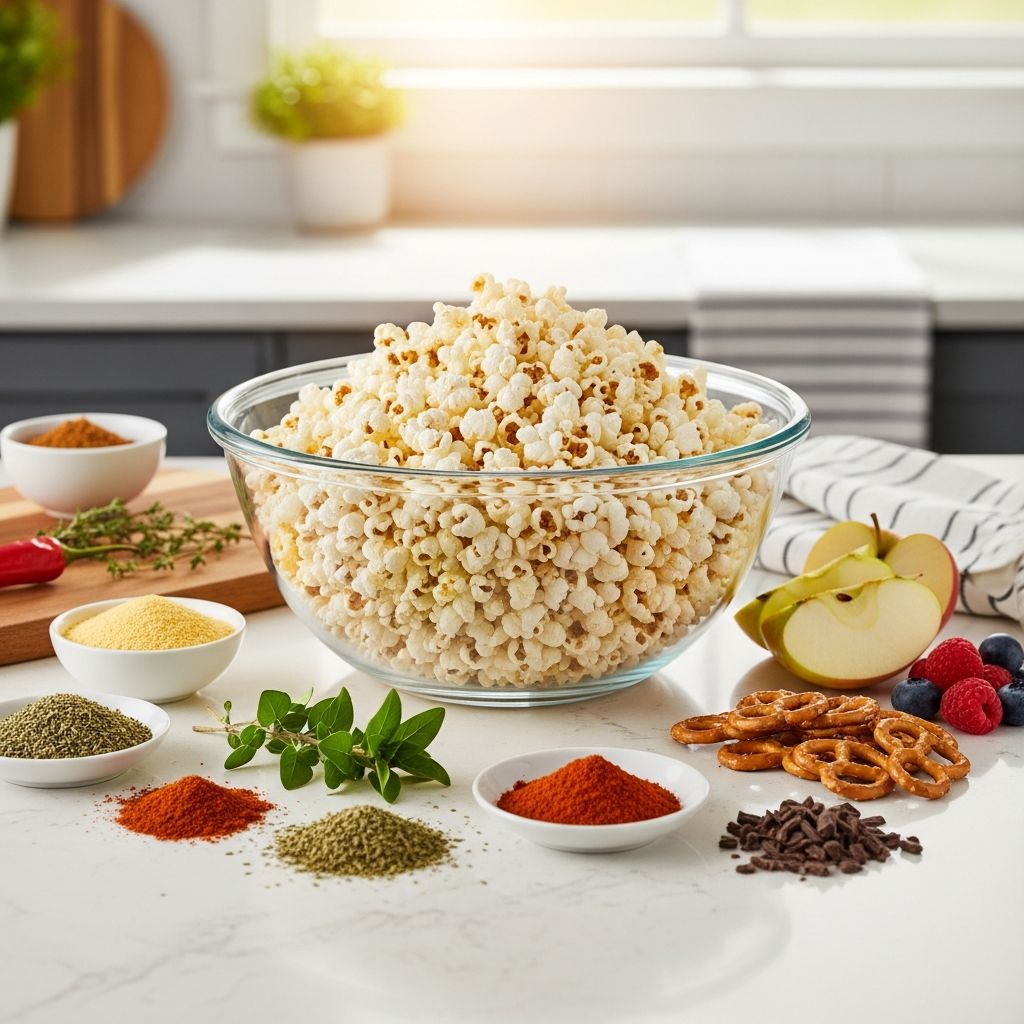
Popcorn can be a smart, fiber-rich snack or a greasy, salt-bomb depending on how it is prepared. This guide shows how to transform plain kernels into healthy, flavorful bowls of popcorn that work for busy parents, movie lovers, and anyone trying to snack more mindfully.
Why Popcorn Can Be a Healthy Snack
At its core, popcorn is simply a whole grain that expands when heated. When you skip the heavy butter and sugary coatings, those fluffy pieces can deliver fiber and crunch for very few calories per cup. That makes popcorn a powerful ally when you want something to munch without derailing your day.
Popcorn’s neutral flavor is also its secret strength. It acts as a blank canvas for spices, herbs, and light oils, which means you can satisfy savory, spicy, or sweet cravings while still keeping the overall snack balanced and relatively light.
Choosing the Right Popcorn Kernels
Not all popcorn kernels behave the same way in the pot or in an air popper. While most grocery store bags will pop just fine, looking a bit closer at the label can help you get better texture, fewer unpopped kernels, and more consistent results.
- Plain, unflavored kernels: Avoid pre-seasoned or pre-buttered options. You want raw kernels only, so you control the salt and fat.
- Non-GMO or organic (optional): If you prefer minimally processed ingredients, choose non-GMO or organic popcorn kernels from reputable brands.
- Storage matters: Keep kernels in an airtight container in a cool cupboard to maintain moisture levels. Dry, old kernels tend to pop poorly.
Most families will find that a large bag of plain yellow or white kernels is the best value. You can then flavor small batches differently for kids, teens, and adults without having to buy multiple types of packaged popcorn.
Healthy Ways to Pop Your Corn
The popping method has a huge impact on how healthy your snack will be. Instead of relying on heavily flavored microwave bags, choose one of these home methods that give you more control over ingredients and portion size.
Air Popping: Oil-Free and Extra Light
Air popping uses hot air to burst the kernels, so no fat is required at all. You can use a countertop air popper or a microwave-safe bowl with a vented lid designed for popcorn. Once the kernels are popped, add only as much seasoning and oil as you truly want.
- Measure about 1/4 cup of kernels per person.
- Pop according to your device’s instructions until you hear more than 2–3 seconds between pops.
- Transfer to a large bowl before seasoning so everything coats evenly.
Stovetop Popping with Healthy Oils
Stovetop popcorn creates a slightly richer flavor and tender texture by using a small amount of oil. Choosing the right oil and using it sparingly keeps this method healthy and satisfying.
- Good oil choices: extra-virgin olive oil, avocado oil, or unrefined coconut oil for a faintly sweet note.
- Basic ratio: about 2–3 tablespoons of oil for 1/2 cup of kernels in a large, heavy pot.
- Technique tip: Warm the oil with 2–3 tester kernels. When they pop, add the rest, cover, and shake occasionally until popping slows.
DIY Microwave Popcorn (No Bag Required)
If you love the convenience of microwave popcorn, you can still make a healthier version at home. All you need is a brown paper lunch bag or a microwave-safe container with a loose-fitting lid.
- Add 1/4–1/3 cup of kernels to the bag or bowl.
- Fold the top of the bag over twice, or cover the bowl loosely.
- Microwave on high until popping slows to about 2 seconds between pops.
- Carefully open away from your face, then add seasonings right away while the popcorn is hot.
Nutrition Snapshot: How Popcorn Fits Your Day
Plain, air-popped popcorn is surprisingly nutrient-dense for its calorie count. While exact values vary slightly by brand and method, the table below offers a rough guide to what you get in a simple three-cup serving without added fat.
| Nutrient | Amount (approx.) | Why It Matters |
|---|---|---|
| Calories | 90–100 kcal | Allows for a generous portion with room for light toppings. |
| Fiber | 3–4 g | Supports digestion and helps you feel full longer. |
| Protein | 3 g | Adds a small but helpful amount of plant-based protein. |
| Fat | < 1 g (unseasoned) | Very low in fat before oils or butter are added. |
| Sodium | Trace, if unsalted | Stays low in salt as long as you season lightly. |
Because popcorn is a whole grain, it can also contribute small amounts of antioxidants and B vitamins. The key is to respect serving size and toppings, treating popcorn as a light meal component or snack rather than a vessel for heavy butter and sugary syrups.
Five Healthy Savory Popcorn Ideas
Once you have a bowl of hot, freshly popped kernels, the fun begins. These savory combinations use herbs, spices, and modest amounts of heart-friendly fats to bring flavor without creating a junk-food situation.
1. Simple Olive Oil and Sea Salt
This is the minimalist popcorn for people who enjoy straightforward, grown-up flavors. A drizzle of quality olive oil and a pinch of flaky salt elevate plain kernels into a snack that pairs beautifully with a weeknight movie or a glass of sparkling water.
- Drizzle 1–2 teaspoons of extra-virgin olive oil over 3 cups of hot popcorn.
- Toss immediately, then sprinkle with a light pinch of sea salt.
- For a boost, add a dash of cracked black pepper or dried oregano.
2. Garlic Herb Garden Bowl
This variation mimics the comfort of garlic bread but with far fewer calories. Using dried herbs means you can keep the seasoning blend ready in your pantry for quick snacking.
- Combine garlic powder, dried basil, dried parsley, and a little onion powder.
- Lightly mist popcorn with olive oil spray or toss with a teaspoon of warm oil so the spices cling.
- Sprinkle the herb mixture over the bowl while tossing to coat.
3. Smoky Paprika & Lime
This bold combination works well for anyone who usually craves chips. Smoked paprika adds a barbecue-like aroma, while a squeeze of lime brightens everything without adding fat.
- Stir together smoked paprika, a pinch of chili powder, and a small amount of salt.
- Toss warm popcorn with the spice mix and a few drops of lime juice.
- Let it sit for a minute so flavors absorb before tasting and adjusting.
4. Light “Cheesy” Nutritional Yeast Popcorn
Nutritional yeast is a flaky, savory ingredient that many people use as a dairy-free cheese alternative. Sprinkled over popcorn, it gives a rich, umami flavor without the heaviness of actual cheese sauce.
- Spritz popcorn lightly with water or oil spray.
- Sprinkle with 1–2 tablespoons of nutritional yeast.
- Add a small pinch of salt and toss until every kernel looks coated.
5. Curry Spice Crunch
For adventurous snackers, a mild curry blend can turn popcorn into a warm, fragrant treat. You can use store-bought curry powder or craft your own from turmeric, cumin, and coriander.
- Mix curry powder with a little garlic powder and a pinch of salt.
- Toss warm popcorn with 1 teaspoon of melted coconut or avocado oil.
- Sprinkle the spices over the top while stirring to distribute evenly.
Four Healthier Sweet Popcorn Twists
Sugary caramel popcorn can quickly turn a wholesome grain into dessert. These sweet ideas lean on natural sweeteners, spices, and small amounts of healthy fats to satisfy cravings in a more balanced way.
1. Cinnamon Vanilla Cloud
Instead of thick caramel, dust your popcorn with warm baking spices. Cinnamon naturally makes foods taste sweeter, which helps you use less sugar overall.
- Mix ground cinnamon with a small spoonful of coconut sugar or finely ground brown sugar.
- Lightly spray hot popcorn with water or oil to help the mixture stick.
- Sprinkle the cinnamon blend over the bowl, tossing until each handful is lightly dusted.
2. Dark Chocolate Drizzle Delight
A bit of dark chocolate goes a long way when it is melted and drizzled. The goal is to accent the popcorn, not drown it, so that each bite has a touch of indulgence with plenty of crunch.
- Melt a small amount of dark chocolate chips using a double boiler or microwave in short bursts.
- Spread popcorn on a parchment-lined tray and flick the melted chocolate over it in thin ribbons.
- Let the chocolate set, then gently break apart clumps and portion into bowls.
3. Maple Pecan Breakfast-Style Popcorn
This version tastes like a lighter cousin of granola. A modest drizzle of pure maple syrup combined with chopped nuts adds variety and makes the snack feel more like a mini-meal.
- Toss warm popcorn with a teaspoon or two of melted coconut oil.
- Add a drizzle of maple syrup and a handful of finely chopped pecans or walnuts.
- Sprinkle with a tiny pinch of salt to heighten the flavors.
4. Fruit & Crunch Confetti
Dried fruit and seeds can transform a plain bowl into a colorful, nutrient-dense mix. This is especially appealing for kids who enjoy variety in textures and colors.
- Combine popcorn with small amounts of dried cranberries, raisins, or chopped apricots.
- Stir in pumpkin seeds or sunflower seeds for extra crunch and healthy fats.
- Keep portions modest, as dried fruit is more concentrated in sugar than fresh fruit.
Tips for Making Popcorn Kid-Friendly and Routine-Friendly
A big bowl of popcorn can quickly become the default snack in many homes. With a few smart habits, it can be a routine you feel good about instead of something you worry might be too salty or rich.
- Pre-measure kernels: Store kernels in small jars or containers labeled with the number of servings to avoid oversized batches.
- Offer toppings bar-style: Set out small bowls of herbs, seeds, and light sweeteners so each family member can create a personal mix.
- Pair with fresh produce: Serve popcorn alongside sliced fruit or veggie sticks to round out the snack.
- Mind portion sizes: Individual bowls help everyone notice how much they are eating, rather than grazing from one giant pot.
Common Mistakes That Make Popcorn Less Healthy
Even the best intentions can be undone by a few common habits. Recognizing these mistakes helps you adjust your routine and enjoy popcorn more often without guilt.
- Overloading butter or oil: A little fat helps flavors stick, but several tablespoons per person quickly adds up in calories and saturated fat.
- Heavy, salty store-bought bags: Many flavored microwave bags and ready-to-eat tins come with high sodium and artificial ingredients.
- Sticky, sugar-heavy coatings: Thick caramel, marshmallow, or candy shells can turn a bowl into the equivalent of several cookies.
- Eating directly from giant containers: This makes it hard to notice when you have had enough and can lead to mindless overeating.
FAQ: Healthy Popcorn Questions Answered
Is popcorn actually good for weight management?
Popcorn can support weight management because it offers a big volume of food for relatively few calories, especially when air-popped and lightly seasoned. The fiber content helps you feel more satisfied than you might from a handful of chips or crackers with the same calories.
What is the healthiest way to cook popcorn?
Air popping is generally the lightest method because it does not require added fat. If you prefer the taste of stovetop popcorn, using a small amount of a heart-friendly oil and keeping toppings simple can still result in a snack that fits well into a balanced eating pattern.
How much popcorn is considered a reasonable serving?
For most adults, about three cups of air-popped popcorn (before adding heavy toppings) makes a sensible snack portion. If you add nuts, chocolate, or extra oil, you may want to keep the serving closer to two cups to stay in line with your overall energy needs.
Are flavored microwave popcorn bags unhealthy?
Some flavored microwave options come with high levels of sodium and saturated fat, and may include additives you would not normally use at home. Making your own microwave popcorn from plain kernels gives you control over seasonings so you can keep the ingredients list short and recognizable.
Can people with dietary restrictions still enjoy popcorn?
Plain popcorn is naturally gluten-free and vegan, which makes it flexible for many dietary needs. Always check seasoning blends and add-ins for hidden allergens, and customize toppings to align with your specific health goals or medical advice.
With a simple bag of kernels and a few pantry spices, popcorn can shift from a once-in-a-while indulgence to an easy, everyday snack that supports your health goals. Experiment with different flavors, keep an eye on toppings, and enjoy the satisfying crunch of a bowl that works as hard as you do.