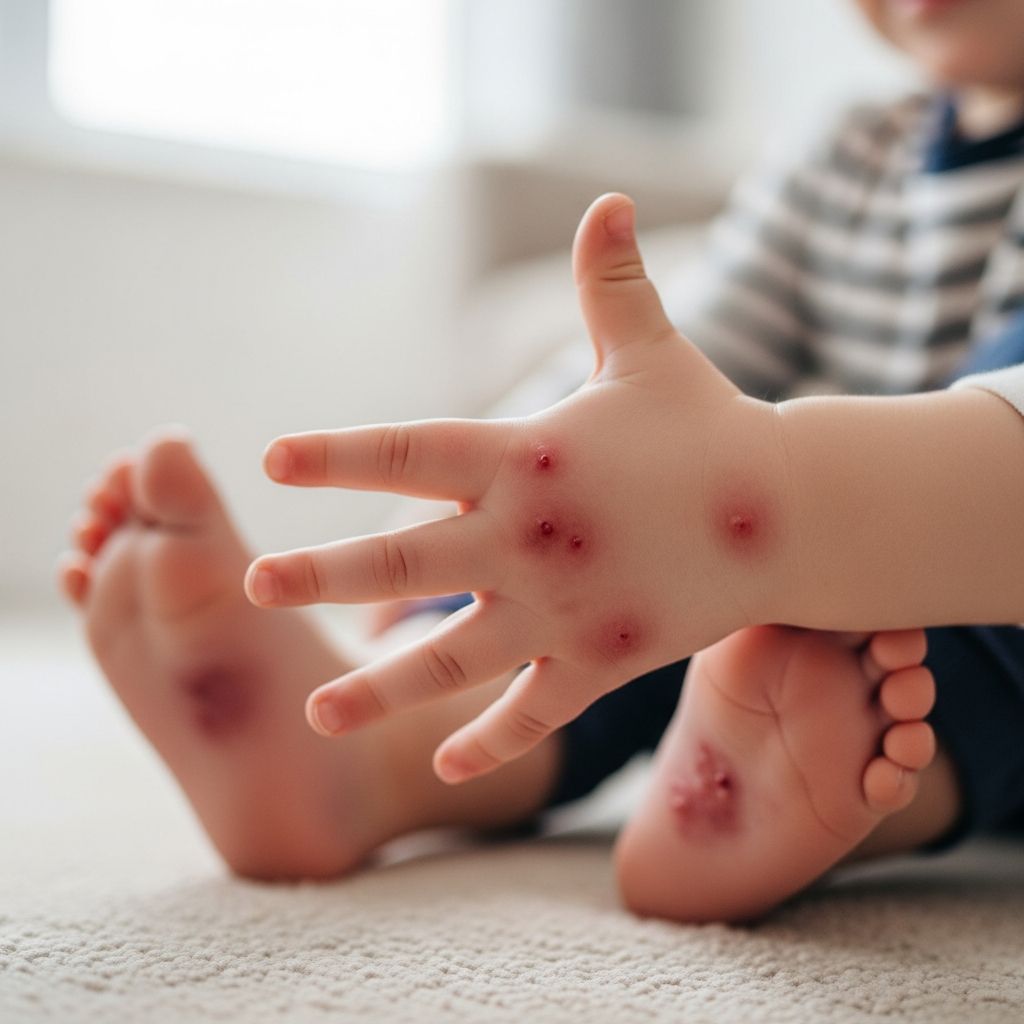
Hand, foot, and mouth disease (HFMD) is a common childhood illness that can look alarming but is usually mild and short-lived. This guide walks you through what it is, what to expect, and how to keep your child comfortable and safe.
What Exactly Is Hand, Foot, and Mouth Disease?
Hand, foot, and mouth disease is a contagious viral illness that mainly affects babies and young children, causing a combination of fever, mouth sores, and a skin rash that often appears on the hands and feet. It is caused by several different viruses in the enterovirus family, most often certain types of coxsackievirus and enterovirus 71.
Although the name sounds dramatic, HFMD is not the same as foot-and-mouth disease seen in animals, and children cannot catch it from pets or farm animals. In most healthy children, HFMD clears up on its own within about a week, with rest, fluids, and basic symptom relief at home.
Who Is Most Likely to Get HFMD?
Hand, foot, and mouth disease can affect people of any age, but it is especially common in children under 5, whose immune systems are still developing and who are in close contact with other kids in daycare, preschool, and playgroups. Older children, teenagers, and adults can get it too, particularly if they have not been exposed to the virus before.
Outbreaks tend to appear in communities where children gather in groups, such as child-care centers and schools, and are more frequent in warmer months or early fall in many regions. Re-infection is possible because different virus strains can cause HFMD, so having it once does not guarantee lifelong protection.
How Does Hand, Foot, and Mouth Disease Spread?
The viruses that cause HFMD spread easily through the fluids and secretions of an infected person, such as saliva, nasal mucus, blister fluid, and stool. Everyday behaviors in young children, like drooling, sharing toys that go in the mouth, and poor handwashing habits, help the virus move quickly from child to child.
Germs can pass through:
- Close contact such as hugging, cuddling, or sharing eating utensils.
- Coughing or sneezing, which releases droplets into the air and onto surfaces.
- Touching contaminated objects (toys, doorknobs, tabletops) and then touching the eyes, nose, or mouth.
- Contact with stool during diaper changes or toilet training.
Children are usually most contagious during the first week of illness when the fever and fresh rash are present, but virus can continue to be shed in stool for several weeks after symptoms improve. Good hygiene at home and in childcare settings is key to slowing the spread.
Signs and Symptoms: What Parents Will Notice
HFMD often starts like a mild cold, then progresses to more specific signs over a few days. Not every child will show every symptom, and the order can vary, but there is a common pattern.
Typical Symptom Timeline
| Timeframe | What You May See |
|---|---|
| Day 1–2 | Low-grade fever, sore throat, reduced appetite, general fussiness or feeling unwell. |
| Day 2–4 | Painful spots or ulcers appear in the mouth (tongue, gums, inside cheeks); small red bumps show up on hands, feet, and sometimes buttocks or legs. |
| Day 4–7 | Fever improves; mouth sores and rash may blister, then dry out; appetite gradually returns. |
| After 1 week | Most symptoms fade; mild peeling of skin on hands or feet may be noticed in some children. |
Common Symptoms in Detail
- Fever: Often the first symptom, usually low to moderate, sometimes with chills and tiredness.
- Mouth sores: Small red spots that can turn into tiny ulcers on the tongue, gums, or inside the cheeks, making eating and drinking uncomfortable.
- Skin rash: Flat or slightly raised red spots, sometimes with tiny blisters, on the palms, soles, and occasionally the buttocks, legs, or arms; usually not very itchy in young children.
- Poor appetite and drooling: Children may refuse solid foods, cry when swallowing, or drool more because of painful mouth sores.
- General discomfort: Irritability, clinginess, and low energy are common as the body fights the infection.
How Symptoms Differ by Age
Babies and toddlers often show their discomfort through fussiness, poor feeding, or changes in sleep, while older children are more likely to complain of a sore throat or mouth pain. Teens and adults who become infected may have milder rashes or even no visible spots but can still feel feverish and achy.
Diagnosis: How Do Doctors Confirm HFMD?
In most cases, healthcare providers diagnose hand, foot, and mouth disease by examining the child and asking about recent symptoms and contact with other sick children. The combination of mouth sores and a characteristic rash on the hands and feet, along with a short history of fever, is usually enough to make the diagnosis.
Lab tests are rarely needed but may be considered in unusual or severe cases, such as when symptoms are atypical, complications appear, or there is a concern about other illnesses. When testing is done, it may involve swabs from the throat or stool samples to detect the virus.
Home Care: Keeping Your Child Comfortable
There is no specific cure that makes HFMD disappear immediately, but supportive care at home can greatly ease discomfort and help the body recover smoothly. Most children can be cared for at home without needing hospital treatment, as long as they stay hydrated and do not show warning signs of serious illness.
Comfort Measures for Mouth Pain
- Offer plenty of cool liquids such as water, breastmilk or formula, and oral rehydration solutions.
- Provide soft, bland foods like yogurt, mashed potatoes, smoothies, or applesauce if your child is willing to eat.
- Avoid acidic, salty, or spicy foods and drinks, such as citrus juices or chips, which can sting mouth sores.
- For children old enough, cold treats like ice pops can soothe sore mouths and encourage fluid intake.
Managing Fever and Discomfort
- Use age-appropriate fever reducers and pain relievers only as directed by a pediatrician or according to package instructions.
- Dress your child in lightweight clothing and keep the room at a comfortable temperature.
- Encourage rest with quiet activities such as reading, drawing, or calm screen time while symptoms are at their peak.
Hydration Checklist
Because mouth pain can make drinking difficult, dehydration is one of the main concerns during HFMD. Monitor your child for signs like:
- Urinating less often than usual or having very dark yellow urine.
- Dry lips or tongue, or crying without tears.
- Unusual sleepiness, weakness, or dizziness.
If you notice these symptoms, contact a healthcare provider promptly, as your child may need medical evaluation or fluids.
When to Call a Doctor or Seek Urgent Care
Most cases of hand, foot, and mouth disease do not require emergency care, but there are times when professional help is essential. Trust your instincts as a caregiver, especially if your child seems sicker than expected or symptoms worsen instead of improve.
Contact a healthcare provider right away if your child:
- Has trouble drinking or swallowing, or has not urinated for 6–8 hours (in infants) or for much longer than usual (in older children).
- Has a fever that lasts more than a few days or returns after going away.
- Seems unusually drowsy, confused, or difficult to wake.
- Complains of severe headache, stiff neck, or sensitivity to light.
- Develops breathing difficulties, persistent vomiting, or seizures.
- Has a rash that looks very painful, spreads rapidly, or shows signs of infection such as increasing redness, warmth, or pus.
Emergency care is needed if your child has trouble breathing, shows signs of severe dehydration, or has any sudden, concerning neurological symptoms such as seizures or loss of consciousness.
Possible Complications: What Parents Should Know
Complications from HFMD are uncommon in healthy children, but understanding what might happen can help parents stay alert. The most frequent problem is dehydration, especially in young children who refuse to drink because of mouth pain.
Rarely, certain HFMD-causing viruses may lead to more serious conditions affecting the nervous system or heart, such as viral meningitis or inflammation of the brain. These serious outcomes are uncommon, but early recognition of red-flag symptoms and timely medical care significantly reduce the risk of long-term problems.
Prevention: Reducing the Risk of HFMD in Your Family
Because HFMD spreads easily, especially among young children, prevention efforts focus on hygiene and sensible measures when someone in the household is sick. While it is impossible to avoid every exposure, consistent habits greatly lower the chance of infection and reinfection.
Everyday Prevention Habits
- Encourage frequent handwashing with soap and water, especially after using the toilet, changing diapers, or wiping a child’s nose, and before eating.
- Clean and disinfect high-touch surfaces and shared toys regularly, especially during and after an illness in the home.
- Teach children not to share utensils, cups, straws, toothbrushes, or towels.
- Cover coughs and sneezes with a tissue or elbow, then wash hands promptly.
School and Daycare Considerations
Children with HFMD are usually asked to stay home from daycare or school during the first few days of illness, when fever is present and new lesions are appearing. Policies vary, but many programs request that the child be fever-free, feeling well enough to participate, and not drooling excessively from mouth sores before returning.
Caregivers and teachers can further limit spread by enforcing regular handwashing, promptly cleaning bodily fluid spills, and keeping shared items like pacifiers or toys clean and individualized whenever possible.
�
Frequently Asked Questions About Hand, Foot, and Mouth Disease
Is hand, foot, and mouth disease the same as foot-and-mouth disease in animals?
No. Although the names sound similar, HFMD in humans and foot-and-mouth disease in livestock are caused by different viruses. Children cannot catch HFMD from animals, and people with HFMD do not pose a risk to pets or farm animals.
Can a child get HFMD more than once?
Yes. Because several different viruses can cause HFMD, a child who has had the illness once can still get it again if exposed to a different strain. Later infections are sometimes milder, but this is not guaranteed.
How long is HFMD contagious?
Children are most contagious during the first week when fever and fresh rash are present. However, the virus can continue to shed in stool for several weeks after the child feels better, which is why careful handwashing remains important even after symptoms improve.
Is there a vaccine or specific antiviral medicine for HFMD?
There is no widely available vaccine or routine antiviral medication for the common viruses that cause HFMD in most regions. Treatment focuses on relieving symptoms, staying hydrated, and letting the body’s immune system clear the infection.
When can my child safely go back to school or daycare?
In general, children may return once their fever has resolved, they feel well enough to participate in normal activities, and they can manage their saliva without excessive drooling from mouth sores. It is wise to check the specific policy of your child’s school or daycare, as guidelines can differ.
Key Takeaways for Busy Parents
- Hand, foot, and mouth disease is a common viral illness in young children that typically causes mild, short-lived symptoms.
- The main signs are fever, mouth sores, and a characteristic rash on the hands, feet, and sometimes buttocks or legs.
- There is no quick cure, but supportive care at home with fluids, soft foods, rest, and pain relief keeps most children comfortable.
- Serious complications are rare, but dehydration and unusual neurological symptoms require prompt medical attention.
- Good hand hygiene, cleaning shared surfaces, and sensible exclusion from group settings help reduce the spread of this highly contagious infection.