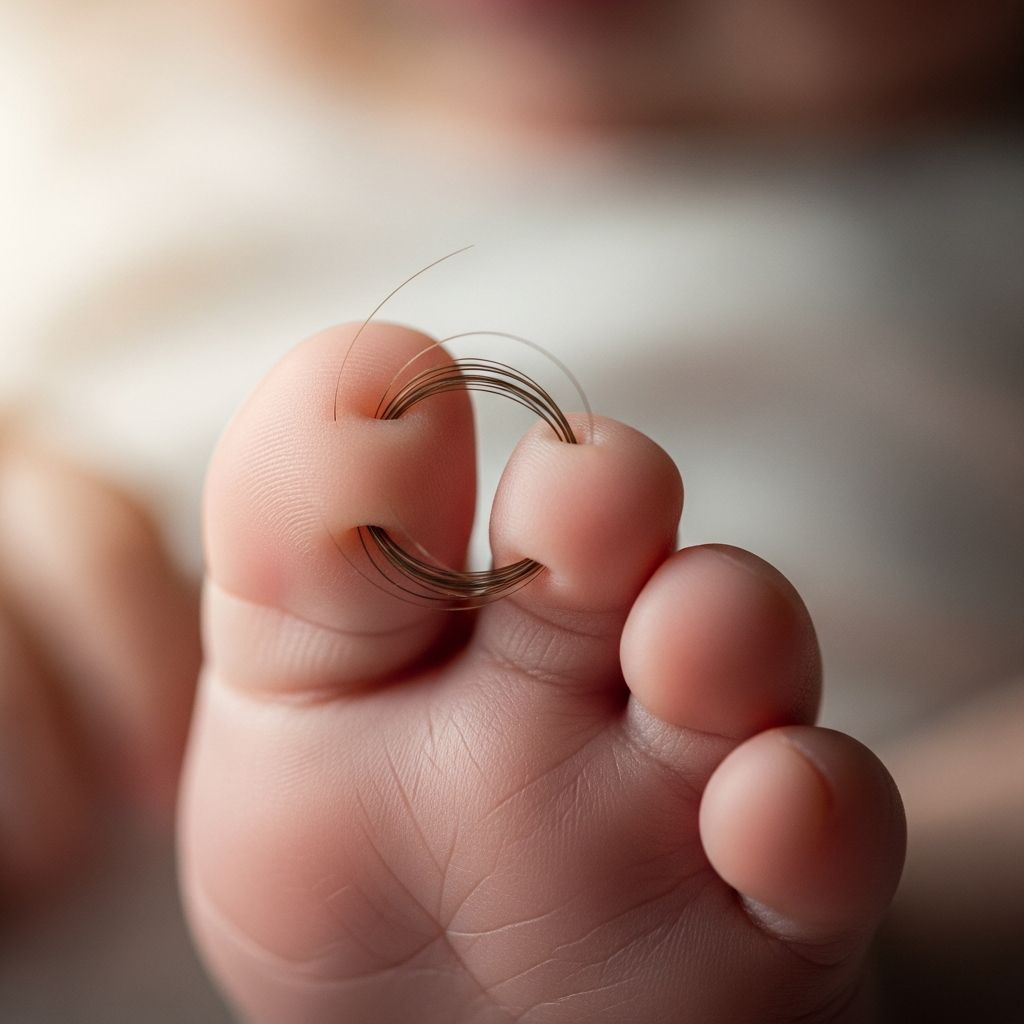
What Is Hair Tourniquet Syndrome?
Hair tourniquet syndrome is a medical condition that occurs when a strand of hair or thread wraps tightly around a baby’s toe, finger, or even genital area, cutting off blood circulation. This can happen at any time, but it is most common in infants under six months old due to postpartum hair loss and the baby’s small appendages. If not treated promptly, the constriction can lead to swelling, pain, nerve damage, or even tissue death.
Common Locations Affected
- Toes (most frequent)
- Fingers
- Penis
- Labia
- Uvula (rare)
Each of these areas requires careful and immediate attention, as the risk of tissue damage increases with time.
Symptoms of Hair Tourniquet Syndrome
Recognizing the symptoms early is crucial for prompt treatment. Common signs include:
- Persistent, unexplained crying or irritability
- Redness, swelling, or discoloration on a toe, finger, or genital area
- A deep line, indentation, or visible hair wrapped around the affected area
- Coldness or loss of movement in the digit
- Bleeding or skin breakdown if left untreated
What to Do Immediately (First Aid)
If you suspect your baby has a hair tourniquet, follow these steps:
- Stay calm—this condition is usually treatable if addressed quickly.
- Check closely using a flashlight and magnifying glass if needed.
- Gently remove clothing, socks, or diapers and inspect all digits and crevices.
- If the hair is visible, use tweezers or fine scissors to carefully remove it. If you cannot see a loose end, break the knot at one end and unwrap the hair slowly.
- Do not attempt to remove deeply embedded hair or thread; seek medical help immediately.
When to Seek Emergency Medical Help
Seek immediate medical attention if:
- The hair is not fully visible.
- The swelling or redness is spreading.
- There are signs of tissue damage.
- Your baby’s symptoms worsen despite hair removal.
In clinical settings, doctors may use magnifying loops, local anesthetic, or small surgical incisions to access embedded hair. In some cases, a depilatory cream (hair removal cream) may be used under supervision—never use this without doctor approval.
Treatment Options
The treatment method depends on the severity of the condition:
- For mild cases, a healthcare provider may use a hair removal cream to dissolve the hair, which is the least invasive and most effective method.
- For severe cases where the hair or thread is deeply embedded, a pediatric surgical specialist may perform surgery under anesthesia to remove the constriction.
- After removal, the affected area should be kept clean and dry. Apply an antibiotic ointment and cover with a dressing if needed.
Healing and Recovery
With early diagnosis and treatment, most babies recover quickly:
- Swelling and tenderness typically decrease within 10 minutes of hair removal.
- The appearance of the affected area should return to normal almost immediately.
- Complete recovery usually occurs within a month.
- Keep the area clean and dry for the first few days. Avoid baths or swimming pools.
- Apply petroleum jelly or baby lotion to the area if needed.
- If pain continues, consult your healthcare provider about giving a mild pain reliever.
Prevention Tips
Preventing hair tourniquet syndrome is possible with regular inspection and care:
- Check your baby’s toes, fingers, and genital area daily, especially after haircuts or when postpartum hair loss is common.
- Keep the baby’s environment free of loose hair and threads.
- Use soft, seamless clothing and avoid items with loose threads.
- Regularly inspect diapers and clothing for any loose fibers.
Quick Facts Recap
| Feature | Hair Tourniquet Syndrome |
|---|---|
| Risk Age | 0–6 months (most common) |
| Cause | Loose hair/thread constriction |
| Body Areas | Toes, fingers, penis, labia, uvula |
| Symptoms | Swelling, redness, deep line, crying |
| Emergency? | Yes, if not removable or circulation affected |
| Preventable? | Absolutely, with regular inspection |
FAQs
Can hair tourniquet syndrome cause permanent damage?
If treated promptly, most babies recover without long-term issues. However, delayed treatment can lead to tissue damage or loss of the affected body part.
How can I tell if my baby has a hair tourniquet?
Look for persistent crying, swelling, redness, a deep line or indentation, and visible hair wrapped around a toe, finger, or genital area.
Can I treat a hair tourniquet at home?
If the hair is visible and not deeply embedded, you may be able to remove it with tweezers or scissors. If you cannot see the hair or the area is swollen, seek medical help immediately.
What should I do after removing the hair?
Keep the area clean and dry. Apply an antibiotic ointment if needed and monitor for signs of infection.
How can I prevent hair tourniquet syndrome?
Regularly inspect your baby’s appendages, keep the environment free of loose hair and threads, and use soft, seamless clothing.