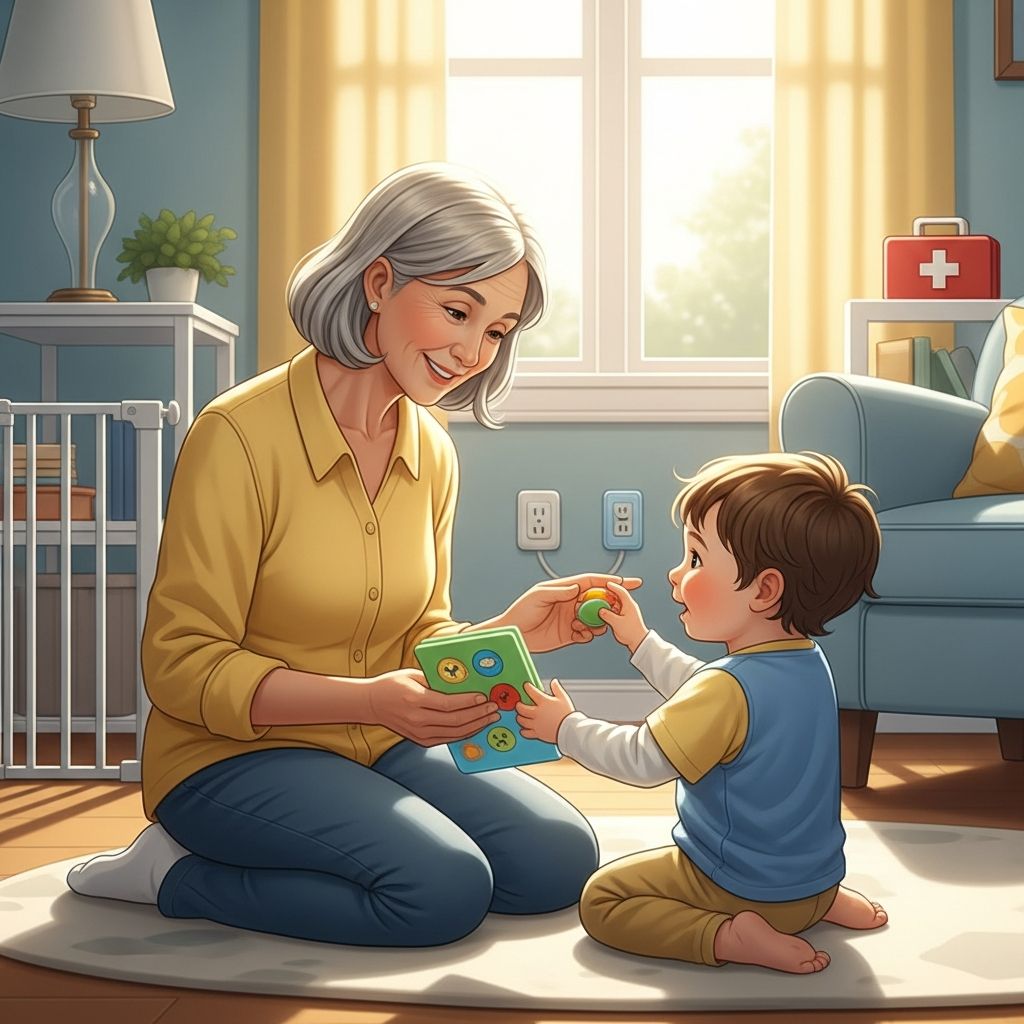
Grandparents play a vital role in family life, often stepping in to provide care when parents need a break. However, evolving safety standards mean their knowledge from decades ago may not align with today’s best practices. This guide offers practical ways to refresh their skills, fostering confidence and security for everyone involved.
Why Safety Knowledge Matters for Family Caregivers
Child safety protocols have advanced significantly due to research and technology. What was once standard can now pose risks. For instance, older generations might recall co-sleeping as normal, but current guidelines emphasize separate sleep spaces to reduce Sudden Infant Death Syndrome (SIDS) risks. Bridging this gap prevents accidents and builds trust.
Studies highlight how informal caregivers like grandparents form a crucial support network. A report on grandparents as a child care safety net underscores their frequency in providing care, yet notes gaps in awareness of contemporary risks. Updating them ensures consistent protection across caregivers.
Evolution of Child Safety Guidelines Over Decades
Safety has transformed from basic precautions to comprehensive, evidence-based strategies. In the past, cribs lacked strict spacing rules, leading to entrapment hazards. Today, regulations mandate slat distances no wider than 2 3/8 inches.
- Sleep environments: Firm, flat mattresses in empty cribs replaced soft bedding and pillows.
- Car seats: Rear-facing until age 2, with tether anchors standard.
- Home hazards: Anchoring furniture prevents tip-overs, a leading injury cause.
These shifts stem from data showing thousands of preventable injuries annually. Grandparents benefit from quick refreshers to match parental standards.
Key Sleep Safety Updates for Infant Care
Safe sleep remains paramount. The American Academy of Pediatrics recommends back-sleeping on a firm surface, alone, without loose items. Grandparents from the belly-sleeping era need gentle reminders.
| Old Practice | Current Standard | Risk Reduction |
|---|---|---|
| Stomach sleeping | Back sleeping only | Lowers SIDS by 50% |
| Co-sleeping in adult bed | Bassinet or crib nearby | Prevents overlay suffocation |
| Blankets and bumpers | Sleep sack, empty crib | Eliminates rebreathing risks |
Demonstrate setups during visits. Provide visual aids like laminated checklists for ongoing reference.
Modern Car Seat Protocols Grandparents Must Know
Vehicle safety has rigorous rules. Rear-facing seats until at least age 2 or maximum height/weight protect necks in crashes. Booster seats until 4’9″ ensure belt fit.
Practice installations together. Apps from manufacturers verify compatibility. A quick checklist includes:
- Tether connected properly.
- Seat level and secure.
- No more than 1 inch movement at belt path.
Grandparents report higher confidence after hands-on sessions, reducing transport errors.
Home Proofing: Beyond Basic Locks
Childproofing now addresses tip-overs, stairs, and toxins comprehensively. Show grandparents:
- Furniture anchors: Secure TVs, dressers to walls.
- Stair gates: Pressure-mounted for tops, hardware for bottoms.
- Cabinet latches and toilet locks: Prevent access to cleaners, submersion risks.
- Outlet covers and cord winders: Electrocution, strangulation prevention.
Safe Sitting programs emphasize these tools, noting grandparents often overlook them. A 10-minute home audit together identifies blind spots.
Recognizing and Handling Emergencies
Empower grandparents with CPR refreshers and allergy action plans. Epinephrine auto-injectors require training; practice on trainers.
Common scenarios:
- Choking: Back blows, chest thrusts for infants; Heimlich for older kids.
- Fevers: Lukewarm baths, not alcohol rubs.
- Falls: Monitor for concussion signs like vomiting, confusion.
Keep emergency info visible: pediatrician, allergies, medications.
Age-Appropriate Activities That Prioritize Safety
Fun and safety coexist. Match play to developmental stages.
Infants (0-12 months): Tummy time on clean floors, supervised mirror play. Avoid walkers; they delay milestones and risk falls.
Toddlers (1-3 years): Sink-or-float experiments with unbreakable items, no splashing zones. Soft play areas prevent slips.
Preschoolers (3-5 years): Puzzles, outdoor chalk games. Set ‘one rule, one repeat’ for boundaries.
Supervision tips: Two-minute sweeps for hazards, constant line-of-sight.
Communicating Updates Without Offense
Approach delicately: ‘Things have changed since we were parents—let’s review together.’ Frame as team effort for grandchild’s safety.
Host workshops or share videos. Positive reinforcement builds buy-in: ‘Your experience plus these tips makes you unstoppable.’
Building Lasting Safety Habits in Families
Consistency across caregivers prevents confusion. Create family safety binders with visuals, protocols. Regular check-ins reinforce learning.
Research shows routine alignment calms children, boosts grandparent confidence. Celebrate safe visits to encourage ongoing care.
Frequently Asked Questions
Should grandparents use old cribs for naps?
No. Check for recalls and compliance with current standards like slat spacing. Donate outdated ones; safer options abound.
How often should car seats be inspected?
Every use. Annually by certified techs. Replace after crashes or expiration (6-10 years).
What if a grandparent forgets a new rule?
Patient reminders and practice sessions. Use mnemonics like ‘Back to Sleep’ for recall.
Are baby walkers safe for active babies?
No. They cause injuries; opt for stationary entertainers.
How to handle medication storage?
Locked, out of reach. Original packaging with dosing info handy.
This comprehensive refresh equips grandparents for safe, joyful caregiving. Families thrive when knowledge aligns across generations.
References
- How Grandparents Can Keep Grandkids Safe and Having Fun — Pediatrics Houston. 2023. https://pediatricshouston.com/how-grandparents-can-keep-grandkids-safe-and-having-fun/
- Older Adults’ Motivations for Participating in a “Tune-Up” of Their Driving Skills — PMC (PubMed Central). 2021-09-01. https://pmc.ncbi.nlm.nih.gov/articles/PMC8406366/
- Updating Grandparents on Current Child Care Safety Practices — Safe Sitter. 2023. https://safesitter.org/updating-grandparents-on-current-child-care-safety-practices/
- Grandparents: A Critical Child Care Safety Net — Child Care Aware of America. 2008-10-01. https://www.childcareaware.org/wp-content/uploads/2015/10/2008_grandparents_report-finalrept.pdf