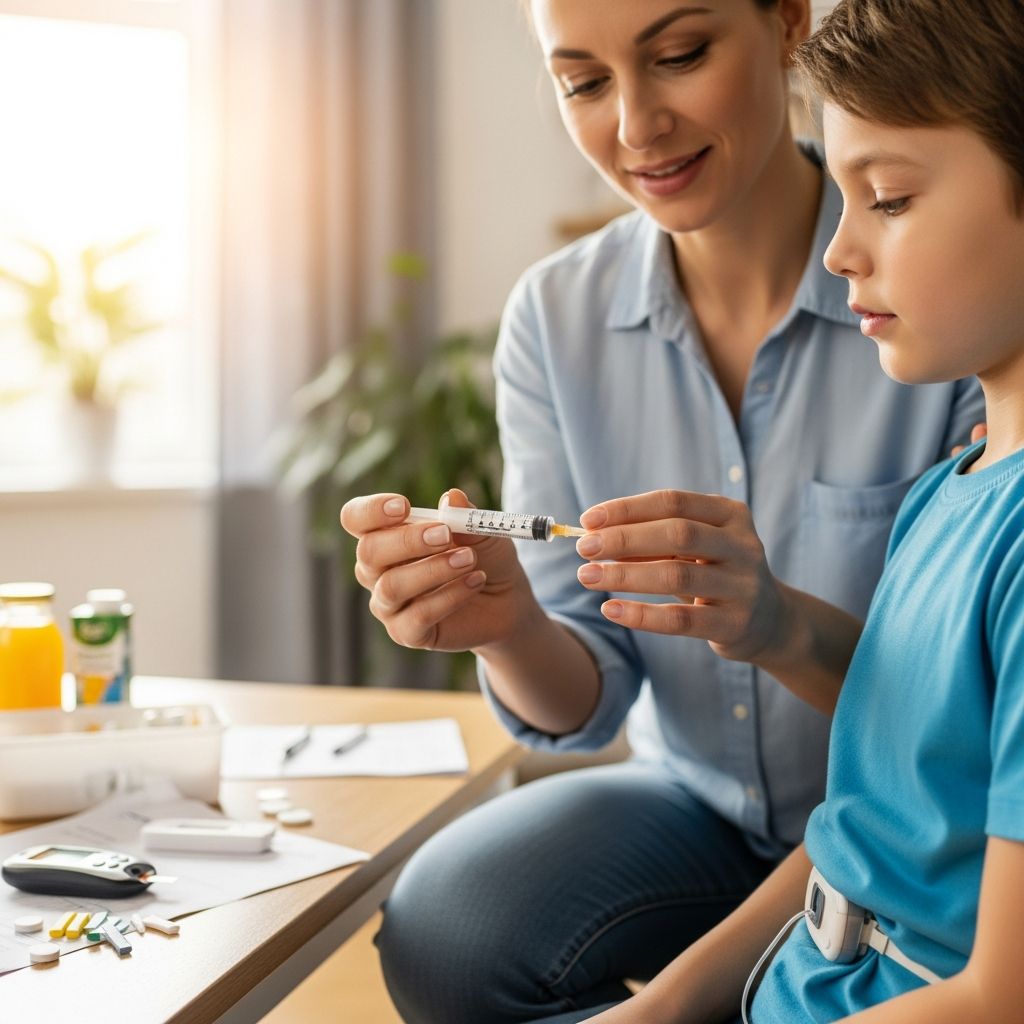
For families of children with diabetes, glucagon is a critical emergency medicine that can quickly raise dangerously low blood sugar when a child cannot safely swallow food or drink. Understanding how and when to use glucagon can turn a frightening situation into one you are prepared to handle.
What Is Glucagon and Why Is It Important?
Glucagon is a natural hormone made by the pancreas that tells the liver to release stored sugar into the bloodstream. In emergency medicine form, it is given as an injection or nasal dose to rapidly raise blood sugar when it drops to a level that is unsafe.
For children using insulin, blood sugar can sometimes fall so low that they become confused, very sleepy, or even unconscious. In these situations, they may not be able to eat or drink safely. Glucagon steps in as a life-saving backup when fast-acting sugar by mouth is not possible.
- Glucagon counters severe hypoglycemia by releasing stored glucose from the liver.
- It is designed for use when your child cannot safely take anything by mouth.
- It buys valuable time until medical help or oral carbohydrates can be given.
Low Blood Sugar vs. Severe Low Blood Sugar
Not every low blood sugar requires glucagon. Parents need to distinguish typical lows that can be treated with snacks from severe lows that are emergencies.
Typical Low Blood Sugar
A mild to moderate low blood sugar (hypoglycemia) happens when levels fall below the target range but the child is still awake and able to swallow. This kind of low is usually treated with quick-acting carbohydrates like juice, glucose tablets, or candy, followed by a more lasting snack if needed.
- Common signs: shakiness, sweating, hunger, fast heartbeat, irritability, headache, or trouble concentrating.
- Child can speak, respond, and safely chew and swallow.
- Treatment: fast-acting sugar by mouth, then recheck blood sugar as advised by the care team.
Severe Low Blood Sugar
Severe hypoglycemia is an emergency. This is when blood sugar is so low that the child’s brain function is affected, and they cannot safely cooperate with eating or drinking.
- Possible signs: confusion, staring, inability to follow directions, slurred speech, extreme sleepiness, seizure, or unresponsiveness.
- Child may choke if given food or drink, or be unable to take anything by mouth.
- This is when glucagon is indicated, according to the child’s diabetes care plan.
When Should Parents Use Glucagon?
Glucagon is not for routine lows; it is reserved for situations where safety and consciousness are at risk. Parents should follow the instructions from their child’s diabetes care team, but certain patterns are common.
In general, glucagon is meant for:
- A child who is unconscious or having a seizure from low blood sugar.
- A child who is awake but cannot safely swallow or is refusing to take sugar because of confusion, severe nausea, or behavior change linked to a low.
- Situations where attempts to raise blood sugar by mouth have failed and symptoms are worsening.
Glucagon may also be advised during overnight lows when a child cannot be awakened enough to drink safely. Parents should always clarify specific thresholds and instructions with the diabetes team and write them into a home and school plan.
Types of Glucagon Products
Several glucagon products are now available, and they vary in how they are prepared and given. The child’s healthcare provider will choose one based on age, weight, family preference, and insurance coverage.
| Type | How It’s Given | Key Features |
|---|---|---|
| Traditional injectable kit | Injection into muscle (arm, thigh, or buttock) after mixing powder and liquid | Requires several preparation steps; widely used and familiar in clinics |
| Ready-to-use injection or autoinjector | Pre-filled or auto-injecting pen into muscle or under skin | Simpler, fewer steps, often color-coded for caregivers |
| Nasal glucagon | Sprayed into the nose while child is lying on their side or back | No needle; does not require inhalation or deep breathing |
Regardless of the product chosen, parents and caregivers should practice with demonstration devices or trainer kits so they feel confident using the correct technique during an emergency.
Step-by-Step: Giving Glucagon in an Emergency
Every product comes with its own instructions, but certain general steps apply across forms. It is wise to rehearse these in calm moments so they become familiar.
1. Check for Severe Symptoms
- Look for inability to swallow, seizure activity, confusion, or unresponsiveness.
- If your child wears a continuous glucose monitor, glance at the reading and trend, but do not delay treatment to confirm with a fingerstick if symptoms are severe.
2. Do Not Give Food or Drink
- Avoid putting anything in your child’s mouth if they are having a seizure, are not fully awake, or cannot follow instructions.
- This reduces the risk of choking and aspiration.
3. Administer Glucagon
Follow the specific steps for your product, but most involve:
- Opening the container and removing safety caps or seals.
- Preparing the dose (mixing, if using a traditional kit, or simply pressing a device against the skin or into the nose for newer formats).
- Delivering the full prescribed amount as directed by the diabetes care team.
4. Place Your Child Safely
- Turn your child onto their side to prevent choking if they vomit.
- Keep the area around them clear, especially during a seizure.
5. Call for Emergency Help
- After giving glucagon, contact emergency services according to your local guidelines.
- Inform them that your child has diabetes, is having a severe low blood sugar, and has just received glucagon.
6. Recheck and Follow Up
- Blood sugar usually begins to rise within minutes, but you should recheck levels when your child is more responsive if possible.
- Once they can safely swallow, follow medical advice for giving carbohydrates to maintain blood sugar after glucagon’s effect wears off.
Possible Side Effects and What to Expect
Most children tolerate glucagon well, especially given the benefits during a severe low. However, some short-term side effects can occur as blood sugar rises and the body responds to the medicine.
Parents may notice:
- Nausea or vomiting, especially soon after the dose.
- Headache, dizziness, or a “washed-out” feeling as the child recovers.
- Fast heartbeat or mild flushing.
Because vomiting is possible, keeping the child on their side is important until they are fully alert. If any unusual rash, trouble breathing, or swelling occurs, seek urgent medical care and mention that glucagon was given, as very rare allergic reactions are possible.
Storage, Expiration, and Readiness
Glucagon is only helpful if it is current, stored correctly, and easy to find in a crisis. Parents should treat glucagon like a fire extinguisher: it may sit unused for long periods, but it must be ready the moment it is needed.
- Check the expiration date regularly, such as at the start of each school year or clinic visit.
- Store as instructed by the manufacturer, often at room temperature and away from extreme heat or moisture.
- Keep kits in consistent, clearly labeled locations at home, school, and other frequent environments.
When glucagon is replaced, use the old device as a trainer (if safe and allowed) to practice the steps with family members and caregivers.
Training Caregivers, School Staff, and Babysitters
Parents are not always present when a child experiences a severe low blood sugar. Teachers, coaches, relatives, and babysitters should know where glucagon is stored and how to use it.
Key Training Points for Other Adults
- Basic understanding that the child has diabetes and uses insulin.
- How to recognize the difference between a typical low and a severe low.
- Where glucagon is kept and who has permission to administer it.
- Clear written step-by-step instructions, ideally provided by the diabetes clinic or school plan.
Practice sessions with a trainer device are extremely helpful. Short role-play exercises, where adults rehearse what to say when calling emergency services and how to position the child, build confidence before a real emergency happens.
Integrating Glucagon Into the Diabetes Care Plan
Glucagon should not stand alone; it fits into a larger safety plan tailored to the child’s age, routine, and activity levels. This plan helps reduce the chances of severe lows and ensures a swift response when they occur.
- Include glucagon use instructions in the child’s written diabetes management plan and emergency plan.
- Review the plan at least once a year or after any severe low to see if insulin doses, meal schedules, or activity guidelines need adjustment.
- Discuss with the diabetes team whether additional supplies, such as fast-acting carbohydrate and a backup glucagon kit, should be stored in key locations.
Emotional Impact and Reassurance for Families
Experiencing a severe low blood sugar can be frightening for both child and family. Children may remember feeling out of control or weak; parents may worry it could happen again at any time.
It can help to:
- Talk openly with your child in age-appropriate language about what happened and how glucagon helped keep them safe.
- Emphasize that everyone is learning together and that the family has a plan for the future.
- Ask the healthcare team for guidance if your child shows ongoing fear, sleep problems, or anxiety around low blood sugar.
Frequently Asked Questions About Glucagon
Is glucagon only for children with type 1 diabetes?
Glucagon is most commonly prescribed for children with type 1 diabetes because they depend on insulin and have a higher risk of severe lows. However, some children with type 2 diabetes who use insulin or certain other medications may also be advised to have glucagon on hand. This decision is made by the child’s healthcare provider.
Can glucagon be given if I am not sure the blood sugar is low?
In a clear emergency, such as unresponsiveness in a child known to have diabetes, using glucagon when severe hypoglycemia is suspected is generally considered safer than waiting too long. Parents should discuss specific guidance with their diabetes team so they feel comfortable acting quickly if symptoms are obvious.
What if my child starts to wake up while I am preparing glucagon?
If your child becomes more alert but is still not able to safely swallow, it is still appropriate to proceed with glucagon according to the plan. If they fully awaken, can sit up, follow directions, and safely drink, talk with your care team about whether oral carbohydrates are sufficient in that situation.
Can glucagon be used more than once?
Depending on the situation and medical advice, a second dose may be given if the first dose does not improve symptoms within the recommended time frame and emergency services are delayed. Families should ask their healthcare team for clear instructions about repeat dosing and always seek urgent medical care after glucagon is used.
Will using glucagon mean my child did something wrong?
No. Severe lows can happen even when families follow their diabetes plan carefully. Growth, illness, increased activity, and changes in appetite can all influence blood sugar. Glucagon is a safety tool, not a sign of failure, and using it promptly shows responsible, attentive care.
Key Takeaways for Parents
- Glucagon is an emergency medicine that quickly raises blood sugar when a child with diabetes has a severe low and cannot safely take sugar by mouth.
- Parents, caregivers, and school staff should know when and how to use glucagon, where it is stored, and what to do after giving it.
- Regular practice, clear written plans, and open communication with the healthcare team help families feel prepared rather than fearful.
By keeping glucagon available, up to date, and backed by solid training, families create an extra layer of safety for children living with diabetes.