Establishing strong hygiene practices early in a child’s life lays the foundation for health, confidence, and independence. As children grow through distinct developmental phases, their ability to manage personal care evolves, requiring parents to adapt teaching methods accordingly. This guide outlines key hygiene milestones, practical strategies, and engaging activities tailored to each age group, drawing from pediatric developmental standards to help families cultivate routines that stick.
Foundations in the First Years: Infants (0-2 Years)
During infancy, hygiene focuses on caregiver-led care to protect delicate skin and prevent infections. Babies’ immune systems are still maturing, making consistent cleanliness crucial for warding off rashes, digestive issues, and respiratory problems. Primary responsibilities include frequent diapering, gentle bathing, and modeling hand hygiene for adults handling the child.
Gentle bathing with lukewarm water and fragrance-free products two to three times weekly suffices, as over-bathing can dry out skin. Always clean the diaper area thoroughly during changes—front to back for girls to avoid urinary tract infections—and pat dry to prevent moisture-related irritations. Caregivers must wash hands meticulously before feeds and after diaper handling to minimize germ spread.
- Diaper care: Change every 2-3 hours or immediately after soiling; use barrier creams if needed.
- Bathing basics: Support baby’s head; wash face, neck folds, and genitals gently.
- Nail trimming: Use baby clippers when nails are soft, post-bath, to avoid scratches.
By 12 months, infants may signal discomfort from wetness, marking the transition to self-awareness. Introduce soft cloths for them to hold during wipes, fostering early sensory engagement without expecting independence yet.
Playful Introduction: Toddlers (2-4 Years)
Toddlers burst with curiosity and energy, making this prime time for fun, interactive hygiene lessons. Motor skills advance, allowing attempts at self-care, but supervision remains essential to ensure thoroughness. Focus on handwashing, toothbrushing, and potty training as gateways to autonomy.
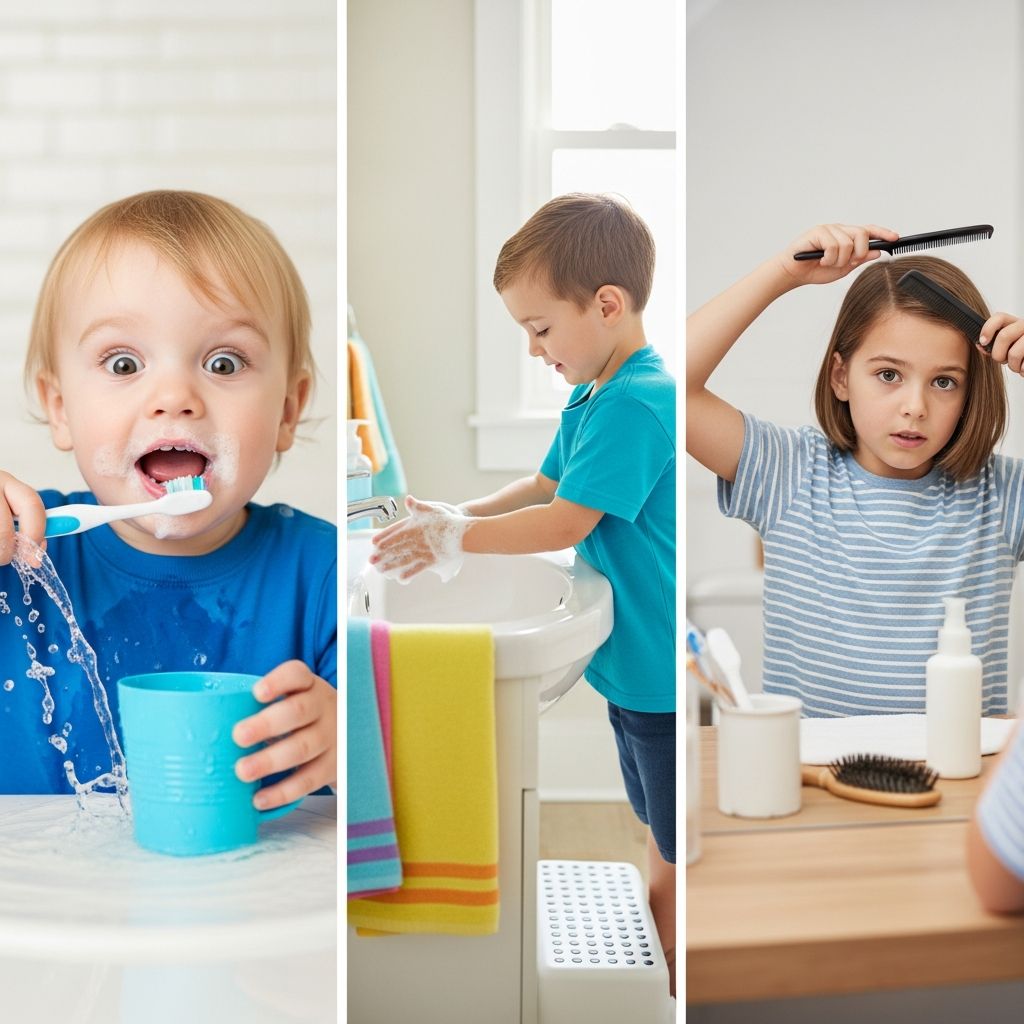
Handwashing should last at least 20 seconds—teach the ‘palms, backs, fingers, thumbs, wrists’ sequence with soap. Sing songs like ‘Happy Birthday’ twice to time it perfectly, especially before meals, post-toilet, and after play. For teeth, use a rice-grain-sized fluoride toothpaste smear on a soft brush; brush twice daily while supervising to reach all surfaces.
Potty training typically begins around 24-35 months, when children show interest or stay dry for periods. Celebrate successes with praise, and teach wiping (front-to-back), flushing, and handwashing sequences. Bathing can now involve foam letters or toys to make it enjoyable, aiming for full-body coverage every other day.
| Hygiene Task | Tips for Toddlers | Common Challenges |
|---|---|---|
| Handwashing | Use colorful soap dispensers; make bubbles to ‘chase germs’ | Short attention span—use timers |
| Toothbrushing | Let them brush first, then parent ‘finishes’ | Resistance to flavors—try fun flavors |
| Potty Training | Introduce potty chair; read books about it | Accidents—stay patient, no punishment |
Activities like a ‘bubble germ hunt’—where soap bubbles represent germs to wash away—turn routines into games, boosting compliance. By 30-36 months, many achieve basic post-urination hygiene independently.
Growing Independence: Preschoolers (4-6 Years)
Preschoolers thrive on routine and praise, developing the dexterity for more complex tasks. They imitate adults closely, so parental modeling is powerful. Emphasize understanding ‘why’—e.g., ‘washing stops sickness’—to build intrinsic motivation.
Daily routines should include showering or bathing 2-3 times weekly, with children lathering soap and rinsing under guidance. Hair washing weekly prevents buildup; use detangling sprays for ease. Dental care advances to pea-sized toothpaste and flossing introductions for spaced teeth, ideally with dentist visits starting at age 1 and annually thereafter.
Hand hygiene expands to before snacks and after sneezes/coughs. Introduce grooming like combing hair or face washing with a soft cloth. Create a visual chart with stickers for tasks completed, reinforcing accountability.
- Nail care: Trim weekly; teach filing edges smooth.
- Nose blowing: Practice with tissues into a trash bin.
- Clothing hygiene: Change daily, especially after messes.
Role-playing scenarios, such as a ‘cleanliness clinic’ with toy tools, embeds habits playfully. By age 4-5, most handle full toileting independently, including clothing fasteners. Preschool bathing frequency aligns with skin health needs, avoiding daily washes unless soiled.
Responsibility and Awareness: School-Age (6-12 Years)
School introduces germs from peers, heightening hygiene’s role in illness prevention. Children this age grasp consequences, like cavities from poor brushing or infections from unwashed hands. Promote full independence while monitoring consistency.
Daily showers, deodorant introduction around puberty onset (ages 8-10 for some), and twice-daily brushing/flossing are standards. Explain acne prevention through face washing and clean clothes. Laundry involvement teaches sorting and loading basics.
For preteens nearing 12, discuss menstrual hygiene for girls (pads at first period) and grooming like shaving if desired. Rewards systems evolve to privileges, like choosing bath products.
| Age Range | Key Hygiene Advances | Parental Role |
|---|---|---|
| 6-8 Years | Independent bathing; basic flossing | Spot-checks; educate on germs |
| 9-12 Years | Deodorant, hair styling; full dental routine | Praise consistency; privacy respect |
By 6, independent hygiene like showering and hair brushing is typical. Organizational tools, such as hygiene checklists, aid homework-like routines.
Fun Activities to Reinforce Habits Across Ages
Engagement trumps enforcement. Tailor activities to developmental readiness:
- Infants: Sensory baths with floating toys.
- Toddlers: Germ-chasing songs during handwashing.
- Preschoolers: Sticker reward charts for task completion.
- School-Age: Hygiene challenges with peer competitions or apps tracking streaks.
Group family ‘clean-up races’ normalize routines, making them social and exciting.
Overcoming Common Hurdles
Resistance peaks during transitions. Address forgetfulness with reminders via alarms or notes; sensory issues (e.g., toothpaste taste) by trialing options. For potty regressions, revert to praise without pressure. Consistency, positivity, and modeling yield results—habits form over weeks, not days. Consult pediatricians for persistent issues.
Frequently Asked Questions
How often should I bathe my preschooler?
Two to three times per week is ideal to maintain skin moisture, increasing if sweaty or dirty.
When do kids master independent toothbrushing?
Around 6-7 years, though supervision until 8 ensures thoroughness.
What’s the best way to start potty training?
At 24-35 months when ready; use child-sized potties, books, and rewards for interest shown.
Should I force hygiene if my child resists?
No—use play, choices (e.g., soap scents), and lead by example for buy-in.
How to introduce deodorant or puberty hygiene?
Around 8-12 years; discuss body changes openly and provide unscented options first.
References
- The Stages of Happy Hygiene Training for Children — Merlin Day Academy. 2023. https://merlindayacademy.com/the-stages-of-happy-hygiene-training-for-children/
- Developmental Milestones for Children’s Self-Help and Functional Skills — Cloud Nine Therapy. 2024. https://cloudninetherapy.com.au/developmental-milestones-for-childrens-self-help-and-functional-skills/
- Self Care Developmental Milestones — Synaptic Pediatric Therapies. 2023. https://synapticpediatrictherapies.com/self-care-developmental-milestones/
- When and How to Start Teaching Personal Hygiene — Warrenton Pediatrics. 2024. https://warrentonpediatrics.com/when-and-how-to-start-teaching-personal-hygiene/
- Personal Hygiene Milestones: A Guide for Parents — Connecticut Children’s. 2023. https://www.connecticutchildrens.org/growing-healthy/personal-hygiene-milestones-guide-parents
- Hygiene for Preschoolers — Sydney Children’s Hospitals Network. 2024. https://www.schn.health.nsw.gov.au/kids-health-hub/growth-and-development/preschoolers/hygiene