A video of a German mom “free birthing” her baby in the middle of the Pacific Ocean has resurfaced online, sparking a mix of admiration, shock, and serious concern about birth safety and hygiene.
Who Is the Mom Behind the Viral Ocean Birth Video?
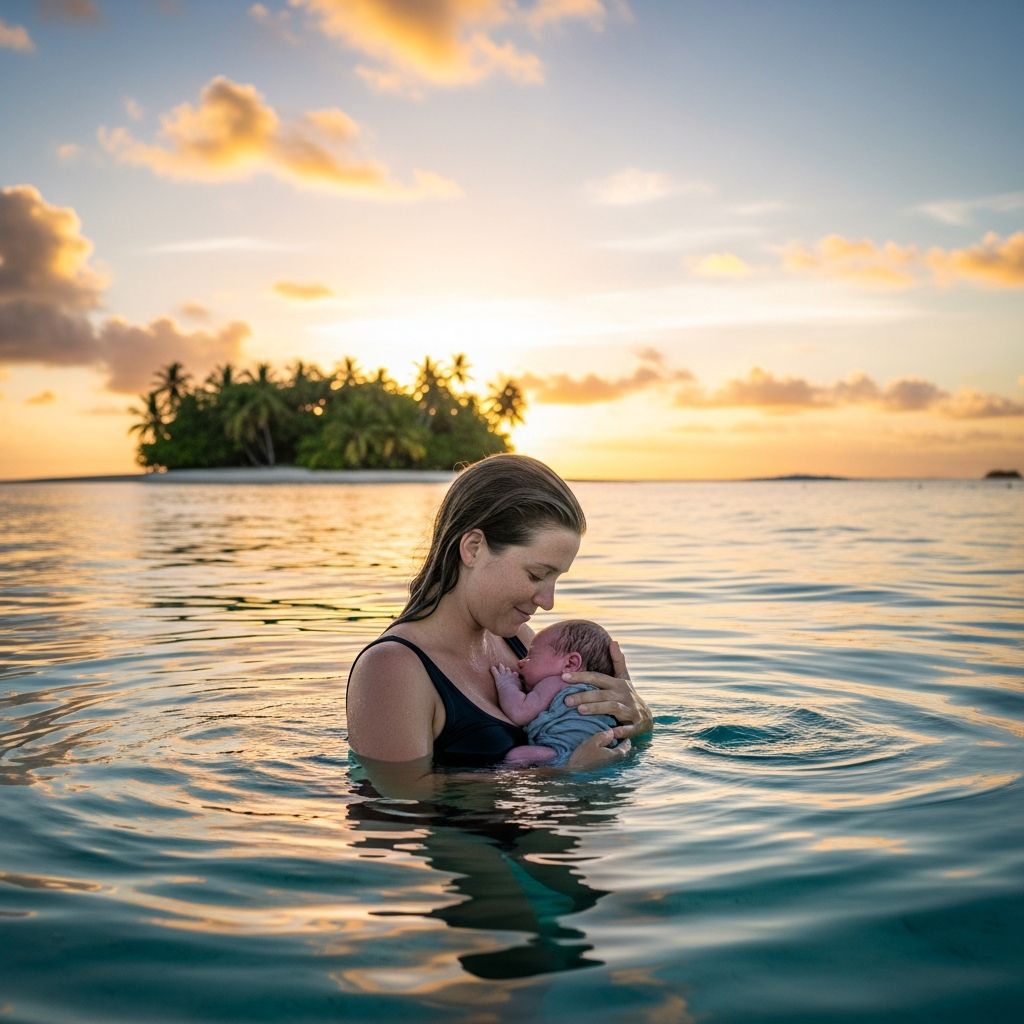
The video that keeps resurfacing shows a German mother, living abroad with her partner and children, giving birth in the shallow waves of a Pacific beach instead of in a hospital or even at home. She had already experienced multiple previous births, including at least one that was described as traumatic in a clinical setting and another at home, and she wanted this pregnancy to feel completely free of medical intervention and outside control. In the viral clip, she is seen in the surf, laboring on the shoreline and ultimately lifting her newborn out of the water while waves lap around them.
The birth took place on a relatively quiet stretch of beach, with her partner nearby and their other children cared for elsewhere. The baby—described in news coverage as a calm, content infant—reportedly received no immediate medical intervention and was instead kept skin-to-skin with his mother, then later weighed at home using common household tools like luggage scales. The imagery of a baby emerging into the world surrounded by ocean waves has captured global attention because it appears both serene and intense at the same time.
What Is ‘Free Birth’ and How Is It Different from Water Birth?
The mom’s choice is often described as a “free birth,” meaning she intentionally gave birth without any doctors, nurses, or midwives present, and outside a medical facility. Free birth is distinct from a planned home birth with a midwife or doula, where there is still professional oversight and a plan for emergencies. In this case, the mother and her partner took responsibility for every aspect of labor, delivery, and immediate postpartum care, including monitoring, cord cutting, and placenta delivery.
People sometimes confuse free birth with water birth, but they are not the same. Water birth usually takes place in a controlled environment such as a birthing pool at home or in a hospital or birth center, where the water temperature, cleanliness, and surroundings can be managed, and professionals are present if needed. By contrast, this Pacific Ocean birth combined free birth with an outdoor water setting, where elements like waves, temperature, and potential contaminants are far less predictable.
- Free birth: No medical professionals, often at home or in nature, with parents directing the entire process.
- Home birth with midwife: Planned birth at home, but attended by a licensed or trained birth professional.
- Water birth: Labor and/or delivery in water, usually in a sanitized tub or pool and often with professional support.
How She Prepared for an Ocean Birth
According to news coverage and social media commentary, the mother did not arrive at the decision to birth in the ocean impulsively. She reportedly watched the local tide patterns for weeks, tracking high and low tides, water depth, and temperature to decide when conditions might be safest and most comfortable. She kept a birth kit in the car that included towels, gauze, and supplies for catching the placenta and managing bleeding, and she and her partner had a strategy for what to do once labor intensified.
Her previous labors reportedly became progressively shorter with each child, which made her believe that this baby might also arrive quickly. This expectation gave her confidence that she could reach the beach, labor in the surf, and then return home before exhaustion or complications set in. She has described feeling deeply connected to nature and her own body in this pregnancy, seeing the sea and its rhythmic waves as a partner in the birth process rather than a risk factor.
The Experience: Laboring in the Pacific Surf
In the viral footage, the mother is on her knees or in a squat at the shoreline, supporting herself against her partner while contractions build. As waves roll in, they wash over her lower body, at times rising to her waist or chest, creating a visually dramatic contrast between the intensity of labor and the natural beauty around her. Observers often remark on how the sound and rhythm of the waves seem to mirror the contraction pattern, something the mom herself has described as soothing and empowering.
After the baby emerges, she cradles him against her chest with the umbilical cord still attached, appearing to focus on keeping him above the water line and close to her body for warmth. Later descriptions mention that she wrapped him in towels, then briefly re-entered the water to rinse herself off before the family headed home to rest together. Supporters of her choice emphasize that, to them, the environment looks peaceful and far from the bright lights and beeping machines that can make hospital births feel clinical and overwhelming.
Why She Chose to Avoid Medical Supervision
The mother has spoken publicly about feeling that previous medicalized births took power away from her and did not honor what she sees as the natural capacity of the female body. After a traumatic first birth in a clinic and later experiences at home, she increasingly wanted to distance herself from formal prenatal care, routine scans, and due-date deadlines. For this pregnancy, she reportedly declined standard checkups, instead trusting her intuition, bodily awareness, and personal research to guide her decisions.
To her, the ocean birth was about more than location—it symbolized a complete rejection of institutional control over birth. She has said she wanted to feel fully responsible, fully present, and uninterrupted by external voices. Supporters of this approach say it can be emotionally healing for women who have faced birth trauma or felt ignored in medical settings, though critics point out that personal autonomy has to be weighed against the possibility of preventable complications.
Public Reaction: ‘Amazing’ or Alarming?
When the Pacific Ocean birth video resurfaced, many commenters praised the mom as “amazing,” “brave,” and “incredibly strong.” They admired the way she appeared calm amid contractions and found inspiration in the idea of birth taking place outdoors, close to nature. Some parents wrote that the video helped them see birth as something powerful and beautiful rather than purely medical or frightening, and they expressed respect for her confidence and trust in her body.
At the same time, a large number of viewers reacted with alarm, disbelief, and even anger. They questioned why anyone would intentionally give birth in the open ocean, exposed to unpredictable waves, temperature shifts, and potential pollutants or bacteria. Critics often described the choice as unnecessarily risky for both mother and baby, seeing it less as an empowering act and more as an avoidable gamble with a newborn’s health. The sharp divide in responses reflects broader cultural tensions around birth choice, medical authority, and parental autonomy.
Key Concerns: Hygiene, Temperature, and Emergencies
One of the biggest concerns raised in online comments is hygiene. Skeptical viewers point out that ocean water can contain bacteria, viruses, and pollutants from runoff, marine life, and human activity. They worry that exposing a newborn, whose immune system is still developing and whose umbilical cord is an open pathway for infection, to untreated seawater could increase the risk of serious illness. Questions also focus on how clean the shoreline sand is and whether small cuts or tears from birth could be more vulnerable in that setting.
Temperature is another commonly cited issue. Newborns struggle to regulate their body temperature, and sudden exposure to cooler water and air could theoretically put them at risk of hypothermia. Critics also ask what would have happened if an emergency had arisen—such as heavy maternal bleeding, shoulder dystocia, or baby distress—far from immediate hospital resources. Even short delays in responding to complications can be critical, which is why medical professionals often urge parents to have backup plans and trained support on hand.
Supporters’ Arguments: Research, Intuition, and Water as a ‘Barrier’
Supporters of the mother emphasize that she did not approach the ocean birth casually, but instead reports having researched risks, tides, and water quality before making her choice. They point to her statements that the baby was born healthy, showed no signs of infection, and remained calm and content in the weeks following the birth. To them, these outcomes suggest that, at least in this specific case, her preparation and environment aligned well enough to avoid obvious harm.
Some defenders also reference the concept of water as a physical and psychological aid in birth. Warm water is known to help many women relax, reduce pain perception, and ease transitions between labor stages, and water births in tubs are relatively common in some countries. Advocates take this further by suggesting that natural bodies of water, if chosen carefully, can provide similar benefits, while also reconnecting birth with nature and ancestral traditions. However, this view remains controversial when applied to unsupervised births in open environments like oceans or creeks.
How Health Professionals Generally View Free Birth
Most mainstream health organizations distinguish between planned home births with qualified midwives and free births without any professional oversight. Planned, low-risk home births with skilled attendants can have good outcomes when backed by emergency transfer plans, but free births are usually seen as higher risk because complications may not be recognized or managed promptly. Conditions such as postpartum hemorrhage, high blood pressure, or a baby’s heart rate changes often require quick medical interventions that untrained parents cannot safely provide on their own.
Health professionals generally recommend that anyone interested in out-of-hospital birth at least consult with a midwife or doctor, undergo appropriate prenatal screening, and ensure that an experienced birth attendant is available. Even those who strongly value natural birth are usually encouraged to take comprehensive childbirth education classes, create emergency plans, and understand warning signs that require immediate care. In that context, the Pacific Ocean free birth is frequently cited as an example of pushing beyond what many midwives or obstetricians would consider a reasonable balance between autonomy and safety.
Free Birth vs Assisted Birth: Key Differences
| Aspect | Free Birth (Unassisted) | Home Birth with Midwife | Hospital Birth |
|---|---|---|---|
| Who attends | Parents (and possibly friends/family) with no medical professionals present. | Licensed or trained midwife, sometimes with assistants or a doula. | Doctors, midwives, nurses, and support staff. |
| Location control | Complete freedom (home, outdoors, water, etc.), chosen by the parents. | Home or similar familiar setting, but midwife may set safety requirements. | Hospital or birth center with standardized protocols and equipment. |
| Monitoring | Visual observation by parents only, no professional monitoring tools. | Intermittent or continuous fetal and maternal checks using basic equipment. | Regular or continuous monitoring, lab tests, and rapid assessments. |
| Emergency response | Reliant on calling emergency services and travel time to hospital. | Midwife can recognize problems early and coordinate transfer. | Immediate access to surgery, medications, and specialist teams. |
| Perceived autonomy | Highest; parents make all decisions without professional input. | Shared; parents lead preferences, but midwife guides safety boundaries. | Often structured by hospital policies, though collaborative care is possible. |
What the Viral Video Reveals About Birth Culture
The intensity of reactions to this Pacific Ocean birth says as much about modern birth culture as it does about one family’s choice. On one side are people who see the medical system as overly interventionist, sometimes dismissive of women’s wishes, and too quick to treat pregnancy as an illness. On the other side are parents and professionals who view medical care as the safest baseline, emphasizing that even low-risk pregnancies can become high-risk without warning and that systems exist to prevent tragedies, not to limit freedom.
Viral birth videos often sit at the intersection of these perspectives, acting as Rorschach tests for viewers’ beliefs about autonomy, risk, and what it means to be a “good” parent. Some see the ocean birth mother as a symbol of empowerment and trust in nature; others see her as irresponsible for exposing a newborn to potential danger. Both reactions demonstrate how emotionally charged childbirth decisions have become, especially when broadcast on social media and dissected in public debate.
Practical Takeaways for Expectant Parents
For expectant parents, the story of this German mom’s free birth in the Pacific Ocean can serve as a starting point for deeper conversations rather than a template to copy. It highlights the importance of thinking carefully about where and with whom to give birth, and how to balance a desire for a peaceful, natural experience with the reality that complications can happen unpredictably. It also underscores that social media often shows the most dramatic, successful stories, while less positive outcomes may receive far less attention.
Parents who feel drawn to more natural or out-of-hospital births might consider exploring midwife-led care, birth centers, or supervised water births as options that preserve many elements of autonomy while still providing safety nets. Open, respectful discussions with partners, trusted providers, and experienced birth workers can help clarify what level of risk feels acceptable and what preparations are truly necessary, from prenatal screening to emergency backup plans. In the end, the most constructive lesson is not that one birth choice is universally right, but that informed, thoughtful decision-making matters for every family.
FAQs About Ocean Births and Free Birthing
Is it common for people to give birth in the ocean?
Births in the ocean are extremely rare compared with home or hospital births. While water birth in tubs or pools has become more familiar in some communities, intentionally giving birth in open water like the sea or a creek remains an unusual and controversial choice.
Is ocean water safe for a newborn?
Ocean water is not sterile and can contain bacteria, viruses, and pollutants. Many health professionals caution against exposing a newborn’s eyes, mouth, and umbilical cord to untreated water, especially immediately after birth when infection risk can be higher and temperature regulation is fragile.
What are the main risks of free birth without medical professionals?
The main risks include delayed recognition of complications and lack of access to emergency interventions. Problems like hemorrhage, cord prolapse, high blood pressure, or fetal distress can escalate quickly, and without trained attendants and equipment, families may have a harder time responding in time.
Can someone plan a natural birth and still stay safe?
Many families find a middle ground by working with midwives, doulas, or supportive obstetric teams who respect natural birth preferences while maintaining safety standards. Options such as midwife-led home births, birth centers, or supervised water births can blend autonomy with professional oversight, though suitability depends on individual health circumstances.
Should online videos influence how someone plans their own birth?
Viral videos can be inspiring but do not show the full picture of risks, preparation, or what might have gone wrong. Expectant parents are generally encouraged to treat online stories as conversation starters, not medical advice, and to base birth plans on personal health factors, evidence-based information, and trusted professional guidance.