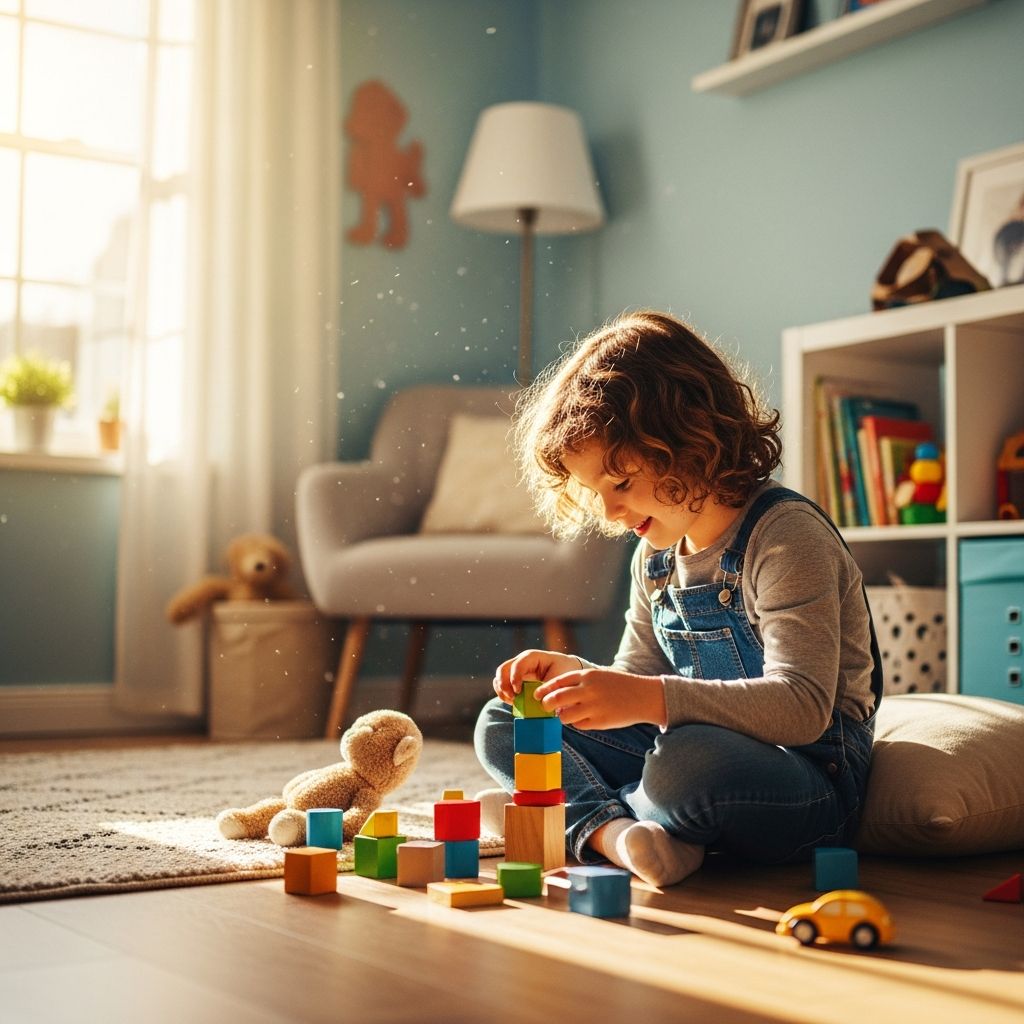
Independent play, often called solo time, is essential for children’s development, allowing them to explore creativity, build self-reliance, and develop emotional strength without constant adult intervention. Parents frequently struggle with balancing involvement and giving space, but clear communication can make this transition smooth and beneficial for the whole family.
Why Independent Play Matters for Child Growth
Solo play provides children with uninterrupted opportunities to invent, experiment, and solve problems on their own terms. This self-directed activity sharpens cognitive skills, enhances imagination, and promotes emotional regulation as kids learn to manage their feelings during unstructured moments.
Research from child development experts emphasizes that extended periods of free play contribute to better focus, resilience, and even language acquisition indirectly through self-narration. When children engage in pretend scenarios or manipulate toys freely, they practice decision-making and build confidence that carries into social interactions.
Moreover, in an era dominated by scheduled activities and screens, alone time counters overstimulation. It teaches kids to tolerate boredom, which sparks true innovation rather than passive consumption. Families who prioritize this see children who are more adaptable and less dependent on external entertainment.
Age-Specific Approaches to Introducing Solo Time
Tailoring your message to a child’s developmental stage ensures they understand and embrace independent play. Younger children need simple reassurances, while older ones benefit from discussions about personal growth.
For Toddlers (Ages 1-3): Building Foundations
At this stage, focus on short bursts of solo exploration. Use positive reinforcement by responding warmly to their initial gestures or sounds during play, then gradually step back. Sportscasting—narrating their actions briefly like “You’re stacking those blocks high!”—supports language without interrupting flow.
- Start with 5-10 minutes in a safe space, visible but not hovering.
- Mimic their play sounds to show engagement before fading out.
- Praise efforts post-play: “You played so creatively by yourself!”
For Preschoolers (Ages 3-5): Encouraging Fantasy
Preschoolers thrive in pretend play, which can be solo or with peers. Allow self-talk without interference, as it aids concentration and problem-solving. Introduce alone time by framing it as a special adventure: “This is your explorer time to create stories with your toys.”
- Provide props like dress-up clothes or simple household items.
- Set a timer with fun sounds to signal start and end.
- Follow their lead only when they invite you, using comments like “That spaceship looks fast!”
For School-Age Kids (Ages 6-10): Fostering Independence
Older children grasp concepts like personal space. Explain benefits directly: “Alone time helps you think of your own ideas and feel strong inside.” Encourage them to choose activities, from reading to building forts, and check in briefly to validate progress.
- Use open-ended questions post-play: “What was your favorite part?”
- Model your own solo activities to normalize it.
- Link it to privileges, like extra screen time after successful solo sessions.
For Tweens (Ages 11+): Respecting Emerging Autonomy
Tweens crave independence but may resist structure. Communicate mutual respect: “I need time to recharge, and you get space to do your thing.” Discuss how solo reflection aids schoolwork and hobbies, using active listening to address pushback.
Body language matters—maintain eye contact during these talks and validate feelings: “I get that it’s boring at first, but it gets fun.”
Practical Strategies for Clear Communication
Effective dialogue turns potential resistance into enthusiasm. Key is consistency, empathy, and modeling.
| Strategy | Description | Age Suitability | Example Phrase |
|---|---|---|---|
| Door Opener Statements | Encourage sharing by showing interest without directing. | All ages | “Tell me more about what you’re building.” |
| I-Statements | Express needs without blame. | 5+ | “I feel refreshed after some quiet time alone.” |
| Active Listening | Reflect back to confirm understanding. | 3+ | “It sounds like you enjoyed creating that story.” |
| Visual Timers | Make boundaries concrete. | 2-8 | “When the sand runs out, we’ll play together.” |
Eliminate distractions during these moments—put away devices to model focus. Regular family meetings can reinforce rules, like designated solo slots daily.
Overcoming Common Hurdles
Resistance is normal; kids may cling or complain. Address fears empathetically: “It’s okay to miss me; I’m right nearby if you need me.” Gradually increase durations and celebrate successes with specific praise.
For high-energy kids, pair solo time with calming activities like drawing. If clinginess persists, observe triggers—hunger or tiredness often masquerade as neediness. Journaling shared notes can track progress and excitement.
Parental guilt is another barrier. Remember, stepping back builds capable kids. Your presence during invited interactions provides ample bonding.
Long-Term Benefits for Family Dynamics
Families practicing these methods report stronger bonds, as children learn to value others’ space too. Parents gain recharge time, reducing burnout, while kids develop skills for lifelong success: creativity from play, resilience from solitude.
Emotional intelligence flourishes—kids better articulate feelings, solve conflicts independently. Positive communication habits extend to peers and school.
Frequently Asked Questions
What if my child refuses solo time?
Start small, stay consistent, and empathize. Use play invitations post-session to rebuild connection. Persistence pays off as they discover joy in independence.
How much alone time is ideal daily?
Aim for 20-60 minutes based on age, building up. Quality unstructured play trumps quantity.
Does screen time count as independent play?
No—opt for non-digital activities to maximize developmental gains. Screens limit imagination.
Can solo play help with separation anxiety?
Yes, it builds security through self-soothing, reducing reliance on parents over time.
What activities promote best solo engagement?
Building toys, art supplies, books, and nature items encourage open-ended exploration.
References
- Becoming Unglued – Giving Your Child the “Alone Time” Both of You Need — Janet Lansbury. 2009-11-01. https://www.janetlansbury.com/2009/11/becoming-unglued/
- Positive Communication with Kids at Every Age — Generation Mindful. N/A. https://genmindful.com/blogs/mindful-moments/positive-communication-with-kids-at-every-age
- Communicating Effectively With Children — University of Missouri Extension (.edu). N/A. https://extension.missouri.edu/publications/gh6123
- How to Support Your Child’s Communication Skills — ZERO TO THREE (.org). N/A. https://www.zerotothree.org/resource/how-to-support-your-childs-communication-skills/
- Building and Maintaining Effective Communication with Your Children — Fairfax County Public Schools (.gov equivalent .edu). N/A. https://www.fcps.edu/news/building-and-maintaining-effective-communication-your-children
- 8 Psychologist-Backed Tips for Improving Communication with Kids — Parent.com. 2021-08-01. https://www.parent.com/blogs/conversations/2021-8-expert-tips-talk-effectively-kids
- The Power of Alone Time — The Children’s Trust (.org). N/A. https://www.thechildrenstrust.org/news/parenting-our-children/the-power-of-alone-time/