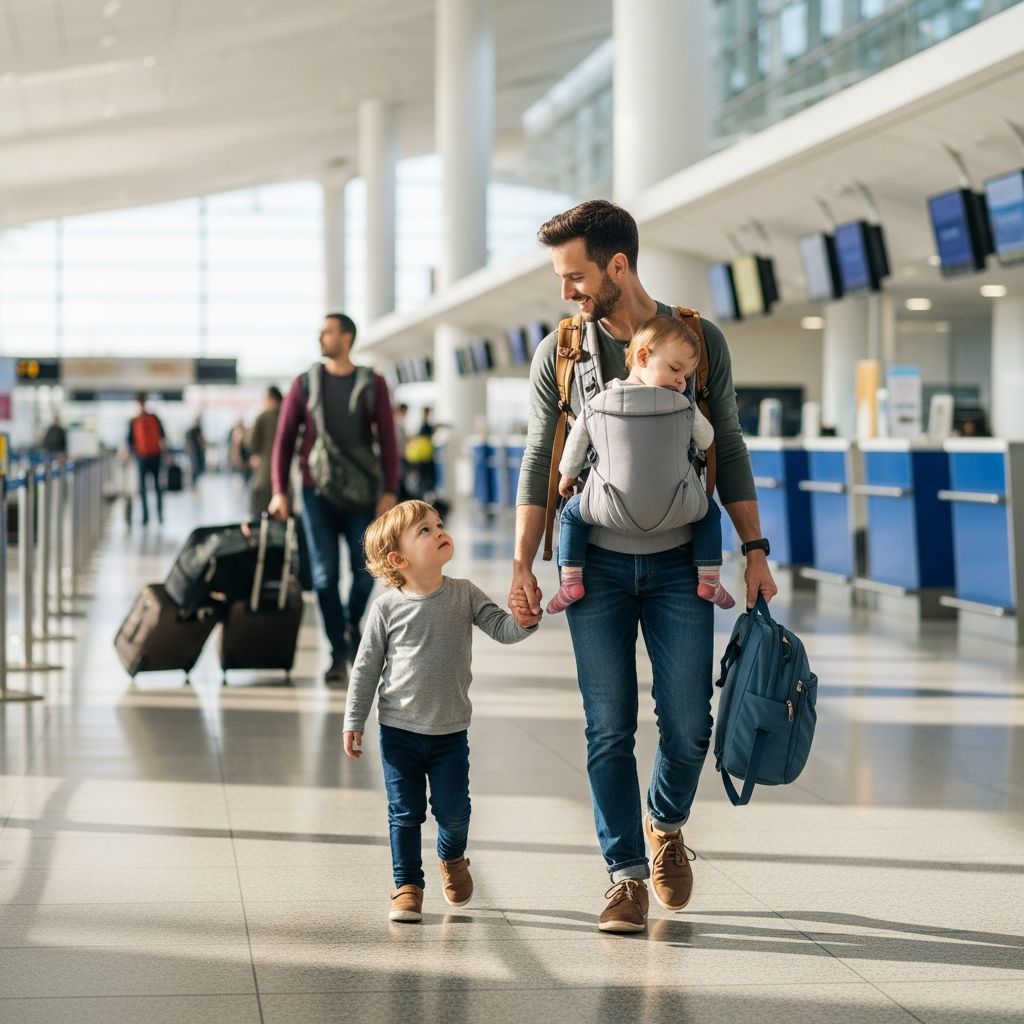
Parents often picture air travel with children as a juggling act: stroller, diaper bag, snacks, toys, and a heavy car seat banging into every doorway on the way to the gate. Flying without bringing a car seat on board can be both safe and practical in many situations, as long as you plan ahead and understand your options. This guide walks through how to decide whether to bring a car seat, what to do instead if you leave it behind, and how to make the entire trip more comfortable for everyone.
Should You Bring a Car Seat at All?
The first decision to make is not how to carry the car seat, but whether you truly need it for your specific trip. Every family, child, and itinerary is different, so there is no one-size-fits-all answer. Thinking through a few key questions can help you decide whether to bring a car seat or leave it at home and use alternatives.
- How old and active is your child, and do they sit still easily?
- Will you need a car seat at your destination for taxis, rental cars, or relatives’ vehicles?
- How many adults are traveling and able to help carry gear?
- How long is the flight and how tight are your connections?
Situations Where Leaving the Car Seat Makes Sense
Skipping the car seat on the plane is often most realistic when you are visiting a city where you rely mainly on public transportation, walking, or rides that can supply a seat on request. Families on short flights, with one lap infant and a second adult, may also find that carrying less gear outweighs the benefits of using a seat in the air.
- Urban trips where you will primarily use subways, buses, or trains.
- Stays with family who can provide a safe, appropriate car seat at your destination.
- Itineraries with multiple tight connections where you need to move quickly between gates.
When Bringing a Car Seat Is Still Worth It
There are also situations when hauling the car seat is the safer and more comfortable choice, even if it is inconvenient. Long flights, very active toddlers, and rental-car heavy trips are examples where having your own seat may feel essential for both safety and sanity. In those cases, instead of leaving it behind entirely, focus on how to transport it more efficiently through the airport.
- Red-eye or long-haul flights when you want your child to sleep in a familiar seat position.
- Trips where you will be driving daily and want a seat you know how to install correctly.
- Children who are escape artists in lap belts or who are calmer when strapped into a harnessed seat.
Safety Basics When Flying Without a Car Seat
Choosing not to use a car seat on board does not mean ignoring safety. Airlines and aviation authorities have clear guidelines for how young children may fly, and there are specialized products designed just for air travel. Understanding the basic categories of in-flight restraints helps you make a choice that balances risk with practicality.
| Option | Age/Size Range | Main Advantages | Potential Drawbacks |
|---|---|---|---|
| Lap infant (no separate seat) | Typically under 2 years, on adult’s lap | No extra ticket cost; minimal gear to carry | Least secure in turbulence; limited personal space |
| Child in regular airplane seat belt | Usually 2+ years with their own seat | Simplest option; no extra device needed | Standard lap belt may not fit very small children well |
| Portable aviation-specific harness | Typically preschoolers within specified weight range | Adds upper-body restraint; lighter than car seat | Still requires purchase of a seat; only used on planes |
Understanding Lap Infant versus Own Seat
Many airlines allow children under two to fly as lap infants, meaning they share an adult’s seat and do not use a separate harness. This is convenient and cheaper, but it does offer less protection in strong turbulence or a sudden stop, and it can be tiring to hold a wiggly toddler for hours. Paying for a seat for a baby or toddler allows the use of belts or travel-specific harnesses and typically gives everyone a bit more breathing room.
Why Some Parents Choose Portable Harnesses
Portable harness devices designed specifically for air travel provide upper-body restraint using the existing lap belt as a base. These systems are much lighter than traditional car seats and can often fit in a backpack or carry-on. For families who want more security than a lap belt provides but cannot face hauling a full seat down the aisle, these harnesses can be a useful middle ground, provided the child meets the size and age requirements specified by the manufacturer.
Alternatives to Carrying a Car Seat Through the Airport
If you decide not to use your child’s car seat on the plane itself, you still need to plan for ground transportation and sleep arrangements at your destination. Fortunately, there are several ways to avoid hauling the seat through every step of the airport while still having safe options where they matter most.
Checking the Car Seat Instead of Carrying It On
One common compromise is to check the car seat either at the ticket counter or at the gate. Checking at the counter means you are free of the seat from the very beginning of the journey, while gate-checking allows you to use it in the airport and only hand it over before boarding. In both cases, padding and protective bags can help reduce the risk of damage in transit, and you should always inspect the seat for cracks or broken pieces when you pick it up.
- Use a padded car seat travel bag or wrap the seat with extra clothing for cushioning.
- Label the seat clearly with your name, phone number, and destination address.
- Arrive at baggage claim prepared to give the seat a quick visual check before using it.
Renting a Car Seat at Your Destination
Another option is to skip bringing a seat entirely and rent one where you arrive. Rental car companies, baby gear rental services, and sometimes hotels can provide age-appropriate car seats for a daily fee. This reduces the burden of carrying gear, but it does mean trusting that the seat is clean, undamaged, and has not expired, so it is worth asking questions and inspecting the seat before strapping your child in.
- Confirm availability and the exact type of seat in advance, especially during busy travel seasons.
- Check the manufacturing date and visible condition of the rental seat when you receive it.
- Bring your own manual or printed instructions for the seat type so you can verify installation.
Relying on Car-Free Transportation
In some destinations, you may genuinely never need a car seat because you can rely on trains, trams, ferries, or walking. This is often the case for central city stays where public transit is robust and affordable. In these scenarios, flying without a car seat is not only easier but also completely practical, as long as you have a clear plan to avoid car travel or use services that can provide appropriate seating if needed.
Smart Gear Choices That Lighten the Load
Graceful family travel is less about pushing through discomfort and more about choosing gear that matches your trip. Leaving the car seat behind gives you room to invest in other items that make airports and flights more manageable with small children. Lightweight, multi-use gear can replace bulkier pieces and help everyone move faster and more comfortably.
Strollers, Baby Carriers, and Compact Baggage
Without a car seat, your stroller and baby carrier become much more important tools. A lightweight or travel stroller that folds quickly can be gate-checked and used to transport both child and carry-ons. Soft structured carriers keep babies close and hands free, which is especially helpful during security, boarding, and long walks between gates.
- Choose a stroller that folds with one hand and fits through narrow boarding ramps.
- Practice using your carrier before the trip so both you and your child are comfortable with it.
- Use a backpack-style diaper bag to keep your hands free for passports and boarding passes.
Travel-Friendly Sleep and Comfort Solutions
Some families use their car seat as a familiar sleep environment on the plane, but you can recreate that sense of comfort in other ways. Neck pillows sized for kids, small blankets that smell like home, and favorite stuffed animals all help signal that it is time to rest. Compact inflatable footrests, where allowed, can turn a standard airplane seat into a mini lounging area for older toddlers and preschoolers.
Packing Strategies When You Skip the Car Seat
Once the car seat is off your packing list, the rest of your luggage strategy can be simplified too. The goal is to keep essentials accessible without overloading yourself with bags that are hard to manage while also supervising a child. A little planning before you leave home can prevent stressful digging through overstuffed carry-ons at 30,000 feet.
Organizing In-Flight Essentials
Think of your carry-on as a series of small, clearly labeled kits rather than one big bag full of random items. Group diapering supplies, snacks, entertainment, and spare clothing into separate pouches or clear bags. This makes it much easier to grab what you need when your child spills juice or suddenly decides they absolutely must have crayons right now.
- Pack at least one full change of clothes for your child and a spare shirt for yourself.
- Bring wipes, diapers, and disposable bags in a separate, easy-to-grab pouch.
- Include both familiar snacks and a few new, special treats for novelty.
Balancing Checked and Carry-On Luggage
Without a car seat, you may be tempted to carry everything on, but checked luggage can still be your friend when traveling with kids. The key is to keep just enough with you to handle delays and mishaps, while checking bulkier, heavier items. One adult can manage a rolling suitcase and a child’s hand, while the other handles the stroller or carrier and a backpack.
Managing Your Child’s Expectations on the Flight
Whether children are in car seats or not, the flight itself can be challenging. Clear expectations and a few simple routines help turn the experience into an adventure instead of a battle. Since your child will likely have more freedom of movement without a car seat, planning for that extra wiggle room is essential.
Creating a Simple Flight Routine
Before your trip, walk your child through what will happen: sitting for takeoff, using inside voices, watching shows or reading, and taking short bathroom breaks. On board, repeat the same simple sequence: buckle up, snack, quiet activity, stretch, and rest. A loose routine gives kids a sense of predictability without demanding perfection.
Choosing Activities That Work Without a Tray of Gear
Traveling without a car seat means your child can shift positions and may not always be facing straight ahead. Select activities that work in a variety of postures: stickers, reusable activity books, downloaded shows, and simple card games for older kids. Avoid tiny pieces that will roll under every seat in a five-row radius, and save one or two favorite distractions for the final hour of the flight when everyone is getting tired.
Pros and Cons Overview
To help visualize whether bringing a car seat is right for your next trip, it can be useful to compare the main advantages and drawbacks directly. The table below summarizes how traveling with and without a car seat generally stack up for most families.
| Aspect | With Car Seat | Without Car Seat |
|---|---|---|
| Airport mobility | Slower, more gear to carry or roll | Faster, easier through security and connections |
| In-flight child containment | Child more confined, often easier to keep in one spot | More freedom of movement; may require more hands-on supervision |
| Ground transportation at destination | Immediate access to a seat you know well | Need to arrange alternative seats or use transit without cars |
| Luggage volume | One bulky item to carry, check, or install on board | Less total gear; more room for other essentials |
| Up-front trip cost | May require buying a seat for the child and transporting the car seat | Can save money if using lap infant option or rentals at destination |
Frequently Asked Questions
Is it safe to fly without a car seat for my baby or toddler?
Flying without a car seat is allowed on many airlines, and countless families choose to do it every year. The safest option is generally to give each child their own seat and use an appropriate restraint, but many parents balance that ideal with cost, logistics, and their child’s temperament and make different choices for each trip.
What should I do if I do not bring a car seat but need a car at my destination?
If you expect to ride in cars, plan ahead instead of deciding at the rental counter. Options include renting a seat from the car rental company, using a local baby gear rental service that delivers to your hotel or vacation rental, or coordinating with relatives to borrow an extra seat that fits your child correctly.
How can I keep my child from slipping down under the regular airplane lap belt?
For smaller children, tighten the belt snugly and position it low across the hips rather than on the stomach. A small travel pillow or rolled blanket behind their back can help them sit upright more comfortably, and reminding them to keep their bottom all the way back in the seat makes it easier for the belt to stay in place.
Will the airline provide any special restraints if I do not bring a car seat?
Most airlines simply offer the standard lap belt for any passenger with their own seat, including children. Some carriers may sell or approve specific aviation-only harnesses, but you generally need to bring these yourself and verify in advance that they are accepted on the flight you booked.
What if I change my mind and want the car seat on the return flight?
If you checked your car seat or left it with family at your destination, you may still be able to use it on the return flight as long as you purchase a seat for your child and the seat fits in the aircraft. To keep your options open, pack any necessary labels or documentation and review the airline’s policies before departure so there are no surprises at the gate.
Making the Decision That Works for Your Family
In the end, deciding whether to lug a car seat on an airplane is a personal choice shaped by your child’s age, your itinerary, your budget, and your tolerance for carrying extra gear. Some trips will call for the reassurance of having a familiar seat on board, while others will be easier when you leave it behind and travel lighter. By considering your specific needs, understanding the alternatives, and preparing in advance, you can board the plane confident that you have made a thoughtful, informed decision for your family.