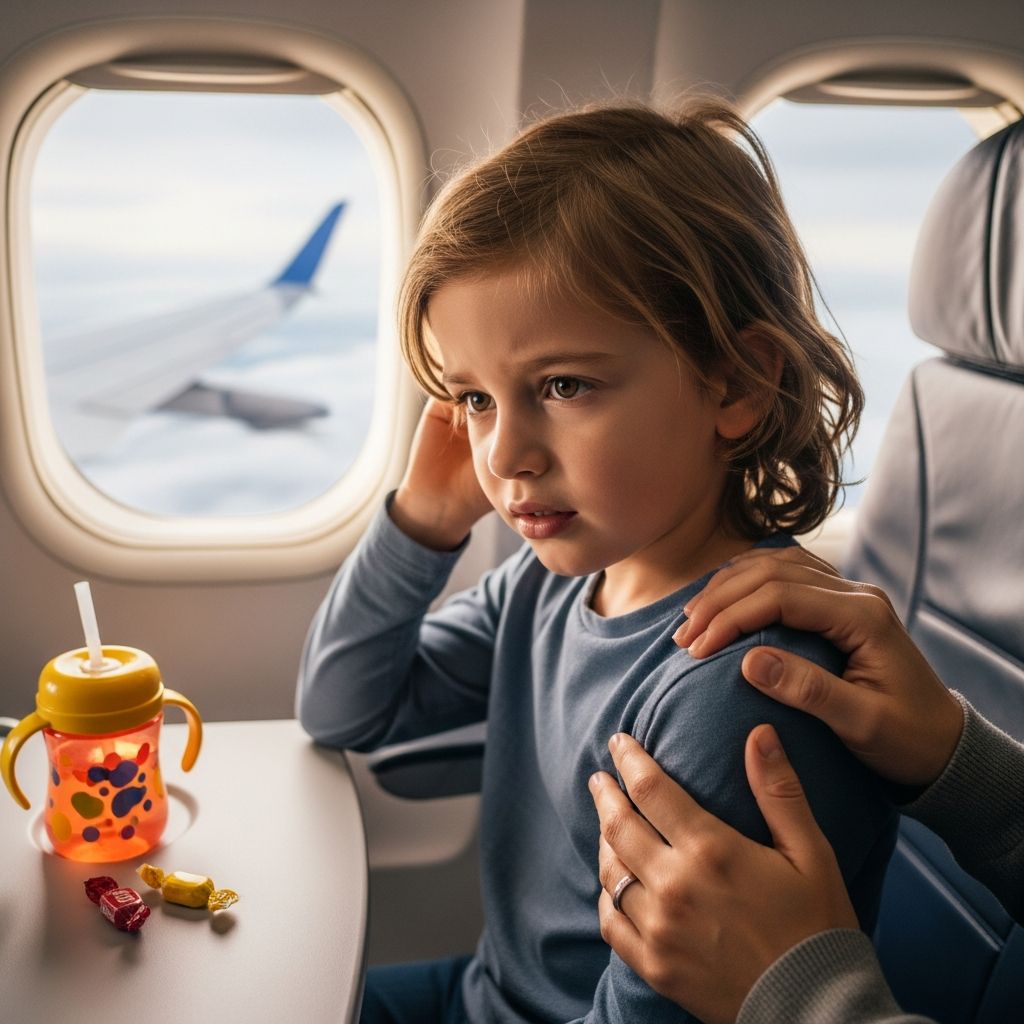
Air travel opens doors to family adventures, but rapid cabin pressure changes during takeoff and landing often cause ear pain known as airplane ear or ear barotrauma in children. This condition arises when the Eustachian tubes, which regulate middle ear pressure, fail to adjust quickly enough, leading to discomfort or pain. Children’s shorter, more horizontal Eustachian tubes make them particularly vulnerable.
Understanding the Science Behind Flight Ear Pain
During ascent, decreasing external pressure allows middle ear air to expand and escape through the Eustachian tube, often causing a popping sensation. Descent poses greater challenges as increasing pressure pushes against the eardrum if the tube doesn’t open to admit air, resulting in fullness, muffled hearing, or sharp pain. Infants and toddlers cry frequently during landing due to this imbalance, but the pain is temporary and rarely causes lasting damage unless an infection is present. Kids with ear tubes experience less issues as these bypass natural tube function.
Proactive Preparation Before Boarding
Preparation starts days before the flight. Hydration thins mucus, easing tube function—encourage water intake while avoiding caffeine. If congestion from colds or allergies looms, consult a pediatrician about decongestants like oxymetazoline nasal spray 20-30 minutes pre-descent or oral pain relievers such as acetaminophen or ibuprofen. Delay flights with active ear infections to prevent eardrum rupture. Pack child-sized pressure-regulating earplugs, available at pharmacies, to slow pressure shifts.
Real-Time Strategies During Takeoff and Landing
The critical windows are ascent and descent. Keep children awake, as sleep reduces swallowing frequency essential for pressure equalization.
- For Infants (0-2 years): Offer breast milk, formula bottle, or pacifier to promote sucking and swallowing. Position upright during feeding to avoid choking.
- For Toddlers (2-5 years): Provide sippy cups with water, sugar-free gum, or hard candies (if age-appropriate) to encourage chewing and swallowing.
- For School-Age Kids (6+): Teach yawning, frequent sips, or the Valsalva maneuver—pinch nose, close mouth, gently blow to force air into tubes. Demonstrate and practice beforehand.
Demonstrate techniques mid-flight to build familiarity. Distraction with toys, snacks, or screens reduces anxiety, which can exacerbate pain perception.
Advanced Techniques for Persistent Issues
Filtered earplugs like EarPlanes create a gradual pressure buffer, ideal for sensitive ears. For recurrent sufferers, pre-flight antihistamines or nasal steroids may reduce inflammation if recommended by a doctor. Toynbee maneuver—pinch nose, swallow with mouth closed—offers another option for older kids. Avoid forceful blowing to prevent injury.
Age-Specific Advice Table
| Age Group | Primary Methods | Additional Tips |
|---|---|---|
| Infants (0-12 months) | Pacifier, nursing, bottle | Wake if sleeping during descent; stay hydrated |
| Toddlers (1-3 years) | Sippy cup, pacifier, light snacks | Encourage yawning; avoid sleep |
| Preschoolers (4-6 years) | Gum, candy, swallowing drinks | Simple Valsalva; games for distraction |
| School-Age (7+) | Valsalva, yawning, earplugs | Pain meds 30 min prior if needed |
Common Mistakes to Avoid on Flights
Letting kids sleep through pressure changes hinders natural equalization. Overlooking hydration thickens mucus. Flying congested without meds risks severe pain. Don’t use adult earplugs on small ears or exceed medication doses—always follow labels or doctor advice. Skipping pre-boarding pain relief for known sufferers prolongs discomfort.
When to Seek Medical Advice
Mild cases resolve post-landing, but persistent pain, hearing loss, dizziness, or discharge warrants a doctor visit to rule out infection or barotrauma complications. Children with frequent ear issues or tubes should get clearance pre-flight.
Real Parent Experiences and Expert Insights
Many parents report success combining methods: one notes pacifiers transformed landings for their baby, while another credits earplugs for a pain-free trip with a congested toddler. Pediatric ENT specialists emphasize timing—start interventions 20-30 minutes before descent, as it can last up to an hour.
Frequently Asked Questions (FAQs)
Can airplane ear cause permanent damage in kids?
No, it’s typically temporary without infection; tubes equalize pressure naturally soon after.
Is it safe to give pain meds before flying?
Yes, acetaminophen or ibuprofen 30 minutes prior per package dosing, but consult doctor for infants.
What if my child has a cold?
Use decongestants if approved; otherwise, delay flight to avoid worsened blockage.
Do earplugs work for babies?
Child-sized versions do; insert pre-takeoff per instructions.
How long does descent discomfort last?
Usually minutes once tubes open; proactive steps shorten it.
Long-Term Tips for Frequent Flyers
For families traveling often, monitor ear health annually. Eustachian tube function improves around age 5. Maintain hydration routines and pack a ‘flight kit’ with pacifiers, gums, earplugs, and meds. Practice maneuvers at home to desensitize kids.
By anticipating pressure changes and employing these evidence-based tactics, parents can transform potentially tearful flights into pleasant journeys. Safe travels!
References
- How to Prevent Airplane Ear in Kids and Adults — NAENTA. 2023. https://naenta.com/how-to-prevent-airplane-ear-in-kids-and-adults/
- Airplane Earaches – Preventing Flight Pain — The Youth Clinic. 2023. https://youthclinic.com/airplane-earaches-preventing-flight-pain/
- Traveling with children — MedlinePlus, U.S. National Library of Medicine. 2024-05-01. https://medlineplus.gov/ency/article/002427.htm
- Flying and Your Child’s Ears — Nemours KidsHealth. 2023. https://kidshealth.org/en/parents/flying-ears.html
- Tips for flying with kids — UT Physicians. 2023. https://www.utphysicians.com/tips-for-flying-with-kids/
- Protecting Your Child’s Ears During an Airplane Flight — Washington University School of Medicine, Dept. of Otolaryngology. 2020-04-01. https://oto.wustl.edu/app/uploads/2020/04/Protect-Ears-During-Flight-1-10.pdf
- Keep Your Ears Comfortable on Your Next Flight — ColumbiaDoctors. 2023. https://www.columbiadoctors.org/news/keep-your-ears-comfortable-your-next-flight