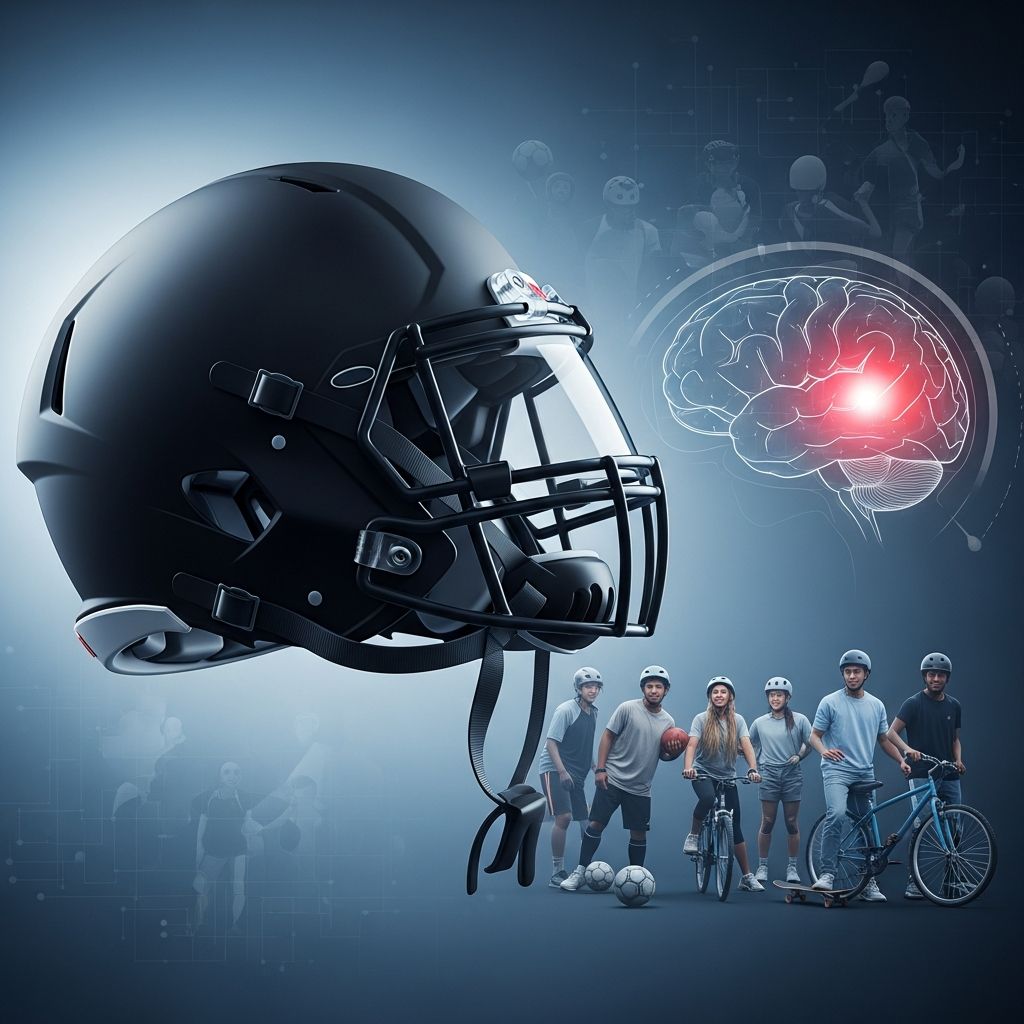
Helmets are everywhere in teen life – on the field, at the skate park, on the slopes, and on the road. They look tough and protective, so it is easy to assume that wearing one makes you completely safe from head injuries. The truth is more complicated: helmets play a huge role in safety, but no helmet can completely prevent concussions.
This guide breaks down what helmets actually do, why concussions can still happen, and how you can use gear, habits, and smart decisions together to better protect your brain.
Understanding Concussions in Simple Terms
A concussion is a type of brain injury caused by the brain moving quickly back and forth inside the skull. This usually happens after a hit to the head, face, neck, or even a hard hit to the body that makes the head jerk suddenly.
- The brain is soft tissue surrounded by protective fluid inside a hard skull.
- When the head suddenly stops or changes direction, the brain can bump into the skull.
- This impact can change how brain cells work for a short time, leading to symptoms.
Concussions are usually described as “mild” brain injuries because they are rarely life-threatening, but they are still serious. They can affect memory, mood, balance, sleep, and school performance for days or weeks.
What Helmets Are Designed to Do
Helmets are built to protect against the kinds of injuries most likely to cause immediate, severe damage. Different activities use different designs, but most helmets share basic parts:
- Hard outer shell to spread the force of a hit over a wider area.
- Inner padding or foam to absorb some of the impact energy.
- Straps and fit systems to keep the helmet in the right position.
Because of this design, helmets can greatly reduce the risk of injuries like skull fractures, cuts on the head, and some types of severe brain trauma. They are especially important in activities where falls, collisions, and high speeds are common.
| Helmets Are Very Good At | Helmets Are Not Good At |
|---|---|
| Reducing the chance of skull fractures from direct blows. | Stopping the brain from moving inside the skull. |
| Protecting the scalp from cuts and serious bruises. | Eliminating the risk of concussion after a hard impact. |
| Lowering the risk of some life-threatening head injuries. | Letting you take bigger risks safely or making dangerous hits “okay.” |
Why No Helmet Can Be Fully “Concussion-Proof”
Many people assume that if a helmet can handle a strong hit, it can also stop concussions. The problem is that concussions are not only about the strength of a blow, but also about how quickly the head speeds up, slows down, and twists.
- Helmets mainly reduce the force that reaches the skull, not the movement of the brain inside it.
- A hard hit to the body can snap the head back and forth, causing a concussion even when the helmet is never directly struck.
- Rotational forces (twisting of the head) are especially tricky for helmets to control completely.
New helmet designs and technologies try to reduce how much force reaches the brain, but there is currently no gear that can guarantee zero concussions. Any product or ad that promises complete concussion prevention should be viewed with skepticism.
Common Myths About Helmets and Concussions
Misinformation can make people feel safer than they really are or convince them not to wear helmets at all. Clearing up myths helps you make smarter choices.
- Myth 1: “If I wear a helmet, I can’t get a concussion.”
Reality: Helmets reduce some risks but do not remove the possibility of a concussion. Powerful impacts or whiplash-type movements can still cause injury. - Myth 2: “More expensive helmets always prevent concussions better.”
Reality: Price does not automatically equal better protection. A correctly fitted, certified helmet that is in good condition can be just as effective as a high-end model for many activities. - Myth 3: “If I don’t black out, it’s not a concussion.”
Reality: Most concussions do not involve loss of consciousness. Symptoms can be subtle at first and build over hours. - Myth 4: “Only contact sports players need to worry.”
Reality: Concussions can happen in non-contact sports, physical education, biking, skateboarding, or even during everyday accidents.
Signs and Symptoms You Should Never Ignore
Recognizing a concussion early is one of the most important safety skills you can have. Symptoms can show up right away or slowly over several hours.
Physical symptoms
- Headache or a feeling of pressure in the head.
- Dizziness, balance problems, or feeling unsteady.
- Nausea or vomiting.
- Blurred or double vision, or sensitivity to light or noise.
- Feeling tired, sluggish, or “drained.”
Thinking and mood changes
- Feeling confused, “in a fog,” or having trouble focusing.
- Memory problems, like not remembering the play, fall, or what happened right before.
- Slower thinking or difficulty answering questions quickly.
- Feeling irritable, sad, emotional, or more anxious than usual.
If you or a teammate has any of these after a hit or fall, it is important to speak up, even if the symptoms seem mild. Continuing to play while injured can make symptoms worse and recovery slower.
When a Helmet Still Makes a Huge Difference
Even though helmets cannot stop every concussion, wearing one can be the difference between a serious injury and a minor one. Certain activities have a much higher risk of head impacts, and going without a helmet in those situations is extremely risky.
- Cycling or mountain biking.
- Skateboarding, scootering, or inline skating.
- Skiing and snowboarding.
- Contact and collision sports like football, hockey, and lacrosse (when helmets are part of the rules).
Think of a helmet as your first layer of protection. It does not give permission to act recklessly, but it does give your head a better chance if something goes wrong.
How to Choose and Fit a Helmet That Actually Helps
A badly fitted helmet can slide around, expose parts of the head, or even come off during a crash. Getting the basics right matters just as much as owning the helmet in the first place.
Steps to pick the right helmet
- Match the helmet to the activity. Use bike helmets for biking, snow helmets for skiing or snowboarding, and sport-specific helmets for organized teams when required.
- Look for safety certification labels. This shows the helmet has been tested to meet standards for that activity.
- Check for damage. Avoid helmets with cracks, crushed foam, or straps that are frayed or broken.
Fit checklist
- The helmet sits level on your head, not tilted back or forward.
- The front edge is low enough to cover your forehead, usually about two finger-widths above your eyebrows.
- Side straps form a “V” shape under and slightly in front of your ears.
- The chin strap is snug. When you open your mouth wide, you should feel the helmet pull down slightly.
- The helmet does not move easily when you shake or nod your head.
Helmets are not meant to last forever. If you are in a significant crash, the foam inside may be compressed in ways you cannot see. That usually means it is time to replace the helmet, even if the outside still looks okay.
Smart Habits That Protect Your Brain Beyond Helmets
Real brain safety comes from combining good equipment with smart behavior and a supportive team culture. Helmets are just one part of the picture.
- Follow the rules of the game. Safety rules exist to limit dangerous hits, high sticks, checking from behind, or tackling out of bounds.
- Learn and use proper technique. Keeping your head up, avoiding using your head as a weapon, and practicing safer tackling or checking forms reduce risk.
- Respect practice limits. Too many full-contact practices can add up to more impacts over time.
- Speak up about symptoms. Tell a coach, athletic trainer, or parent if you feel off after a hit.
- Support teammates who report injuries. No one should be teased or pressured for taking a concussion seriously.
What to Do Right After a Suspected Concussion
If you think you or someone else may have a concussion, the safest move is to stop playing right away. More activity can make symptoms worse and may put the brain at risk for more serious complications.
- Remove from play immediately. Do not return to the game, practice, slope, or skate session the same day when a concussion is suspected.
- Tell an adult you trust. This might be a coach, athletic trainer, school nurse, or parent.
- Get checked by a health professional. A doctor or other trained provider can evaluate symptoms, ask questions, and decide what steps come next.
- Follow the recommended rest and recovery plan. This may include time away from screens, school adjustments, and a gradual return to physical activity.
Ignoring symptoms or hiding an injury to stay in the game might feel tough in the moment, but your brain will be with you long after one season ends. Protecting it is always worth missing a few plays.
Talking to Parents, Coaches, and Friends About Helmet Use
Sometimes, pressure from friends or the desire to look “cool” leads people to skip helmets or downplay injuries. Starting honest conversations can change that culture.
- With parents: Explain that you want to stay active and safe, and ask for help getting properly fitted, sport-appropriate gear.
- With coaches: Ask about your team’s rules on reporting symptoms, returning to play, and limiting unnecessary contact in practice.
- With friends: Remind them that serious brain injuries can affect school, driving, sports, and career dreams. A helmet on your head is better than one hanging from your handlebars.
Frequently Asked Questions (FAQs)
1. If helmets don’t stop all concussions, why bother wearing one?
Helmets significantly lower the risk of serious, life-threatening head injuries and can reduce how severe some impacts are. Even if they cannot guarantee that you will never get a concussion, they give your brain and skull much more protection than going without one.
2. Can I keep using my helmet after a crash if it looks fine?
Not always. The foam inside many helmets is designed to crush and absorb force during a big impact. Once it has done that job, it may not protect as well the next time, even if there are no obvious cracks or dents outside. For major falls or collisions, it is usually safest to replace the helmet.
3. Do soft caps or thin headbands count as concussion protection?
Some sports use padded headbands or soft headgear to reduce bumps and cuts, but these usually do not meet the same standards as hard-shell helmets. They may provide some extra cushioning, but they should not be seen as a replacement for proper helmets where those are recommended or required.
4. How long does it take to recover from a concussion?
Recovery time is different for everyone. Many teens start to feel better within a couple of weeks, but some symptoms can last longer, especially if the person returns to full activity too soon. Following medical advice, resting properly, and slowly easing back into school and sports usually leads to better results.
5. Is it okay to take pain medicine and keep playing if my head hurts?
Using medicine to hide a headache and continue playing is risky. Pain relief can make it harder to notice how serious your symptoms are, and continuing activity with a possible concussion can make the injury worse. It is better to stop, get evaluated, and return only when it is medically safe.
Key Takeaways for Teen Athletes
- Helmets are essential for many activities because they reduce the risk of severe head injuries.
- No helmet can completely prevent concussions, because they cannot stop the brain from moving inside the skull.
- Smart choices, honest communication, proper technique, and a culture that respects injuries are just as important as good gear.
Your brain helps you think, feel, learn, move, and connect with people. Treating it with care – by using helmets correctly, reporting symptoms, and respecting safety rules – is one of the strongest ways to protect your future, both in and out of sports.