When a child gets hurt, even a small cut or bump can feel like a big emergency. Having a well-stocked, easy-to-find first aid kit helps caregivers act quickly, reduce panic, and treat many minor problems at home.
Why Every Family Needs a First Aid Kit
A thoughtfully prepared first aid kit turns chaos into calm. Instead of searching drawers for bandages or medicine, everything you need is gathered in one place. This saves time, reduces stress, and keeps kids reassured that adults know what to do.
Beyond convenience, a kit also supports safer care. Clean supplies, age-appropriate medications, and clear instructions help you treat minor injuries correctly and avoid making problems worse. In more serious situations, a good kit buys precious minutes while you wait for professional help.
Choosing the Right Container
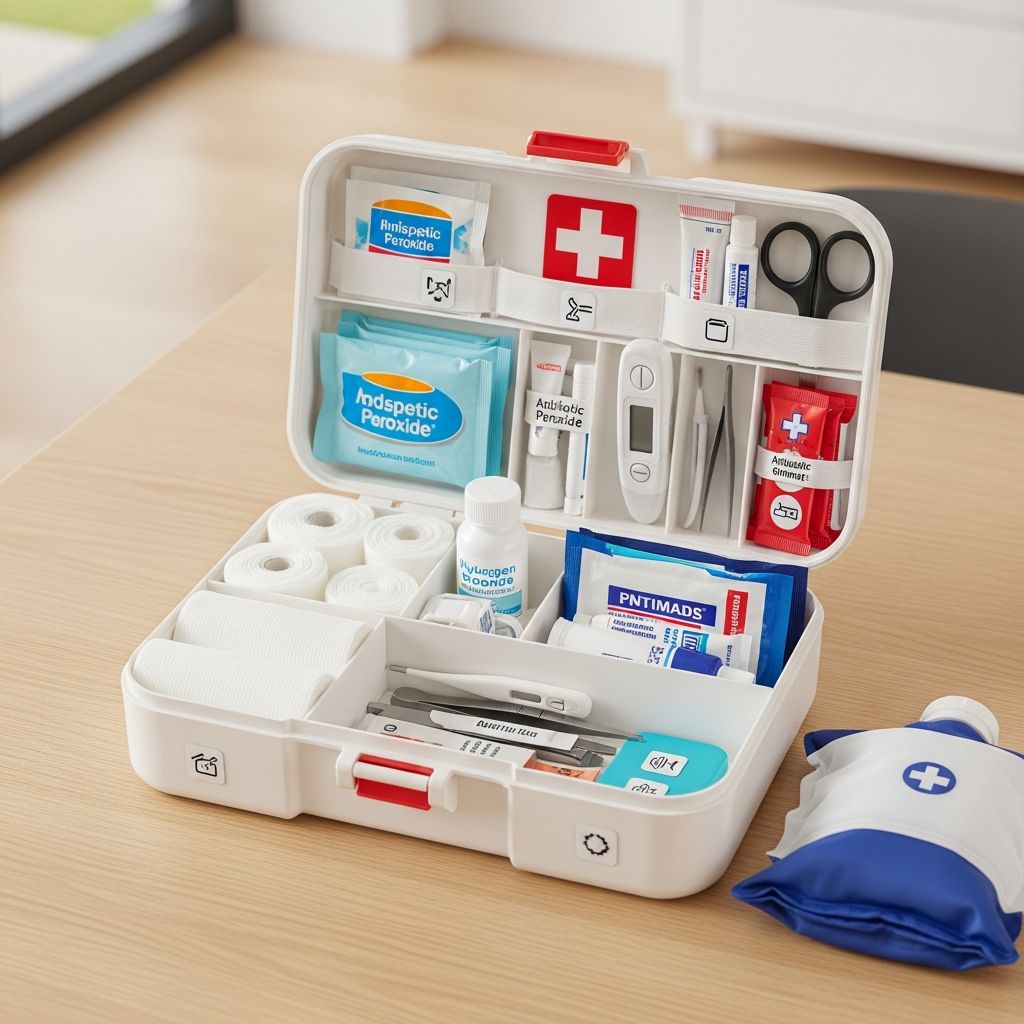
The best first aid kit container is easy to spot, simple to carry, and protects its contents from moisture and dust. Many families use a bright plastic box, a small toolbox, or a soft-sided bag with compartments.
- Visibility: Choose a bold color or add a clear label like “FIRST AID” so anyone can find it quickly.
- Durability: Pick a container that closes securely and can tolerate being moved, dropped, or stored in a car trunk.
- Compartments: Dividers or small pouches help keep items organized so you are not digging for what you need.
Consider keeping a smaller travel version in your car, diaper bag, or sports bag, using a zippered pouch or lunchbox-style container for on-the-go care.
Core Supplies for Cuts, Scrapes, and Bleeding
Most family injuries are minor skin wounds: scraped knees, small cuts, or blisters. Stock your kit with items that help clean, protect, and cover these everyday problems.
- Adhesive bandages in several sizes for small cuts and blisters.
- Sterile gauze pads for larger scrapes or areas that need padding.
- Roller gauze or elastic wrap to hold dressings in place.
- Medical adhesive tape that is gentle on skin but secure.
- Non-stick pads for wounds that should not stick to regular gauze.
For best results, keep wound-care supplies in their own section of the kit. That way, when blood is involved, you can find them quickly without sorting through medicines and tools.
Cleaning and Infection-Prevention Items
Cleaning a wound before covering it lowers the risk of infection and helps it heal faster. The goal is gentle cleansing without harsh scrubbing that damages tissue.
- Antiseptic wipes or solution for cleaning the skin around a cut.
- Saline or clean water for rinsing dirt and debris out of wounds.
- Mild soap (travel-sized) if you do not have single-use wipes.
- Antibiotic ointment or cream to apply a thin protective layer after cleaning.
- Alcohol-based hand sanitizer so helpers can clean hands when soap and water are not available.
Use fresh, single-use items whenever possible to avoid contaminating the rest of the kit. Never reuse gauze or wipes, and discard anything that becomes visibly dirty or wet.
Tools That Make Care Easier and Safer
Simple tools help you handle splinters, remove bandage backing, cut tape, and see what you are doing. Keep these items in a small inner container or side pocket within the kit.
- Tweezers: For removing splinters, glass slivers, or stingers.
- Small scissors: For cutting tape, gauze, or clothing around an injury.
- Digital thermometer: For checking a child’s temperature accurately.
- Disposable gloves: Non-latex gloves to protect both caregiver and child when dealing with blood, vomit, or other body fluids.
- Flashlight or headlamp: For checking injuries in low light or during power outages.
- Small notepad and pen: To record medication times, symptoms, or instructions given by a healthcare provider.
Teach older children and other caregivers how to use these tools safely. For example, stress that scissors and tweezers should only be used with adult guidance.
Medications to Consider for Your Kit
Over-the-counter medications can help manage pain, fevers, allergies, and everyday stomach issues. Always talk with a healthcare professional before adding new medicines, especially for infants and young children.
| Type of Medicine | What It Helps With | Important Notes |
|---|---|---|
| Pain relievers / fever reducers (e.g., acetaminophen, ibuprofen) | Fever, headaches, muscle aches, minor injuries | Use child-specific formulas and dosing tools; avoid aspirin in children unless directed by a doctor. |
| Antihistamines | Mild allergic reactions, sneezing, itchy eyes, hives | Check age limits and dosing; know signs of severe allergy that require emergency care. |
| Hydrocortisone cream | Rashes, insect bites, mild skin irritation | Use thin layers and follow package directions, especially on young children. |
| Antacid or stomach relief medication | Mild heartburn or indigestion in older kids and adults | Not usually for young children unless a provider recommends it. |
| Oral rehydration solution packets | Mild dehydration from vomiting or diarrhea | Mix with clean water as directed; watch closely for signs of severe dehydration. |
Always keep medications in original containers so dosing information, age restrictions, and ingredients are easy to read. Include a dosing syringe or medicine cup to measure liquid medicines accurately.
Comfort and Skin-Soothing Supplies
Not every item in a first aid kit is about emergencies. Some are about comfort, easing distress, and helping kids feel better while they heal. Including a few soothing products can make a big difference in how a child experiences an injury.
- Aloe gel or cooling lotion for mild sunburns.
- Itch-relief lotion or gel for insect bites and mild rashes.
- Instant cold packs for bumps, sprains, and bruises.
- Soft tissues for runny noses or tearful moments.
- A small, child-friendly distraction item, such as a sheet of stickers or a tiny toy, to reduce fear during care.
These extras are not strictly necessary for survival, but they can help keep children calmer and more cooperative, which in turn helps adults give better care.
Information to Keep Inside the Kit
A powerful but often overlooked part of a first aid kit is printed information. In an emergency, having phone numbers and written instructions close at hand can prevent delays and confusion.
- Phone numbers for pediatrician, family doctor, local emergency services, and poison control.
- A brief list of each family member’s allergies and ongoing medications.
- Copies of any special medical instructions for children with chronic conditions (such as asthma or severe allergies).
- Simple written steps for common situations, like treating a nosebleed or cleaning a cut.
Laminate these pages or place them in a plastic sleeve to protect them from moisture. Update them whenever contact information changes, or when a family member starts or stops a significant medication.
Where to Store Your First Aid Kit
The ideal location for a home first aid kit uses one rule: easy for adults to reach, hard for small children to access. Many families choose a high shelf in the kitchen, hallway, or main bathroom.
- Avoid storing the kit in a locked area that takes time to open, unless safety risks demand it.
- Do not place the kit where temperatures swing widely, such as in a hot garage, near a stove, or in a damp basement.
- Use the same spot consistently and tell all caregivers where the kit is kept.
If you keep a kit in your car, try to refresh temperature-sensitive items regularly, because heat and cold can reduce the effectiveness of medicines and adhesive products.
Checking and Updating Your Kit
A first aid kit is not a one-time project. Supplies get used, medicine expires, and family needs change. Plan to review the kit at least twice a year, or more often if you use it regularly.
- Check expiration dates on all medicines and ointments; safely discard and replace anything out of date.
- Replace bandages, gauze, and wipes that look worn, dirty, or damaged.
- Review written information and phone numbers for accuracy.
- Add items that match new situations, such as sports-related supports or special medications for a new diagnosis.
Consider syncing your kit checks with other household safety routines, such as testing smoke alarms or reviewing fire escape plans.
Teaching Kids About First Aid Safely
Children are naturally curious about bandages and medicines. Rather than hiding the kit completely, involve them in age-appropriate ways so they understand what it is for and how to use it safely.
- Show young children how to ask for a grown-up if someone is hurt.
- Explain that only adults give medicine, even if bottles look familiar or tasty.
- Practice simple scenarios, such as bringing the kit to a parent when a sibling falls.
- Teach older kids basic skills like washing a scrape, applying a small bandage, and reading labels.
This kind of education builds confidence and helps children feel prepared, not frightened, when accidents happen.
Special Situations: Customizing Your Kit
Every family is different, and a basic kit sometimes needs extra items to meet specific health needs. Think about your household, activities, and environment when personalizing your supplies.
- For children with severe allergies, include prescribed emergency medication and an action plan.
- For families involved in outdoor sports, consider extra blister care, ankle supports, and sun protection.
- For infants, add items like bulb syringes, age-appropriate fever reducers, and diaper rash ointment (with guidance from a healthcare provider).
- For homes far from medical care, consider a more advanced kit and formal first aid training.
When in doubt about adding specialized items, ask your child’s healthcare provider what is most helpful and safe for your situation.
Frequently Asked Questions
How many first aid kits does a family need?
Most families benefit from at least two kits: a main one at home and a smaller version for the car or outings. The home kit can be larger and more complete, while the travel kit focuses on essentials like bandages, cleansing wipes, a pair of gloves, and basic medicine.
What should never be kept in a child-accessible kit?
Prescription medicines, sharp tools, and any product that could be dangerous if swallowed should always be out of reach of young children. If your kit includes these items, store it in a place that is high and, if necessary, secured with a child safety latch.
Can household items substitute for a formal kit?
In an emergency, clean cloths, tape, and water can be useful, but they are not as reliable as a planned kit. A dedicated first aid kit ensures supplies are clean, organized, and ready at a moment’s notice, rather than scattered across different rooms.
How do I know when to call a doctor instead of using the kit?
Use your kit for minor injuries like small cuts, scrapes, mild burns, and occasional headaches. Call a healthcare provider or emergency services if bleeding will not stop, a wound is very deep or large, a child has trouble breathing, shows signs of a serious allergic reaction, or seems unusually sleepy, confused, or in severe pain.
Is it worth taking a first aid class?
Yes. A class gives you hands-on practice and teaches you how to stay calm and focused during emergencies. Combining a solid first aid kit with basic training offers your family the best protection when unexpected injuries or illnesses occur.