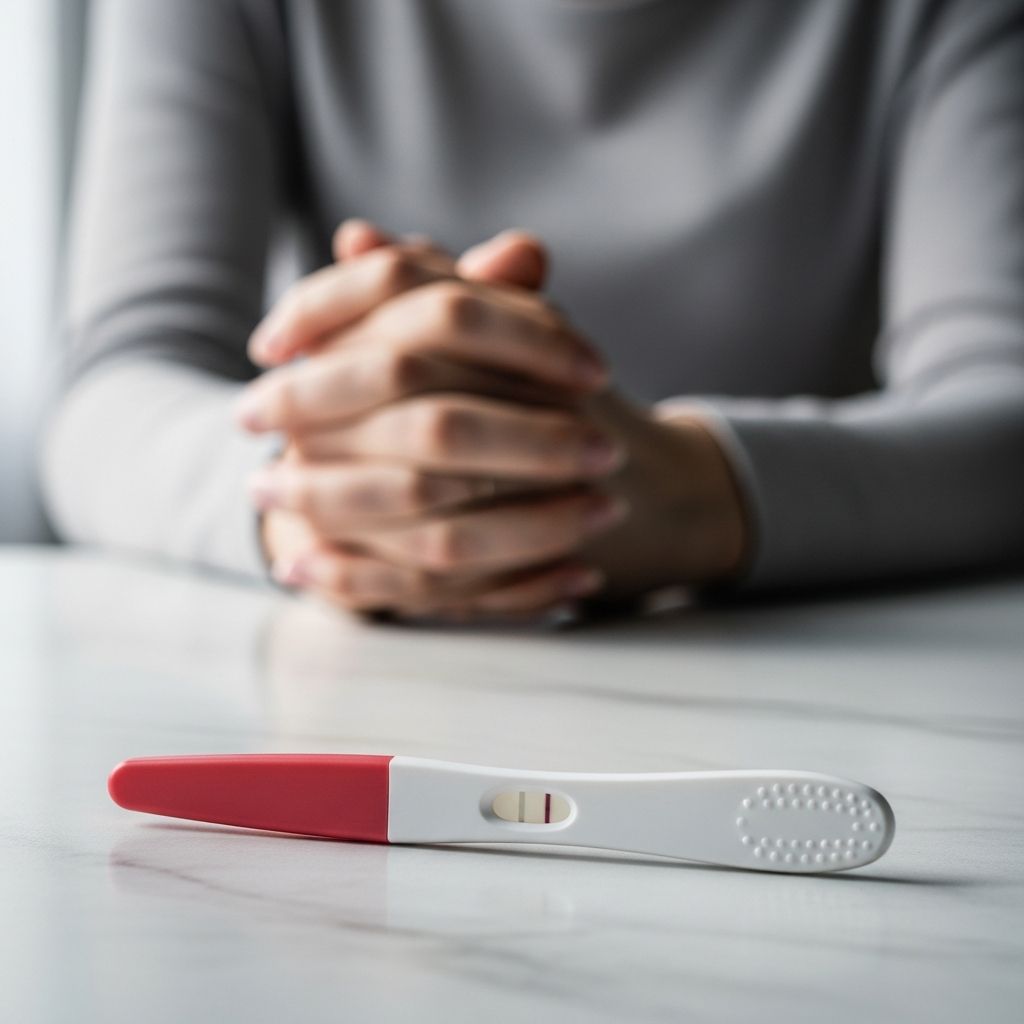
Seeing a barely-there second line on a pregnancy test can be exciting, confusing, or downright stressful. This guide explains what that faint line usually means, why it happens, how to tell it from a faulty result, and what to do next so you can move forward with clarity.
How Home Pregnancy Tests Work (In Simple Terms)
Most at-home pregnancy tests work by detecting a hormone called human chorionic gonadotropin (hCG) in your urine. This hormone is produced after a fertilized egg implants in the lining of the uterus, and it rises in the early weeks of pregnancy.
Test sticks or strips are coated with antibodies that react when they come into contact with hCG. If the hormone is present at or above the test’s sensitivity level, a colored line or symbol appears in the result window to indicate pregnancy.
- Control line: Shows the test worked correctly.
- Result line: Appears (usually in color) if hCG has been detected.
- Faint result line: Often indicates early pregnancy when hCG is still low.
What a Faint Line Usually Means
In most cases, a faint but colored line in the result window means the test has detected some hCG, which strongly suggests pregnancy. The line appears lighter because the amount of hormone in your urine is close to the lower limit the test can detect.
Remember that pregnancy tests are designed to show either presence or absence of hCG. The depth of color does not directly measure how far along you are or how healthy the pregnancy is.
- Any colored line within the recommended reading time is typically considered a positive result.
- A faint line that appears after the test has sat for too long is more likely to be an evaporation or drying line, not a reliable result.
Common Reasons for a Faint Line
Several factors can cause a pregnancy test line to look light or barely visible. Understanding these helps you decide what to do next and whether to repeat the test.
1. Very Early Pregnancy
If you test a few days before or just after a missed period, your hCG level may still be low but rising. That often produces a faint line that tends to darken over the next 48–72 hours as the hormone increases.
- You may be 3–4 weeks from your last menstrual period when a very faint line first appears.
- Retesting in two days with first-morning urine often shows a clearer, darker line if pregnancy is progressing.
2. Diluted Urine
Drinking a lot of fluids before testing can water down your urine and lower the detectable concentration of hCG, which can make the result line look faint even if you are pregnant.
- Testing later in the day after heavy fluid intake can produce weaker lines.
- Using your first urine of the morning, which is more concentrated, generally gives stronger, clearer results.
3. Testing Too Soon After Implantation
Implantation typically happens about 6–12 days after ovulation, but there is individual variation. If you test right after implantation, the hormone has only just begun to appear and may not yet produce a bold line.
- Early-response tests can pick up lower levels of hCG but are more likely to show faint lines.
- Waiting at least a day or two after a missed period usually reduces the chance of confusion from a faint result.
4. Less-Sensitive Test Brands
Not every test has the same sensitivity. Some only register a positive when hCG is above a higher threshold, so when you are just pregnant, the result line may appear lighter on these tests compared with more sensitive brands.
5. Recent Pregnancy or Fertility Treatment
If you have recently been pregnant, experienced a very early loss, or received fertility medications that contain hCG, small amounts of the hormone can linger for a short time and cause faint positives.
- hCG from a previous pregnancy or injection can take days or weeks to fully clear.
- A line that does not get darker or disappears on later tests may reflect declining hormone from a prior pregnancy event.
Faint Positive vs. Evaporation Line vs. Indent
One of the biggest worries with a faint line is whether it is a true positive or just an artifact on the test. Learning to recognize the differences can provide peace of mind and help you interpret results more accurately.
| Type of Line | Timing | Color | What It Usually Means |
|---|---|---|---|
| Faint positive result line | Appears within the test’s recommended reading window | Light pink, blue, or the dye color used on the test | Likely indicates early pregnancy with low but detectable hCG |
| Evaporation line | Shows up after the reading window has passed | Usually gray, colorless, or streaky | Caused by drying; not a reliable indicator of pregnancy |
| Indent line | Visible on some tests before use or immediately after urine passes | Colorless groove where dye travels | Part of the test strip structure; does not indicate pregnancy |
Always check your test result within the time frame listed in the instructions, often between three and ten minutes. Anything that appears after that window should be viewed with caution and confirmed with a new test if needed.
Can a Faint Line Be Wrong?
True false positives are uncommon when tests are used correctly, but they can happen. A faint line might not always mean an ongoing pregnancy, and it is possible to see a faint line one day and a negative test later.
Situations That Can Lead to Misleading Faint Lines
- Chemical pregnancy: A very early pregnancy loss shortly after implantation, where hCG briefly rises, then falls again.
- Recent miscarriage or birth: hCG may still be present in your system for some time after the pregnancy has ended.
- hCG-containing medications: Some fertility injections include hCG and can cause a faint positive until the drug clears your body.
- Improper test use: Not following instructions, using expired tests, or exposing the test strip to excess moisture can distort results.
If you keep getting faint lines that do not get darker, or if your line disappears on later tests, it is wise to contact a healthcare professional to discuss what may be happening.
Step-by-Step: What to Do After a Faint Line
Once you see a barely-there second line, it helps to have a clear, simple plan. The following steps can guide you through the next few days.
- Check the instructions: Confirm you are reading the result at the correct time and in the correct way for your specific brand.
- Confirm the line has color: If the second line is the same dye color (even if very light) and within the time window, treat it as likely positive.
- Wait 48 hours and retest: Use first-morning urine, avoid excessive fluids before testing, and use the same brand if possible for easier comparison.
- Track line progression: Take photos under similar lighting to compare how the line changes over time, but remember that slight variations do not always signal a problem.
- Book a medical appointment: If your test remains faint, is confusing, or if you have symptoms like bleeding or severe pain, contact your healthcare provider.
For the most definitive answer, a blood test ordered by a healthcare provider can measure the exact level of hCG in your blood and track whether it is rising appropriately.
Best Practices for Testing to Avoid Confusing Faint Lines
While you cannot eliminate every possible uncertainty, a few simple habits make it more likely you will get a clear result the first time.
- Test no earlier than the first day of your missed period when possible.
- Use first-morning urine, which is typically more concentrated.
- Limit fluids for a few hours before testing if you are testing later in the day.
- Follow the timing guidelines closely: do not read the test too early or too late.
- Check the expiration date and store tests as recommended on the package.
- Consider using a digital test as a follow-up if faint lines are causing significant stress.
Emotional Side of Faint Test Lines
Seeing a faint line often comes with a surge of emotion—hope, fear, confusion, or all three at once. These feelings are normal, especially if you have been trying to conceive or have experienced loss before.
It may help to talk with a partner, trusted friend, or support group while you wait to retest or see a doctor. Practicing stress-reducing activities, such as gentle movement, journaling, or focused breathing, can also make the waiting period more manageable.
Frequently Asked Questions About Faint Lines
Does any faint line mean I am pregnant?
If a faint colored line appears within the recommended reading time, it usually means the test has detected hCG and you are probably pregnant. However, early losses or testing errors can occasionally create positive results that do not reflect an ongoing pregnancy.
How soon should I retest after a faint line?
Waiting about 48 hours before taking another test is a reasonable rule of thumb. In early pregnancy, hCG typically rises enough over two days to make the line darker or more obvious on a new test.
Can a faint line ever mean I am not pregnant?
Yes, it is possible, though less common. An evaporation line that appears after the reading window, residual hCG from a recent pregnancy, or certain fertility medications can create a faint line even when there is no ongoing pregnancy.
What if my faint line does not get darker?
If repeated tests over several days show a line that stays very faint or begins to fade, contact your healthcare provider. This pattern can sometimes be associated with a chemical pregnancy or other issues that need medical guidance.
Should I rely on line darkness to judge pregnancy health?
Home tests are not designed to measure the quality or health of a pregnancy based on how dark the line looks. Only a healthcare provider can properly evaluate pregnancy progress with blood tests, ultrasound, and clinical assessment.
Is a digital test better if I keep getting faint lines?
A digital test that displays words like “pregnant” or “not pregnant” can reduce confusion about faint lines. Many people find this reassuring, especially after having trouble interpreting traditional test strips.
Key Takeaways
- A faint, colored line read within the correct time window usually suggests early pregnancy.
- Lines that appear late or look gray and colorless are more likely to be evaporation lines.
- Retesting after 48 hours with first-morning urine can clarify whether hCG levels are rising.
- For definitive answers or if you have worrying symptoms, a healthcare provider and blood testing are the next best steps.