After birth, your body sheds blood and tissue called lochia, which can be heavier and last longer than a normal period. Choosing the right postpartum pads helps keep you dry, protects stitches, and supports healing while you care for your newborn.
This guide walks you through the types of postpartum pads, what to pack for the hospital and home, and how to stay as comfortable as possible during the fourth trimester.
Understanding Postpartum Bleeding (Lochia)
Lochia is the normal vaginal discharge that follows childbirth as the uterus heals and returns to its pre-pregnancy size. It usually lasts 4–6 weeks but can vary between people.
Typical stages of lochia
- Days 1–3: Lochia rubra – bright or dark red, similar to a heavy period, may contain small clots.
- Days 4–10: Lochia serosa – pinkish or brown, flow gradually lightens.
- Days 10+: Lochia alba – yellowish or whitish discharge, light spotting.
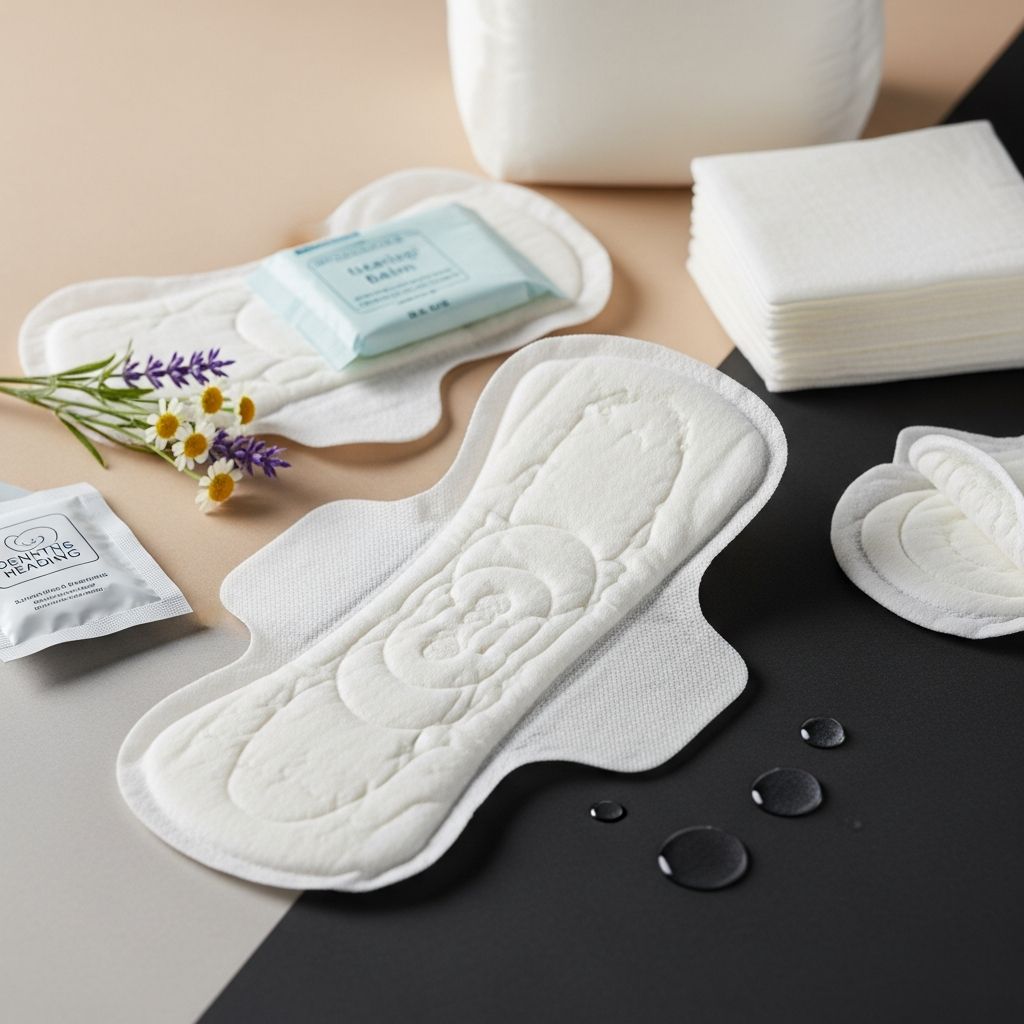
Because the early days can be heavy, regular menstrual pads are rarely enough. Maternity pads are specifically designed to handle the higher volume and different texture of after-birth bleeding.
Why Postpartum Pads Matter More Than Regular Pads
After delivery, especially if you have tears or stitches, the vulva and perineum are extremely sensitive. The wrong product can rub, trap moisture, or irritate wounds.
Key differences from ordinary menstrual pads
- Higher absorbency to manage heavy and unpredictable flow after childbirth.
- Softer, more cushioned topsheets to avoid snagging stitches or irritating tender tissue.
- Longer and wider coverage from front to back to protect against leaks when sitting, standing, or lying down.
- Gentler materials (often cotton-rich, fragrance-free, and chlorine-free) to reduce irritation during healing.
Major Types of Postpartum Pads
Most parents use more than one type of pad as their bleeding changes over time. Understanding the categories helps you build a practical stash without overbuying.
| Pad Type | Best For | Key Advantages | Things to Consider |
|---|---|---|---|
| Heavy-duty maternity pads | First 3–5 days postpartum, hospital stay | Maximum absorbency, full coverage, soft cushioning | Bulky under clothes, usually disposable only |
| Overnight / extra-long pads | Overnight use, moderate-heavy flow | Extended back, good leak protection while lying down | May still feel large for daytime once flow lightens |
| Thin or ultra-thin pads | Later weeks when bleeding tapers | Discreet, more comfortable for moving around | Not adequate for very heavy early bleeding |
| Cooling / ice packs (“padsicles”) | First days for pain, swelling, and bruising | Cold therapy plus absorption, soothing on perineum | Bulkier, not always as absorbent as standard pads |
| Reusable cloth pads | Eco-conscious parents, lighter bleeding phase | Washable, soft fabrics, less waste | Need frequent changes and reliable laundry access |
How Many Postpartum Pads Do You Really Need?
Estimates vary, but most people use more pads in the first two weeks than they expect. Medical sources note that postpartum flow can be heavier than a typical period, especially in the early days.
Suggested starting point
- For the hospital:
- Most hospitals provide heavy maternity pads for the first 24–48 hours.
- Pack 1–2 extra heavy pads in your bag if you want a specific brand.
- For the first 7–10 days at home:
- 24–36 heavy maternity or overnight pads.
- 4–8 cold-therapy or padsicle-style pads if swelling or soreness is a concern.
- Weeks 2–4:
- 24–30 regular or thin pads for lighter but ongoing flow and spotting.
Every body is different. If you have a history of heavy periods or deliver multiples, you may appreciate a larger supply of high-absorbency options.
Key Features to Look For in Postpartum Pads
Rather than chasing brand names, focus on features that match your body, birth experience, and preferences.
1. Absorbency level
- Early days: choose products labeled maternity, post-birth, or super/overnight with high absorbency claims.
- Later weeks: switch to regular or thin pads once bleeding is clearly lighter and no longer soaking pads quickly.
- If you are soaking a large pad in less than an hour or passing very large clots, contact your healthcare provider, as this may signal excessive bleeding.
2. Length and width
- Extra-long pads offer better front-to-back coverage when lying down or getting in and out of bed.
- Winged pads help keep the pad in place as you move and protect the sides of underwear.
- Some postpartum pads are designed with a wider back panel for night use to minimize leaks.
3. Surface material and comfort
- Look for soft, cloth-like topsheets that feel gentle on stitches and swollen tissue.
- Many parents prefer pads that are fragrance-free and free of harsh chemicals; some choose organic cotton options for peace of mind.
- A lightly cushioned pad can double as a soft barrier between sutures and the pressure of sitting.
4. Breathability and skin health
- Good airflow helps reduce moisture buildup and irritation.
- If you are prone to rashes or yeast infections, breathable pads and frequent changes are especially important.
- Avoid plastic-backed products for long stretches if they make you feel hot or sweaty.
5. Cooling and pain-relief options
- Commercial instant ice pads provide 20 minutes or so of cold therapy plus absorption and can help ease swelling and pain in the first days.
- DIY “padsicles” can be made by applying water or approved soothing ingredients to large pads and freezing them, but always confirm ingredients (such as witch hazel or aloe) with your provider if you have stitches or sensitive skin.
Postpartum Pads vs. Other Products
There is a growing range of products marketed for postpartum recovery. Each has a place, but they are not always interchangeable.
| Product Type | Primary Purpose | Pros | Limitations |
|---|---|---|---|
| Maternity / postpartum pads | Manage lochia (post-birth bleeding) | Designed for heavy flow, soft on healing tissue | Disposable, can feel bulky at first |
| Incontinence pads | Handle urine leaks | Excellent odor control, fast liquid absorption | Not specifically tested for lochia; shape may not suit postpartum needs |
| Period underwear | Menstrual flow | Reusable, comfortable, no shifting pad | Usually not absorbent enough for the first days after birth |
| Adult diapers / disposable underwear | Urinary or fecal incontinence, very heavy bleeding | 360° protection, useful the first couple of nights | Can feel warm, require full change each time |
Sample Postpartum Pad Plan by Stage
Use this as a flexible blueprint and adjust based on your provider’s advice and your own experience.
Immediately after birth (hospital or birth center)
- Expect very heavy bleeding similar to a heavy period or more.
- Use large maternity pads or mesh underwear with attached absorbent pads provided by the facility.
- If available, add cold-therapy pads during the first day for pain relief.
First week at home
- Stick with heavy-duty maternity or extra-long overnight pads.
- Change pads at least every 3–4 hours while awake, or more often if saturated.
- Continue using ice pads intermittently if recommended and helpful for swelling.
Weeks 2–3
- Most people can transition to regular or thinner long pads as flow lightens.
- Consider reusable cloth pads or period underwear for comfort and reduced waste if bleeding is moderate to light.
Weeks 4–6
- Spotting or light discharge is common; light pads or liners are usually enough.
- If bleeding suddenly becomes heavy again, or you pass large clots, call your healthcare provider promptly.
Comfort Tips for Using Postpartum Pads
Small changes in how you wear and change pads can significantly improve your comfort level.
- Change pads frequently to keep the area dry and reduce odor and irritation.
- Pat, don’t wipe, when drying after using the bathroom, especially if you have stitches.
- Use a peri bottle with warm water to rinse instead of toilet paper at first; this is often recommended in postpartum care instructions and can reduce discomfort.
- Wear breathable, high-waisted cotton underwear that can accommodate large pads.
- If you notice persistent itching, burning, or rash, switch to a different pad type and consult your provider in case of infection or allergy.
Frequently Asked Questions About Postpartum Pads
How long will I need to wear postpartum pads?
Lochia typically lasts between 4 and 6 weeks, though the heaviest bleeding usually occurs in the first 7–10 days. Many people use heavy maternity pads only in the early days, then switch to regular or thin pads as bleeding lightens.
Can I use tampons or menstrual cups after birth instead of pads?
Health organizations advise against internal products like tampons or menstrual cups until your provider confirms that your cervix has closed and tissues are healed, often at the postpartum checkup. Pads are safer while the uterus and birth canal are still healing because they reduce the risk of infection.
Are incontinence pads safe to use postpartum?
Incontinence pads are designed for urine leaks and often provide strong odor control and fast absorption. They can be helpful if you also experience bladder leakage, but they are not specifically tested for lochia. If you use them, choose soft, breathable versions and monitor for any irritation.
Do I really need special “maternity” pads, or can I use my usual period pads?
Postpartum bleeding is often heavier than a typical menstrual period, especially in the first days. Maternity pads are longer, more absorbent, and softer, which makes them better suited to protecting stitches and reducing leaks early on. Once your flow becomes similar to a normal period, your usual pads may be appropriate.
When should I call my healthcare provider about bleeding?
Contact your provider or seek urgent care if you soak a full-size pad in less than an hour for several hours, pass clots larger than a golf ball, develop dizziness or shortness of breath, or if bleeding suddenly becomes heavy again after it had slowed. These can be signs of postpartum hemorrhage or other complications and require immediate medical attention.
References
- Lochia (postpartum bleeding) and discharge — National Health Service (NHS). 2021-09-21. https://www.nhs.uk/pregnancy/labour-and-birth/after-the-birth/your-body-after-the-birth/
- 9 of the best postpartum maternity pads — Medical News Today. 2022-11-24. https://www.medicalnewstoday.com/articles/maternity-pads
- Guide to Postpartum / Maternity Pads — U by Kotex. 2022-03-10. https://www.ubykotex.com/en-us/resources/menstrual-products/postpartum-maternity-pads
- Postpartum Recovery: Pads & Underwear Guide — TENA US. 2022-06-01. https://www.tena.us/women/living-with-bladder-weakness/pregnancy-and-urine-leakage/post-partum-product-guide
- A Guide to: Pads, Padsicles & Peri bottles. Postpartum Comfort as a New Mom. — Welcome Baby Co. 2023-04-18. https://www.welcomebabyco.ca/blog/padsicles
- Different Types of Pads for Your Flow — Rael. 2022-05-12. https://www.getrael.com/blogs/r-blog/different-types-of-pads