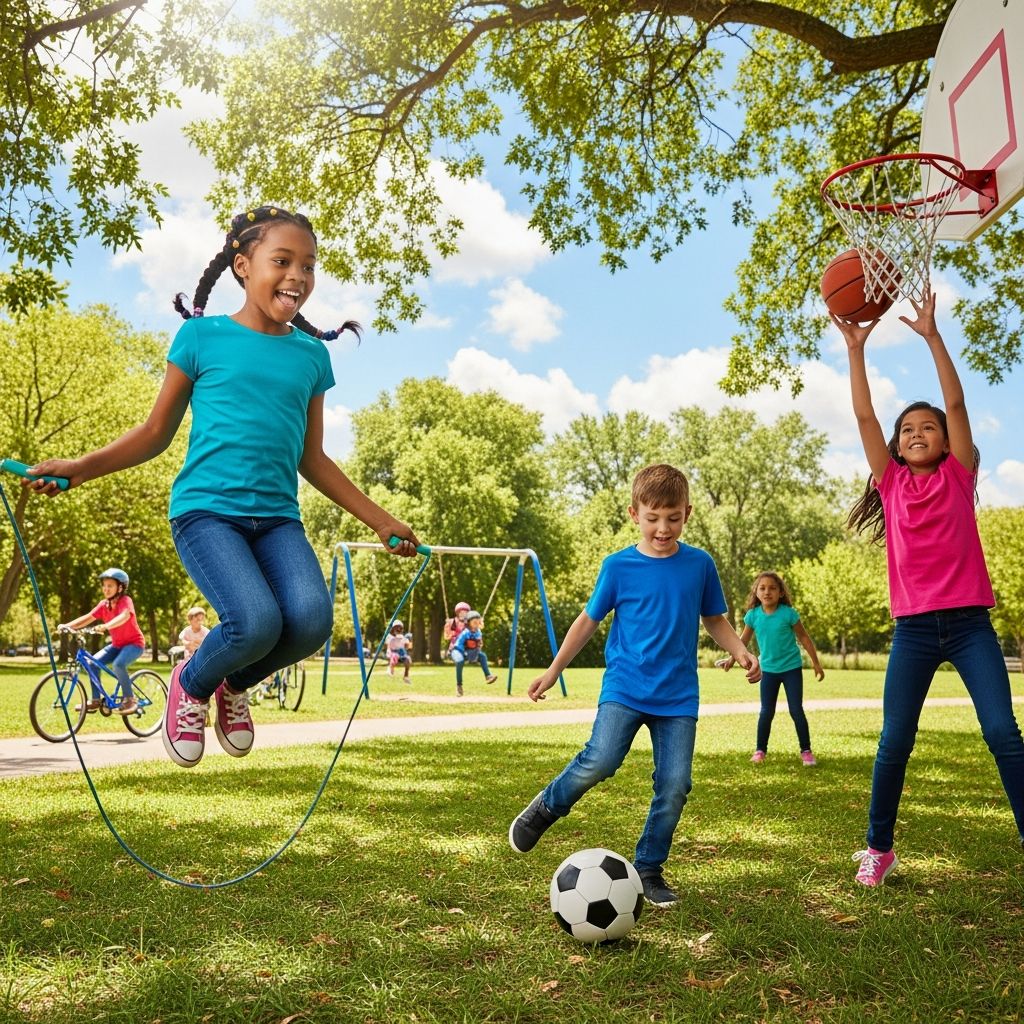
Grade-school children are naturally full of energy, yet many spend hours sitting in classrooms, on devices, or in cars. Regular exercise turns that energy into strength, confidence, and lifelong healthy habits. This guide explains what kind of movement kids need and how parents can make daily activity fun and realistic.
Why Movement Matters in the Elementary Years
Elementary school is a powerful window for shaping how children think about their bodies and health. During these years, bones, muscles, and coordination develop rapidly, and active play supports both physical and emotional growth.
When kids move regularly, they tend to sleep better, manage stress more easily, and concentrate more effectively in school. Activity also helps maintain a healthy weight and lowers the risk of future health problems such as diabetes and heart disease.
How Much Exercise Do School-Age Kids Need?
Health organizations generally recommend that school-age children accumulate about 60 minutes of moderate to vigorous physical activity most days of the week. That hour does not need to happen all at once; it can be broken into several shorter bursts throughout the day.
- Short walking or biking trips (10–15 minutes) before or after school.
- Active play at recess and during after-school programs.
- Structured sports practices, dance classes, or swimming lessons.
The key is variety: a mix of activities that elevate the heart rate, build strength, and improve flexibility helps children develop a well-rounded foundation of fitness.
Core Types of Activity Kids Need
Thinking about exercise in a few simple categories makes it easier to plan a balanced week for your child. Most days should include some of each type.
1. Heart-Pumping Aerobic Activity
Aerobic activity makes the heart beat faster and breathing deeper. Kids often get this through playful movement rather than formal workouts.
- Running games, such as tag or relay-style races in the yard or park.
- Bike riding or scootering on safe paths or sidewalks.
- Dancing to favorite songs in the living room.
- Jumping rope in short intervals.
2. Muscle-Strengthening Movements
Strength activities for kids rely more on body weight and play than on gym equipment. They help support posture, sports skills, and everyday tasks like carrying backpacks.
- Climbing playground structures, ladders, or climbing walls.
- Doing animal walks (bear crawl, crab walk, frog jumps) in the hallway or yard.
- Simple body-weight exercises like push-ups against a wall or plank holds on a mat.
- Carrying light grocery bags or helping move yard tools (under supervision).
3. Bone-Strengthening Impact Activity
Activities that involve impact with the ground help build strong bones, especially in the legs and hips. These movements are most powerful during the elementary years.
- Hopping, skipping, and jumping games.
- Jumping off low steps and landing softly with bent knees.
- Running games that involve quick starts and stops.
- Sports that involve jumping, such as basketball or certain playground games.
4. Balance and Flexibility Practice
Stretching and balance activities help prevent injuries and improve body control. These movements can feel more like calming play than intense exercise.
- Yoga-inspired poses like tree pose, warrior, or simple forward bends.
- Standing on one leg while brushing teeth or waiting for the bus (with supervision).
- Gentle stretches for legs, arms, and back after playtime or sports practice.
- Walking along a curb or a taped line on the floor to practice balance.
Sample Weekly Activity Mix
The table below illustrates one possible way to spread movement across a typical school week. It is only an example; you can adjust based on your child’s interests, schedule, and needs.
| Day | Before/After School | Evening |
|---|---|---|
| Monday | 15-minute family walk or bike ride | 15 minutes of dancing + light stretching |
| Tuesday | Playground time with climbing and running | Short strength circuit (animal walks, wall push-ups) |
| Wednesday | Active game at after-school program | Neighborhood scooter or biking with a friend |
| Thursday | Organized sport or swimming lesson | Gentle stretching and balance practice |
| Friday | Walk home from school if safe and possible | Family game night with movement breaks (dance or jumping jacks) |
Age-Appropriate Ideas by Grade Range
Children in kindergarten move differently than fifth graders. Matching activities to developmental level keeps exercise safe and enjoyable.
Early Elementary (Kindergarten–Grade 2)
Young children learn best through imagination, exploration, and short bursts of activity. Formal rules can be challenging, so keep games simple and playful.
- Make-believe movement: pretend to be animals, superheroes, or vehicles.
- Simple chasing games with clear boundaries and quick rounds.
- Follow-the-leader activities that mix hopping, skipping, and crawling.
- Short home obstacle courses using pillows, boxes, and tape lines.
Middle Elementary (Grades 3–4)
Children in this group are ready for slightly more structure and can follow multi-step instructions. They may enjoy tracking their progress or learning basic sports skills.
- Beginner sports skills: dribbling a ball, basic throwing and catching.
- Timed “movement challenges” like how many jumps in 30 seconds.
- Simple family games such as backyard soccer or relay races.
- Introductory classes in dance, martial arts, or gymnastics.
Upper Elementary (Grades 5–6)
Older grade-schoolers often value social time and may be more sensitive about performance. Activities that involve peers, choice, and skill-building are usually appealing.
- Team-based sports at school or in community leagues.
- Outdoor adventures such as hiking, biking trails, or geocaching.
- Beginner strength routines using body weight or light resistance bands.
- Goal-oriented challenges like training for a kid-friendly fun run.
Fitting Exercise into Busy Family Schedules
Many families struggle to balance homework, work schedules, and activities. The secret is to weave movement into routines you already have rather than adding another big task to the day.
- Walk or bike for short errands when possible instead of driving.
- Turn screen time into “movement time” breaks: 5–10 minutes of activity between episodes or game levels.
- Schedule “family movement appointments” a few times a week, like you would any other activity.
- Encourage active chores such as sweeping, raking leaves, or helping in the garden.
Safety Basics Every Parent Should Know
Exercise should challenge children without putting them at unnecessary risk. A few simple guidelines can make active time safer and more enjoyable.
- Ensure kids wear appropriate shoes that fit well and provide support.
- Use helmets and protective gear for biking, skating, or scootering.
- Teach children to listen to their bodies and rest if they feel pain, dizziness, or unusual shortness of breath.
- Provide water before, during, and after activity, especially in hot weather.
- Choose age-appropriate activities and avoid heavy weightlifting for young children.
Supporting Kids Who Are Reluctant to Move
Not every child loves sports or high-energy games. Some may feel self-conscious, overwhelmed, or simply more drawn to quiet activities. With patience, most children can discover a form of movement they enjoy.
- Offer choices: dancing, swimming, walking the dog, or nature scavenger hunts.
- Focus on fun and effort rather than winning or being the fastest.
- Start with small, achievable goals, such as a 10-minute walk three times a week.
- Model active behavior by moving with your child instead of only giving instructions.
The Role of Screen Time and Sedentary Habits
Extended sitting—whether in front of a TV, tablet, or computer—can crowd out time for physical activity. Setting gentle boundaries helps children balance technology with movement.
- Create “movement rules,” such as a short activity break after every half hour of screen use.
- Keep screens out of bedrooms to protect sleep and encourage reading or quiet play instead.
- Designate device-free periods (for example, during meals or the first hour after school) when active play is encouraged.
Making Activity Inclusive for All Abilities
Children with physical, developmental, or learning differences can and should participate in movement that feels safe and enjoyable for them. The goal is not to match someone else’s performance but to help each child discover ways their body can move.
- Adapt games by changing rules, reducing distances, or allowing extra time.
- Use equipment that is easier to handle, such as larger, softer balls.
- Collaborate with healthcare providers, therapists, and teachers on safe activity plans.
- Celebrate effort and creativity in movement, not just speed or strength.
Simple At-Home Activity Ideas
Parents do not need a home gym or large yard to help kids be active. Many effective ideas require little space or equipment.
- Hallway relay: kids move from one end to the other using different motions (tiptoe, hop, crab walk).
- Indoor “treasure hunt” where children search for objects and perform a movement at each clue.
- Balloon volleyball using a couch or tape line as a net.
- Step challenge using stairs, marching in place, or stepping on and off a low, stable platform.
How Parents Can Encourage Lifelong Healthy Habits
Children watch more than they listen. When adults treat physical activity as a normal, enjoyable part of the day, kids are more likely to adopt the same mindset. Encouragement and consistency matter more than perfection.
- Talk positively about what bodies can do rather than how they look.
- Involve children in choosing family activities, such as weekend hikes or bike rides.
- Recognize small successes: learning a new skill, staying active for a few extra minutes, or trying a new game.
- Keep equipment like balls, jump ropes, and chalk visible and easy to reach.
Frequently Asked Questions About Kids and Exercise
1. Can children exercise too much?
Most elementary-age children are unlikely to overexercise if they are involved in a mix of play and age-appropriate sports. Warning signs of doing too much include ongoing pain, extreme tiredness, and a strong desire to skip previously enjoyed activities. If these appear, it is wise to scale back and consult a healthcare professional.
2. Do kids need formal sports to be healthy?
Formal sports can be beneficial but are not required for good health. Active play, daily movement, and simple family routines (like walking, biking, and dancing at home) can provide all the essential benefits of exercise. Sports are just one of many options.
3. What if my child is not athletic?
Being “athletic” is not a requirement for regular movement. Many children who dislike competitive sports enjoy activities such as swimming, hiking, martial arts, or dancing. The goal is to find forms of movement that feel enjoyable and achievable, not to perform at a high level.
4. How do I balance homework and activity?
Short movement breaks can actually help children concentrate on schoolwork. Consider building a routine where kids move for 10–15 minutes before starting homework or between assignments. This approach can improve focus and mood without taking up the whole evening.
5. Should I limit my child’s screen time to encourage exercise?
Reasonable limits on recreational screen time can make it easier to fit movement into the day. Instead of using strict rules alone, pair limits with positive options, such as inviting your child on a walk, planning a family game, or suggesting a backyard adventure.
Final Thoughts
Exercise for elementary-age children does not need to be complicated, expensive, or rigid. With creativity, flexibility, and a focus on fun, families can build daily habits that support strong bodies, confident minds, and a positive relationship with movement that lasts well beyond the grade-school years.