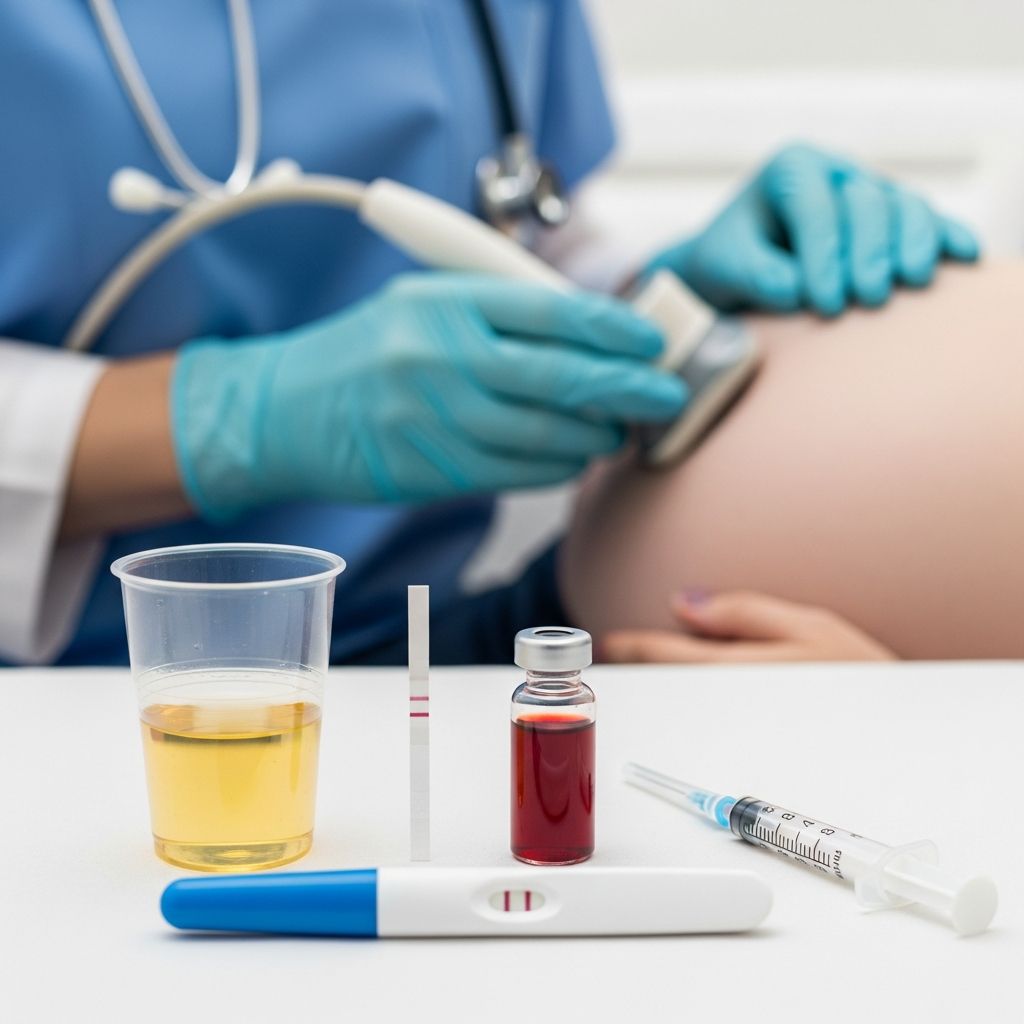
An **ectopic pregnancy** occurs when a fertilized egg implants outside the uterus, most commonly in a fallopian tube, posing serious health risks if not detected early. Early diagnostic testing through blood work, imaging, and clinical evaluation is crucial for safe management.
Recognizing Early Warning Signs
Many women experience typical early pregnancy symptoms like nausea or fatigue before ectopic signs emerge. Key indicators include sharp **abdominal or pelvic pain**, often one-sided, vaginal spotting or bleeding, and shoulder pain from internal irritation. Pain may intensify with movement, and lightheadedness or fainting signals potential rupture.
- One-sided pelvic pain that worsens over time
- Light vaginal bleeding or heavy spotting
- Shoulder tip pain due to blood in the abdomen
- Dizziness, weakness, or rapid heartbeat
Risk factors heighten suspicion: prior ectopic pregnancy, pelvic inflammatory disease, smoking, or tubal surgeries. Women with these should seek prompt evaluation for any unusual symptoms.
Initial Medical Evaluation Process
Consultation begins with a detailed history and physical exam. Providers assess pain location, bleeding patterns, and vital signs for hemodynamic stability. A urine pregnancy test confirms pregnancy, but quantitative **beta-hCG blood tests** provide critical data on hormone levels.
Normal intrauterine pregnancies show hCG doubling every 48 hours; slower rises or plateaus suggest ectopic risk. Levels below 1,500-2,000 mIU/mL often warrant ultrasound.
Key Diagnostic Tools: Ultrasound and Beyond
**Transvaginal ultrasound (TVUS)** is the gold standard for visualizing pregnancy location, offering higher resolution than transabdominal ultrasound early on. It detects an intrauterine sac by 5-6 weeks; absence with rising hCG indicates ectopic possibility.
Definitive signs include an adnexal mass or free fluid suggesting rupture. For ambiguous cases, serial hCG monitoring and repeat scans guide decisions.
| Test Type | Purpose | Timing | Accuracy |
|---|---|---|---|
| Quantitative beta-hCG | Track hormone rise | Every 48 hours | High for trends |
| Transvaginal Ultrasound | Locate gestation sac | 5-7 weeks | 95% sensitive |
| Transabdominal Ultrasound | Detect fluid/rupture | Later gestation | Supportive |
Emerging biomarkers and endometrial sampling show promise for earlier, precise diagnosis, potentially reducing maternal morbidity.
Treatment Pathways: From Monitoring to Intervention
Treatment depends on stability, hCG levels, ectopic size, and patient preferences. Options preserve fertility when possible.
Expectant Management
Suitable for stable patients with low, declining hCG (<1,000 IU/L) and no heartbeat. Close monitoring allows natural resolution, avoiding intervention.
Medical Management with Methotrexate
**Methotrexate (MTX)**, injected intramuscularly at 50 mg/m², halts cell growth for absorption over 4-6 weeks. Ideal for unruptured, stable cases with hCG <5,000 IU/L, ectopic mass <3.5 cm, no fetal heartbeat. Follow-up hCG checks ensure >15% drop by day 7; a second dose may be needed.
Contraindications: breastfeeding, liver/kidney issues, rupture.
Surgical Interventions
Urgent for rupture, instability, or failed medical therapy. **Laparoscopy** (keyhole surgery) is preferred: salpingostomy removes pregnancy preserving the tube, salpingectomy excises the tube for safety. Outcomes favor salpingectomy for recurrence prevention with similar fertility.
For rare sites like interstitial or cesarean scar, specialized techniques like cornual resection or uterine artery embolization apply.
| Approach | Indications | Pros | Cons |
|---|---|---|---|
| Expectant | Declining hCG <1000, stable | Non-invasive | Rupture risk |
| Methotrexate | hCG <5000, unruptured | Fertility-preserving, outpatient | Side effects, monitoring |
| Laparoscopy | Rupture, failure of meds | Quick recovery, minimally invasive | Anesthesia, tube loss possible |
Aftercare and Recovery Expectations
Post-methotrexate: avoid alcohol, folic acid, sun; monitor hCG until undetectable (weeks-months). Side effects include cramping, nausea. Surgical recovery: 1-2 weeks rest, watch for infection/bleeding.
Fertility remains viable; future ectopic risk is 10-15%, mitigated by IVF if needed. Emotional support addresses grief from pregnancy loss.
Preventive Measures and Risk Reduction
While not fully preventable, quitting smoking, timely STI treatment, and early prenatal care lower risks. High-risk women benefit from proactive hCG/ultrasound screening.
Frequently Asked Questions (FAQs)
What if I suspect an ectopic pregnancy?
Seek emergency care immediately for pain or bleeding; early diagnosis prevents rupture.
Can I get pregnant after ectopic treatment?
Yes, most women conceive successfully; discuss options like tube-preserving surgery.
How long does methotrexate take to work?
hCG resolution in 4-6 weeks with weekly monitoring.
Is surgery always required?
No, stable cases often use medication; surgery for emergencies.
What are long-term effects?
Slightly higher recurrence risk, but fertility preserved in most.
References
- Ectopic pregnancy – NHS — NHS. 2023. https://www.nhs.uk/conditions/ectopic-pregnancy/
- Overview of ectopic pregnancy diagnosis, management, and innovations — NIH/PMC. 2023-04-01. https://pmc.ncbi.nlm.nih.gov/articles/PMC10071153/
- Diagnosis and treatment of ectopic pregnancy — BCMJ. 2022. https://bcmj.org/articles/diagnosis-and-treatment-ectopic-pregnancy
- Ectopic Pregnancy — ACOG. 2023. https://www.acog.org/womens-health/faqs/ectopic-pregnancy
- Ectopic Pregnancy: Causes, Symptoms & Treatments — Cleveland Clinic. 2023-07-28. https://my.clevelandclinic.org/health/diseases/9687-ectopic-pregnancy
- Ectopic Pregnancy: Diagnosis and Management — AAFP. 2020-05-15. https://www.aafp.org/pubs/afp/issues/2020/0515/p599.html