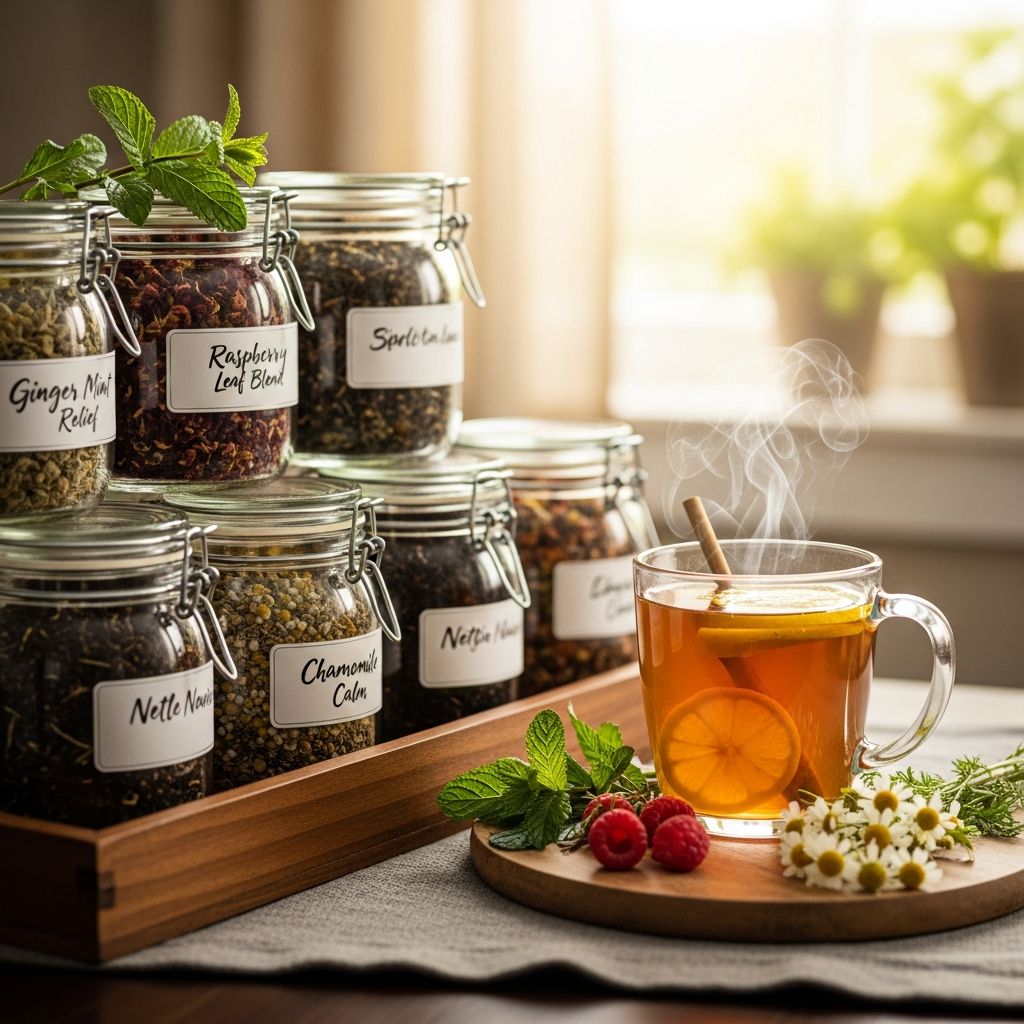
Many expecting parents love the ritual of a warm drink. Tea can feel comforting, ease nausea, and help you stay hydrated. But not every tea is a good match for pregnancy, and \”natural\” does not automatically mean safe. This guide explains how to choose pregnancy-friendly teas, how much to drink, and which ingredients to approach with caution.
Why Tea Choices Matter During Pregnancy
During pregnancy, your body and your baby respond differently to common substances like caffeine and concentrated herbs. Some teas contain caffeine, which crosses the placenta and takes longer for your baby’s body to process. Others contain herbs with hormonal or uterine effects that are not fully understood.
- Caffeine can affect fetal growth and risk of miscarriage at high intakes.
- Herbal compounds may act on the uterus, hormones, or blood flow.
- Research is limited for many herbal teas, so safety data are incomplete.
The goal is not to avoid tea entirely, but to choose evidence-informed options in moderate amounts and review any new herbs with your healthcare provider.
Caffeine and Pregnancy: How Much Tea Is Too Much?
Most guidelines suggest limiting total daily caffeine during pregnancy. Exact limits vary slightly by organization and country, but they are broadly similar.
| Guidance | Suggested Daily Caffeine Limit | Notes |
|---|---|---|
| Many clinical recommendations | Up to about 200 mg per day | Common limit used to reduce miscarriage and growth restriction risk. |
| Some research-based guidelines | Up to 300 mg per day | Higher end of range; some experts advise staying lower if possible. |
Because tea usually has less caffeine than coffee, it can fit into your daily allowance, but you still need to count it.
- Black tea (8 oz): roughly 40–60 mg caffeine
- Green tea (8 oz): roughly 20–45 mg caffeine
- White tea (8 oz): generally slightly less than green tea
- Matcha/strong brews: can be higher in caffeine than standard tea bags
If you also drink coffee, soda, energy drinks, or eat chocolate, remember to include those in your daily caffeine tally.
Common Caffeinated Teas in Pregnancy
Caffeinated teas come from the Camellia sinensis plant. In moderate amounts, they are generally considered safe in pregnancy if you stay within your daily caffeine limit and your provider has not given you a stricter cap.
Black, Green, White, Oolong, and Chai Teas
These teas are widely consumed around the world and provide antioxidants. However, overconsumption can push caffeine intake above recommended levels.
- Choose weaker brews (shorter steeping time) to lower caffeine.
- Consider switching some cups to decaf versions.
- Aim to spread your caffeinated drinks across the day instead of drinking them all at once.
If you are particularly sensitive to caffeine, some experts suggest aiming closer to 100 mg per day or less, especially early in pregnancy, but you should confirm this with your care team.
Understanding Herbal Tea Safety
Herbal teas are made from leaves, flowers, roots, seeds, or bark of non-tea plants. Unlike black or green tea, many herbs used in pregnancy teas have limited human research, and their effects can be complex.
Key points about herbal teas in pregnancy:
- They are often seen as gentle, but some herbs can stimulate the uterus or affect hormones.
- Strength varies by brand, amount of herb per bag, and how long you steep.
- Drinking large quantities or highly concentrated brews is not recommended unless medically supervised.
Several official and clinical resources suggest limiting most herbal teas to around 1–2 cups per day in pregnancy, unless you have specific guidance from your provider.
Herbal Teas Often Considered Pregnancy-Friendly (With Limits)
Based on available evidence and expert guidance, the following teas are commonly regarded as reasonable options in moderation for many pregnant people. However, individual situations differ, so always check with your own clinician.
Ginger Tea
Ginger is one of the best-studied herbal options in pregnancy. Multiple clinical trials have shown that ginger can help reduce nausea and vomiting in early pregnancy when used in appropriate doses.
- Often used for morning sickness, motion sickness, and digestive discomfort.
- Generally considered safe in moderate oral amounts for pregnant people.
- Large or highly concentrated doses should still be discussed with your provider.
Peppermint Tea
Peppermint is widely used in pregnancy to ease nausea, gas, and indigestion.
- Studies suggest typical amounts do not harm the pregnant person or baby when used as tea.
- Very high intake is not recommended; stick to modest daily amounts.
- Some people find peppermint aggravates reflux; if so, reduce or avoid it.
Lemon Balm and Mild Relaxing Herbs
Some midwifery and integrative medicine sources include lemon balm, chamomile, nettle, and rose hips among teas considered safe in beverage amounts for generally healthy pregnant people. That said, evidence is not uniform, and some observational research has linked heavy, regular chamomile use with higher risk of preterm birth and low birth weight, especially in the third trimester.
Practical approach:
- Use these herbs in moderate, occasional amounts.
- Avoid drinking large volumes every day without talking to your provider.
- Stop and seek advice if you notice contractions, cramping, or any unusual symptoms after drinking an herbal tea.
Raspberry Leaf Tea: Popular but Controversial
Raspberry leaf tea (RLT) is one of the best-known “pregnancy teas.” Traditionally, it has been used in late pregnancy to “tone” the uterus and support labor. Modern research is still limited, but several observational studies and reviews have tried to evaluate its effects.
What the Research Suggests
- RLT may have both stimulant and relaxant effects on uterine muscle in lab models, depending on dose and timing.
- Some observational studies found that users had slightly shorter second stages of labor and fewer interventions such as cesarean sections or assisted births, though the data are not strong and have notable methodological flaws.
- A clinical fact sheet from a maternity service notes that raspberry leaf is “likely safe” later in pregnancy but has not been clearly proven beneficial.
Safety and Timing
Because raspberry leaf may influence uterine activity, many clinicians and researchers recommend:
- Avoiding RLT in the first trimester due to possible uterotonic effects.
- If used, limiting it to the second and especially third trimester under medical guidance.
- Keeping the dose moderate (e.g., 1–2 cups per day) rather than consuming large quantities.
RLT may be contraindicated for people with preterm labor risk, uterine irritability, prior cesarean with complications, or certain medical conditions. Always review this tea with your maternity provider before starting it.
Herbal Teas to Use With Extra Caution or Avoid
Several herbs are not recommended in pregnancy because of potential effects on the uterus, hormones, or fetal development. Lists vary among sources, but common examples include:
- Strong laxative teas containing senna or cascara
- High-dose licorice root (can affect blood pressure and hormones)
- Sage, pennyroyal, and some other “emmenagogue” herbs traditionally used to stimulate menstruation
- Highly concentrated blends marketed for weight loss or detox
Chamomile and fennel are sometimes promoted in pregnancy teas, but case reports and animal studies have linked heavy use of some preparations with miscarriage, preterm labor, or fetal effects. Occasional, low-dose use may be acceptable for some people, but this is an area where it is crucial to follow individual medical advice.
Practical Tips for Choosing a Pregnancy Tea
Use this checklist when you are standing in front of the tea shelf or browsing online:
- Check the ingredient list carefully; avoid blends that do not list exact herbs.
- Prefer single-herb or simple blends (e.g., just ginger; peppermint + lemon) over complex “detox” mixes.
- Look for established herbs that have some safety history in pregnancy, such as ginger or peppermint, and avoid rare or exotic plants unless your provider approves.
- Choose reputable brands that test for contaminants like heavy metals and pesticides.
- Limit intake of any new herbal tea to about 1 cup a day at first and monitor how you feel.
How Much Tea Is Reasonable in a Day?
Exact limits depend on your overall diet, health history, and what else you drink, but a conservative, commonly used framework is:
- Caffeinated tea: usually 1–3 cups per day, ensuring your total caffeine (from all sources) stays around or below 200 mg, unless your provider advises otherwise.
- Herbal tea: often limited to 1–2 cups per day of a given herb, especially if it has not been extensively studied.
- Plain water: should still be your main hydration source; tea is a complement, not a replacement.
Remember that different mugs and brewing times change how strong your tea is. When in doubt, make a slightly weaker brew and drink slowly.
Simple Ideas for Pregnancy-Friendly Tea Rituals
Drinking tea can be part of a daily self-care routine during pregnancy. To make that routine as safe and soothing as possible, consider:
- Rotating between water, caffeine-free herbal teas, and modest amounts of caffeinated tea.
- Using honey, lemon, or a slice of fresh ginger instead of high-sugar flavorings.
- Enjoying an evening cup of a mild, caffeine-free tea (such as a small amount of lemon balm or peppermint) to wind down, if approved by your provider.
- Pairing tea time with relaxation practices such as deep breathing or journaling to reduce stress.
Frequently Asked Questions About Tea and Pregnancy
Is it safe to drink green tea while pregnant?
Green tea contains caffeine but in lower amounts than coffee. In most pregnancies, moderate green tea intake can fit within the recommended caffeine limit if you track your total intake and have no specific medical contraindications. Always confirm your personal limit with your healthcare provider.
Can I drink herbal teas freely since they are caffeine-free?
No. Many herbal teas are caffeine-free, but they may contain biologically active compounds that affect the uterus, hormones, or blood flow. Because research is limited, most experts recommend choosing only herbs with a better-known safety profile and limiting them to 1–2 cups per day during pregnancy, unless specifically advised otherwise.
When can I start raspberry leaf tea if I want it for labor support?
Raspberry leaf tea is generally not recommended in the first trimester due to possible uterine effects. Some clinicians allow cautious use in the second and especially third trimesters, typically in moderate amounts and only after reviewing your individual obstetric history. Do not start RLT without speaking to your midwife or doctor.
Are “pregnancy blend” teas automatically safe?
Not necessarily. “Pregnancy” labeling is not tightly regulated in many regions. Some blends may include herbs that certain guidelines consider questionable in pregnancy, or doses that are higher than you need. Always read the full ingredient list and cross-check each herb with reliable, pregnancy-specific information or your healthcare team.
What should I do if I drank a tea that might not be safe?
If you accidentally drank a small amount of a questionable tea, do not panic. Stop using it, note the brand and ingredients, and contact your healthcare provider or a maternity triage line for tailored advice. Seek urgent care if you notice severe cramping, bleeding, reduced fetal movement, or any other worrisome symptoms.
References
- Is Tea Safe During Pregnancy? — Healthline (reviewed by K. Gans, RD). 2020-10-15. https://www.healthline.com/nutrition/is-tea-safe-during-pregnancy
- Raspberry Leaf Tea in Pregnancy: Safety, Benefits, and Research Insights — News-Medical. 2023-06-07. https://www.news-medical.net/health/Raspberry-Leaf-Tea-In-Pregnancy-Safety-Benefits-and-Research-Insights.aspx
- Pregnancy Safe Teas: Which Teas Are Safe To Drink? — Natural Cycles. 2023-02-01. https://www.naturalcycles.com/cyclematters/pregnancy-safe-teas
- Herbal teas during pregnancy and breastfeeding — Pregnancy, Birth and Baby (Australian Government). 2022-09-15. https://www.pregnancybirthbaby.org.au/herbal-teas-during-pregnancy-and-breastfeeding
- Frequently Used Herbal Teas During Pregnancy – Short Update — Phytotherapy Research (via PMC). 2020-08-01. https://pmc.ncbi.nlm.nih.gov/articles/PMC7384490/
- Herbs in Pregnancy: What’s Safe, What’s Not? — Aviva Romm, MD. 2021-03-10. https://avivaromm.com/herbal-medicines-in-pregnancy-safety/