Long summer days at home can be wonderful, but they can also feel overwhelming when kids are restless and parents are stretched thin. This guide offers practical, realistic ways to keep children engaged, connected, and learning at home—without turning you into a full-time cruise director.
Instead of aiming for a picture-perfect summer, the focus here is on connection over perfection, play over performance, and simple routines over rigid schedules.
Why Unstructured Summer Play Matters
Before jumping into ideas, it helps to remember why open-ended, at-home play is valuable in the first place.
- Builds creativity: When kids are bored and have time to experiment, they invent games, stories, and worlds of their own.
- Supports emotional health: Free play helps children process feelings, relieve stress, and build resilience.
- Strengthens executive function: Planning games, negotiating rules, and solving problems support self-control and flexible thinking.
- Creates family memories: Ordinary rituals at home often become the moments kids remember most.
With that in mind, you do not need constant novelty. A small set of flexible ideas, used again and again, can carry you through the entire summer.
Designing a Gentle Summer Rhythm
A simple daily rhythm provides predictability without strict timetables. Think in loose blocks instead of exact times.
| Part of the Day | Focus | Examples |
|---|---|---|
| Morning | Movement & fresh air | Backyard play, walk, nature scavenger hunt |
| Midday | Quiet & creative time | Drawing, building, reading, simple crafts |
| Afternoon | Messy or water play | Water buckets, kitchen science, pretend play |
| Evening | Connection & calming | Family game, story time, stargazing, journaling |
You can post this rhythm on the fridge with simple icons or drawings so younger kids know what to expect.
Outdoor Fun in Small Spaces
You do not need a big yard or expensive gear to make outdoor time feel special. Even a balcony, patio, or tiny patch of grass can become an adventure zone.
Backyard (or Balcony) Challenges
- Move-It Circuits: Use chalk or index cards to create a simple movement path: jump, spin, crawl, hop, dance. Kids can help design the moves and time each other.
- Nature Collections: Invite your child to collect “treasures” like leaves, rocks, or petals, then sort them by size, color, or texture to sneak in early science and math skills.
- Listening Walks: Take a short walk and quietly list all the sounds you notice—birds, traffic, rustling leaves. This builds attention and mindfulness.
- Shadow Games: Trace each other’s shadows with chalk, then return later in the day to see how they moved. Ask kids to predict where the shadow will be next.
Simple Water Play (Even Without a Pool)
Water adds instant excitement and supports sensory and motor development. You can offer water play with what you already have at home.
- Pour & Transfer Station: A plastic bin, a few containers, funnels, and spoons keep toddlers and preschoolers busy pouring, scooping, and filling.
- Target Splash: Draw circles with chalk or tape a target to a fence. Kids toss wet sponges or water-filled balloons to hit the center.
- Float or Sink Lab: Invite children to test different household items (spoons, lids, small toys) in a tub of water and guess which will float or sink.
- DIY Car or Toy Wash: Set out soapy water, brushes, and towels so kids can wash bikes, toy cars, or plastic figures.
Keep a dedicated “water bin” of towels, swimsuits, and old clothes so getting wet feels easy instead of like extra work.
Indoor Play that Doesn’t Feel Like School
Summer learning does not have to look like worksheets. Everyday play naturally supports reading, math, and problem-solving when adults provide time, materials, and encouraging attention.
Story-Rich Play Ideas
- Rotating Story Basket: Place a few picture books in a basket with related objects (toy animals, scarves, blocks). After reading, invite your child to retell or act out the story with the props.
- Homemade “Book Theater”: Use stuffed animals or puppets to perform a short scene from a favorite story. Older kids can write a few lines of dialogue on index cards.
- Comic Strip Corner: Show kids how to divide paper into boxes and create simple comics with speech bubbles. Spelling and drawing do not have to be perfect; the goal is expression.
Hands-On Math without Worksheets
- Snack Fractions: Use fruit slices, crackers, or tortillas to talk about halves, quarters, and wholes while preparing snacks.
- Pattern Building: Invite kids to make patterns with blocks, beads, or bottle caps: red-blue-red-blue, big-small-small, etc.
- Shape Hunt: Ask children to find circles, rectangles, and triangles around the house and sketch them in a small notebook.
DIY Mini Makerspace
Set up a small shelf or box as a “makerspace” for open-ended building.
- Clean recycling items (boxes, tubes, cartons)
- Safe tape, glue sticks, rubber bands, and string
- Scrap paper, cardboard, and markers
- Optional: popsicle sticks, clothespins, bottle caps
Challenge ideas:
- Build a bridge that can hold three toy cars.
- Design a tall tower that can survive a gentle shake.
- Create a “machine” that moves when you blow on it.
Creative Projects with Everyday Supplies
Art and STEM activities do not require fancy kits. Many engaging projects start with normal household items.
Low-Prep Art Invitations
- One-Color Challenge: Offer paper and supplies in only one color (blue crayons, blue stickers, blue scraps). Limitations often spark creativity.
- Painting without Brushes: Try cotton balls with clothespins, old toothbrushes, or cardboard strips instead of traditional brushes.
- Texture Rubbing Book: Place paper over textured surfaces (leaf, coin, wood) and rub with crayons, then staple pages into a “texture book.”
- Recycled Sculpture Gallery: Invite kids to build a sculpture from clean recyclables and then “curate” a mini gallery for family to tour.
Kitchen Science Experiments
Simple experiments introduce scientific thinking—observing, predicting, and testing—without requiring special tools.
- Fizzy Reactions: Combine baking soda and vinegar in a tray with food coloring. Ask kids to describe the bubbles, sounds, and smells.
- Homemade Rain Clouds: Fill a clear glass with water, add shaving cream on top, and drop colored water through the “cloud” to see rain streaks form.
- Ice Excavation: Freeze small toys in a container of water. Provide droppers of warm water or salt to help kids “rescue” the objects.
Connection-Building Family Rituals
Children often remember small, repeated rituals more than big, elaborate outings. These simple traditions can anchor your summer.
Weekly Theme Evenings
- Story Picnic Night: Spread a blanket on the floor or in the yard, eat a simple meal, and read a stack of picture books or a chapter book aloud.
- Game Marathon Night: Rotate through two or three board games or card games, letting each family member choose one.
- Music & Memories Night: Play songs from the adults’ childhoods and teach kids the dances or stories connected to each one.
Daily Moments of One-on-One Time
Even 10 minutes of warm, focused attention can improve behavior and emotional regulation.
- Let your child choose the activity, as long as it is safe.
- Put devices out of sight; give full eye contact and presence.
- Describe what you see (“You’re building such a tall tower”) rather than evaluating (“That’s the best tower”).
Independent Play: Helping Kids Entertain Themselves
Parents need breathing room, and kids benefit from learning how to play independently. You can nurture this skill gradually.
Setting Up for Success
- Limit the toy choices: Too many options can overwhelm children. A small selection of toys encourages deeper play.
- Create “yes” spaces: Designate a safe area where kids can move freely without constant “no” or “be careful” from adults.
- Use short play blocks: Start with 10–15 minutes of independent play and slowly extend the time.
Independent Play Prompts
- “Can you build a home for your favorite stuffed animal?”
- “How many different ways can you use this scarf?”
- “Can you sort your toys into three groups and explain your choices?”
- “Can you draw a map of an imaginary island?”
Handling Boredom and Screen Time without Power Struggles
Boredom is uncomfortable but also useful. It can be the doorway to creativity once children learn that adults will not fix it instantly.
Responding to “I’m Bored”
- Acknowledge the feeling: “It’s hard when nothing feels fun right now.”
- Offer a short list of choices: one active, one creative, one helpful (like feeding a pet).
- Keep a “boredom jar” with written prompts kids can draw when they feel stuck.
Making Screen Time Work for You
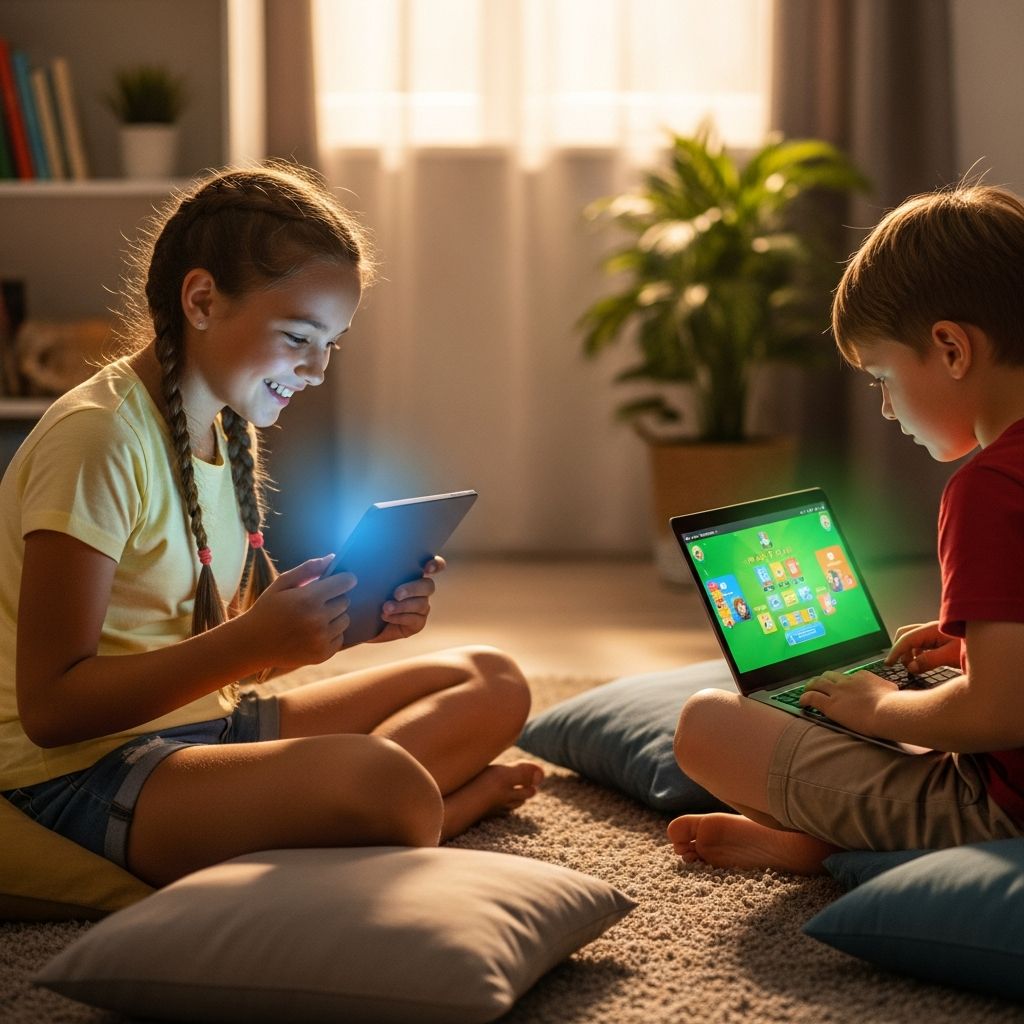
Digital media is part of modern family life. Research suggests that what children watch and how families use screens together matters more than sheer hours.
- Decide on clear limits: Involve kids in setting daily or weekly screen windows.
- Co-view when you can: Watching together and talking about what you see can support learning and critical thinking.
- Balance passive and active use: Mix watching shows with active uses like coding apps, drawing apps, or video calls with relatives.
- Respect transitions: Give 5–10 minute warnings before turning screens off and offer something specific to do next.
Adapting Activities for Different Ages
The same basic ideas can work across ages with small adjustments.
| Activity Theme | Toddlers & Preschoolers | Early Elementary | Older Kids |
|---|---|---|---|
| Nature Play | Collect leaves and rocks; simple sensory bins | Draw or label finds; make simple charts | Start a nature journal with observations and sketches |
| Building | Stack blocks or cups and knock them down | Build houses, garages, or bridges for toy figures | Design complex structures or simple machines |
| Art | Finger painting and large scribbles | Directed projects like collages or murals | Experiment with perspective, shading, or mixed media |
| Storytelling | Act out stories with puppets | Dictate stories for adults to write down | Write comics or short plays independently |
Keeping Expectations Realistic
No summer will be meltdown-free. Kids will have big feelings, siblings will argue, and plans will fall apart—and that is okay.
- Choose one or two special activities each day, not a packed schedule.
- Allow time for quiet, screens, and doing nothing at all.
- Notice what your child returns to again and again—those repeat favorites can become your go-to options.
The goal is not to fill every minute, but to create an environment where curiosity, play, and connection can grow.
Frequently Asked Questions (FAQs)
How many activities should I plan in a day?
Most families do well with one or two planned activities plus plenty of free play. An over-packed day often leads to more meltdowns and frustration.
What if my child only wants screens all summer?
Involve your child in setting clear screen limits, offer appealing alternatives (especially active or social ones), and stay consistent. Co-watching some content together and talking about it can also make screen time feel more connected and less isolating.
How can I work from home and still give my kids a good summer?
Use a loose daily rhythm, build up independent play in short increments, and schedule your most focused work times during quiet play or screen windows. Even 10 minutes of fully present connection before you work can help kids play more calmly afterward.
My kids fight constantly. Will these activities really help?
Shared projects and clear roles can reduce conflict, but sibling tensions are normal. Keep some activities for one-on-one time with each child, and rotate leadership roles (who chooses the game, who explains the rules) to support cooperation.
Do I need special supplies to make summer at home fun?
No. Most ideas in this guide rely on basics you likely already own: paper, crayons, tape, recyclables, and simple kitchen ingredients. The real “supply” that matters most is your willingness to offer attention and room for play.
References
- The Power of Play: A Research Summary on Play and Learning — Center for Early Childhood Education, Eastern Connecticut State University. 2012-01-01. https://www.easternct.edu/center-for-early-childhood-education/the-power-of-play.html
- Clinical Report: The Power of Play: A Pediatric Role in Enhancing Development in Young Children — Yogman M. et al., American Academy of Pediatrics. 2018-09-01. https://publications.aap.org/pediatrics/article/142/3/e20182058/38618/The-Power-of-Play-A-Pediatric-Role-in-Enhancing
- Executive Function & Self-Regulation — Center on the Developing Child, Harvard University. 2023-01-01. https://developingchild.harvard.edu/science/key-concepts/executive-function/
- Mindful Walking: Enjoying the Present Moment — Greater Good Science Center, UC Berkeley. 2017-06-01. https://greatergood.berkeley.edu/article/item/mindful_walking
- Water and Children: Safety and Developmental Benefits — HealthyChildren.org, American Academy of Pediatrics. 2022-05-01. https://www.healthychildren.org/English/safety-prevention/at-play/Pages/Water-Safety-And-Young-Children.aspx
- Everyday Science with Young Children — National Science Teaching Association. 2017-01-01. https://www.nsta.org/blog/everyday-science-young-children
- Media and Young Minds — Council on Communications and Media, American Academy of Pediatrics. 2016-11-01. https://publications.aap.org/pediatrics/article/138/5/e20162591/60327/Media-and-Young-Minds