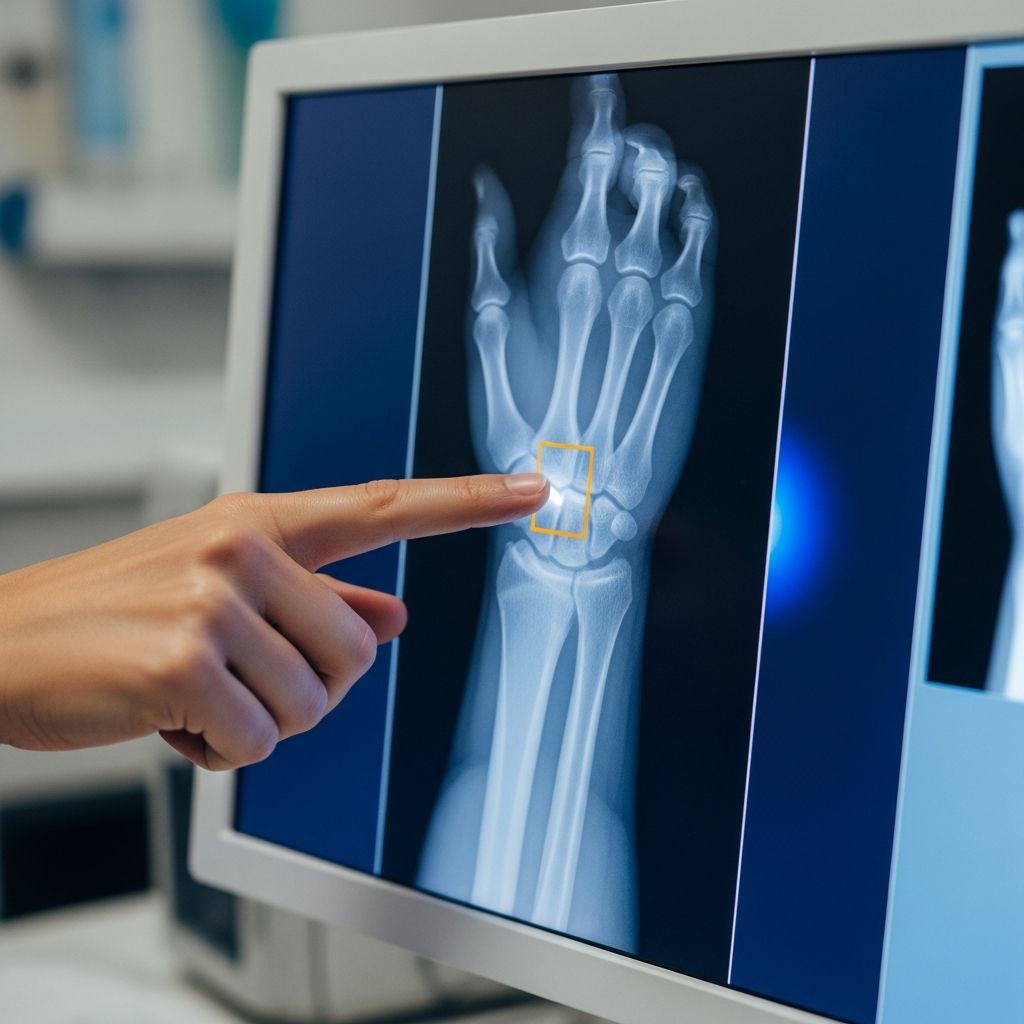
When a child falls or hurts a wrist, doctors often recommend a wrist X-ray to check for broken bones or other damage inside the joint. This quick imaging test helps the care team see exactly what is going on so treatment can be safe and effective.
For many parents, the word “X-ray” raises questions about safety, pain, and how to calm a worried child. This guide explains the process in simple terms so you can walk into the radiology department feeling prepared and confident.
What Is a Wrist X-Ray?
A wrist X-ray is a medical image that shows the bones where the hand meets the forearm. The picture includes the small wrist bones (carpals) and the lower ends of the two forearm bones (radius and ulna).
To create this image, a machine sends a small, controlled beam of X-ray energy through the wrist toward a detector plate or digital sensor. Dense structures like bone absorb more of the beam and appear lighter on the image, while softer tissues appear darker or more transparent.
Why Doctors Order Wrist X-Rays for Children
Children are active, and wrist injuries are common, especially after falls from playgrounds, bikes, or sports activities. An X-ray helps the healthcare team look inside the wrist instead of guessing based only on swelling or pain.
- Confirming or ruling out a broken bone after a fall or direct impact.
- Checking for small “hairline” fractures that may be hard to see from the outside.
- Evaluating wrist pain without a clear injury, which might be related to overuse, infection, or early arthritis.
- Monitoring bone growth and alignment in children being followed for previous injuries or bone conditions.
How a Wrist X-Ray Helps Guide Treatment
The X-ray image gives the doctor a map of what is happening inside your child’s wrist. Once the pictures are reviewed, the care team can choose the safest and most effective next steps.
- Normal results: If bones and joints look healthy, treatment may focus on rest, ice, and short-term pain relief.
- Minor fracture: A simple crack may need a splint or cast to protect the bone while it heals.
- More serious break: A displaced fracture (where pieces of bone no longer line up) may need repositioning or even surgery.
- Other problems: The exam may reveal joint irritation, bone infection, or changes that suggest another imaging test is needed.
Safety and Radiation: What Parents Should Know
Parents often worry about radiation, especially when tests involve young children. A wrist X-ray uses a low dose of radiation focused on a small part of the body, and modern equipment is designed to keep exposure as low as reasonably possible.
In most cases, the benefit of finding or ruling out a serious injury clearly outweighs the small risk from the radiation dose. If you have concerns, it is always appropriate to ask the imaging staff how they limit exposure and protect children.
Common Safety Measures
- Using the lowest X-ray dose that still produces a clear image.
- Shielding parts of the body not being imaged when appropriate.
- Limiting repeat images by positioning the child carefully the first time.
- Adjusting settings for a child’s size rather than using adult settings.
Preparing Your Child for the Appointment
A little preparation can make the experience smoother and less frightening for your child. Taking a few minutes to explain what will happen reduces surprises and helps them feel more in control.
How to Talk About the Test
- Use simple, calm language such as “pictures of your bones” instead of technical terms.
- Reassure your child that the test does not hurt, but that staying still is very important.
- Tell them who will be there (a technologist, sometimes a nurse, and you, if allowed).
- Encourage questions and answer honestly without adding frightening details.
Practical Tips Before You Go
- Dress your child in comfortable clothes with easy access to the wrist (a short-sleeved shirt works well).
- Remove bracelets, watches, or metal jewelry from the arm and hand ahead of time.
- Bring a favorite small toy, stuffed animal, or book for comfort in the waiting area.
- Plan to arrive a bit early to complete paperwork without rushing.
Step-by-Step: What Happens During the Exam
Knowing what to expect during each stage of the exam can ease stress and help you support your child in real time. While small details may differ between hospitals and clinics, the basics are usually similar.
| Stage | What Your Child Experiences | How You Can Help |
|---|---|---|
| Check-in | Brief questions, confirmation of your child’s name and wrist injury. | Stay close, provide details about how the injury happened if asked. |
| Waiting area | Short wait until the technologist is ready. | Read a book, play a quiet game, or offer reassurance. |
| Entering the X-ray room | Seeing the large camera and table or chair. | Explain that the machine is like a big camera for bones. |
| Positioning | Technologist gently places the wrist in one or more positions. | Encourage your child to follow instructions and stay still. |
| Taking the images | Brief moments when the machine makes a small sound or light. | Remind your child each picture is quick and then it is done. |
| Finishing up | Technologist checks images and releases your child when complete. | Praise your child for cooperating and being brave. |
Positioning: How the Wrist Is Placed
To get clear pictures, the technologist will gently move your child’s hand and arm into specific positions on the X-ray table or a small platform. These positions are chosen to show different angles of the bones and joints.
- Hand and forearm may be placed palm down for one image.
- The side of the wrist may be positioned for another view.
- Sometimes the wrist is angled slightly to highlight certain bones.
If your child is in pain, let the technologist know right away. Positions can often be adjusted or supported with small pads so the wrist is secure without adding unnecessary discomfort.
How Long Does a Wrist X-Ray Take?
The imaging itself usually takes only a few minutes once your child is positioned correctly. Most of the appointment time is spent on check-in, positioning, and making sure the images are clear enough so that repeat pictures are not needed.
In many cases, families are in and out of the imaging department within 20–30 minutes, though this can vary depending on how busy the facility is and whether additional images are requested.
Will It Hurt?
The X-ray beam is painless, and your child will not feel the radiation. Any discomfort usually comes from holding a sore or swollen wrist still for the short time needed to capture the images.
Mild pain relief prescribed or recommended by the doctor, along with gentle handling by the technologist, can make it easier for a child to remain still. Comfort items and distraction (like talking about a favorite topic) also reduce stress and perceived pain.
Supporting Anxious or Young Children
Some children feel scared in new medical settings, especially when surrounded by unfamiliar equipment. Your calm presence and simple reassurances usually make the biggest difference.
- Ask if you can stay in the room; if allowed, you may be given a protective apron.
- Stand where your child can see and hear you throughout the test.
- Use a steady, soothing voice and praise even small efforts (“You’re doing a great job holding still”).
- For very young children, simple counting or a short story can help them focus on something other than the wrist.
After the Wrist X-Ray: What Happens Next?
Once the images are taken, the technologist will check them on a computer screen to ensure they are clear. If the pictures look good, your child is free to go and you will return to the clinic area or emergency department.
A doctor trained in reading X-rays (often a radiologist) reviews the images and prepares a report for the provider who ordered the test. That provider then explains the results to you and discusses the treatment plan.
Questions to Ask About Results
- Did you see any fractures or other problems on the X-ray?
- Does my child need a splint, cast, or further imaging?
- How long will healing take, and what activities should be limited?
- When should we schedule a follow-up visit?
Possible Outcomes and Follow-Up Care
Results from a wrist X-ray can lead to different care paths, depending on what is seen. Sometimes the findings are reassuring; other times they confirm the need for closer treatment and follow-up.
- No visible fracture: The doctor might call the injury a sprain or bruise and recommend rest, ice, and monitoring for changes.
- Simple fracture: A cast or splint is often enough, with follow-up X-rays to confirm proper healing.
- Complex fracture or growth-plate involvement: A referral to an orthopedic specialist (bone doctor) may be arranged.
- Unclear findings: Sometimes additional imaging, such as a repeat X-ray after a few days, an ultrasound, CT scan, or MRI, may be recommended.
How to Care for Your Child at Home
Whether the X-ray shows a sprain or a fracture, home care plays a key role in recovery. Follow your provider’s instructions closely and watch for signs that your child’s condition is changing.
- Encourage rest and avoid activities that cause wrist pain or risk another fall.
- Use ice packs wrapped in cloth on the wrist as recommended to reduce swelling.
- Keep any splint or cast dry and intact; do not trim or remove it yourself.
- Give pain medication exactly as instructed, and call if pain suddenly worsens.
When to Call the Doctor After the Exam
Most children do well after a wrist X-ray, but certain signs should prompt a call to the care team. Trust your instincts if something about your child’s condition does not seem right.
- Increased swelling, numbness, or tingling in the fingers.
- Fingers that become pale, bluish, or very cold.
- Severe pain that does not improve with prescribed medicine or rest.
- Problems with a cast or splint, such as cracking, slipping, or cutting into the skin.
FAQs About Children’s Wrist X-Rays
Is a wrist X-ray safe for my child?
Yes. The test uses a small amount of radiation focused on the wrist, and equipment is adjusted for children to keep exposure as low as safely possible. The medical team weighs the tiny risk of radiation against the important benefit of accurately diagnosing an injury.
Can I be in the room during the X-ray?
Policies vary, but many facilities allow a parent or caregiver to stay in the room, especially with young children. You may be asked to wear a protective apron and stand in a specific spot away from the X-ray beam.
Will my child need sedation?
Sedation is rarely necessary for wrist X-rays because the test is fast and requires only brief periods of stillness. In special situations, such as with very young or extremely anxious children, the care team may consider additional strategies to help them stay comfortable and still.
How soon will we get the results?
In emergency or urgent-care settings, a provider often reviews the images quickly and discusses the main findings with you during the same visit. In outpatient clinics, the report may be available later that day or within a short period, depending on the facility’s workflow.
What if the X-ray looks normal but my child still hurts?
Sometimes small fractures or soft-tissue injuries are not obvious on the first X-ray. If pain, swelling, or limited movement continue, the doctor may recommend follow-up imaging or a repeat exam to look for changes over time.
Can repeated X-rays be harmful?
Each X-ray adds a small amount of radiation exposure, but medical teams work hard to limit the number of images taken and to use child-appropriate settings. When follow-up X-rays are recommended, it is usually because the benefit of checking healing or alignment clearly outweighs the minimal added risk.
Key Takeaways for Parents
- A wrist X-ray is a quick, targeted imaging test that shows the bones in your child’s wrist and lower forearm.
- The exam is painless, and any discomfort usually comes from holding a sore wrist still for a short time.
- Radiation exposure is low, and equipment is designed to protect children while still producing clear images.
- Your calm presence, simple explanations, and praise can greatly reduce your child’s anxiety during the test.
- Clear communication with the care team before and after the exam ensures that you understand the results and the next steps in your child’s treatment.