Sensory play involves activities that stimulate a toddler’s senses—sight, sound, touch, smell, and taste—helping forge vital neural pathways for comprehensive growth.
Why Sensory Experiences Matter in Early Years
During the toddler stage, from ages 1 to 3, children’s brains are rapidly wiring themselves through sensory input. Each touch, sound, or scent contributes to integrating sensory information, refining individual senses, and building a cohesive understanding of the world. This process supports cognitive leaps, like pattern recognition and problem-solving, as the brain learns to filter relevant stimuli from background noise.
Beyond cognition, sensory play strengthens motor abilities. Fine motor skills emerge from pinching, pouring, and scooping, preparing hands for tasks like buttoning clothes or using utensils. Gross motor development benefits from activities involving whole-body movement, such as balancing or climbing through textured paths.
Emotionally, these experiences calm overstimulated nerves and build confidence. With no ‘right’ or ‘wrong’ outcomes, toddlers explore freely, boosting self-esteem and resilience. Language flourishes too, as caregivers narrate sensations—’This is squishy!’—expanding vocabulary and descriptive skills.
Key Developmental Gains from Sensory Engagement
- Cognitive Boost: Sensory input drives neural connections essential for reasoning and focus.
- Motor Mastery: Tactile manipulation hones precision in small muscles.
- Language Expansion: Descriptive play introduces new words and communication patterns.
- Emotional Regulation: Calming textures soothe and teach self-control strategies.
- Social Foundations: Shared play encourages turn-taking and empathy.
Proprioceptive and vestibular senses—body awareness and balance—are often overlooked but crucial. Activities like pushing heavy objects or spinning gently enhance these, aiding coordination and spatial understanding.
Easy Tactile Adventures for Home
Tactile play is a cornerstone, engaging the sense of touch to explore textures. Start simple with household items to keep it accessible and safe.
Texture Discovery Bins
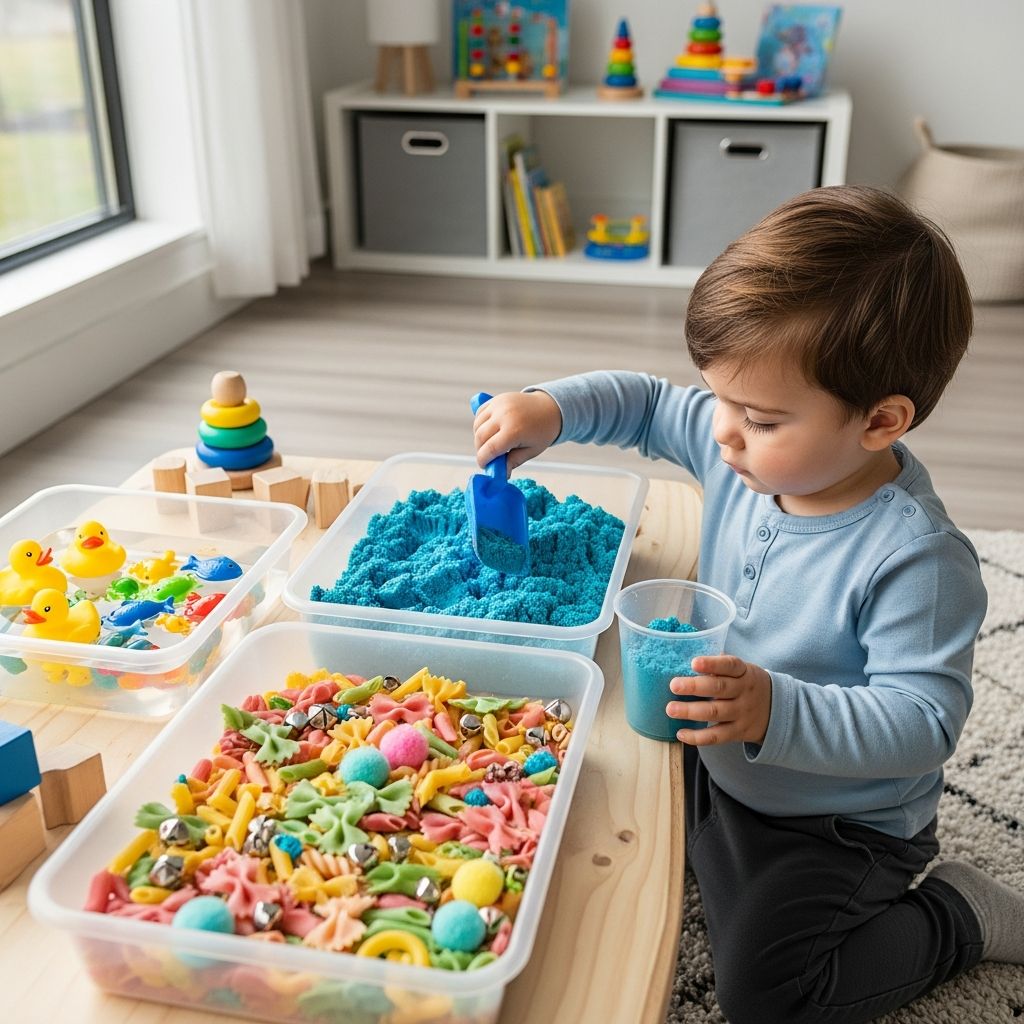
Fill a shallow container with safe fillers like uncooked rice, oats, or pom-poms. Hide small toys inside for digging. This promotes scooping, grasping, and texture differentiation, sharpening fine motor control and curiosity.
- Use dry materials for crunch: pasta shapes or lentils.
- Add wet elements cautiously: water beads or gel bags.
- Supervise to prevent ingestion; opt for large pieces.
Play Dough Creations
Homemade dough from flour, salt, water, and food coloring offers endless squishing and rolling. Toddlers knead, flatten, and shape, building hand strength while experimenting with resistance.
Vary by adding scents like lavender or embeds like glitter for multi-sensory layers.
Visual and Auditory Explorations
Sight and sound pair powerfully with touch, creating richer experiences.
Colorful Water Play
In transparent bottles or trays, layer colored water with oil and drops of dye. Shaking reveals mesmerizing swirls and bubbles, teaching cause-effect while delighting the eyes.
| Activity | Senses Engaged | Skills Built |
|---|---|---|
| Water Vortex Bottles | Sight, Sound, Touch | Observation, Fine Motor |
| Bubble Wrap Stomping | Touch, Sound | Gross Motor, Listening |
| Shiny Foil Crinkling | Sight, Sound, Touch | Sensory Integration |
Musical Shaker Crafts
Seal beans or bells in plastic eggs or bottles. Shaking produces varied rhythms, encouraging pattern exploration and beat matching, which aids auditory processing and early music appreciation.
Smell and Taste Sensory Fun
Olfactory and gustatory play connects senses to memory and emotion.
Aroma Jars
Layer jars with spices—cinnamon, vanilla, citrus peels. Uncorking releases scents for sniffing and describing, linking smell to words and evoking calm.
Edible Sensory Mixes
Mix yogurt with fruit purees or pudding with cereal bits. Toddlers poke, stir, and taste (if age-appropriate), blending taste with texture for safe, delicious discovery.
Always prioritize non-toxic, nut-free ingredients to avoid allergies.
Outdoor Sensory Worlds
Nature amplifies sensory play with unpredictable elements.
- Sand and Mud Pits: Digging and molding develop grip strength and imagination.
- Leaf and Bark Rubbings: Press paper over surfaces for tactile art, engaging sight and touch.
- Water Stream Splashing: Pouring from buckets hones pouring skills and cause-effect.
Outdoor sessions also introduce temperature variations and wind, enriching vestibular input through running on grass.
Safe Setup and Supervision Tips
Ensure activities suit developmental stages: 1-year-olds need larger items; 2-3-year-olds handle finer details. Cleanliness prevents infections—wash hands post-play.
- Choose choking-hazard-free materials.
- Limit sessions to 15-20 minutes to match attention spans.
- Follow your child’s lead; narrate without directing.
For special needs, adapt: deeper pressure for sensory seekers, lighter touch for avoiders.
Frequently Asked Questions
What age is best for sensory play?
From infancy onward, but toddlers (1-3 years) thrive with hands-on varieties as mobility increases.
Is mess inevitable?
Often, but use trays, smocks, and edible options to minimize cleanup while maximizing fun.
How often should we do sensory activities?
Daily, 15-30 minutes, integrated into routines for consistent growth.
Can sensory play help picky eaters?
Yes, by familiarizing textures through non-eating play first.
What if my toddler rejects certain textures?
Introduce gradually; pair with favorites to build tolerance gently.
Advanced Ideas for Growing Minds
As toddlers near preschool, layer complexity: themed bins (ocean with shells and blue rice) or group play for sharing. Tech-free tools like wooden blocks with fabrics add durability.
Track progress: improved pouring signals motor gains; new words like ‘crunchy’ show language advances.
Sensory play isn’t just amusement—it’s foundational for lifelong learning, turning everyday moments into developmental goldmines.
References
- Sensory play: What it is and what are the benefits — Lovevery Blog. 2023. https://blog.lovevery.com/skills-stages/sensory-play/
- 5 Reasons to Let Your Toddler Touch and Feel — Learning Resources Blog. 2023. https://www.learningresources.com/blog/5-reasons-to-let-your-toddler-touch-and-feel/
- The Benefits of Sensory Play For Your Child — Cleveland Clinic Health. 2023-10-12. https://health.clevelandclinic.org/benefits-of-sensory-play-ideas
- Nurturing Growth Through Sensory Play: Exploring the Benefits and Practices — CASRF. 2023. https://www.casrf.org/post/nurturing-growth-through-sensory-play-exploring-the-benefits-and-practices
- Importance of Sensory Activities in Early Childhood Development — Penn Foster Blog. 2023. https://www.pennfoster.edu/blog/importance-of-sensory-activities-in-early-childhood-development
- The Importance of Sensory Play — Community Playthings Resources. 2023. https://www.communityplaythings.com/resources/articles/sensory-play