Ear seeds provide a gentle, needle-free form of auriculotherapy that parents can use at home to help manage common childhood issues like anxiety, sleep disturbances, and behavioral challenges. Rooted in traditional practices and supported by emerging research, these tiny seeds stimulate specific ear points to promote balance in the body.
Understanding Auriculotherapy and Ear Seeds
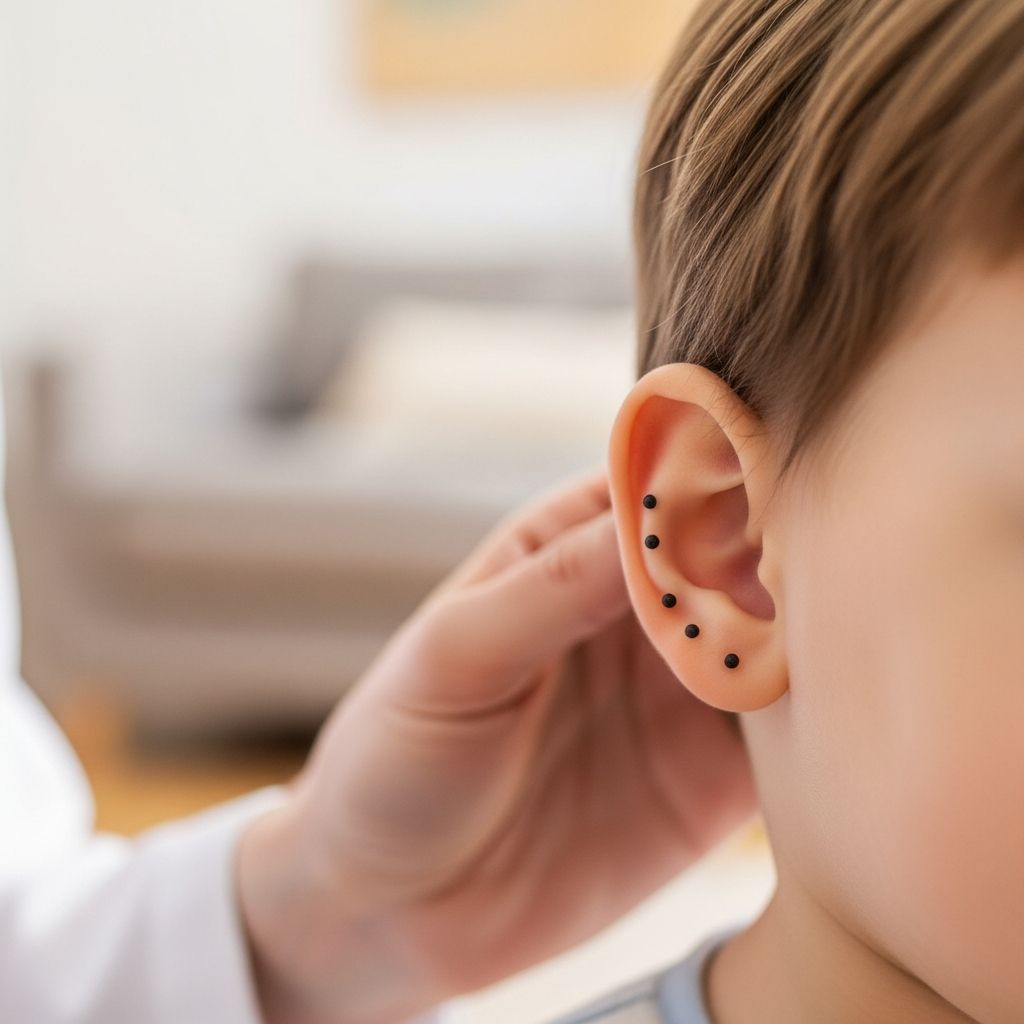
Auriculotherapy involves applying pressure to points on the outer ear, which traditional Chinese medicine views as a microsystem reflecting the entire body. Ear seeds, typically derived from the Vaccaria hispanica plant or made from metal and ceramic, are adhered to these points with waterproof tape. Unlike acupuncture, no needles penetrate the skin, making it suitable for sensitive pediatric use.
For children, fewer points are stimulated due to their vibrant energy in Oriental medicine principles. Protocols recommend starting with one seed on the Shen Men point per ear, lightly touched several times daily. This noninvasive approach allows continuous stimulation over days, with seeds typically lasting 3-5 days before replacement.
Potential Benefits for Young Ones
Research indicates ear seeds may help alleviate various pediatric concerns. A clinical trial on children aged 6-12 with ADHD found that 4 weeks of ear acupressure using V. hispanica seeds on points like Master Cerebral, Zero, Master Oscillation, Sub Cortex, and Shen Men significantly reduced behavioral problems, including attention issues and aggressive behavior. Effects persisted 4 weeks post-intervention.
- Behavioral Support: Reduced ADHD symptoms such as hyperactivity and rule-breaking, plus secondary issues like anxiety and social problems.
- Emotional Regulation: Potential relief for anxiety, depression, and stress, common in school-aged kids.
- Sleep Improvement: Aids insomnia by promoting relaxation through ear point stimulation.
- Pain Management: Eases chronic discomfort, chemotherapy-related tingling, or back pain without medication.
- Other Uses: May support weight management, trauma recovery, and habit-breaking like nail-biting.
While more large-scale studies are needed, these findings suggest ear seeds as a complementary tool alongside standard treatments.
Safe Application Protocols for Kids
Parents should consult a healthcare provider before starting, especially for children under 6 or those with ear infections. Professional application ensures correct point selection, as ears show diagnostic signs like tenderness or color changes.
| Age Group | Recommended Points | Frequency | Duration per Session |
|---|---|---|---|
| 6-12 years (ADHD protocol) | Master Cerebral, Zero, Shen Men, etc. | Twice daily, 4 days/week | 5 minutes |
| Young children | Shen Men (both ears) | 3-4 times daily | Light touch |
| Infants/Babies | Shen Men (one ear) | 3-4 times daily | Light touch |
| Newborns/Premature | One point (one ear) | As needed | Minimal |
Steps for home use: Clean the ear, place seeds on targeted points, secure with tape, and massage gently in circles 3-5 times daily using mild pressure (3-5/10 scale). Alternate ears weekly and track via checklist. Replace if seeds fall off (about 5% incidence).
Addressing Common Parental Concerns
Ear seeds are generally painless; most children feel nothing, though some note mild pressure from tape. Risks are low: irritation for sensitive skin or seeds dislodging (prevent by supervision). If a seed enters the ear canal, seek medical help immediately.
No major side effects reported in studies, unlike invasive methods. They’re safe for outpatient use, empowering families during routines like back-to-school transitions.
Integrating with Everyday Pediatric Care
Combine ear seeds with behavioral therapy, diet, or medication for ADHD. Parents in trials were trained via classes and followed up weekly, ensuring adherence. For anxiety or nail-biting, target stress points in home kits after professional guidance.
Healthcare settings like Children’s Hospital of Philadelphia endorse acupressure seeds as part of holistic plans, removable if uncomfortable. Stimulates natural endorphins and neurotransmitters for stress coping.
Research Insights and Limitations
A PMC study (2024) demonstrated statistical significance in ADHD behavioral improvements via parent-applied acupressure, using control groups and follow-ups. WebMD notes benefits for pain tolerance and insomnia, though evidence is preliminary. Cleveland Clinic emphasizes consulting providers for safety.
Limitations: Small sample sizes, need for long-term data. Not a cure-all, but promising adjunct.
Frequently Asked Questions
What age is safe for ear seeds on kids?
Generally 6+ for full protocols; infants use minimal points on one ear with light touch. Always under professional advice.
Do ear seeds hurt children?
No, they’re noninvasive. Mild tape sensation possible; remove if irritating.
How long do seeds stay on?
3-5 days average; massage daily for benefits.
Can parents apply them at home?
Yes, after training. Studies show efficacy with parental involvement.
Are there risks for kids with ADHD?
Low; one trial reported no adverse events, just rare seed replacement.
Getting Started: Tips for Parents
Seek certified auriculotherapists. Start simple with Shen Men for calm. Monitor for 4 weeks as in trials. Track symptoms daily.
Expand to points for specific needs: anxiety (Shen Men), focus (Master Cerebral).
References
- The Effect of Ear Acupressure on Behavioral Problems in Children with ADHD — PMC/NCBI. 2024. https://pmc.ncbi.nlm.nih.gov/articles/PMC11036156/
- Acupressure and Acupressure Bands and Seeds — Children’s Hospital of Philadelphia (CHOP). Accessed 2026. https://www.chop.edu/health-resources/acupressure-and-acupressure-bands-and-seeds
- Ear Seeds: What to Know — WebMD. Accessed 2026. https://www.webmd.com/balance/ear-seeds-what-to-know
- Ear Seeding Curriculum — NACCHO/Public Health Acupuncture of New Mexico. Accessed 2026. https://www.naccho.org/uploads/card-images/public-health-preparedness/NM-Integrative-Wellness-MRC-Public-Health-Acupuncture-JITT.pdf
- Ear Seeds: What Are They and Do They Work? — Cleveland Clinic. Accessed 2026. https://health.clevelandclinic.org/ear-seeds