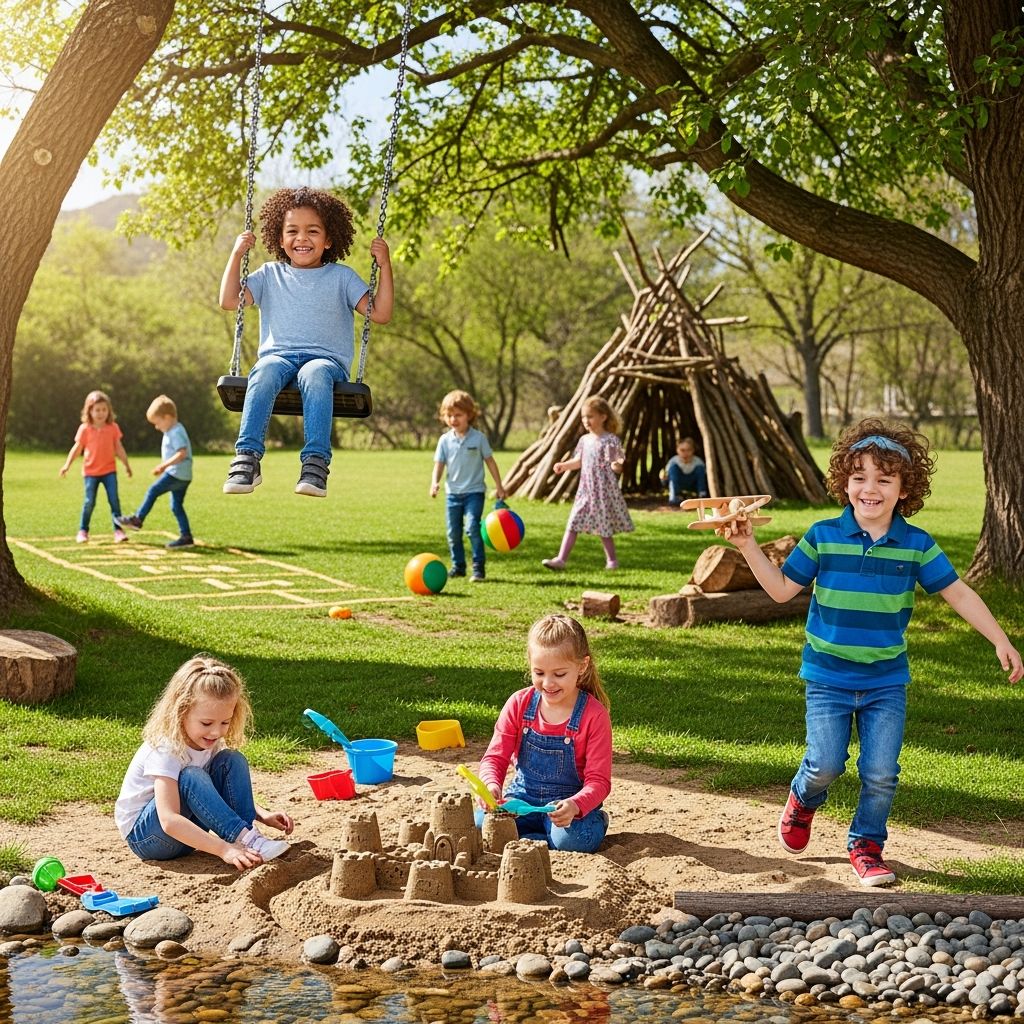
Play stands as a cornerstone of childhood, driving comprehensive development across physical, mental, social, and emotional domains. Far beyond mere entertainment, it equips children with essential life skills through exploration and interaction.
Building Strong Foundations Through Physical Activity
Active engagement in play significantly strengthens children’s bodies, promoting gross and fine motor skills essential for daily functioning. Running, climbing, and jumping during outdoor games enhance muscle tone, balance, and coordination, laying the groundwork for lifelong health.
These activities counteract sedentary lifestyles, reducing obesity risks and fostering cardiovascular fitness. Toddlers, for instance, refine balance by repeatedly falling and recovering, building resilience alongside physical prowess.
- Gross motor play: Tag, biking, and sports build endurance and large muscle control.
- Fine motor development: Drawing, block-building, and puzzles sharpen hand-eye coordination for tasks like writing.
Parents can facilitate this by designating safe outdoor spaces stocked with balls, climbing structures, and simple tools, encouraging at least 60 minutes of daily moderate-to-vigorous activity as recommended by health guidelines.
Unlocking Cognitive Potential Via Imaginative Exploration
Play ignites cognitive growth by stimulating problem-solving, creativity, and critical thinking. Children experiment with cause-and-effect during block towers or puzzles, honing spatial awareness and strategic planning.
Unstructured scenarios, like pretend “store” or “school,” demand rule invention and adaptation, mirroring real-world decision-making. This fosters perseverance as kids iterate on failed attempts, embedding deeper learning through repetition.
| Play Type | Cognitive Benefit | Example Activity |
|---|---|---|
| Puzzle Assembly | Pattern Recognition | Fitting pieces into shapes |
| Role-Playing | Scenario Planning | Acting as chef or doctor |
| Block Building | Spatial Reasoning | Constructing towers or bridges |
Such experiences prime brains for academic success, with research linking playful learning to improved executive function and adaptability.
Cultivating Social Bonds and Empathy
Interactive play teaches negotiation, sharing, and leadership, vital for forming relationships. Group games require turn-taking and rule adherence, cultivating empathy by exposing children to diverse perspectives.
Conflicts arising in play—over toy possession or game rules—offer safe practice in resolution, building communication skills. Board games exemplify this, demanding cooperation toward shared goals while respecting individual inputs.
- Encourages turn-taking and fairness in multiplayer settings.
- Develops leadership through role assignment in imaginative play.
- Fosters empathy via understanding peers’ emotions during interactions.
These skills translate to school and beyond, reducing isolation risks and enhancing peer connections.
Nurturing Emotional Resilience and Regulation
Play serves as an emotional outlet, allowing safe expression of feelings like joy, frustration, or anger. Pretend scenarios help process experiences, developing self-regulation and resilience.
Navigating play’s ups and downs—losing a game or resolving disputes—builds confidence and flexibility. It reduces stress, providing joyful relief from academic pressures.
Children learn impulse control and task-switching, crucial for emotional maturity. Without ample play, social and self-management skills may falter.
Balancing Structured and Free-Form Play
While organized sports offer discipline, unstructured play sparks true independence. Free exploration lets children dictate pace and narrative, boosting creativity and autonomy.
A mix is ideal: Structured for skill-building, unstructured for innovation. Limit screens to prioritize hands-on engagement, ensuring diverse play types.
Practical Strategies for Parents to Champion Play
Carve out daily unstructured time, free from schedules. Stock environments with open-ended toys like blocks, art supplies, and costumes rather than directive electronics.
Join occasionally—narrate actions or pose open questions—to model skills without dominating. Ensure safety: Soft surfaces for falls, supervision for young ones.
- Rotate toys to maintain novelty and curiosity.
- Designate ‘play zones’ indoors and out.
- Observe interests to tailor opportunities, like nature hunts for explorers.
Advocate for play in schools, countering academic overload. Communities benefit from play-centric policies, enhancing collective child well-being.
Long-Term Impacts: Play’s Lifelong Legacy
Early play patterns influence adult health, creativity, and relationships. Physically active kids often maintain fitness habits; cognitively playful ones excel in innovation.
Socially adept from play, they navigate workplaces effectively. Emotionally resilient individuals handle adversity better, underscoring play’s enduring value.
Frequently Asked Questions
How much playtime do children need daily?
Children aged 3-5 require at least 3 hours of physical activity daily, including active play; school-age kids need 60 minutes of moderate-to-vigorous activity.
What if my child prefers screens over play?
Gradually introduce interactive alternatives like outdoor challenges or group games; model play yourself to demonstrate its joys.
Is unstructured play safe without supervision?
For toddlers, close watch is essential; older children benefit from guided freedom in secure environments to build independence.
Can play help with behavioral issues?
Yes, it channels energy positively, teaches regulation, and reduces stress, often improving focus and cooperation.
How does play support learning disabilities?
Play-based approaches strengthen neural pathways, enhancing skills like attention and problem-solving in tailored, engaging ways.
References
- Kids and Playtime – Why It Is so Important — Brown University Health. 2023-05-15. https://www.brownhealth.org/be-well/kids-and-playtime-why-it-so-important
- The Benefits of Play: How Playtime Nurtures Child Development — Commonwealth Pediatrics. 2024-02-10. https://commonwealthpeds.com/development-and-play/
- 10 reasons why play is important — National Literacy Trust. 2023-11-20. https://literacytrust.org.uk/resources/10-reasons-why-play-important/
- It’s a Kid’s Job — NIH News in Health. 2018-07-01. https://newsinhealth.nih.gov/2018/07/it-s-kid-s-job
- The Role of Play in Child Development: Benefits and Tips — Waukesha Pediatrics. 2024-08-05. https://www.waukeshapediatrics.com/my-blog/1203102-the-role-of-play-in-child-development-benefits-and-tips
- The Power of Play — Boston Children’s Museum. 2023-09-12. https://bostonchildrensmuseum.org/learn/the-power-of-play/
- Importance of Play in Early Childhood — HeadStart.gov. 2022-06-18. https://headstart.gov/curriculum/article/importance-play-early-childhood