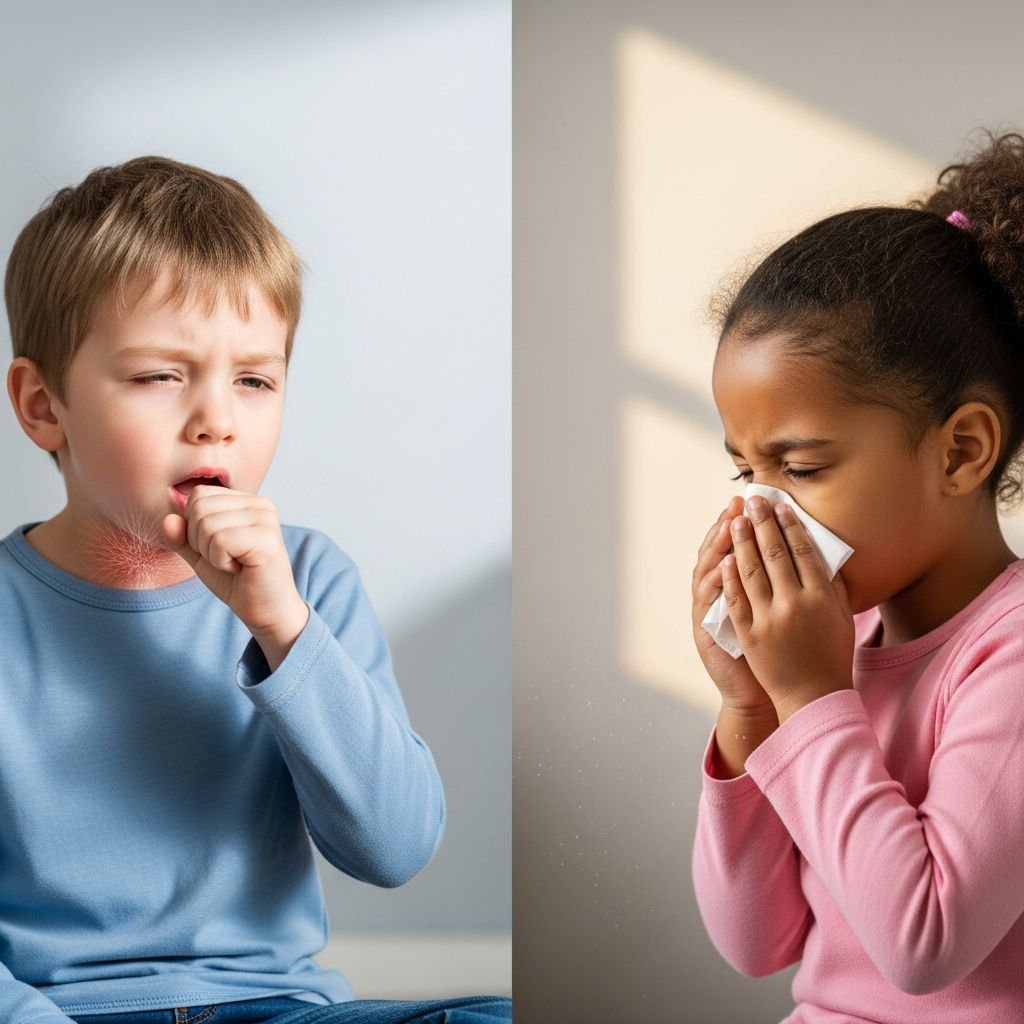
Coughs in children serve as the body’s natural mechanism to clear irritants or mucus from the airways, but distinguishing between a dry cough and a wet cough is crucial for appropriate care. A dry cough is typically non-productive, producing no mucus and often feeling like a persistent tickle, while a wet cough is productive, involving phlegm that rattles in the chest.
Key Differences Between Dry and Wet Coughs
Recognizing the type of cough helps parents respond effectively. Dry coughs sound harsh and hacking without any phlegm expulsion, whereas wet coughs produce a gurgling or rattling noise due to mucus movement.
| Feature | Dry Cough | Wet Cough |
|---|---|---|
| Sound | Harsh, hacking, tickly | Gurgling, rattly, congested |
| Mucus Production | None (non-productive) | Yes (productive, phlegm) |
| Sensation | Throat irritation or itch | Chest congestion |
| Common Timing | Worsens at night | Constant, with congestion |
Clinical studies confirm that wet coughs always correlate with visible airway secretions, while dry coughs may have minimal secretions, making parental and clinician assessments reliable but not absolute.
Common Causes of Dry Coughs in Children
Dry coughs often stem from throat or airway irritation rather than infection. Frequent triggers include:
- Viral infections: Early stages of colds or flu irritate the throat without mucus buildup.
- Allergies: Pollen, dust, or pet dander provoke a tickly cough, especially with sneezing or itchy eyes.
- Environmental factors: Dry air, smoke, or pollutants cause persistent hacking.
- Asthma or post-viral inflammation: Lingering airway sensitivity leads to non-productive coughing.
These coughs tend to intensify at night when lying down, as postnasal drip or gravity affects the throat.
Common Causes of Wet Coughs in Children
Wet coughs indicate mucus production, usually from lower respiratory involvement. Primary causes are:
- Respiratory infections: Colds, flu, or bronchitis fill airways with phlegm.
- Sinus issues or postnasal drip: Mucus drains into the throat, creating a productive cough.
- Pneumonia: Bacterial or viral, leading to colored phlegm and chest rattliness.
- Bronchiolitis: Common in infants, with wheezing and mucus.
A wet cough helps expel mucus, but if prolonged, it risks secondary infections.
Symptoms Accompanying Each Cough Type
Beyond sound, associated signs guide assessment. For dry coughs, expect a scratchy throat, mild fever, or runny nose without thick discharge. Wet coughs pair with stuffy nose, fever, breathing difficulty, or green/yellow phlegm signaling possible bacteria.
- Dry: Itchy throat, worsens lying down, no fever spike.
- Wet: Chest tightness, frequent clearing, possible wheezing.
Persistent coughs over three weeks warrant attention, as they may indicate ongoing issues.
Safe Home Remedies for Dry Coughs
Focus on soothing irritation without suppressing the cough entirely.
- Humidify air: Use a cool-mist humidifier to moisten dry airways.
- Honey for ages 1+: 1/2 to 1 teaspoon before bed reduces tickling (never for infants).
- Fluids and elevation: Warm liquids and propping up the head ease nighttime coughs.
- Avoid irritants: Keep away from smoke and allergens.
Safe Home Remedies for Wet Coughs
Encourage mucus clearance rather than suppression.
- Steam therapy: Bathroom steam or humidifier loosens phlegm.
- Hydration: Plenty of fluids thin mucus for easier expulsion.
- Saltwater gargle (ages 4+): Reduces throat mucus pooling.
- Chest percussion: Gentle patting helps dislodge phlegm in toddlers.
Over-the-counter remedies are not recommended for young children; consult a pediatrician first.
When to Consult a Doctor
Most coughs resolve in 1-3 weeks, but seek help if:
- Cough lasts >3 weeks or worsens.
- High fever, rapid breathing, or blue lips appear.
- Wheezing, vomiting from coughing, or dehydration signs.
- Infant under 3 months coughs persistently.
Brassy coughs may signal tracheomalacia, highly specific per studies.
Preventing Coughs in Children
Proactive steps reduce occurrences:
- Handwashing and vaccinations (flu, COVID, RSV).
- Maintain indoor humidity 40-60%.
- Avoid secondhand smoke.
- Manage allergies with air purifiers.
Frequently Asked Questions (FAQs)
Is a wet cough always a sign of infection?
Not always; it can stem from postnasal drip or allergies, but infections are common. Monitor for fever or colored phlegm.
Can I give cough medicine to my toddler?
No, avoid OTC cough meds for children under 6; they lack safety data and may harm. Use home remedies instead.
Why does my child’s cough worsen at night?
Gravity causes mucus or postnasal drip to pool when lying down, irritating the throat.
How long should a cough last after a cold?
Up to 3-4 weeks for post-viral coughs; longer needs evaluation.
What’s the difference between a barking and dry cough?
Barking is croup-related, hoarse and seal-like; dry is tickly without hoarseness.
References
- Dry Cough VS Wet Cough In Toddler: What To Know — Cheers Childcare. 2023. https://cheerschildcare.com/dry-cough-vs-wet-cough/
- Is your kid’s cough more than just a cough? — OSF HealthCare. 2023-10-12. https://www.osfhealthcare.org/blog/is-your-kids-cough-more-than-just-a-cough
- Cough quality in children: a comparison of subjective vs. bronchoscopic findings — PMC (National Library of Medicine). 2011-05-25. https://pmc.ncbi.nlm.nih.gov/articles/PMC545936/
- What your child’s cough is telling you — Children’s Health. 2023. https://www.childrens.com/health-wellness/what-your-childs-cough-is-telling-you
- Common Kids’ Coughs Explained — Children’s Healthcare of Atlanta. 2023. https://www.choa.org/parent-resources/everyday-illnesses/common-kids-coughs-explained
- Productive vs Non-Productive Cough — Delsym. 2023. https://delsym.com/tips-and-resources/productive-cough-vs-non-productive/