Moving your toddler from a full-size high chair to a dining booster seat is a big step toward independent eating and family meals at the table. The right booster can make that transition smoother, safer, and a lot less messy, while the wrong choice can wobble, slide, or turn every dinner into a wrestling match.
This guide explains what booster seats are, which features really matter, how to match a seat to your child and your dining room, and how to use it safely day after day. It is a completely original resource created to help you shop with confidence.
Why a Dining Booster Seat Matters
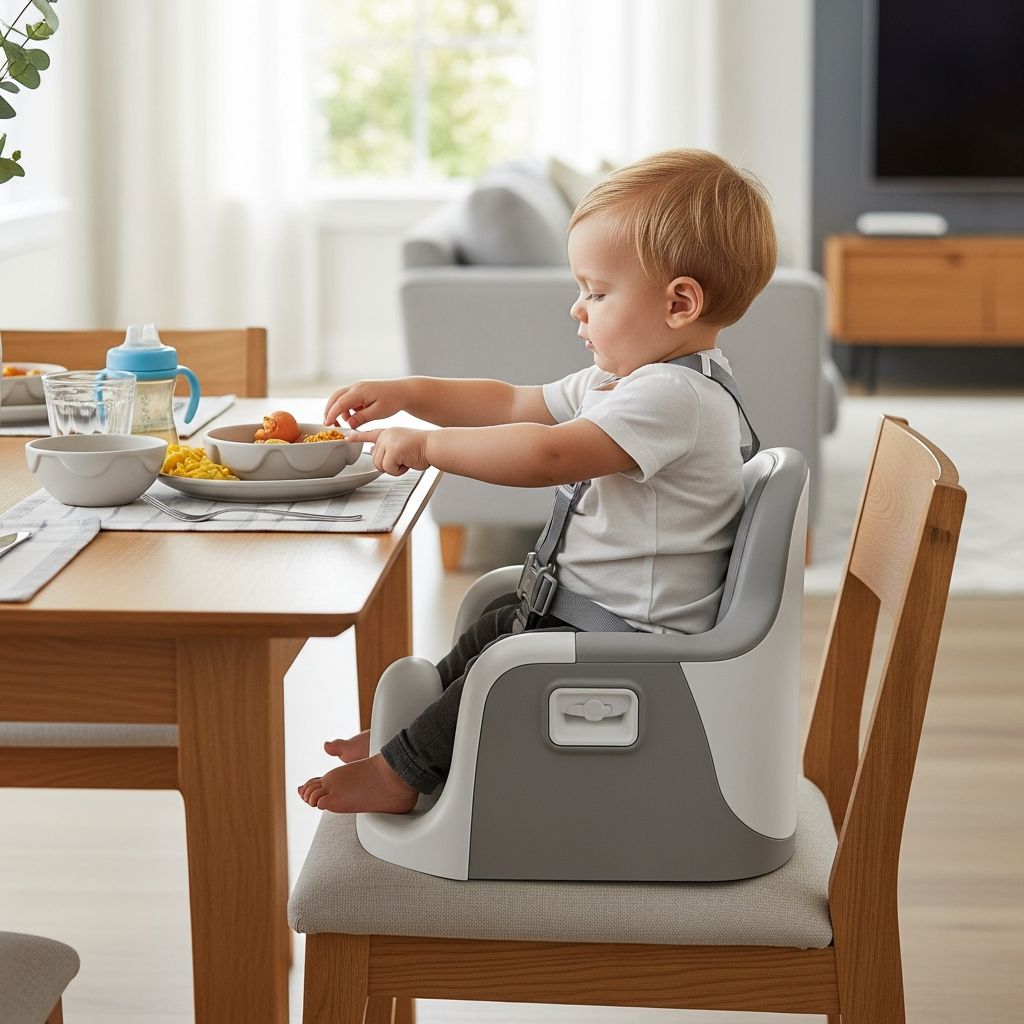
A dining booster seat raises your toddler up to table height so they can sit on a regular chair and eat with the rest of the family. Instead of being off to the side in a bulky high chair, your child gets a front-row seat at mealtime conversations and routines.
- Promotes social skills: Sitting at the table helps toddlers copy table manners, try new foods, and feel included in family life.
- Supports independence: Boosters encourage kids to feed themselves and eventually climb in and out (with supervision) as they grow.
- Saves space: Many families outgrow the big footprint of a high chair and prefer a compact booster that straps to an existing chair.
Over time, the booster becomes a bridge between “baby feeding gear” and a standard dining chair, helping your toddler grow into a confident eater.
High Chair vs. Booster Seat: Which One Do You Need?
Parents often wonder when to graduate from a high chair. The answer depends on your child’s age, posture, and your home setup, not just their birthday.
| Feature | High Chair | Dining Booster Seat |
|---|---|---|
| Typical user | Babies and young toddlers who need full support | Older babies and toddlers who can sit steadily |
| Support level | High back, harness, wide base | Lower profile, sometimes no back for older toddlers |
| Space needs | Takes up dedicated floor space | Attaches to an existing chair, compact |
| Portability | Usually stays at home | Often folds or is light enough for travel |
| Best for | Beginning solids and very wiggly eaters | Joining the family at the table, saving space |
Many families use a high chair for the first months of solid foods and then bring in a booster somewhere between 12–24 months, once their child can sit upright and maintain good trunk control. That timeline can be adjusted based on your child’s abilities and your comfort level.
Different Types of Dining Booster Seats
Not all booster seats look or function the same. Knowing the main categories helps you quickly narrow down your options.
1. Rigid Plastic Boosters
These are molded plastic seats that strap to a dining chair and may or may not come with a tray. They are popular because they are affordable and usually very easy to wipe clean.
- Often include a backrest and safety harness for younger toddlers.
- Some models feature height adjustments to grow with your child.
- Best for everyday use at home when durability and low maintenance are important.
2. Cushioned or Foam Boosters
These seats use a soft foam or thick cushioning to keep your child more comfortable during longer meals. The cushion may be one solid piece or a padded cover over a plastic base.
- Gentler on little legs and bottoms, especially on hard dining chairs.
- May look more like regular decor than “baby gear,” which some families prefer.
- Look for waterproof or wipeable surfaces to avoid trapped crumbs and stains.
3. Portable and Travel Boosters
Travel-friendly boosters collapse, fold, or roll to fit in a bag and are designed for restaurant chairs, grandparents’ houses, and vacations. They may be fabric-based or very slim plastic designs.
- Lightweight and compact, often with a carrying strap or bag.
- Perfect for families who eat out often or split time between homes.
- Some sacrifice padding, height range, or support for the sake of portability.
4. Backless Boosters for Older Toddlers
Backless models are usually lower, sleeker cushions without a backrest or harness. They are intended for older toddlers and preschoolers who already have strong sitting balance.
- Helps kids reach the table while making them feel more like “big kids.”
- Often the easiest to clean and store when not in use.
- Should only be used when your child no longer needs full restraint to sit safely.
Key Safety Features to Look For
Safety should always come before style or cute prints. When evaluating booster seats, give extra attention to how the seat attaches to both the child and the chair.
- Secure straps to the chair: Ideally, there will be at least a strap around the back of the dining chair and one under the seat to prevent sliding or tipping.
- Harness for your child: Younger toddlers do best with a three-point or five-point harness that includes a strap between the legs to prevent slipping down.
- Non-slip base: Rubberized feet or a textured bottom reduce the chance of the booster sliding on smooth chair surfaces.
- Stable shape: A wide base and low center of gravity help the seat feel solid, even when your toddler leans to reach something.
- Sturdy materials: Avoid flimsy plastic or thin fabric that could sag or crack under daily use.
Always remember that no booster can replace close supervision. Children should never be left unattended in any elevated seat, and standing or jumping in the booster should be an absolute “no” every time.
Comfort and Ergonomics: Helping Your Toddler Sit Well
A safe seat that is uncomfortable will lead to squirming, complaining, and quick attempts to escape. Comfort matters just as much as safety when you want calmer family meals.
- Seat depth and width: Your child should be able to sit with their back against the backrest (if there is one) without the front edge cutting into the backs of their knees.
- Foot support: Toddlers sit better when their feet can rest on something solid, whether that is a footrest, a box under the chair, or a low rung on the dining chair.
- Upright posture: The seat should allow your child to sit mostly upright, not leaning back like in a lounge chair. Upright posture supports safer swallowing and better control of utensils.
If your toddler constantly twists or slides down, double-check the harness fit, chair attachment, and whether the seat itself might be the wrong shape for their body.
Practical Features Parents Love
Beyond safety and comfort, there are several everyday conveniences that can make your life significantly easier.
- Removable tray: A tray can be helpful during the early months when your child is still learning to reach the main table, and it offers a contained space for food and play.
- Height adjustability: Seats with multiple height settings can follow your child from toddler years into preschool.
- Foldability and storage: If space is tight, look for boosters that fold flat or stack neatly when not in use.
- Neutral style: Simple colors and designs blend more easily into your dining area and can feel less cluttered.
Choosing a booster with the right combination of these features can mean the difference between setting up every meal from scratch and simply sliding your child into a ready-to-go seat.
Cleaning and Maintenance: Dealing With the Mess
Toddlers and tidy meals rarely go together, so plan on crumbs, spills, and occasional full-scale disasters. A booster that is quick to clean will save time and frustration.
- Wipeable surfaces: Smooth plastic or waterproof foam wipes down easily with a cloth after each meal.
- Minimal crevices: Fewer seams and cracks mean fewer places for dried food to hide.
- Removeable cover or tray: If your seat has fabric, check that you can remove and wash it. Detachable trays that fit in the sink or dishwasher are a major plus.
Make a habit of a quick wipe-down after each use and a deeper clean regularly. This keeps the booster hygienic and ensures the straps and buckles don’t get clogged with food residue.
Matching the Booster to Your Home and Lifestyle
The “best” booster for another family might be totally wrong for yours. Think about how and where you will use the seat most often.
- Dining chair shape: Wide, flat seats are ideal. Very curved or narrow chairs can make it hard to attach the booster securely.
- Kitchen layout: In a tight space, a compact, non-bulky booster may be safer and more convenient.
- Travel habits: If you frequently eat out or visit relatives, a dedicated travel booster or a home seat that folds can be worth the investment.
- Number of kids: If you have multiple children, consider stackable or uniform boosters for a consistent setup.
Taking a few measurements of your dining chairs and testing how easy it is to buckle and unbuckle the seat during a typical day can guide you toward the right pick.
When Is Your Toddler Ready for a Booster Seat?
Age ranges on packaging are only a starting point. Readiness is more about your child’s physical abilities and behavior at the table.
- Your child can sit unsupported with good control for the length of a meal.
- They can reach the table without straining or leaning dangerously forward.
- They understand simple safety rules like “sit on your bottom” (with reminders, of course).
Some children are ready as early as around one year, while others benefit from staying in a traditional high chair a while longer. Use your judgment and transition gradually if needed, starting with supervised snacks or short meals.
How to Set Up and Use a Booster Seat Safely
A good booster must be installed correctly to be truly safe. Take a few extra minutes during the first setup and teach other caregivers to use it the same way.
- Choose a stable chair: Use a sturdy dining chair with all four legs firmly on the floor. Avoid bar stools or lightweight folding chairs.
- Attach all straps: Secure the straps under the chair seat and around the back. Tighten them until the booster doesn’t shift when you wiggle it.
- Adjust the harness: Fasten the harness snugly across your child’s lap and between their legs, making sure it is not twisted.
- Position the chair: Keep the seated child a safe distance from sharp corners, hot dishes, and table edges that could be used for climbing.
- Supervise constantly: Stay close enough to prevent standing, pushing the table, or trying to climb out.
Check the booster regularly for loose screws, worn straps, or cracks in the plastic, and stop using it if you notice any damage that could affect stability.
Common Mistakes to Avoid
Even experienced parents can fall into shortcuts when they are tired or in a rush. Try to avoid these common booster seat mistakes.
- Skipping the harness “just this once” because your child complains.
- Placing the booster on top of a bar stool, bench, or other unstable surface.
- Allowing toddlers to stand on the booster to reach for items on the table or counter.
- Using the booster on a chair that is pushed too far from the table, making kids lean to reach their food.
Consistency helps toddlers learn that the booster has firm rules, just like a car seat. The more predictable the routine, the fewer arguments you will have over buckles and sitting still.
Frequently Asked Questions About Dining Booster Seats
How long will my child use a dining booster seat?
Most children use a booster for at least a couple of years, typically from the time they move out of a high chair until they can sit at table height with feet supported on their own. For many families, that means somewhere between about two and six years old, depending on the height of the table and chairs and the child’s growth.
Can a booster seat replace a high chair from the beginning?
Some booster seats are designed to work for younger babies as long as they offer strong back support, a reliable harness, and a stable base. However, many families still prefer using a traditional high chair for the earliest months of solid foods because the support and recline options can be more generous. If you plan to use a booster from the start, check the manufacturer’s minimum age and weight guidelines and make sure your baby can sit upright comfortably.
Is it safe to use a dining booster on a bench?
Benches can be tricky because they often allow more side-to-side movement, and some do not offer a back to anchor the booster’s straps. Whenever possible, attach the booster to a standard, sturdy dining chair as recommended in the product instructions. If you must use a bench occasionally, be certain that the booster does not slide, that all straps are secure, and that an adult sits directly next to the child.
How do I know if the booster fits my dining chair?
Before buying, compare the dimensions and strap configuration listed for the booster with the shape of your chair. Flat, wide seats and open backs are easiest to work with. Deep curves, very thin seats, or unusual designs can make it difficult to thread and tighten straps properly. If possible, test the booster on your own chair or choose a retailer with a flexible return policy.
What should I do if my toddler keeps trying to escape?
Some toddlers test limits by sliding an arm out of the harness or trying to stand up mid-meal. First, check that the harness is adjusted snugly and positioned correctly. Then keep mealtimes engaging but fairly short, and give consistent, calm reminders about the rule to sit on their bottom. If your child is extremely resistant, consider whether the seat is comfortable and whether the table height and foot support are appropriate; discomfort often shows up as wiggling and escape attempts.
Final Thoughts
A well-chosen dining booster seat can turn chaotic meals into calmer, safer, and more connected family time. Focus on safety, comfort, ease of cleaning, and how the seat fits your home and child’s stage of development. With those pieces in place, you will have a reliable spot at the table where your toddler can learn, explore new foods, and grow into a confident, independent eater.