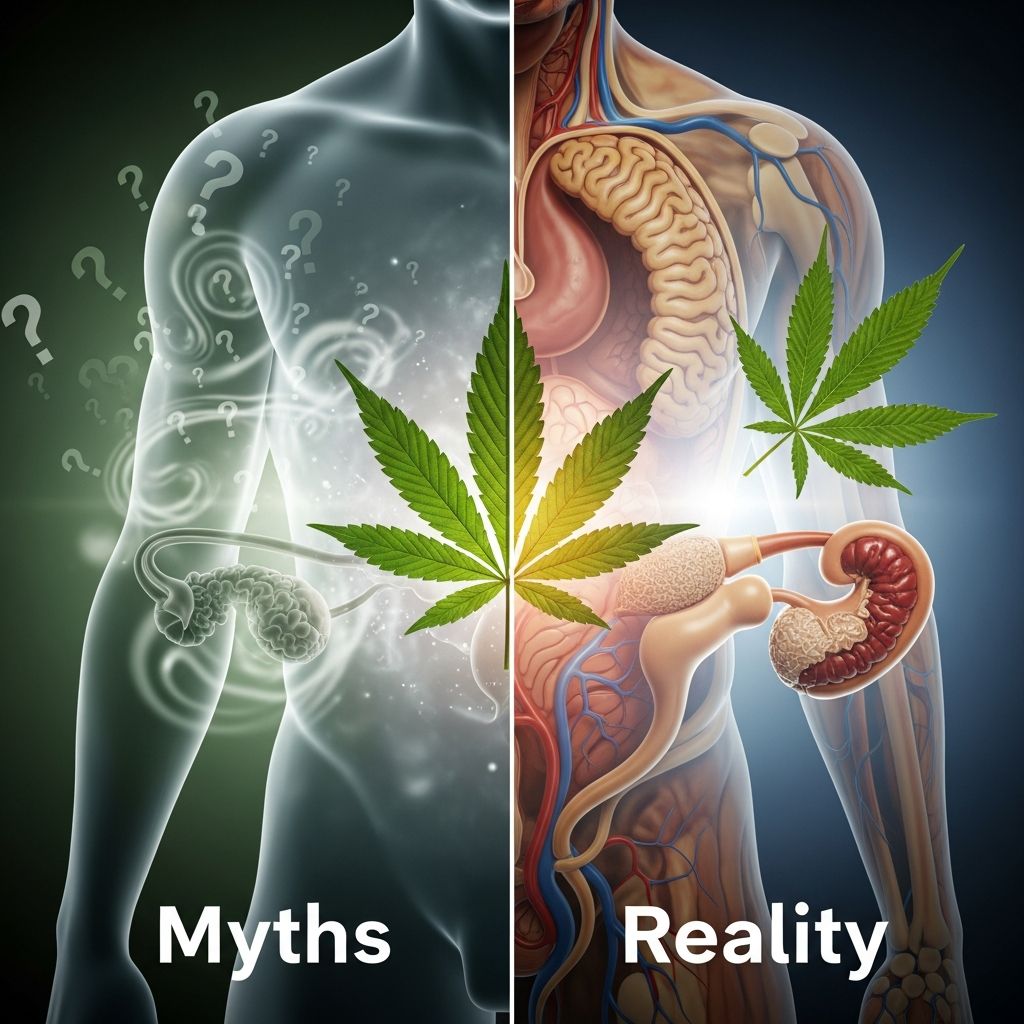
Cannabis consumption has surged globally, prompting questions about its influence on male physiology, particularly testosterone production and reproductive capabilities. Scientific investigations reveal a nuanced relationship, with effects varying by usage patterns, dosage, and individual biology. Acute exposure may cause temporary dips, while chronic heavy use correlates with more sustained disruptions, though human data shows inconsistencies compared to animal models.
Understanding Testosterone’s Role in Male Health
Testosterone, the primary androgen hormone, regulates muscle mass, bone density, libido, mood, and sperm production. Produced mainly in the testes’ Leydig cells, its synthesis follows the hypothalamic-pituitary-gonadal (HPG) axis: the hypothalamus releases gonadotropin-releasing hormone (GnRH), prompting the pituitary to secrete luteinizing hormone (LH) and follicle-stimulating hormone (FSH), which stimulate testicular function.
Disruptions to this axis can lead to symptoms like fatigue, reduced muscle growth, erectile dysfunction, and infertility. Cannabis, via its main psychoactive component THC, interacts with the endocannabinoid system (ECS), which has CB1 and CB2 receptors in the hypothalamus, pituitary, and testes, potentially altering hormone signaling.
Short-Term Effects of Cannabis on Hormone Levels
Immediate responses to cannabis use often involve transient testosterone suppression. Studies indicate single-session consumption can reduce levels by 15-35%, with recovery in 24-48 hours. This stems from THC binding to CB1 receptors in the brain, inhibiting GnRH release and subsequently lowering LH and FSH by up to 40%.
Paradoxically, some human research reports slight elevations post-use. A 2018 Andrology study of healthy men found higher serum testosterone in those smoking within 30 days versus longer abstainers. Similarly, a 2020 World Journal of Urology analysis noted small increases, diminishing with higher THC doses. A Danish study of 1,215 men observed 7% higher levels in smokers, though smoking itself (not just cannabis) may contribute.
- Acute boosts: Occasional users (2-3 times/month) show statistically significant rises.
- Mechanistic explanation: Short-term ECS activation might enhance certain pathways before suppression dominates.
Chronic Cannabis Use and Sustained Impacts
Long-term daily exposure presents greater risks. A 2022 OHSU primate study linked chronic THC edibles to over 50% testicular shrinkage and reduced testosterone, marking the first such nonhuman primate evidence. Rodent models confirm: acute 10 mg/kg THC depresses testicular synthesis; chronic 2 mg/kg yields larger effects.
Human findings vary. A seminal 1974 Kolodny study reported 44% lower testosterone in daily smokers, but a 2019 World Journal of Urology review of 1,577 men found no differences. Heavy chronic users (multiple times daily) may see 20-55% reductions, with slower recovery (3-6 months). Cannabis dependence associates with 1.2-fold higher erectile dysfunction risk, though not always low testosterone.
| Usage Pattern | Testosterone Change | Key Studies | Recovery Estimate |
|---|---|---|---|
| Acute (single use) | -15% to -35% | Multiple acute trials | 24-48 hours |
| Moderate (2-3x/week) | -5% to -15% | Short-term human data | 1-2 weeks |
| Chronic daily | -20% to -44% | Kolodny 1974; primate 2022 | 4-12 weeks |
| Heavy chronic | Up to -55% | High-dose models | 3-6 months |
Cannabis Influence on Sperm Quality and Fertility
Beyond testosterone, cannabis affects spermatogenesis. Chronic use correlates with lower sperm count, motility, and morphology. The 2022 primate study showed testicular atrophy alongside hormone drops. Human data from infertile men links use to reduced plasma testosterone and altered estradiol/prolactin, impacting libido and sperm production.
A Journal of Urology systematic review notes consistent animal evidence of depressed synthesis, with mixed human results. Recent use harms more than frequency alone. No direct hypogonadism link, but fertility declines, especially in dependent users.
- Smaller testicular volume in regular users.
- Leydig cell dysfunction from direct cannabinoid exposure.
- Increased prolactin may suppress sperm output.
Factors Shaping Individual Responses
Effects aren’t uniform. Dosage, THC potency, frequency, duration, age, genetics, body fat, and baseline health modulate outcomes. Younger men and those with low T are more vulnerable; fat-stored THC prolongs exposure.
Tolerance develops in some chronic users, normalizing levels despite ongoing use. Co-factors like tobacco/alcohol confound results—smokers often have higher T, blurring cannabis-specific impacts.
Reversibility and Recovery Pathways
Positive news: most effects reverse post-abstinence. A 1976 study showed baseline return in 2-4 weeks; broader data suggests 4-12 weeks for chronic users. Primate models imply longer for severe atrophy.
Lifestyle aids recovery: exercise, sleep, nutrition, and avoiding endocrine disruptors accelerate HPG axis normalization. Monitor via blood tests if symptoms persist.
Broader Reproductive and Sexual Health Considerations
Cannabis dependence ties to erectile dysfunction (1.2x risk in adults), possibly via vascular or hormonal paths, with higher PDE5i prescriptions. Yet, a study of 4,800 men found better penile blood flow in users, attributed to younger age/health profiles.
No consistent libido boost or detriment; short-term highs may enhance, chronic use impairs via prolactin/estradiol shifts.
Frequently Asked Questions
Does occasional cannabis use lower testosterone?
Minimal impact; some studies show temporary increases. Heavy chronic use poses greater risk.
Can quitting cannabis restore fertility?
Yes, sperm parameters and hormones typically normalize within weeks to months.
Is THC or CBD more harmful to male hormones?
THC primarily drives suppression via CB1; CBD effects understudied but likely milder.
Should men trying to conceive avoid cannabis?
Advisable, given links to sperm quality declines, even if testosterone effects vary.
How does cannabis compare to alcohol for testosterone?
Alcohol chronically suppresses more reliably; cannabis effects are dose/pattern-dependent.
Practical Recommendations for Men’s Health
Men concerned about hormones should track usage, prioritize moderation, and test levels (total/free T, LH/FSH) if symptomatic. Consult urologists for fertility goals. Emerging research urges caution with high-THC products amid legalization.
While not universally detrimental, evidence favors abstinence for optimal reproductive health, especially chronic/heavy patterns. Balance enjoyment with awareness of potential HPG disruptions.
References
- Does Marijuana Use Affect Testosterone Levels? — Men’s Health. 2023-05-15. https://www.menshealth.com/health/a42598419/does-weed-affect-testosterone/
- Does marijuana lower testosterone? — SiPhox Health. 2024-01-10. https://siphoxhealth.com/articles/does-marijuana-lower-testosterone
- Does Cannabis Affect Testosterone? — Hims. 2023-11-20. https://www.hims.com/blog/weed-and-testosterone
- Chronic marijuana use negatively impacts male reproductive health — OHSU News. 2022-01-25. https://news.ohsu.edu/2022/01/25/chronic-marijuana-use-negatively-impacts-male-reproductive-health-may-decrease-testicular-function
- Cannabis Dependence Linked With Erectile Dysfunction — Renal and Urology News. 2023-06-12. https://www.renalandurologynews.com/news/erectile-dysfunction-testosterone-cannabis-dependence-linked/
- Cannabis and Male Fertility: A Systematic Review — Journal of Urology (AUA). 2019-01-01. https://www.auajournals.org/doi/pdf/10.1097/JU.0000000000000248
- How Does Marijuana Affect Male Fertility? — Denver Urology. 2023-08-05. https://www.denverurology.com/urology-blog/how-does-marijuana-effect-male-fertility/