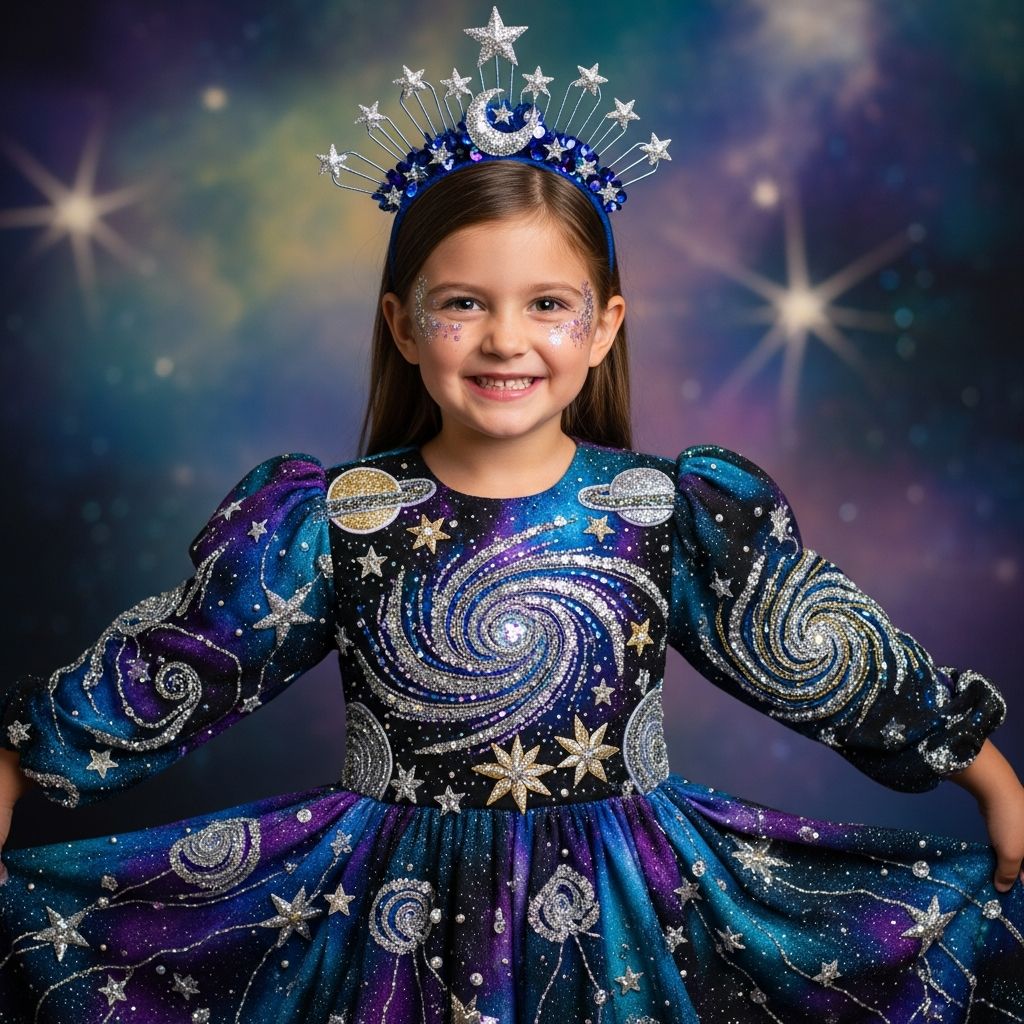
Galaxy prints are everywhere in pop culture, and they make an especially fun idea for a Halloween costume that kids can help design themselves. Instead of buying a one-time outfit, you can transform simple clothes into a swirling nebula of color, stars, and light using basic craft supplies and a bit of creativity.
This guide walks you through every step of creating a comfortable, glow-ready DIY galaxy Halloween costume for kids, from materials and painting techniques to safe use of lights and galaxy-inspired makeup.
Why a Galaxy Costume Is Perfect for Kids
Picking a Halloween outfit can be tough, but a galaxy costume solves a lot of common costume problems parents run into.
- Comfortable to wear: The base layer is just regular clothing, so kids can move, sit, and play easily.
- Weather-flexible: Use leggings and long sleeves for cooler climates or lighter layers where it’s warm.
- Creative and customizable: No two galaxies look the same, so there’s no pressure to be perfect.
- Budget-friendly: You can often start with pieces your child already owns.
- STEM tie-in: It’s a fun reason to talk about space, stars, and the universe.
Because galaxies are made of stars, dust, and gas spread over enormous distances, they naturally lend themselves to loose, abstract patterns kids love to help create.
Materials and Tools You Will Need
You can vary the exact products, but the list below covers the basics for a striking galaxy costume.
Core Clothing Pieces
- 1 dark base outfit (e.g., navy or black leotard + leggings, or long-sleeve tee + leggings)
- Optional: dark socks or tights and simple dark shoes
Painting and Color Effects
- Fabric paints in white, deep blue, and purple
- Fabric spray paints or soft fabric dyes in pink, blue, and purple for misty color
- Optional: glow-in-the-dark fabric paint for added nighttime visibility
- 1 soft sponge or make-up sponge for blending colors
- 1 old toothbrush dedicated to splatter effects
Galaxy Veil or Cape
- About 1.5–2 yards of dark tulle, netting, or organza (black, navy, or very dark purple)
- Safety pins, fabric glue, or a simple elastic waistband to attach the veil or cape
Lighting and Extras
- 1–2 strings of battery-operated LED lights (cool white or multicolor)
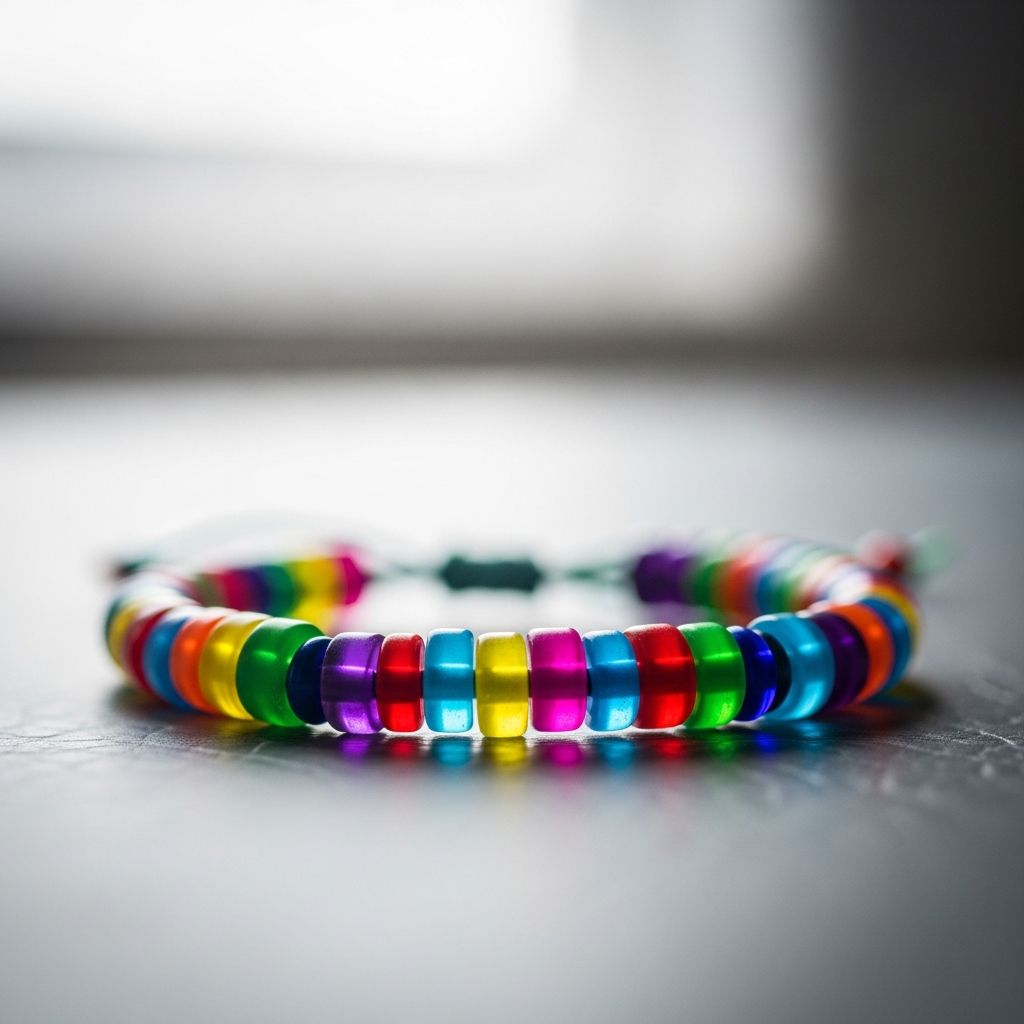
- Glow sticks or glow bracelets as optional add-ons
- Small pouch or belt bag to hold battery packs securely
Makeup and Application Supplies
- Black, navy, and purple eyeshadow (or face-safe cream colors)
- White face paint or eyeliner pencil
- Fine-tipped brush for drawing small stars
- Cotton swabs and small brushes for blending
Work Area Protection and Safety
- Plastic tablecloth, old sheet, or butcher paper to protect your surface
- Apron or old T-shirt for the child
- Disposable gloves for any adult handling spray products
Step 1: Prepare the Base Costume
Good preparation makes the painting process easier and helps your design last through multiple wears and washes.
- Wash and dry the clothing: Launder the base outfit according to the care label before adding paint. Many fabrics are treated with finishing agents that can interfere with paint adhesion.
- Protect your work space: Lay the top and leggings flat on a covered table or floor. Slip a piece of cardboard or thick paper inside the shirt and between pant legs to prevent paint from soaking through.
- Plan the front and back: Decide which side you want more detail on. Younger kids may prefer a simple front; older kids often enjoy a fully painted 360° galaxy.
Step 2: Create Galaxy Clouds with Fabric Paint
Galaxies often show soft, wispy regions where stars and dust cluster together. You can mimic this with layered fabric paint.
- Start with white: Add a small amount of white fabric paint to a palette or plate. Using your sponge, lightly dab and smudge a curving band of white diagonally across the torso. Think of this as the bright center of your galaxy.
- Blend in color: While the white is still slightly damp, dab deep blue along the edges, softening the border between white and black fabric.
- Add purple for depth: Work patches of purple beside and over some of the blue areas. Leave bits of the original dark fabric visible; space is mostly dark with pockets of color.
- Vary the edges: Use the sponge to gently blur outer edges into the fabric, creating the feel of drifting cosmic clouds.
Repeat this process for sleeves and legs, using shorter, broken strokes so the design feels fluid and natural rather than like solid stripes.
Step 3: Mist on Color for a Nebula Effect
Fabric spray paint or mist bottles create soft, hazy transitions that mimic nebulae and gas clouds.
- Work in a ventilated area: If any aerosol or fine-mist product is used, apply it outdoors or in a very well-ventilated space and follow the manufacturer’s safety directions.
- Test first: Spray a scrap of fabric or paper to see how powerful the spray is before aiming at the costume.
- Use light passes: Hold the nozzle away from the fabric and gently mist pink, purple, and blue in small areas, focusing near your painted clouds.
- Avoid heavy patches: Short bursts work best. Heavy application can create large blotches that look more like solid planets than misty gases.
Allow the spray to dry to the touch before moving the garment to work on the other side, following the product’s recommended drying time.
Step 4: Add Starfields with a Toothbrush Splatter
The tiny specks of distant stars bring the galaxy to life. A toothbrush technique is an easy way to get that effect.
- Thin the paint slightly: Mix a small amount of white fabric paint with water until it has the consistency of cream. Too thick and it won’t flick; too thin and it will drip.
- Load the toothbrush: Dip the brush into the paint and tap off any excess.
- Practice first: Flick paint onto scrap paper by running your thumb along the bristles away from you.
- Splatter the costume: When you’re comfortable, hold the brush above the fabric and gently flick, creating tiny scattered white dots. Concentrate more dots near your cloud band and fewer in the darker corners.
For a few brighter stars, dip the tip of a small brush into undiluted white and manually dot single points where you want them to stand out.
Step 5: Design the Galaxy Veil or Cape
A floating layer of tulle or organza adds drama and movement, especially when kids run, spin, or dance.
- Cut the veil: Trim tulle into a long rectangle that can drape from the shoulders or attach at the waist like a trailing train.
- Lightly paint: Lay the tulle flat and add faint streaks of purple and blue using a sponge. On sheer fabric, subtlety looks best.
- Star splatter: Use a very light white splatter with the toothbrush. The stars will appear as a delicate shimmer.
- Attach securely: Use safety pins to fasten the tulle to the back neckline, shoulders, or an elastic waistband. Always pin from the inside so the smooth side touches the child’s skin.
Step 6: Incorporate Safe Lighting Effects
Adding lights makes the costume look like a living night sky during trick-or-treating. Battery-powered LED strings are typically cooler and more energy-efficient than older bulb types.1
| Lighting Type | Pros | Considerations |
|---|---|---|
| LED string lights | Bright, cool to the touch, reusable | Need secure placement and hidden wires |
| Glow sticks | Easy, disposable, no batteries | Short life; supervise to avoid chewing or breaking |
| Clip-on LED pins | Simple to attach and remove | Small parts—keep away from mouths and very young kids |
How to Attach LED Lights
- Position the lights: Lay the lights on the dry costume, running them along seams, around the neckline, or down the sides like constellations.
- Secure the wire: Lightly stitch or safety-pin the wire in place at intervals so it does not dangle or catch on objects.
- Place the battery pack: Put the pack in a soft pouch or belt bag worn at the waist or clipped inside a pocket.
- Check comfort: Have your child try on the outfit and move around. Adjust any scratchy or tight spots.
Step 7: Galaxy-Inspired Face Makeup
Face makeup is optional but adds a polished, photo-ready finish. Use products labelled as safe for skin and avoid sharing eye products between children to reduce the risk of irritation.2
Soft Space Background
- Dust a mix of navy and purple eyeshadow over the outer parts of the cheeks and temples.
- Blend in a little shimmer or highlighter along the cheekbones to mimic glowing starlight.
Star and Constellation Details
- Using white face paint on a fine brush, place a few tiny dots near the outer corner of one eye.
- Connect two or three dots with very fine lines to suggest a tiny constellation.
- Add a slightly larger star on the cheekbone by drawing a small plus sign (+) and softening the ends.
Ask the child to close their eyes when you paint near them and keep makeup away from the waterline. For removal, use a gentle cleanser or wipes designed for face paint.
Safety and Comfort Tips for Kids’ Costumes
Craft projects are more enjoyable when they are safe and comfortable. A few quick checks can prevent issues later.
- Non-toxic products: Choose paints and makeup labeled non-toxic and intended for fabric or skin.
- Ventilation: When spraying paints or sealants, work in fresh air and follow all safety instructions on the label.3
- Flammability awareness: Many costume textiles are more flammable than everyday clothing. Keep children away from open flames like candles or fire pits.4
- Mobility check: Make sure the veil or cape is not so long that it becomes a tripping hazard.
- Visibility: If the costume is very dark, use reflective tape or extra lights so drivers can see your child clearly at night.5
Fun Variations on the Galaxy Theme
Once you have the basic technique down, you can easily twist the idea into new space-themed outfits.
- Solar system dancer: Add felt circles as planets around the hem, each painted in different colors.
- Galaxy wizard: Pair the painted outfit with a tall pointed hat and star-covered cape.
- Mini constellation hero: Skip spray paints and just use star splatter plus a single large constellation on the chest for a simpler project.
- Sibling space crew: Give one child a galaxy outfit, another a rocket or astronaut look, and a third a sun or moon costume.
Frequently Asked Questions (FAQs)
Q: How long does it take to make a kids galaxy costume?
Most of the active painting can be done in about 1–2 hours, but you should allow overnight drying time before your child wears the costume. Adding lights and makeup typically takes an additional 30–45 minutes.
Q: Can I wash the costume after Halloween?
Yes, in many cases you can. Check the fabric paint label for curing instructions and recommended washing methods. Many fabric paints need heat-setting with an iron or dryer before laundering, and they often last best with gentle, cold-water washes turned inside-out.
Q: What age is this project suitable for?
Younger children can help with simple steps like sponging color and watching star splatters, but adults or older kids should handle cutting, spray products, and attaching lights. Always supervise closely and keep small parts away from very young children.
Q: Do I have to use spray fabric paint?
No. If you prefer to avoid sprays, you can achieve a similar effect by thinning regular fabric paint with water and dabbing it on with a sponge for soft, hazy areas. It may take a little longer but works well for indoor crafting.
Q: What if my child has sensitive skin?
Choose hypoallergenic, fragrance-free face paints and test a small patch on the forearm before applying it to the face. If any redness or irritation appears, skip makeup and keep the galaxy details on the clothing and veil instead.
References
- LED Basics — U.S. Department of Energy. 2022-03-14. https://www.energy.gov/eere/ssl/led-basics
- Cosmetics Safety Q&A — U.S. Food and Drug Administration. 2022-06-08. https://www.fda.gov/cosmetics/cosmetics-safety-questions-and-answers
- Spray Paint Safety Tips — Washington State Department of Labor & Industries. 2021-05-12. https://www.lni.wa.gov/safety-health/preventing-injuries-illnesses/spraying-paints-and-coatings
- Halloween Fire Safety — National Fire Protection Association. 2023-09-15. https://www.nfpa.org/halloween
- Halloween Safety Tips — American Academy of Pediatrics. 2022-10-01. https://www.healthychildren.org/English/safety-prevention/all-around/Pages/Halloween-Safety-Tips.aspx