Preschoolers are energetic, curious, and sometimes intense. These years from about age three to five are a major leap in language, emotions, and independence, and your relationship with your child is the most powerful tool you have to guide that growth.[10]
This guide offers a peaceful, connection-based approach to daily life with preschoolers: handling big feelings, setting limits without harshness, and supporting play, learning, and social skills.
Understanding the Preschool Years
Between ages three and five, children develop rapidly in several areas: physical coordination, language, thinking, and emotional regulation.[10] They are eager for independence but still need a lot of guidance and comfort.
| Area of growth | Typical changes (3–5 years) | How parents can support |
|---|---|---|
| Movement | Improves running, jumping, hopping, climbing, catching and throwing; can pedal or ride simple wheeled toys. | Provide safe outdoor play, balls, climbing opportunities, and time to move every day. |
| Fine motor | Draws shapes and simple people, uses child scissors, manages buttons and zippers, feeds self with utensils. | Offer crayons, playdough, child-safe scissors, dressing practice, and simple art projects. |
| Language | Speaks in longer sentences, asks endless questions, tells simple stories, understands more complex instructions. | Talk, read, and sing daily; answer questions; encourage storytelling and conversation. |
| Thinking | Understands basic counting, colors, simple time ideas; enjoys pretend play and simple games with rules. | Play board/card games, sort and count objects, talk about real-life events, and invite pretend play. |
| Social & emotional | Starts to take turns, share more, show empathy, but still has big outbursts and fears; learning self-control. | Stay calm during meltdowns, name feelings, model kindness, and coach problem-solving with peers. |
These milestones are general patterns, not strict rules. Some children reach skills earlier or later. If you are concerned about development, talk with your child’s health provider and use official milestone tools from organizations such as the CDC.
Why Connection Comes Before Correction
Preschoolers behave better when they feel safe, seen, and understood. A warm, responsive parenting style, often called authoritative parenting, is linked to better emotional health, social skills, and school readiness than either harsh or very permissive styles.[10]
Key elements of a connection-first approach include:
- Emotional warmth: Frequent hugs, eye contact, shared laughter, and active listening.
- Clear, consistent boundaries: Calm, firm rules that are predictable and explained simply.
- Respectful communication: Speaking to your child as you want them to speak to others.
- Problem-solving together: Involving your child in simple choices and solutions.
This balance of warmth and structure supports brain systems involved in self-control, empathy, and resilience.[10]
Supporting Big Feelings and Tantrums
Intense emotions are normal at this age. Brain areas responsible for self-control and planning are still developing, so preschoolers often “borrow” your calm while they learn how to manage frustration and disappointment.
Common Emotional Challenges
- Tantrums when they hear “no,” are tired, hungry, or overwhelmed.
- Fear of the dark, monsters, separation, or new experiences.
- Jealousy of siblings or friends.
- Frustration when tasks are hard or rules feel unfair.
Steps for Handling a Meltdown Peacefully
- Stay grounded
Take a breath before you respond. Your calm body language and voice help your child’s nervous system settle. - Ensure safety
Move objects out of the way or gently guide your child to a safe space if they’re hitting or throwing. - Connect first
Kneel to their level, use a soft tone, and offer simple words: “You’re really upset. I’m here.” - Name the feeling
Labeling emotions (mad, sad, scared, disappointed) helps develop emotional vocabulary and regulation over time. - Hold the limit
You can stay kind and still say no: “I won’t let you hit. You’re angry. We can stomp instead.” - Wait for the wave to pass
Talking or reasoning too much during a peak tantrum rarely helps; focus on staying close and calm. - Reflect and repair later
Once calm, briefly revisit what happened and what you can try next time. Keep it short and hopeful.
Setting Gentle, Firm Limits
Preschoolers need boundaries to feel secure. Limits work best when they are clear, consistent, and delivered with empathy rather than anger or shame.[10]
Principles of Respectful Discipline
- Prevent when possible: Use routines, transitions warnings, and realistic expectations to reduce power struggles.
- State what to do: Replace “Don’t run” with “Feet walking inside.”
- Offer limited choices: “You may jump on the floor or the trampoline, not the couch.”
- Be consistent: Follow through calmly; repeating a rule kindly is more effective than escalating volume.
- Teach skills, not fear: Focus on problem-solving and repairing harm instead of punishment.
Examples of Natural and Logical Consequences
- Natural: If a child refuses a coat, they may feel cold for a few minutes (as long as it is safe); then you offer the coat again.
- Logical: If toys are thrown after a reminder, the toys are put away for a short time because they are not being used safely.
The goal is for your child to learn cause and effect and responsibility within a safe, caring relationship.
Play: The Preschooler’s Natural Classroom
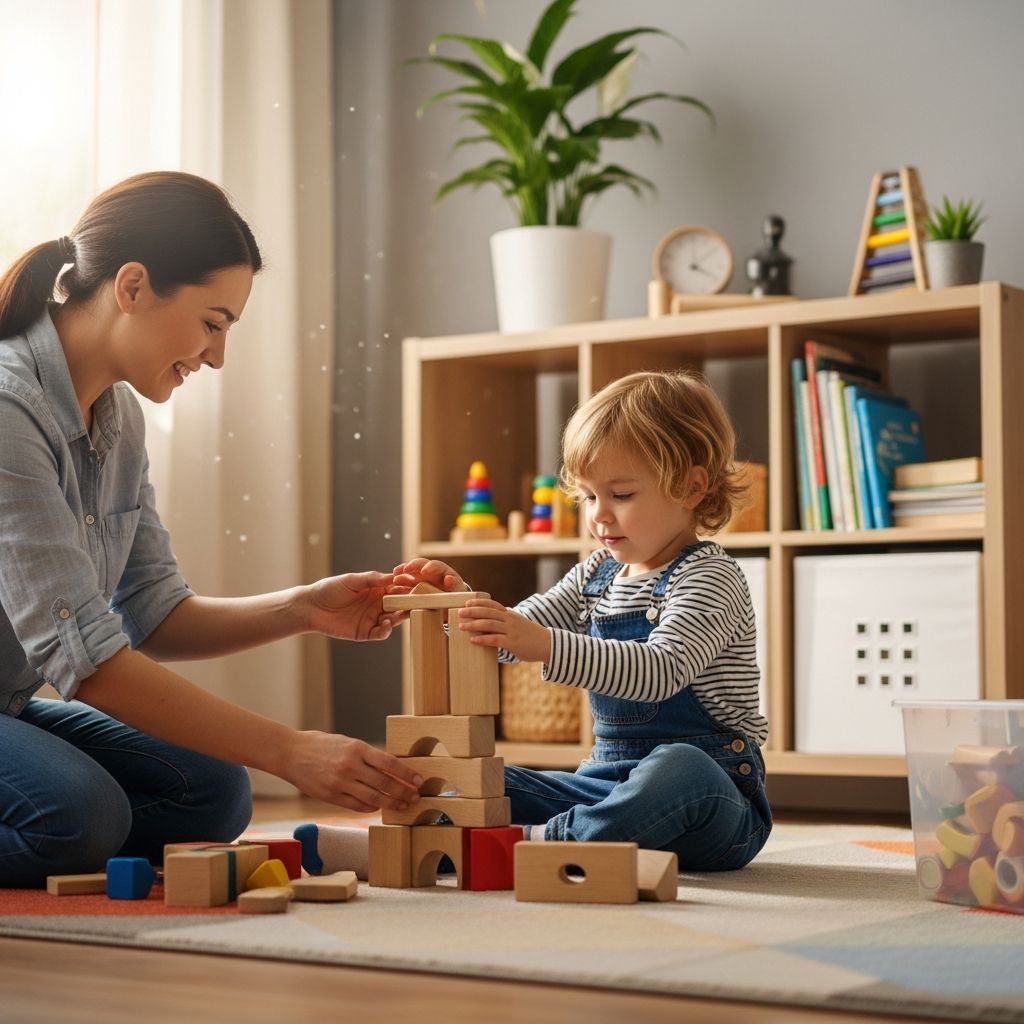
Play is the primary way preschoolers explore the world and build skills. Unstructured playtime supports language, problem-solving, self-control, and social understanding.[10]
Types of Play to Encourage
- Imaginative play: Dress-up, pretend kitchens, stuffed animals, or building “worlds” with blocks and figurines.
- Physical play: Running, jumping, dancing, climbing, playing ball games to build strength and coordination.
- Constructive play: Blocks, train tracks, cardboard creations, simple building sets.
- Art and sensory play: Crayons, markers, clay, water play, sand, or safe sensory bins to develop fine motor skills and creativity.
- Games with simple rules: Age-appropriate board or card games that practice turn-taking and following directions.
Everyday Ways to Support Learning through Play
- Count steps as you walk or snacks as you serve them.
- Sort objects by color, size, or type while cleaning up.
- Talk about shapes you see in your home or outside.
- Invite your child to “help” with simple cooking tasks like stirring or pouring (with supervision).
- Turn chores into games: race to pick up toys, match socks by color or pattern.
Reading, Stories, and Early Learning
By age four and five, many children can retell simple stories, recognize some letters, understand basic counting, and enjoy songs and rhymes. Daily reading and conversation are some of the most powerful ways to support language and thinking skills.
Building a Rich Language Environment
- Read aloud every day: Even 10–15 minutes has long-term benefits for vocabulary and school readiness.
- Ask open-ended questions: “What do you think will happen next?” or “How does that character feel?”
- Connect stories to real life: Relate book events to experiences your child knows.
- Play with rhymes and sounds: Sing songs, clap syllables, and make up silly rhyming words.
- Encourage storytelling: Invite your child to tell you a story or describe their day in order.
Choosing Helpful Books and Media
- Look for stories that show kindness, problem-solving, and emotional expression.
- Include books with diverse characters and families so children see both themselves and others reflected.
- When using screens, choose high-quality, age-appropriate programs and watch together when possible, discussing what you see.
Social Skills, Friends, and Conflict
Preschoolers are still learning how to share, take turns, and see others’ perspectives. Conflicts over toys and space are normal practice grounds for empathy and negotiation.
Coaching Social Skills
- Model respect: Speak to others, including your child, with the tone and words you want them to use.
- Role-play: Practice asking to join play, saying no kindly, and responding to teasing.
- Use simple scripts: “Can I have a turn when you’re done?” or “I don’t like that. Please stop.”
- Coach, don’t rush to rescue: Stay nearby and help children find words, but let them practice skills.
Handling Common Conflicts
- Fighting over toys: Acknowledge both sides, restate the problem, and suggest solutions like taking turns or using a timer.
- Hitting or biting: Stop the behavior immediately, protect others, and state the rule clearly: “No hitting. Hands are for helping.” Later, explore what your child was feeling and practice other ways to express it.
- Exclusion: Empathize with your child’s hurt, then practice ways to ask to join in or invite other friends to play.
Daily Rhythms that Support Calm
Predictable routines help preschoolers feel secure and reduce many behavior struggles. Knowing what comes next lowers anxiety and supports smoother transitions.
Elements of a Helpful Daily Rhythm
- Regular sleep times: Most preschoolers still need 10–13 hours of sleep in 24 hours, often including a nap or quiet rest.
- Consistent mealtimes: Balanced snacks and meals reduce “hangry” meltdowns.
- Time for free play: Every day should include protected time for child-led play.
- Calm transitions: Use five-minute warnings, songs, or visual schedules when shifting activities.
- Connection rituals: Small, repeated moments (a bedtime song, morning cuddle, or after-school check-in) strengthen your bond.
When to Seek Extra Support
Every child develops on their own timeline, but certain signs may warrant a conversation with your child’s health provider or an early childhood specialist.[10]
Consider reaching out for professional input if:
- Your child has very limited language compared to peers, or is losing skills they previously had.
- They rarely make eye contact, show little interest in playing with others, or seem extremely withdrawn.
- They have frequent, intense tantrums that last very long and are hard to calm, even with support.
- They show no interest in pretend play, books, or simple games by late preschool age.
- You have a persistent sense that “something is off,” even if you cannot name it.
Early evaluation and support can make a significant difference, and many services for young children are available through public health, education, or community programs.
Frequently Asked Questions (FAQs)
How much screen time is okay for a preschooler?
Evidence-based guidelines suggest limiting recreational screen use for preschoolers and focusing on high-quality, age-appropriate content, ideally watched together so you can discuss what they see. Prioritize sleep, physical play, reading, and family interaction over screens.[10]
My child still has tantrums at four. Is that normal?
Yes. Occasional tantrums at four or five are common because self-control systems are still maturing. Patterns to watch for include very frequent, very long outbursts, or aggression that is hard to interrupt. If you are unsure, talk with your child’s health provider.
Should my preschooler know letters and numbers before kindergarten?
Some children will recognize letters, write parts of their name, or count small sets of objects, but there is a wide range of normal. It is more important to build curiosity, language, and a love of books through reading aloud, conversation, and playful learning than to push formal academics.
How can I help my child separate more easily at preschool?
Create a brief, predictable goodbye ritual (hug, special phrase, or handshake), stay calm and confident, and acknowledge feelings: “You’ll miss me and I’ll miss you. I’ll see you after snack time.” Working with teachers and keeping drop-offs consistent usually makes separations easier over time.
What if my parenting doesn’t feel peaceful? I lose my temper.
No parent is calm all the time. When you lose your temper, you can repair by apologizing, naming your own feelings, and modeling how to make things right: “I yelled. That was not okay. I was very frustrated and I’m working on using a calmer voice.” Small, repeated efforts to pause, breathe, and reconnect make a big difference.
References
- Developmental Milestones: 4 to 5 Year Olds (Preschool) — Children’s Hospital of Orange County (CHOC). 2023-07-01. https://choc.org/ages-stages/4-to-5-years/
- Development & Milestones for Pre-K Children (4-5 years) — Michigan Department of Health and Human Services. 2022-05-10. https://www.michigan.gov/mikidsmatter/parents/pre-k/milestones
- Milestones by Year — Illinois Cares for Kids. 2022-03-15. https://www.illinoiscaresforkids.org/preschool-en/child-development/milestones-by-year
- Preschooler Development — MedlinePlus, U.S. National Library of Medicine. 2023-08-14. https://medlineplus.gov/ency/article/002013.htm
- Developmental Milestones: 3 to 4 Year Olds — HealthyChildren.org, American Academy of Pediatrics. 2022-07-01. https://www.healthychildren.org/English/ages-stages/preschool/Pages/Developmental-Milestones-3-to-4-Year-Olds.aspx
- CDC’s Developmental Milestones — Centers for Disease Control and Prevention. 2022-03-31. https://www.cdc.gov/act-early/milestones/index.html
- Child Development: Milestones & Stages — Cleveland Clinic. 2023-05-09. https://my.clevelandclinic.org/health/articles/21559-child-development