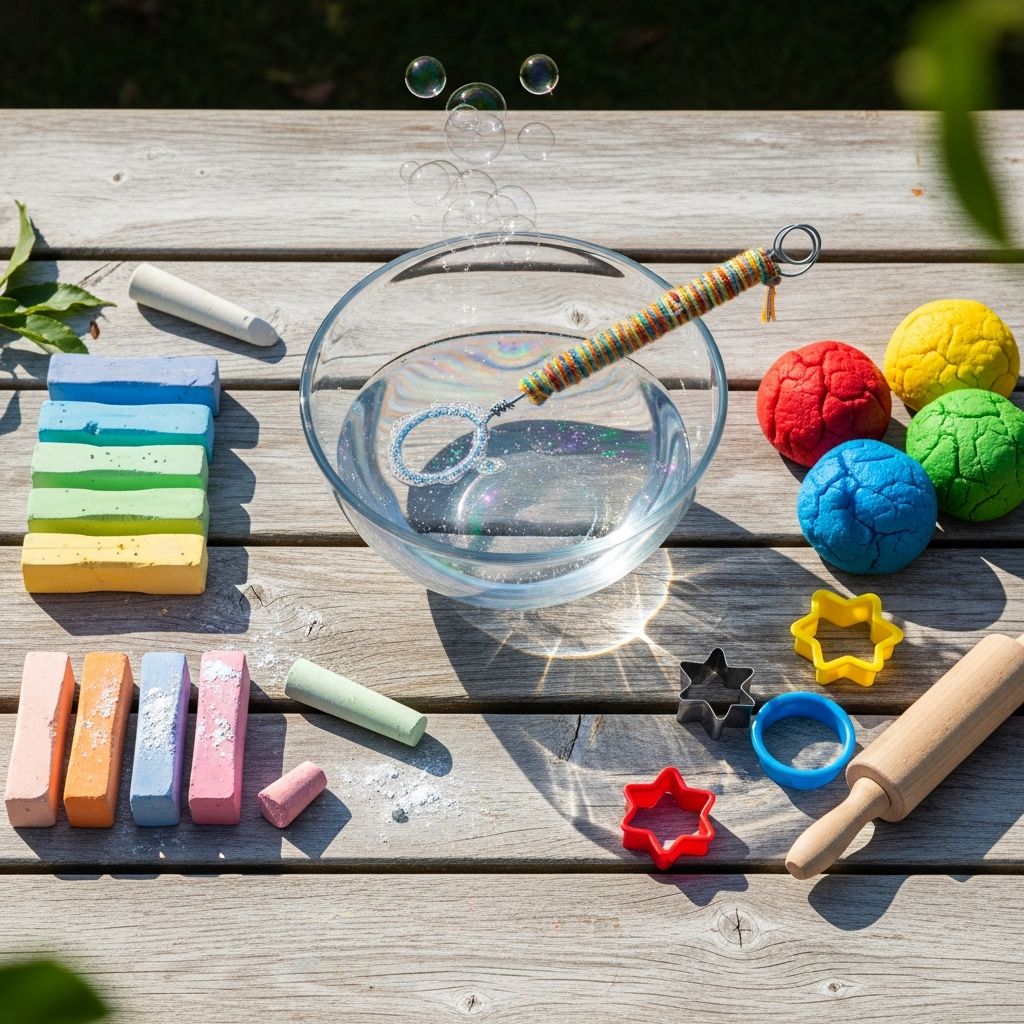
When kids are home for long stretches, the hours between meals can feel endless. One of the easiest ways to keep everyone entertained is to mix up big batches of simple, hands-on materials you can use outside: bubbles, sidewalk chalk, and playdough. These classics are inexpensive, easy to make, and support creativity, fine-motor skills, and open-ended play.
This guide walks you through family-tested ideas for creating and using these three staples, with a focus on making enough to fuel an entire afternoon of play rather than just a few minutes of activity.
Why DIY Outdoor Play Supplies Are Worth the Effort
Making your own play materials has several advantages over buying small, single-use kits.
- More playtime for less money – Bulk ingredients like flour, salt, cornstarch, and dish soap are inexpensive and stretch into large quantities of play materials.
- Customization – Adjust colors, textures, and scents to your child’s preferences or to match a theme (oceans, space, seasons, and more).
- Built-in learning – Measuring, pouring, and mixing introduce basic math, science, and problem-solving skills in a playful way.
- Less waste – Reuse containers and tools instead of collecting a pile of empty plastic bottles and broken toys.
- Calming sensory play – Squishing dough and drawing with chalk can support sensory regulation and focus for many children.
Planning a Mix-It-Up Afternoon Outside
Before diving into individual recipes, think about how to stretch these materials into a long, relaxed block of outdoor time.
- Pick a work zone – A patio table, driveway corner, or picnic blanket makes a good base for mixing and storing materials.
- Assign simple jobs – Younger kids can stir, scoop, and pick colors; older ones can measure, time the mixing, and label containers.
- Set expectations – Let kids know they will be making supplies first, then using them. This helps reduce “Is it ready yet?” every 30 seconds.
- Prepare for mess – Old clothes or aprons, a bucket of water, and a stack of rags make cleanup less stressful.
DIY Bubbles: From Simple Mix to Giant Wands
Store-bought bubble bottles are fun but usually empty in minutes. A homemade bubble mix lets kids blow bubbles freely without rationing, and experimenting with different tools can turn bubbles into a mini science lab.
Core Ingredients and Why They Matter
| Component | What It Does | Common Options |
|---|---|---|
| Water | Base of the solution; helps soap spread into thin films. | Tap water; distilled can give more consistent results if your water is very hard. |
| Soap / Detergent | Creates the bubble film by reducing surface tension. | Gentle dishwashing liquid or hand soap. |
| Stabilizer | Makes bubbles stronger and longer-lasting. | Sugar or glycerin are common home stabilizers. |
Family-Sized Bubble Mix (Approx. 2 Liters)
This recipe is easy to scale up or down depending on the size of your container.
- 6–7 cups lukewarm water
- 1 cup mild dish soap
- 2–4 tablespoons sugar or liquid glycerin
Basic method:
- Pour water into a large bucket or wide storage container.
- Slowly stir in dish soap, trying not to whip up too much foam.
- Add sugar or glycerin and stir gently until dissolved.
- Let the mixture rest at least 30–60 minutes; several hours or overnight can improve bubble strength as ingredients fully combine.
Creative Bubble Tools and Games
Once the solution is ready, raid your kitchen and recycling bin for unusual bubble blowers.
- Homemade wands – Shape pipe cleaners into circles or stars; twist the end around a straw as a handle.
- Colanders and slotted spoons – Dip and wave through the air for clusters of tiny bubbles.
- String wands – Tie cotton string into a loop between two sticks for giant bubbles (better for older kids).
- Bubble races – See whose bubble can travel farthest or last longest before popping.
Sidewalk Chalk: Drawing Big on Driveways and Sidewalks
Sidewalk chalk transforms plain pavement into a temporary canvas for games, art, and learning activities. You can purchase chalk sticks or try making your own versions using common materials like plaster of Paris or cornstarch-based paint.
Two Main Ways to Make DIY Chalk
| Type | Texture | Best For | Key Ingredients |
|---|---|---|---|
| Chalk sticks (solid) | Hard, crayon-like sticks that wear down slowly. | Detailed drawings, repeated use. | Plaster of Paris + tempera paint + water. |
| Chalk paint (liquid) | Runny, paint-like mixture used with brushes. | Big backgrounds, young kids, and sensory play. | Cornstarch + water + food coloring or paint. |
Simple Sidewalk Chalk Paint
- 1 cup cornstarch
- 1 cup water
- Food coloring or washable paint, as needed
How to make it:
- Stir cornstarch and water together until smooth.
- Divide into smaller cups or a muffin tin.
- Add a few drops of color to each portion and mix.
- If the mixture thickens as it sits, add a little more water and stir again.
Kids can use paintbrushes, sponges, or even foam rollers to cover large areas quickly.
Ideas for Using Sidewalk Chalk Outside
- Life-size board games – Draw a winding path of numbered squares; use a stone as a marker and take turns “rolling” and moving.
- Learning corners – Practice letters, sight words, or math facts by jumping on the correct answer.
- Shadow tracing – Have one child strike a pose while another traces their shadow; revisit later to see how shadows move.
- Neighborhood messages – Write friendly notes or draw encouraging pictures for people passing by.
Playdough: Squishy Sensory Fun Indoors or Out
Playdough is a reliable favorite for both indoor and outdoor tables. Most traditional recipes use flour, salt, water, and oil, sometimes along with an acidic ingredient like cream of tartar or lemon juice to improve texture and shelf life.
Why Homemade Playdough Feels So Good
Many early childhood programs use simple dough recipes because they are inexpensive, easy to adapt, and provide rich sensory experiences. Research from child care resource centers highlights that playdough supports hand strength, dexterity, and creativity while being simple to make with pantry ingredients.
Soft Everyday Playdough (No Cooking)
- 1 cup all-purpose flour
- 1/4 cup salt
- 1 tablespoon cream of tartar (optional but helps with stretch)
- 1/2 cup warm water
- 1 tablespoon vegetable oil
- Food coloring as desired
Steps:
- Mix flour, salt, and cream of tartar in a bowl.
- Combine warm water, oil, and coloring in a measuring cup.
- Slowly pour the liquid into the dry ingredients, stirring until it begins to clump.
- Knead the mixture on a clean surface until smooth and stretchy, adding small pinches of flour if too sticky or a few drops of water if crumbly.
Outdoor Playdough Challenges and Games
- Nature bakery – Offer muffin tins, smooth stones, leaves, and sticks so kids can make pretend cupcakes and pizzas.
- Road building – Flatten roads for toy cars, create tunnels, and raise bridges using rocks or blocks as supports.
- Stamp collections – Press items like shells, LEGO bricks, bottle caps, and pinecones into the dough to explore textures.
- Letter builders – Roll snakes and form letters, numbers, or names.
Keeping Things Safe and Manageable
Even simple materials benefit from a few basic precautions and ground rules.
Safety Tips
- Supervision – Stay within sight and hearing of children, especially near roads, driveways, and water.
- Non-toxic ingredients – Use gentle dish soap and washable paints labeled non-toxic, particularly for young children who may mouth materials.
- Allergies and sensitivities – If gluten or fragrance is a concern, look for alternative recipes using cornstarch, rice flour, or unscented soap.
- Slip hazards – Rinse away thick chalk paint or spilled bubble solution from smooth surfaces to reduce slipping risk.
Smart Storage for Longer-Lasting Fun
- Bubbles – Keep in a sealed jug or bottle with a lid. Gently stir rather than shake before reusing, to avoid too much foam.
- Sidewalk chalk paint – Best used the day it is made. It may separate or thicken if kept longer; stir in water if reusing.
- Playdough – Store in airtight containers or zip bags; many homemade doughs last for several days to a week at room temperature when sealed.
Sample Afternoon Schedule Using All Three
If you want to make the most of your materials, here is a simple flow you can adapt.
- First 30 minutes: Mix bubble solution and set aside to rest. Pre-measure chalk paint ingredients.
- Next 30–45 minutes: Kids help stir chalk paint and create a big mural area or game boards.
- Following hour: Switch to bubbles. Introduce different wands and simple challenges (who can make the biggest bubble?).
- Final hour: Move to the shade with playdough and natural loose parts collected throughout the afternoon.
Frequently Asked Questions (FAQs)
How long do homemade bubbles, chalk, and playdough stay usable?
Bubble solution can last for weeks in a sealed container, and some people report it improves with time as ingredients fully blend. Chalk paint is best used the day it is mixed because the cornstarch tends to settle and thicken. Homemade playdough usually lasts several days to a week in airtight containers, depending on the recipe and climate.
Can I make these materials ahead of time for a party?
Yes. Bubble mix and playdough are both good candidates for advance prep. Mix the bubble solution a day or two ahead, and make playdough the night before so it has time to cool fully. Save chalk paint for the day-of, since it separates quickly.
Are these recipes safe if my child tastes them?
Most basic playdough recipes use food-grade ingredients like flour and salt, but they are not meant to be eaten and can contain high levels of salt that are not safe in quantity. Bubble and chalk mixes often include soap or paint and can cause stomach upset if swallowed. Supervise closely and redirect children who habitually mouth toys toward safer sensory options like cooked pasta or gelatin-based play, following pediatric guidance.
How do I reduce the mess indoors after outdoor play?
Set up a simple “wash station” near your door with a shallow tub of water, towels, and a small mat. Have kids rinse hands, feet, and any especially messy toys before coming inside, and keep a laundry basket nearby for chalky or paint-splattered clothes.
Can these activities be adapted for very young toddlers?
Yes, with extra supervision and simplified tools. Offer larger bubble wands, thick paintbrushes, and bigger chunks of dough to reduce choking risks. Avoid small add-ins (like beads or small stones) and focus on big movements: stamping, smearing, and patting.
References
- Play Dough Recipe Booklet — Office of Child Care and Family Resources, University of Wisconsin–Madison. 2017-02-01. https://occfr.wisc.edu/wp-content/uploads/sites/1901/2017/02/ECC_recipes_booklet_from_Cigdem.pdf
- Homemade PlayDough Recipe — DIY Natural. 2020-03-10. https://diynatural.com/homemade-playdough-recipe/
- DIY Sidewalk Chalk — Princess Pinky Girl. 2019-05-05. https://princesspinkygirl.com/diy-sidewalk-chalk/
- Homemade Sidewalk Chalk — Confessions of a Homeschooler. 2012-07-12. https://www.confessionsofahomeschooler.com/blog/2012/07/homemade-sidewalk-chalk.html
- How to Make Sidewalk Chalk and Paint — STEAM Powered Family. 2021-06-01. https://www.steampoweredfamily.com/diy-sidewalk-chalk-sidewalk-paint/