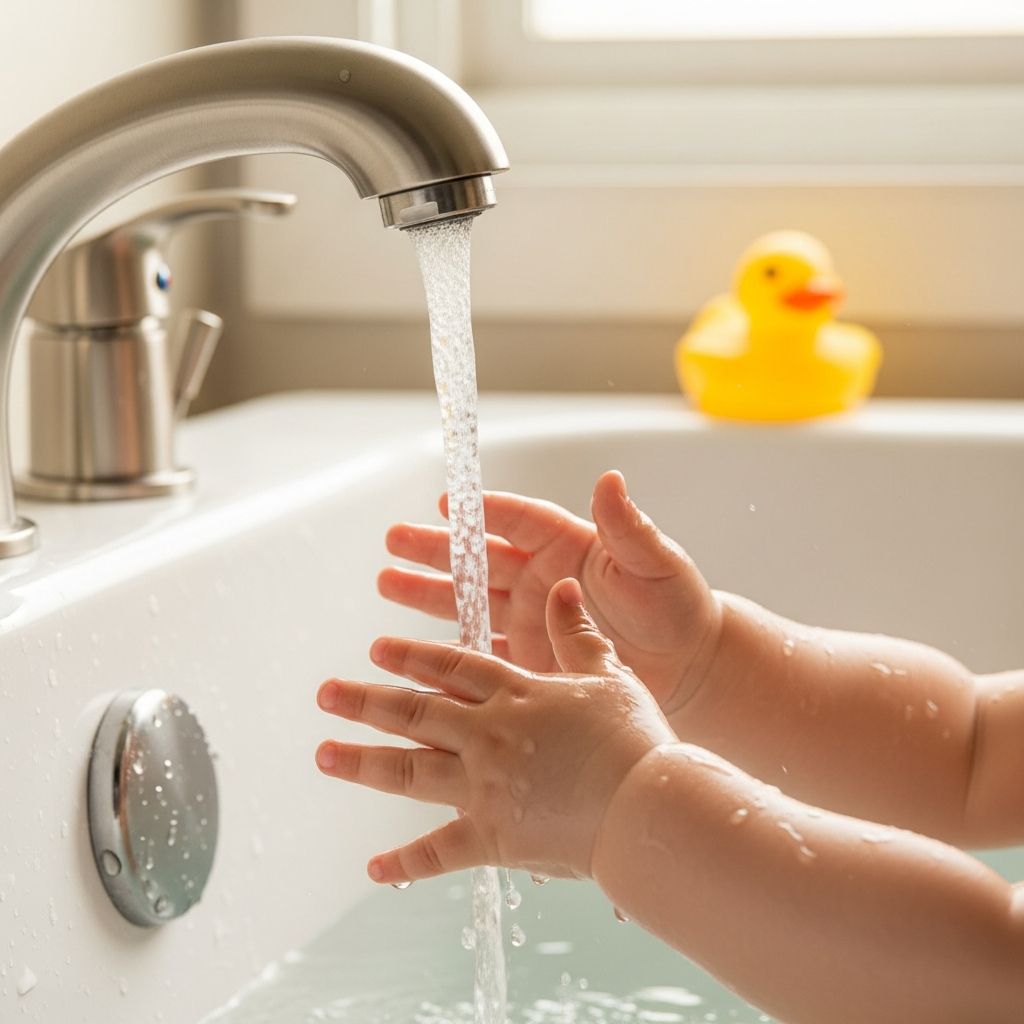
Baths should be about bubbles and giggles, not bruises and tears. Yet the hard metal faucet, sharp tub spout, and fast-moving water can turn a relaxing soak into a risky situation for babies and toddlers. With a few smart products and simple routines, you can turn that same space into a safer, calmer place for everyone.
This guide walks through how to protect little heads from the faucet, support short arms with faucet extenders, control water temperature, and choose gear that actually makes bathtime easier instead of more stressful.
Why the Faucet Is a Hidden Bathtime Hazard
The bathtub faucet looks harmless, but for small children it combines several risks in one spot: hard metal edges, protruding corners, flowing water, and often very hot temperatures. A quick slip or enthusiastic jump can send a toddler’s forehead straight into the spout.
- Babies and toddlers have proportionally larger heads and weaker balance, so they fall more easily and hit the faucet at just the wrong height.
- Even shallow water can be dangerous if a child is stunned by a head bump or startled by a sudden blast of hot water.
Thinking through faucet and spout safety is not about being fearful; it is about removing predictable hazards so you can focus on enjoying bathtime and staying fully present with your child.
Key Safety Goals Around the Tub
Before looking at specific products, it helps to be clear on what you are trying to achieve. Most faucet and tub accessories are designed to support one or more of these basic goals:
- Softening impact: Cushioning sharp or hard surfaces so bumps are less likely to cause injury.
- Controlling water flow: Directing water to where small children can reach, without forcing them to lean under the faucet.
- Managing heat: Preventing scalds by lowering household water temperature and making it easier to mix warm water safely.
- Reducing slips: Adding traction on the tub floor and encouraging safe sitting instead of standing.
When choosing gear, ask whether it helps you meet at least one of these goals in your specific bathroom setup.
Soft Guards for Hard Spouts
One of the simplest ways to improve bath safety is to cover the metal tub spout with a soft, cushioned guard. These devices slip over the faucet and provide a padded layer between your child’s head and the metal.
What a Good Spout Guard Should Do
- Cushion impact: The material should be thick enough to soften a bump, not just decorate the spout.
- Stay put: A guard that slides off easily can become another distraction or hazard.
- Allow water to flow freely: It should not block the faucet opening or shower diverter.
- Resist mold: Smooth, closed-cell materials dry quickly and are easier to keep clean.
Common Spout Guard Materials
| Material | Pros | Cons | Best For |
|---|---|---|---|
| Silicone | Soft, flexible, often dishwasher-safe, fits many spout shapes. | Can stretch over time if removed and reattached frequently. | Families who want easy cleaning and a snug fit. |
| Rubber/foam blends | Very cushioned and lightweight, often budget-friendly. | More likely to trap water; may need frequent drying. | Occasional bath use or secondary bathrooms. |
| Hard plastic with padding | Holds shape well, usually designed with fun characters. | Less forgiving on impact than full-silicone designs. | Older toddlers who need mild protection and enjoy character themes. |
Spout guards often double as playful decor, but safety should come first. Choose function over cuteness, and think about how easy it will be to clean on a tired weeknight.
Faucet Extenders: Bringing Water to Little Hands
For sink and tub faucets that are just out of reach, faucet extenders bring the water stream closer to your child. That means fewer risky stretches and climbs onto the slippery edge of the tub.
How Faucet Extenders Help
- Promote independence: Small children can rinse hands or toys without leaning far forward.
- Encourage good habits: Making water more accessible can support handwashing and rinsing routines.
- Reduce wobbling: If your child is less tempted to climb, they are less likely to slip.
Many extenders are shaped like friendly animals or simple spouts that snap around the faucet. Look for designs that channel the water smoothly rather than spraying in multiple directions, which can surprise or upset young children.
Water Temperature and Flow: Safety Starts at the Source
Even with the safest spout cover, water that runs too hot or too fast can quickly become dangerous for babies and toddlers. A few household adjustments can dramatically lower the risk of scalds.
Simple Temperature Rules
- Set your water heater to a child-safe temperature (many pediatric and safety groups recommend keeping hot water below typical scalding thresholds; check local recommendations).
- Always run your own hand or wrist through the water before placing your child in the tub.
- Fill the tub first, then bring your child in, instead of adjusting temperature while they are already sitting in the water.
If your faucet tends to surge from cold to hot, turn it on in advance and wait until the temperature stabilizes before letting your child reach toward the stream.
Non-Slip Support: The Floor Matters Too
Faucet and spout guards help with bumps, but many bath injuries start with a slip on a slick surface. Adding traction in and around the tub can prevent the stumble that leads to a head-first trip toward the faucet.
- Use a non-slip mat or adhesive strips on the bottom of the bathtub or shower.
- Place an absorbent mat outside the tub so wet feet do not slide on tile or laminate flooring.
- Remind toddlers that baths are for sitting, not standing or jumping, and model that rule consistently.
Choose mats that can be lifted and hung to dry after every bath to minimize mildew and make cleaning more manageable.
Combining Gear: A Safer Bathtime Setup
No single product can remove all bath risks. Instead, think in terms of a complete setup that works together to create a safer environment for your child and a calmer one for you.
Example of a Child-Friendly Tub Configuration
- Soft spout guard securely covering the metal faucet.
- Faucet extender or gentle rinse cup for controlled water flow.
- Non-slip mat on the tub floor and a drying mat just outside the tub.
- Organized corner for bath toys, kept away from the faucet area to reduce collisions.
- Safe storage spot for shampoos and soaps, out of reach yet easy for the adult to access.
By arranging the space deliberately, caregivers can stay closer to the child, avoid leaning across the tub, and respond more quickly if a toy slips or a child wobbles.
Shopping Checklist for Faucet and Spout Safety Gear
When browsing online or in stores, product descriptions can blur together. Use a simple checklist to evaluate whether an item is worth bringing into your bathroom.
Essential Questions to Ask
- Does it fit the faucet or tub style in your home (wall-mounted, curved, extra-wide, etc.)?
- Can you install and remove it quickly without tools?
- Is the material free from common concerning chemicals and labeled for child use?
- Are there any small parts that could detach and become a choking risk?
- How will you clean and dry it after use, and how often?
Parents often find that the best gear is simple, sturdy, and boring in the best possible way: it does its job, then quietly disappears into the background.
Cleaning and Maintenance Tips
Because bath accessories live in a warm, wet environment, they need regular attention to stay safe and sanitary. Skipping this step can turn well-intentioned gear into a source of mold or irritation.
- Rinse spout covers and faucet extenders with clean water after each bath to remove soap residue.
- Shake off excess water and let them air dry completely, ideally on a hook or rack.
- Schedule a regular deep clean using a mild, child-safe cleaner, paying special attention to crevices.
- Inspect for cracks, warping, or loose pieces and replace heavily worn items promptly.
Keeping accessories clean not only protects your child’s skin and lungs; it also helps the materials last longer and perform better.
Teaching Kids Safer Bathtime Habits
Physical safety gear is just one part of the picture. As children grow, they can learn simple, age-appropriate rules that help protect them even when visiting bathrooms in other homes or places.
- Explain that an adult always stays right next to the tub; baths never happen alone.
- Practice sitting on the tub floor and using hands to steady the body before reaching for toys.
- Show your child how to test water with you and talk about “too hot,” “too cold,” and “just right.”
- Turn safe habits into a game: a quick rhyme or song about “sit, splash, and stay low” can help toddlers remember.
Repeating these messages calmly and consistently, rather than only after a slip, makes them part of your family’s routine rather than a response to fear.
Frequently Asked Questions About Faucet and Spout Safety
Do I really need a spout cover if I always stay with my child?
Constant supervision is essential and non-negotiable, but it cannot prevent every stumble. Children can slip or lose balance in seconds, even while an attentive adult is within arm’s reach. A spout cover simply softens the landing if that slip happens, reducing the chance of bruises or cuts and giving you a bit more peace of mind.
Are faucet extenders only for very young children?
Extenders are most helpful when children’s arms are too short to reach the water stream comfortably, but older toddlers and preschoolers may still benefit if your faucet sits unusually far back. Many families keep extenders in place through the early elementary years because they also support independent handwashing at sink level.
Can I make a DIY spout cover or extender?
Homemade solutions can be tempting, but improvised covers may not stay secure or may absorb and trap water, increasing mold risk. If you choose a DIY route, be sure that the material is non-absorbent, fits snugly, does not block water flow, and contains no small pieces that could detach. For most families, purpose-built products offer a safer and more reliable option.
How many bath safety products do I actually need?
Start with the highest-impact items: a non-slip tub surface, a properly adjusted water heater, and a secure spout cover. From there, add extras like faucet extenders or rinse cups only if they solve a real problem in your home. The goal is not to crowd your bathroom with accessories, but to support a simple, safe routine you can maintain consistently.
When can I stop using spout covers and other gear?
There is no universal age when faucet hazards disappear, because children’s coordination and awareness develop at different paces. Many families continue using spout covers through the early school years, especially if siblings of different ages bathe together. You can consider phasing out gear once your child can follow safety rules reliably, move confidently in the tub, and understands how to handle the faucet and water temperature responsibly.
Putting It All Together
Transforming bathtime from nerve-wracking to nurturing does not require a full bathroom remodel. With a few thoughtfully chosen products—such as a cushioned spout guard, a faucet extender, and a sturdy non-slip mat—paired with steady supervision and simple routines, you can dramatically reduce the risk of bumps, slips, and scalds.
The real goal is not a perfectly child-proofed bathroom, but a space where children can play, learn, and unwind while caregivers feel calm and in control. When the hardest part of bathtime is convincing your toddler to get out of the tub, you will know your safety setup is doing its job.