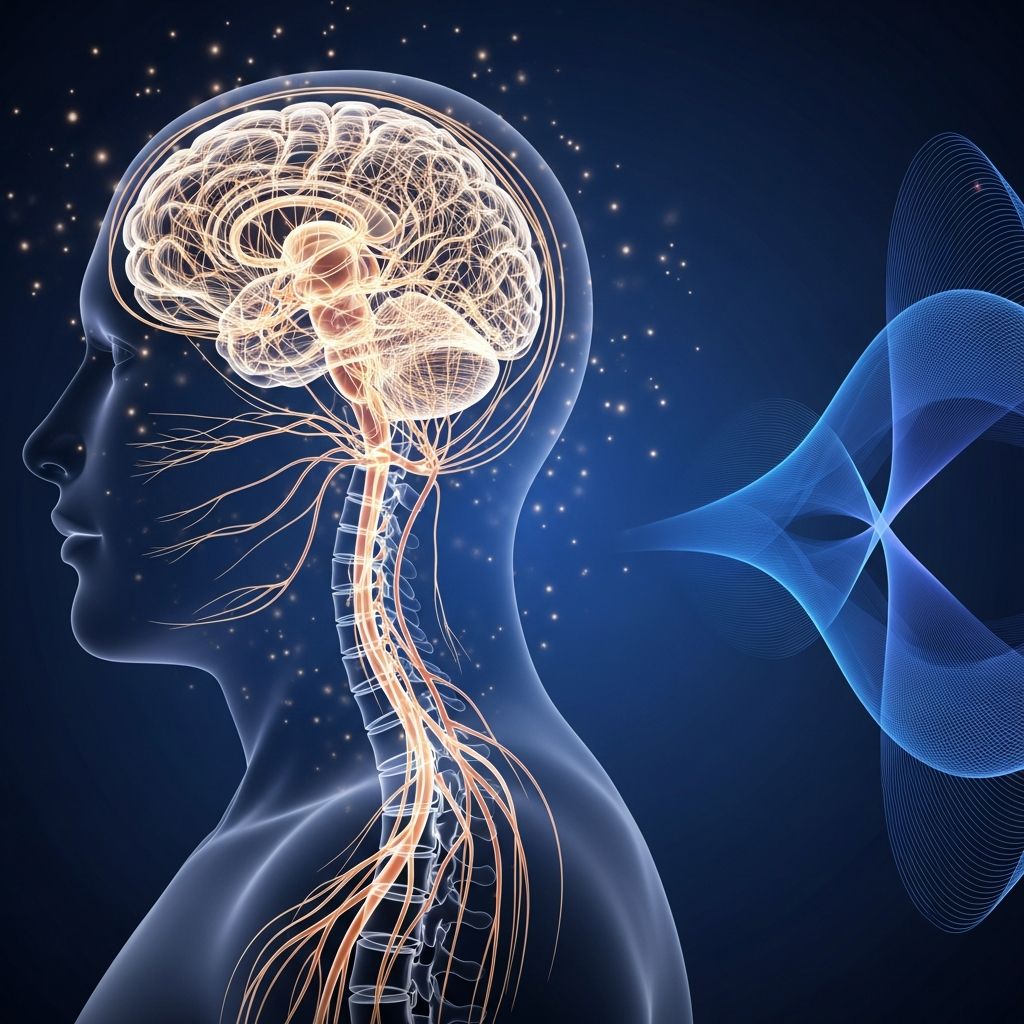
What Is the Central Nervous System?
The central nervous system (CNS) is the command center of the human body, made up of the brain and spinal cord. It is responsible for processing information, coordinating actions, and regulating both voluntary and involuntary functions. Every thought, movement, sensation, and emotion is managed by this intricate network, making it essential for survival and daily life .
Key Components of the CNS
- Brain: The brain is the primary organ of the CNS, handling complex tasks such as thinking, memory, emotion, and decision-making. It also controls basic life functions like breathing, heart rate, and digestion .
- Spinal Cord: The spinal cord acts as a communication highway, transmitting signals between the brain and the rest of the body. It allows for rapid responses to stimuli and helps coordinate movement and sensation .
Major Brain Regions and Their Functions
The brain is divided into several regions, each with specialized roles:
- Cerebrum: The largest part of the brain, responsible for higher functions such as reasoning, problem-solving, language, and sensory processing. It is split into two hemispheres and further divided into lobes, each with unique responsibilities .
- Frontal Lobe: Controls judgment, decision-making, personality, and voluntary movement. It is crucial for planning and social behavior .
- Parietal Lobe: Processes sensory information like touch, temperature, and spatial awareness. It helps interpret pain and understand where the body is in space .
- Occipital Lobe: Dedicated to vision, this region processes visual information from the eyes and allows us to recognize shapes, colors, and movement .
- Temporal Lobe: Involved in memory, language comprehension, and the sense of smell. It also plays a key role in recognizing faces and sounds .
- Brainstem: Connects the brain to the spinal cord and controls vital functions such as breathing, heart rate, and sleep. It includes the midbrain, pons, and medulla oblongata .
- Cerebellum: Coordinates voluntary movements, balance, and posture. It ensures smooth and precise actions, from walking to writing .
How the CNS Communicates
The CNS relies on a network of neurons—specialized cells that transmit electrical and chemical signals. These neurons form pathways that allow the brain to send instructions to muscles and organs, and receive feedback from sensory receptors. The spinal cord acts as a relay, quickly transmitting messages to and from the brain and the peripheral nervous system .
Other Important Brain Structures
- Thalamus: Acts as a relay station, receiving sensory information and directing it to the appropriate brain regions for processing .
- Hypothalamus: Regulates automatic body functions such as hunger, thirst, sleep, and body temperature. It also influences emotional responses and hormone production .
- Pituitary Gland: Known as the “master gland,” it produces hormones that control growth, metabolism, and stress responses .
- Limbic System: Includes structures like the hippocampus and amygdala, which are involved in memory, learning, and emotional regulation .
Role of the Spinal Cord
The spinal cord is a bundle of nerves that extends from the brainstem down the back. It transmits motor commands from the brain to muscles and carries sensory information from the body to the brain. The spinal cord also enables reflex actions, allowing for quick responses to danger without waiting for the brain to process the information .
Common CNS Disorders
Disruptions to the CNS can lead to a range of health issues, including:
- Stroke: Caused by interrupted blood flow to the brain, leading to loss of function.
- Multiple Sclerosis: An autoimmune disease affecting the myelin sheath around nerves.
- Spinal Cord Injuries: Can result in paralysis or loss of sensation.
- Neurodegenerative Diseases: Such as Alzheimer’s and Parkinson’s, which affect brain function over time.
Supporting CNS Health
Maintaining a healthy CNS involves:
- Eating a balanced diet rich in nutrients that support brain function.
- Engaging in regular physical activity to promote blood flow and neuron health.
- Getting adequate sleep to allow the brain to rest and repair.
- Managing stress through relaxation techniques and mindfulness.
- Protecting the head and spine from injury.
FAQs About the Central Nervous System
- What is the main function of the central nervous system?
- The CNS controls all body functions, from movement and sensation to thought and emotion, by processing information and coordinating responses .
- How does the brain communicate with the rest of the body?
- Through a network of neurons, the brain sends and receives electrical and chemical signals via the spinal cord and peripheral nerves .
- Can the CNS repair itself after injury?
- The CNS has limited ability to regenerate, but some recovery is possible with therapy and rehabilitation. Advances in neuroscience continue to improve outcomes .
- What are the most important parts of the brain?
- The cerebrum, cerebellum, brainstem, and limbic system are all crucial for different functions, from movement and balance to memory and emotion .
- How does the spinal cord work?
- The spinal cord transmits signals between the brain and the body, enabling movement, sensation, and reflexes .
Summary Table: CNS Components and Functions
| Component | Primary Function |
|---|---|
| Brain | Processes information, controls thought, emotion, movement, and vital functions |
| Spinal Cord | Relays signals between brain and body, coordinates movement and sensation |
| Cerebrum | Higher cognitive functions, sensory processing, voluntary movement |
| Brainstem | Controls vital functions like breathing, heart rate, sleep |
| Cerebellum | Coordinates movement, balance, posture |
| Limbic System | Regulates emotion, memory, learning |