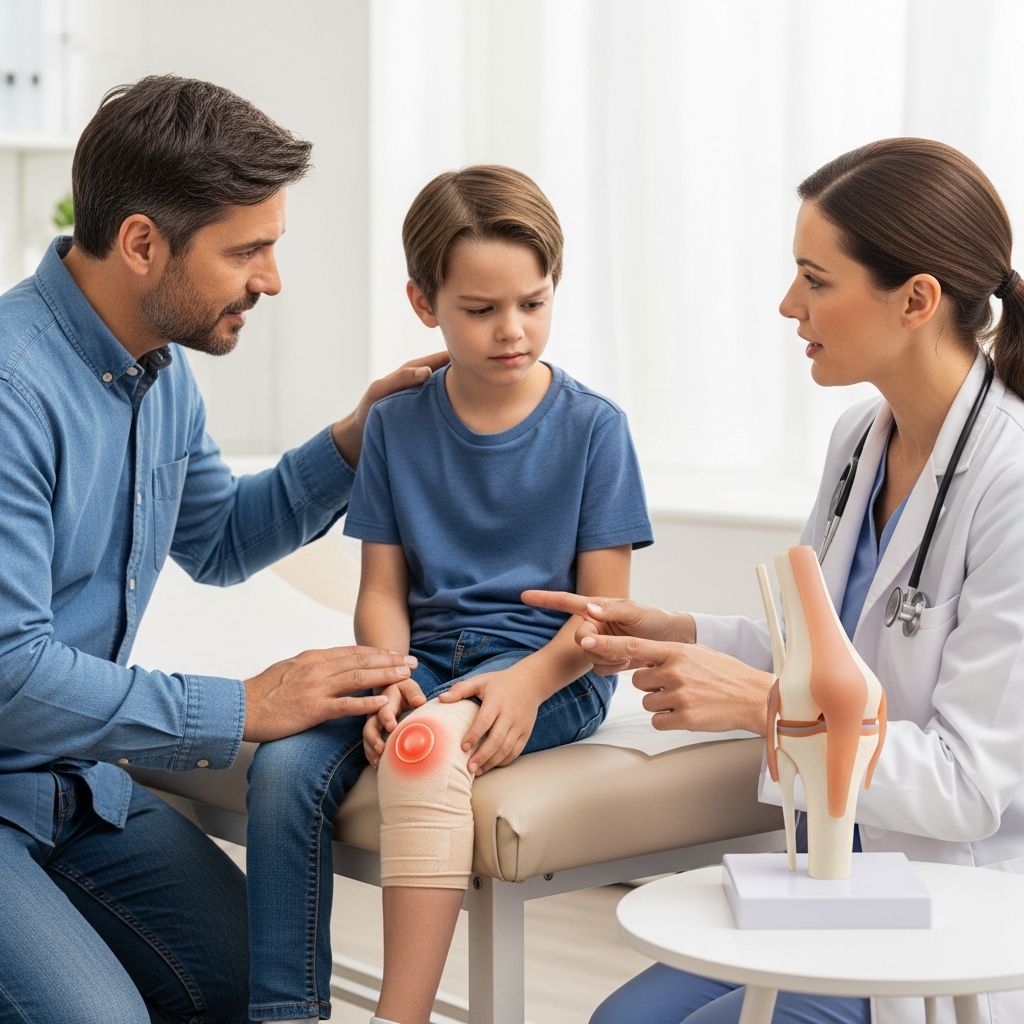
A dislocated kneecap can look frightening, especially when it happens suddenly during sports or play, but with prompt care most children recover well and return to their usual activities. This guide explains what a dislocated kneecap is, how it happens, and what parents can do at every step of the way.
What Is a Dislocated Kneecap?
The kneecap, or patella, is a small bone that glides up and down in a groove at the front of the thigh bone whenever the knee bends or straightens. In a dislocation, this bone slips out of that groove, usually toward the outside of the knee, and gets stuck in the wrong position.
When the patella moves out of place, the nearby ligaments, cartilage, and soft tissues are stretched or torn, which causes sudden pain, swelling, and difficulty moving the leg. In some children the kneecap slides completely out of the groove, and in others it only partially slips out and then returns, a situation known as a subluxation.
Why Children and Teens Are at Risk
Growing bodies, loose ligaments, and high activity levels make kids and teenagers more likely to dislocate a kneecap than many adults. Rapid growth spurts can temporarily change the way the bones, muscles, and tendons line up around the knee, which may affect how smoothly the kneecap tracks in its groove.
Sports that involve jumping, quick pivots, or sudden stops — such as soccer, basketball, gymnastics, cheer, and dance — increase the risk because the knee may twist or buckle while the foot is fixed on the ground. Direct blows to the front or side of the knee, like a collision with another player or a fall onto a bent knee, are also common triggers.
Common Causes and Risk Factors
- Sudden twisting movements: A quick change of direction with the foot planted can push the kneecap sideways.
- Direct impact: A hit to the front or side of the knee, a fall, or a tackle can force the patella out of position.
- Loose or weak ligaments: Some children naturally have more flexible joints or weaker supporting tissues that allow the patella to move too easily.
- Muscle imbalance: Weak or tight thigh and hip muscles can pull the kneecap unevenly as the knee moves.
- Shallow groove or bone shape: In some kids, the groove where the patella sits is not very deep, or the bones are shaped in a way that makes dislocation more likely.
- Previous dislocation: Once a child has dislocated a kneecap, it is easier for it to happen again without treatment and strengthening.
How to Recognize a Dislocated Kneecap
Parents often know something is seriously wrong the moment the injury happens, because the child usually experiences sharp pain and cannot move the knee normally. The knee may look misshapen, and the child may be too scared or uncomfortable to try to stand up.
Watching for clear warning signs can help you decide when to seek urgent medical help instead of assuming it is a simple bruise or sprain.
Typical Symptoms You May See
- Sudden, severe pain at the front of the knee at the time of injury.
- A visible shift of the kneecap to one side, often toward the outside of the leg.
- Swelling around the knee that develops quickly after the injury.
- Difficulty or inability to straighten the knee or bear weight on the leg.
- A feeling that the knee is “stuck,” “locked,” or will give way when the child tries to stand.
- A popping sensation or the sound of something moving out of place at the moment of injury.
In a partial dislocation, the kneecap may slide back on its own, so the leg looks more normal but still feels unstable, painful, or prone to giving out. Children might describe the feeling as if the kneecap keeps slipping or shifting.
What Parents Should Do Right Away
Seeing a kneecap out of place can be alarming, but staying calm and following a few basic steps can protect the joint while you arrange medical care. Avoid trying to push the kneecap back into position yourself, because this can cause additional damage to cartilage, ligaments, and nearby structures.
Immediate First-Aid Steps
- Stop the activity: Have your child sit or lie down immediately and avoid putting weight on the injured leg.
- Stabilize the leg: Keep the knee in the most comfortable position without trying to straighten or bend it forcefully.
- Apply cold packs: Use a cloth-wrapped ice pack on the front and sides of the knee for 15–20 minutes at a time to help reduce swelling and pain.
- Elevate if possible: If your child is comfortable, gently prop the leg on pillows so the knee is slightly raised above heart level.
- Seek urgent care: Contact your child’s doctor, urgent care, or emergency department for guidance and evaluation.
If your child has severe pain, cannot move the leg, the knee looks very deformed, or you suspect a major injury, go to the emergency department rather than waiting for an office visit. Quick evaluation ensures that the patella is safely returned to its proper position and that serious injuries, such as fractures, are not missed.
How Doctors Diagnose a Dislocated Kneecap
In the clinic or emergency department, a clinician starts by asking how the injury occurred and what your child felt at the moment of injury. A detailed description of the movement — for example, a pivot during sports, a fall from a height, or a direct hit — helps determine the likely pattern of damage.
The clinician examines the knee, compares it with the other side, and gently checks for tenderness, swelling, and alignment of the kneecap. Once the patella is back in place, the exam also assesses how easily it can be moved side to side, which may indicate underlying looseness or anatomical differences.
Common Tests and Imaging
- X-rays: Show the position of the kneecap, reveal any bone fragments or fractures, and help evaluate the shape of the groove and surrounding bones.
- MRI scans: Provide detailed images of ligaments, cartilage, and soft tissues to look for tears, bruising, or loose pieces inside the joint.
- Physical stability tests: Simple movements performed by the clinician check how stable the kneecap feels during gentle side-to-side pressure.
The combination of the history, physical exam, and imaging allows the care team to decide whether the injury can be managed with bracing and therapy or whether surgical repair might be needed.
Treatment Options for a Dislocated Kneecap
Treatment aims to place the kneecap back in its groove, protect the joint as damaged tissues heal, relieve pain, and reduce the risk of future dislocations. Many children do well with non-surgical (conservative) care, especially after a first-time injury.
The exact plan depends on the severity of the dislocation, the presence of fractures or ligament tears, the child’s age and activity level, and whether the kneecap has slipped out of place more than once.
Non-Surgical Care
- Closed reduction: If the kneecap is still out of place when your child reaches care, a clinician gently guides it back into the groove, often after giving medicine for pain and relaxation.
- Immobilization: A brace, splint, or cast may be used for a short period to limit knee movement while ligaments and soft tissues begin to heal.
- Pain and swelling control: Cold packs, elevation, and prescribed or over-the-counter pain relievers help your child stay comfortable in the early days after the injury.
- Crutches: Taking weight off the injured leg protects the knee during the initial healing phase and makes moving around safer.
When Surgery May Be Recommended
- Large ligament tears: If key stabilizing ligaments are badly torn, surgical repair or reconstruction may provide better long-term stability.
- Cartilage or bone fragments: Loose pieces within the joint may need to be removed or fixed in place to prevent ongoing pain and damage.
- Repeated dislocations: Children who have multiple dislocations despite bracing and therapy may benefit from procedures that improve patella tracking or tighten supporting tissues.
- Unusual bone anatomy: In some cases, surgery can reshape or reposition bones to create a more secure path for the kneecap.
Many modern procedures are performed arthroscopically, using small incisions and a tiny camera, which can reduce recovery time compared with older open surgeries. Your child’s orthopaedic specialist will discuss the options, benefits, and risks in detail if an operation is being considered.
The Role of Physical Therapy
Rehabilitation is a key part of recovery from a dislocated kneecap, whether or not surgery is needed. A physical therapist designs a plan that gradually restores flexibility, strength, and confidence in using the injured leg.
Therapy typically starts with gentle range-of-motion exercises and progresses to more challenging activities that train the muscles around the hip, thigh, and knee to keep the patella centered in its groove during sports and daily life.
Typical Therapy Goals
- Regain full, pain-free bending and straightening of the knee.
- Strengthen the quadriceps (front thigh muscles) and hip muscles that support kneecap alignment.
- Improve balance and coordination to reduce the risk of falls and missteps.
- Teach safe jumping, landing, and cutting techniques for athletes returning to sport.
Recovery Timeline and Returning to Activities
Recovery times vary between children, but many return to regular daily activities within a few weeks and to sports within several weeks to a few months, depending on the severity of the injury and the treatment used. Progress is usually gradual, and rushing back too soon can increase the chance of another dislocation.
Clinicians often use a combination of pain levels, knee motion, strength measurements, and functional tests — such as hopping or sport-specific drills — to decide when a child can safely resume higher-impact activities.
Sample Recovery Milestones Table
| Phase | Approximate Time Frame* | Typical Focus |
|---|---|---|
| Acute protection | First 1–2 weeks | Pain and swelling control, brace or splint use, limited weight-bearing with crutches. |
| Early rehab | Weeks 2–4 | Gentle motion exercises, gradual increase in walking, beginning muscle activation. |
| Strengthening | Weeks 4–8+ | Targeted strengthening of thigh and hip muscles, balance training. |
| Return to sport | After 8+ weeks (variable) | Sport-specific drills, jumping and cutting practice, clearance when strength and control match the other leg. |
*Time frames are general examples; your child’s plan may be faster or slower depending on the injury and medical advice.
Helping Your Child at Home
Parents play a big role in helping a child feel safe and stay on track with recovery. Providing emotional support, keeping follow-up appointments, and encouraging good habits can make the healing process smoother and less stressful.
- Follow the brace and activity instructions: Make sure your child wears any brace or support as directed and avoids activities that the care team has restricted.
- Stay on top of pain control: Use prescribed or recommended pain strategies so your child is comfortable enough to sleep, move, and participate in therapy.
- Support therapy homework: Remind and assist your child with prescribed home exercises, turning them into a short daily routine.
- Watch for warning signs: Increased swelling, redness, fever, or worsening pain should be reported to the care team promptly.
- Encourage patience: Celebrate small gains, like bending the knee a little farther or walking a bit more easily, to keep motivation high.
Can a Dislocated Kneecap Be Prevented?
Not every injury can be prevented, especially during fast-moving sports, but strengthening and smart training habits can lower the risk of a first-time dislocation or a repeat episode. Preventive steps are especially important for children who have already had one kneecap injury or who have flexible joints.
- Conditioning programs: Exercises that build strength in the quadriceps, hamstrings, and hip muscles can help guide the kneecap smoothly during movement.
- Balance and agility training: Activities like single-leg stands, ladder drills, and controlled jumps teach the body to react quickly and safely.
- Proper warm-up: Gentle jogging, dynamic stretches, and sport-specific drills prepare muscles and joints for more intense play.
- Technique coaching: Learning correct landing and cutting form reduces strain on the knees in sports that require quick changes of direction.
- Listening to pain: Kids should be encouraged to speak up if their knees feel unstable, painful, or as if something is slipping.
Frequently Asked Questions (FAQs)
1. Is a dislocated kneecap an emergency?
A dislocated kneecap usually needs urgent medical assessment, especially if the kneecap is visibly out of place, your child cannot move the knee, or the pain is severe. Prompt care helps return the patella to its proper position, eases pain, and reduces the chance of further damage to ligaments, cartilage, and bone.
2. Will my child need surgery?
Many children recover from a first-time dislocated kneecap with bracing, rest, and physical therapy alone. Surgery is more likely to be recommended if there are large ligament tears, loose bone or cartilage fragments, or repeated dislocations that continue despite good rehabilitation and bracing.
3. How long before my child can play sports again?
The return-to-sport timeline depends on the severity of the injury and how quickly strength and control return. A rough guideline is several weeks for basic daily activities and several weeks to a few months for full sports participation, but the final decision should come from your child’s medical and therapy team.
4. Can a kneecap dislocate more than once?
Yes, once a child has dislocated a kneecap, the risk of another dislocation is higher, particularly if the supporting muscles are weak or there are underlying anatomical factors. A thorough rehabilitation program and, in some cases, bracing or surgical correction can significantly reduce the chance of repeated episodes.
5. Will a dislocated kneecap cause long-term problems?
Many children recover fully and return to all previous activities without long-term issues, especially if the injury is treated promptly and rehabilitation is completed. However, repeated dislocations or severe damage to cartilage and ligaments may increase the risk of future knee pain or early joint wear, which is why careful follow-up and prevention strategies are important.
Key Takeaways for Parents
- A dislocated kneecap is painful but usually treatable, and most children return to sports and play with proper care.
- Recognizing symptoms quickly and seeking prompt medical attention helps protect the knee from further damage.
- Physical therapy and home exercises are as important as braces or surgery in restoring stability and confidence.
- Strong muscles, good technique, and listening to early warning signs can help lower the risk of future kneecap problems.
With calm, informed steps and close communication with your child’s care team, a dislocated kneecap can become a temporary setback rather than a long-term barrier to an active, healthy life.