Respiratory challenges in children, such as asthma or infections, often require targeted medication delivery straight to the lungs. Nebulizers transform liquid medicines into a breathable mist, making treatments simpler for young ones who struggle with inhalers. This guide equips parents with practical insights on selecting, using, and maintaining these devices to support their child’s breathing health.
Understanding Nebulizer Technology
A nebulizer is a medical tool that aerosolizes liquid medication into tiny particles for inhalation, ensuring it reaches deep into the airways. Unlike inhalers that demand coordinated breaths, nebulizers allow steady, passive inhalation over several minutes, ideal for infants, toddlers, and kids with limited coordination.
The core mechanism involves breaking down solutions like bronchodilators or corticosteroids using air pressure, vibrations, or meshes. This mist targets conditions affecting the lungs, minimizing systemic side effects by bypassing the digestive tract.
Common Respiratory Conditions Treated in Children
Nebulizers prove invaluable for pediatric respiratory issues. Key applications include:
- Asthma: Relieves wheezing and bronchospasm with quick-acting drugs like albuterol.
- Cystic Fibrosis: Helps clear thick mucus using mucolytics.
- Bronchiolitis or Pneumonia: Delivers antibiotics or steroids during acute episodes.
- COPD in Older Kids: Manages chronic obstruction, though rarer in pediatrics.
Healthcare providers prescribe nebulizers when symptoms demand higher doses or prolonged delivery, especially during flare-ups.
Exploring Nebulizer Varieties for Family Use
| Type | How It Works | Pros | Cons | Best For Kids |
|---|---|---|---|---|
| Jet (Pneumatic) | Compressed air blasts liquid into mist | Affordable, fine particles, widely available | Noisy (up to 60dB), needs air compressor, longer sessions | Most home setups; effective for deep lung delivery |
| Ultrasonic | High-frequency vibrations create mist | Quiet, portable, fast treatments | Larger droplets, higher cost, may heat meds | Noise-sensitive children; travel |
| Mesh | Vibrating mesh perforates liquid | Compact, silent, battery-powered, precise dosing | Expensive, requires regular cleaning | Portability; on-the-go families |
Jet models dominate pediatric prescriptions due to reliability and insurance coverage, while mesh options suit active lifestyles.
Selecting the Right Nebulizer for Your Child
Consult your pediatrician to match the device to your child’s age, condition severity, and lifestyle. Factors include portability (battery vs. plug-in), noise tolerance, and mask compatibility. Pediatric kits often feature animal-shaped masks or pacifier adapters to ease resistance.
Insurance typically covers one type; check for home delivery programs from providers like those offering comprehensive management.
Step-by-Step Guide to Administering a Treatment
Follow these steps for safe, effective sessions, usually lasting 5-20 minutes:
- Prepare the Area: Choose a quiet spot, wash hands, and gather supplies: nebulizer parts, prescribed medicine, saline if needed, mask/mouthpiece.
- Assemble the Device: Fill the medicine cup with exact dose (never exceed), attach cap, tubing, and mask. Connect to compressor if jet type.
- Position Your Child: Sit upright comfortably; use distractions like books or videos for cooperation.
- Start the Nebulizer: Turn on; encourage slow, deep breaths through mouth or nose. Mist should flow steadily.
- Monitor Progress: Treatment ends when cup empties or sputtering occurs. Wipe face if misty residue appears.
- Disassemble and Clean: Rinse parts immediately (details below).
Practice runs with saline build confidence. Videos from reliable sources demonstrate proper technique.
Cleaning and Maintenance Essentials
Proper hygiene prevents bacterial growth, crucial for vulnerable lungs. Daily:
- Disassemble and rinse all parts with warm water and mild soap.
- Air dry on a clean towel.
Weekly deep clean:
- Soak in 1:1 white vinegar-water for 30 minutes, rinse thoroughly.
- Avoid boiling unless manufacturer-approved, as it damages plastics.
Replace filters monthly, tubing quarterly, and cups/masks as needed. Store dry in a protective case.
Maximizing Comfort and Compliance in Young Patients
Children may fear the machine’s sound or mask. Strategies include:
- Fun masks (dragon, fish shapes) to gamify treatments.
- Timers with rewards post-session.
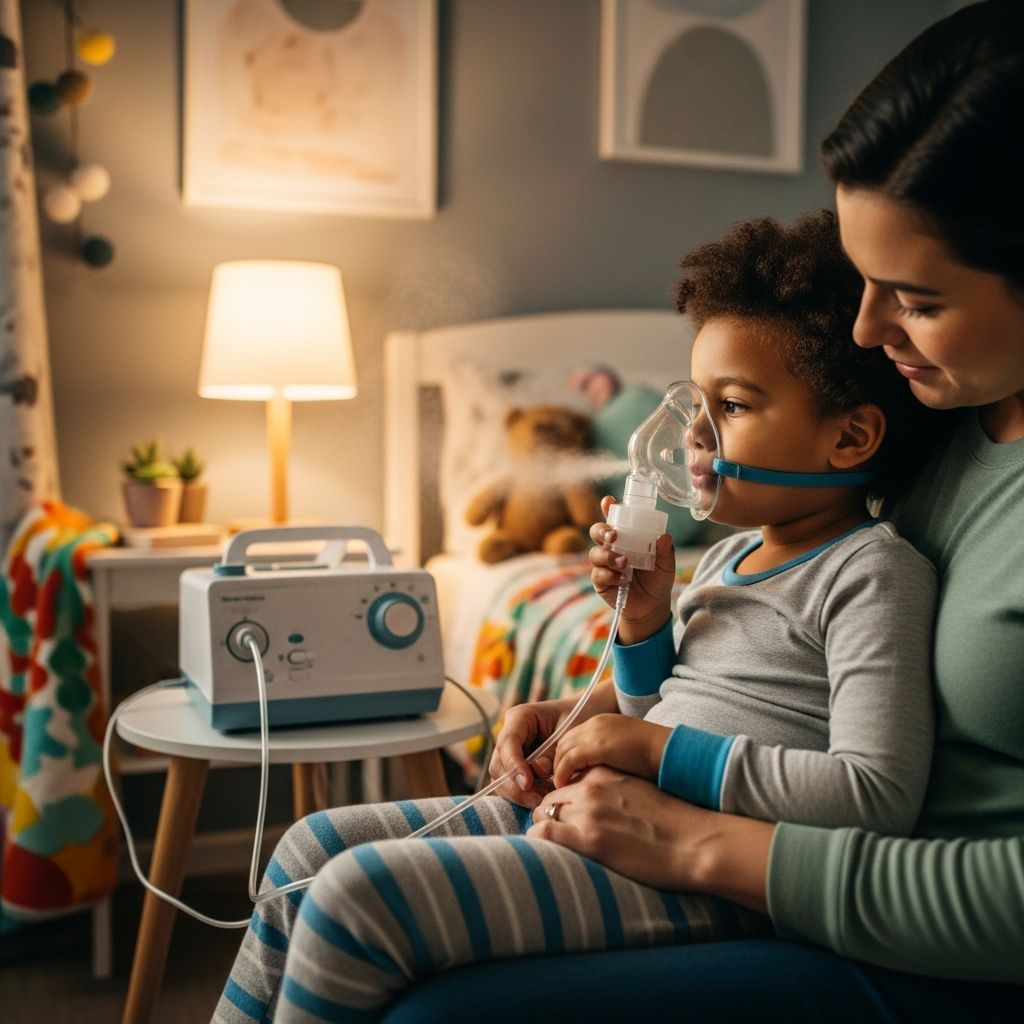
- Parental lap-sitting for security during use.
- Explaining simply: “It’s like magic mist for strong lungs!”
Consistency fosters routine; track symptoms in a log for doctor reviews.
Potential Side Effects and Precautions
Most treatments are safe, but watch for rapid heartbeat (from bronchodilators), jitteriness, or throat irritation. Use as prescribed; overuse risks tolerance buildup. Avoid if child has fever unless advised. Mouthpieces outperform masks for lung deposition, but masks suit non-verbal kids.
Traveling with Your Nebulizer
Portable battery models facilitate trips. Carry prescriptions, extra supplies, and TSA-compliant bags. Car adapters extend usability. Mesh types excel here due to compactness.
When to Contact Your Healthcare Provider
Seek help if treatments fail to ease symptoms, wheezing worsens, or side effects emerge. Routine check-ins ensure optimal therapy.
Frequently Asked Questions (FAQs)
How often can my child use a nebulizer?
Follow prescription: typically 2-4 times daily or as needed for acute relief. Never exceed without guidance.
Is a nebulizer better than an inhaler for kids?
Yes for young children or severe cases needing higher doses; inhalers suit coordinated older kids for quick action.
Can nebulizers be used with any medication?
Only doctor-prescribed respiratory meds; incompatible ones may clog or degrade.
How long does a nebulizer treatment last?
5-15 minutes, depending on type and dose volume.
Are portable nebulizers safe for airplanes?
Yes, as medical devices; notify airlines in advance with documentation.
This guide draws from established medical practices to empower parents. Always prioritize professional medical advice tailored to your child’s needs.
References
- Nebulizer — Wikipedia. 2023-10-01. https://en.wikipedia.org/wiki/Nebulizer
- What is a nebulizer? Definition, types, uses — CVS Health. 2024-05-15. https://www.cvs.com/learn/health/asthma-respiratory-health/what-is-a-nebulizer
- Nebulizers — Rotech Healthcare. 2023-11-20. https://www.rotech.com/nebulizers/
- Home Nebulizer Therapy — Cleveland Clinic. 2024-01-10. https://my.clevelandclinic.org/health/drugs/4254-home-nebulizer
- Nebulizers: Definition, Types, Uses, and Cleaning — WebMD. 2023-09-05. https://www.webmd.com/asthma/home-nebulizer-therapy
- How to Use a Nebulizer — American Lung Association. 2024-02-28. https://www.lung.org/lung-health-diseases/lung-disease-lookup/copd/treating/copd-medications/how-to-use-a-nebulizer