When a teen starts experimenting with makeup, it can feel exciting, overwhelming, and even a little alarming for parents all at once. This guide offers practical, empathy-based strategies to help you talk about makeup, teach healthy habits, and support your teen’s self-expression without turning every eyeliner stroke into a power struggle.
Understanding What Makeup Means to Your Teen
Before correcting technique or banning products, it helps to understand what makeup represents in your teen’s life. For many teens, makeup is less about vanity and more about identity, creativity, and belonging among peers.
Ask open-ended questions instead of jumping straight to critique. You might say, “What do you like most about wearing makeup?” or “Is there a look or influencer you’re trying to recreate?” This invites conversation rather than defensiveness and gives you insight into their motivations.
- Some teens use makeup to feel more confident about acne, dark circles, or other skin concerns.
- Others see it as an art form, similar to drawing or fashion design.
- For many, it is tied to social media trends and a desire to fit in with friends.
Starting the Conversation Without Criticism
How you approach the first few conversations about makeup can set the tone for years. Leading with criticism (too much, too bright, too adult) often pushes teens to hide their experimenting or ignore your input entirely.
Instead, focus on curiosity and collaboration. Choose a calm, neutral moment, not a rushed morning before school or right before a family event. Frame your interest as support rather than control.
Helpful conversation starters
- “I’ve noticed you’ve been trying some new looks—do you want to show me what products you’re using?”
- “If you ever want help learning techniques or choosing products, I’d be happy to explore with you.”
- “What kind of makeup look makes you feel most like yourself?”
Avoid comments that focus only on what is “wrong” with their face or their application. Constant correction can make a teen feel like a project instead of a person.
Building a Foundation: Skincare Before Makeup
Healthy skin makes makeup easier, more comfortable, and often more minimal. Teaching basic skincare sends the message that caring for their skin is a form of self-respect, not punishment for breakouts.
Simple teen-friendly skincare routine
- Gentle cleanser: Once or twice a day, depending on skin type.
- Light moisturizer: Oil-free for oily or acne-prone skin; richer creams for dry skin.
- Sunscreen: Broad-spectrum SPF as a daily habit, even on cloudy days.
- Targeted products: Spot treatments for acne or soothing products for sensitivity, discussed with a healthcare professional when needed.
Link skincare to their goals. If they want concealer to sit smoothly under the eyes or foundation not to cling to dry patches, explain how hydration, sleep, and gentle products make their makeup look better and feel more comfortable.
Creating Age-Appropriate Makeup Guidelines Together
Every family has different values and comfort levels when it comes to makeup, especially for school days or special events. Instead of delivering a long list of rules, work with your teen to build a shared set of guidelines.
Discuss where, when, and how much makeup feels acceptable. Involving them in these decisions increases the chances they will respect the boundaries you set.
| Situation | Suggested Approach | Reasoning |
|---|---|---|
| School days | Light coverage (if any), soft eye makeup, neutral lips. | Keeps focus on learning, reduces time pressure in the morning. |
| Family gatherings | Polished but subtle look, with one feature emphasized (eyes or lips). | Honors family norms while allowing self-expression. |
| Parties or photos | More creative colors or shimmer, still avoiding overly harsh or extreme looks. | Provides room for fun and experimentation in safe contexts. |
| Online content (videos, posts) | Discuss what feels appropriate to share and how it aligns with long-term digital reputation. | Helps them make thoughtful choices about permanent online images. |
Teaching Basic Techniques: Less About Perfection, More About Safety
Many teens are eager to jump into advanced trends like contouring or heavy winged liner before learning the basics. Guiding them through simple techniques first can prevent frustration, uneven application, and skin irritation.
Beginner-friendly makeup steps
- Base: If they want coverage, start with a tinted moisturizer or light concealer instead of full-coverage foundation.
- Eyes: Introduce neutral eyeshadows, soft eyeliner, and basic mascara application with an emphasis on hygiene.
- Cheeks: Cream blushes are often more forgiving and natural-looking for young skin.
- Lips: Tinted balms or glosses can offer color without the maintenance of bold lipsticks.
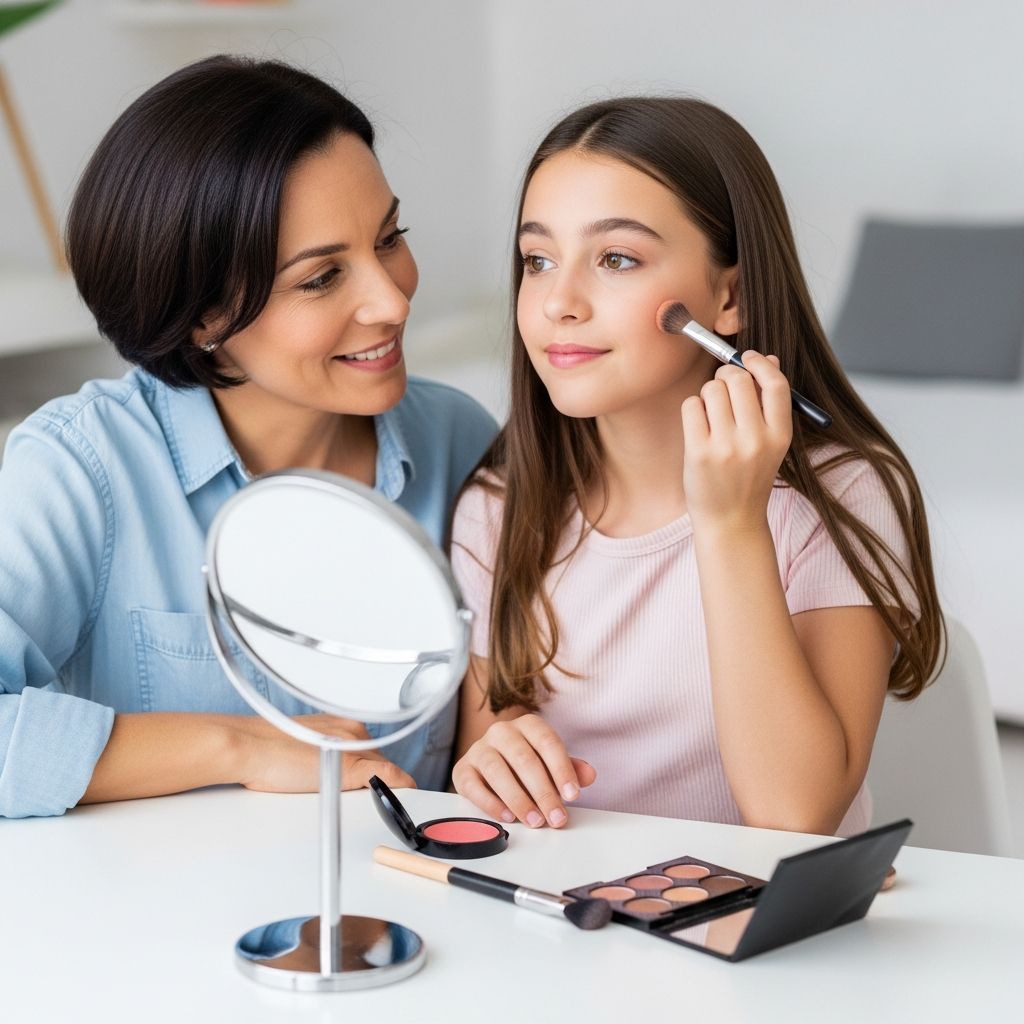
Consider practicing together at a relaxed time—perhaps a weekend afternoon—so they can experiment without the pressure of needing to rush out the door. This also offers a chance to share tips you wish you had known at their age, without lecturing.
Supporting Healthy Self-Image Amid Beauty Ideals
Makeup can either reinforce insecurity or support self-acceptance, depending on how it is framed. Connect makeup to creativity and fun, not as a requirement to be seen or liked.
Gently challenge the idea that they must hide every freckle, scar, or pimple to be presentable. Praise aspects of their appearance that are not altered by makeup—such as their expressions, smile, or unique features—so they do not feel “unfinished” without products.
- Emphasize that makeup is optional, not mandatory, for social events.
- Remind them that everyone has texture, pores, and occasional breakouts, even influencers and celebrities.
- Model healthy behavior by occasionally going makeup-free yourself if you feel comfortable, and speaking kindly about your own face.
Addressing Social Media and Influencer Culture
Many teens learn makeup not from family or friends, but from highly edited videos and filtered photos. These sources can be inspiring but also distort what real skin and realistic routines look like.
Talk openly about filters, editing apps, and sponsorships. Explain that many creators are paid to promote frequent product changes and complex routines that may not be necessary—or even appropriate—for teen skin.
Questions to explore together
- “How long do you think this influencer actually spends on that look versus what you see in a 30-second clip?”
- “What parts of their routine do you think are realistic for you, and what might be more about entertainment?”
- “How do you feel after scrolling through beauty content—more confident or more pressured?”
Safety and Hygiene: Protecting Skin, Eyes, and Lips
Even if your teen’s technique is not perfect, hygiene is non-negotiable. Poor habits like sharing mascara, sleeping in makeup, or using expired products can lead to infections, breakouts, and irritation.
Non-negotiable safety rules
- Never share eye products like mascara, eyeliner, or eyeshadow applicators.
- Remove makeup before bed with a gentle cleanser or makeup remover.
- Clean brushes and sponges regularly with mild soap or brush cleaner.
- Watch for signs of allergic reactions: redness, burning, itching, or swelling.
- Store products in a cool, dry place and discard anything that smells off or changes texture.
Turn these rules into shared rituals rather than punishment. For example, you can schedule a quick “brush-wash Sunday” together or set out makeup-removing wipes as part of the bedtime routine.
Collaborating With Professionals and Trusted Resources
If your teen is truly eager to learn, involving a neutral third party can take pressure off your relationship. A short session with a makeup artist, skincare professional, or a reputable class can offer clear, age-appropriate guidance.
Frame these experiences as a treat, not a correction. Focus on learning skills like choosing shades that match their skin, understanding product labels, and creating everyday looks rather than only dramatic transformations.
- Look for beginner workshops at local salons or community centers.
- Pre-screen online tutorials and channels that emphasize healthy skin, subtle makeup, and realistic routines.
- Encourage your teen to ask professionals questions about their specific skin type or concerns.
Handling Conflict: When You Strongly Disagree With Their Look
Disagreements will happen. Perhaps they show up with heavily drawn brows, overly dark foundation, or bold colors you find inappropriate for the occasion. Reacting with shock or sarcasm often escalates the situation.
Instead, separate your feelings about the look from your feelings about your child. You can dislike a style and still show respect for their autonomy.
Constructive responses during conflict
- Pause before speaking; give yourself a moment to calm down.
- Focus on context: “For school, I’m more comfortable with a softer look. Let’s save this style for parties or weekends.”
- Offer options instead of ultimatums, such as adjusting one feature (toning down lips or eyeliner) instead of demanding a full redo.
- After the moment passes, revisit the conversation in a calmer setting to discuss your values and their need for expression.
Encouraging Experimentation in Low-Stakes Settings
Teens need room to practice and play without the fear of being judged by teachers, classmates, or extended family. Setting aside dedicated “experimentation time” can satisfy their curiosity while keeping everyday looks simpler.
Offer opportunities such as at-home spa days, sleepovers, or weekend afternoons where they can try bolder colors, graphic liner, or special-effect products that may not be suitable for school or formal events.
- Provide makeup remover and gentle cleansers so they can start over as many times as they like.
- Encourage them to take photos to track progress and see which looks they truly like.
- Share your own “makeup fails” from the past to normalize the learning process.
Integrating Makeup Into Broader Life Skills
Makeup conversations can open the door to deeper topics: body image, peer pressure, budgeting, and time management. Treat products and routines as part of the larger work of growing up, not an isolated hobby.
For example, you might link buying makeup to budgeting skills. Help your teen compare prices, read ingredient lists, and decide which items are worth investing in versus where they can save.
- Discuss how much time they want to spend on their appearance each morning and how it affects sleep and punctuality.
- Talk about advertising, sponsorships, and consumerism so they learn to make thoughtful choices rather than impulse purchases.
- Use their interest in beauty as a bridge to conversations about confidence and character that go far beyond appearance.
FAQs: Parents and Teens on Makeup
What is a reasonable age for my teen to start wearing makeup?
There is no universal “right” age; it depends on your family values, your teen’s maturity, and the type of makeup involved. Many families feel comfortable with simple products like lip balm or clear mascara in the tween years, gradually adding more complexity as the teen demonstrates responsibility and respect for agreed boundaries.
How do I stop my teen from wearing too much makeup?
Rather than simply forbidding heavy looks, teach them how to achieve the effects they like with fewer products or lighter application. Work together to create context-based rules—for example, subtle makeup for school and more dramatic looks for special occasions—so they feel some freedom while still respecting family expectations.
What if my teen refuses to remove makeup at night?
Connect makeup removal to outcomes they care about, such as clearer skin, comfortable eyes, and fewer breakouts. Simplify the process with easy-to-use removers and place them somewhere convenient, then build the habit into the bedtime routine as a normal, non-negotiable step like brushing teeth.
Should I buy my teen expensive products?
High price does not always equal better performance or safety. Start with affordable, gentle products and focus on teaching them how to read labels, check reviews, and pay attention to how their skin reacts; if they stay committed and responsible, you can decide together which items, if any, are worth upgrading.
How can I support my teen if they wear makeup to express gender identity?
Begin by listening carefully and affirming their feelings, recognizing that makeup can be an important tool for exploring and expressing identity. Discuss safety, context, and emotional support in the same way you would for any teen, while being especially mindful of the social and emotional challenges they may face and making it clear that your love is not dependent on how they present.
Final Thoughts: Makeup as a Bridge, Not a Barrier
Makeup does not have to become a battlefield between you and your teen. Approached with empathy, curiosity, and clear communication, it can be a powerful bridge—offering chances to bond, share skills, and talk about who they are becoming inside and out.
By focusing on safety, self-respect, and mutual understanding, you encourage your teen to see makeup as one small, adaptable tool in the larger work of building a grounded, confident identity—one that will carry them far beyond the mirror.