Cultural diversity awareness is the ongoing process of helping children recognize, respect, and value the many ways people live, think, and express themselves around the world. When adults are intentional about this work, children are more likely to grow into empathetic, open-minded, and socially responsible adults.
Why Cultural Diversity Awareness Matters
Children begin noticing differences in skin color, language, and customs from a very young age. When these observations are guided with positive explanations and examples, children learn that difference is normal and enriching rather than threatening. In contrast, when adults avoid the topic, children may absorb stereotypes, biases, or fear from what they see and hear around them.
- It supports social-emotional development by teaching empathy, perspective-taking, and respect.
- It prepares children for a globalized world in which collaboration across cultures is essential.
- It creates safer, more inclusive classrooms and homes where each child feels seen and valued.
Core Principles for Teaching Diversity
Before planning specific lessons or activities, it helps to anchor efforts in a few guiding principles. These principles keep the focus on depth, respect, and ongoing learning rather than one-time events or superficial celebrations.
- Normalize difference: Present cultural differences as everyday realities, not as curiosities or exceptions.
- Center respect and dignity: Emphasize that every person deserves fairness, kindness, and respect, whatever their background.
- Be honest but age-appropriate: Acknowledge bias and unfairness in ways children can understand, without overwhelming them.
- Listen to lived experiences: When possible, amplify voices of people speaking about their own cultures rather than speaking for them.
Promoting Diversity Awareness in the Classroom
Educators play a powerful role in shaping how children think about culture and difference. An inclusive classroom is built not only on what is taught explicitly but also on the routines, materials, and interactions that happen every day.
Create an Inclusive Physical Environment
The classroom space itself can signal who belongs and whose stories matter. Thoughtful choices in displays, visuals, and materials can help every child see themselves and others represented.
- Include posters, artwork, and photographs that represent a wide range of races, ethnicities, family structures, abilities, religions, and languages.
- Label key areas and objects in multiple languages if possible, especially those represented in the class community.
- Use dolls, play figures, and role-play materials that reflect diverse skin tones, clothing styles, and physical abilities.
| Area | Non-inclusive Example | More Inclusive Alternative |
|---|---|---|
| Library Corner | Mostly books with characters from one background. | Books featuring main characters of many races, cultures, and family types. |
| Dramatic Play | Single set of dishes and foods from one culture. | Play foods and utensils from various cuisines and traditions. |
| Wall Displays | Holiday decorations from only one tradition. | Rotating displays highlighting multiple holidays and cultural events. |
Integrate Diverse Content Across Subjects
Cultural diversity awareness is not just a social studies topic. It can be woven into literacy, art, music, science, and even math in developmentally appropriate ways. This helps children see that culture influences many aspects of life, from stories and celebrations to inventions and problem-solving.
- In literacy, choose stories written by authors from different backgrounds and featuring children in everyday situations, not only stories about struggle or trauma.
- In music and art, explore instruments, rhythms, and artistic traditions from many regions while highlighting the people and histories behind them.
- In social studies or geography, look at how different communities solve similar problems, such as building homes, sharing resources, or caring for the environment.
Model Inclusive Language and Behavior
Children watch how adults talk about and interact with people who are different from them. Everyday comments can either reinforce stereotypes or challenge them. Educators can intentionally model curiosity, respect, and fairness.
- Avoid generalizations such as “they all” or “those people,” and instead talk about specific individuals or groups with nuance.
- Intervene when students use hurtful language, and guide them to understand why certain words or jokes are harmful.
- Encourage students to ask questions respectfully about unfamiliar customs or appearances, and answer them calmly and non-defensively.
Promoting Diversity Awareness at Home
Families are children’s first teachers, and what happens at home greatly shapes how children think about culture and difference. Parents and caregivers can build diversity awareness through everyday conversations, shared activities, and choices about media and friendships.
Start Open, Honest Conversations
Children will notice differences and ask questions. Rather than shutting those questions down, caregivers can use them as opportunities to build understanding. This does not require having all the answers; it requires a willingness to talk openly and respectfully.
- Respond calmly when a child comments on someone’s skin color, clothing, or accent, and frame differences in a positive or neutral way.
- Use simple stories to explain that people have different traditions, foods, and ways of speaking, and that these are all part of what makes the world interesting.
- If a child repeats a stereotype, gently challenge it and offer a more accurate explanation.
Expose Children to Diverse Experiences
Experiences outside the home can reinforce messages of respect and curiosity. These encounters do not have to be far away or expensive; many communities offer local opportunities to learn about different cultures.
- Visit cultural festivals, museums, community centers, or places of worship with permission and openness to learn.
- Try foods from different regions together and talk about the stories and traditions behind them.
- Encourage friendships and playdates with children from a variety of backgrounds when possible.
Use Books, Shows, and Music Thoughtfully
Media can either widen or narrow children’s understanding of cultural diversity. Caregivers can curate what children see and hear so that they encounter many different types of people in positive, complex roles, not just stereotypes or side characters.
- Choose children’s books and shows with diverse main characters whose identities are part of their lives but not the sole focus of the story.
- Include stories that address fairness, kindness, and standing up to bullying or exclusion.
- Listen to music from different cultures, and, when possible, share short explanations or stories about the artists and communities.
Collaborating Between Home and School
The strongest approach to cultural diversity awareness connects efforts at school and at home. When educators and families share information and coordinate, children receive more consistent messages and support.
- Teachers can invite families to share traditions, stories, or family histories in ways that feel safe and voluntary.
- Schools can communicate clearly about their goals for inclusion and how families can reinforce them at home.
- Families can ask teachers how cultural diversity is addressed in the curriculum and offer constructive ideas or resources.
Avoiding Common Pitfalls
Well-intentioned diversity efforts can sometimes fall into traps that unintentionally reinforce stereotypes or make some students feel singled out. Awareness of these pitfalls helps adults course-correct and design more meaningful experiences.
- Tokenism: Avoid highlighting a culture only during a single holiday or event and ignoring it the rest of the year.
- Exoticizing: Do not present other cultures as strange or “other”; focus instead on both similarities and differences.
- Putting students on the spot: Never assume a child wants to or should speak for an entire group; participation should be optional and supported.
Practical Activity Ideas
Concrete activities can make cultural diversity awareness engaging and memorable. These ideas can be adapted for different ages and settings and are most powerful when connected to ongoing discussions and reflection.
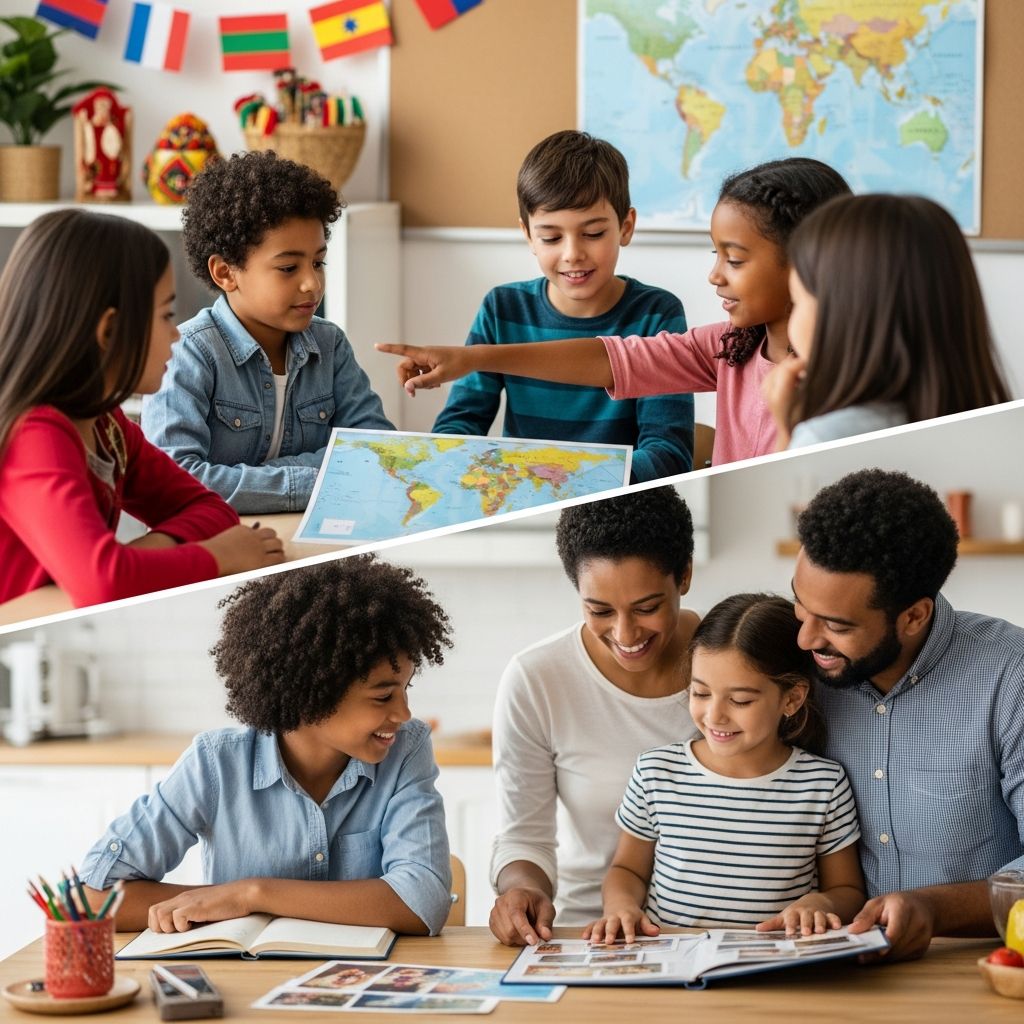
- Classroom or family cultural map: Create a world map where children can place pins, stickers, or drawings representing places important to their families or interests.
- Story-sharing circles: Set aside time for children to share stories about family traditions, favorite meals, or celebrations, making sure everyone has a chance to participate if they choose.
- Language corner: Learn simple greetings in multiple languages and use them in morning meetings or at the dinner table.
- Art projects inspired by global traditions: Explore different patterns, symbols, or techniques from around the world, emphasizing respect for the meanings and histories behind them.
Frequently Asked Questions (FAQs)
At what age should children start learning about cultural diversity?
Children begin noticing differences in appearance and behavior as toddlers, so it is helpful to start simple, positive conversations early. As children grow, adults can introduce more complex ideas about fairness, identity, and history in age-appropriate ways.
How can teachers address biased or hurtful comments in class?
When a biased comment is made, it is important to respond calmly but clearly. Teachers can name why the comment is hurtful, affirm the dignity of the targeted group, and guide the class toward more respectful language and understanding.
What if families have different views about discussing race and culture?
Educators can explain their goals for fostering respect, safety, and inclusion for all students while listening to family concerns. It helps to frame discussions of race and culture as part of teaching kindness, fairness, and accurate information rather than as political debates.
How can parents support diversity awareness if their community is not very diverse?
Even in less diverse communities, families can use books, virtual tours, films, and online cultural events to broaden children’s experiences. They can also focus on teaching skills such as empathy, critical thinking, and curiosity, which help children respond thoughtfully when they do encounter more diverse environments.
Is celebrating holidays from different cultures enough?
Holiday celebrations can be a fun entry point, but they are only one small part of culture. A more complete approach includes everyday stories, role models, histories, and ongoing conversations about identity, fairness, and respect throughout the year.
Building a Lasting Commitment
Promoting cultural diversity awareness is not a one-time lesson or project. It is a long-term commitment to reflection, learning, and relationship-building by both adults and children. When classrooms and homes work together to embrace difference, children learn that inclusion is a core value, not an optional add-on.
Through intentional choices in language, materials, activities, and partnerships, adults can help children see diversity as a source of strength and creativity. Over time, these efforts contribute to communities where more people feel they truly belong and can thrive.