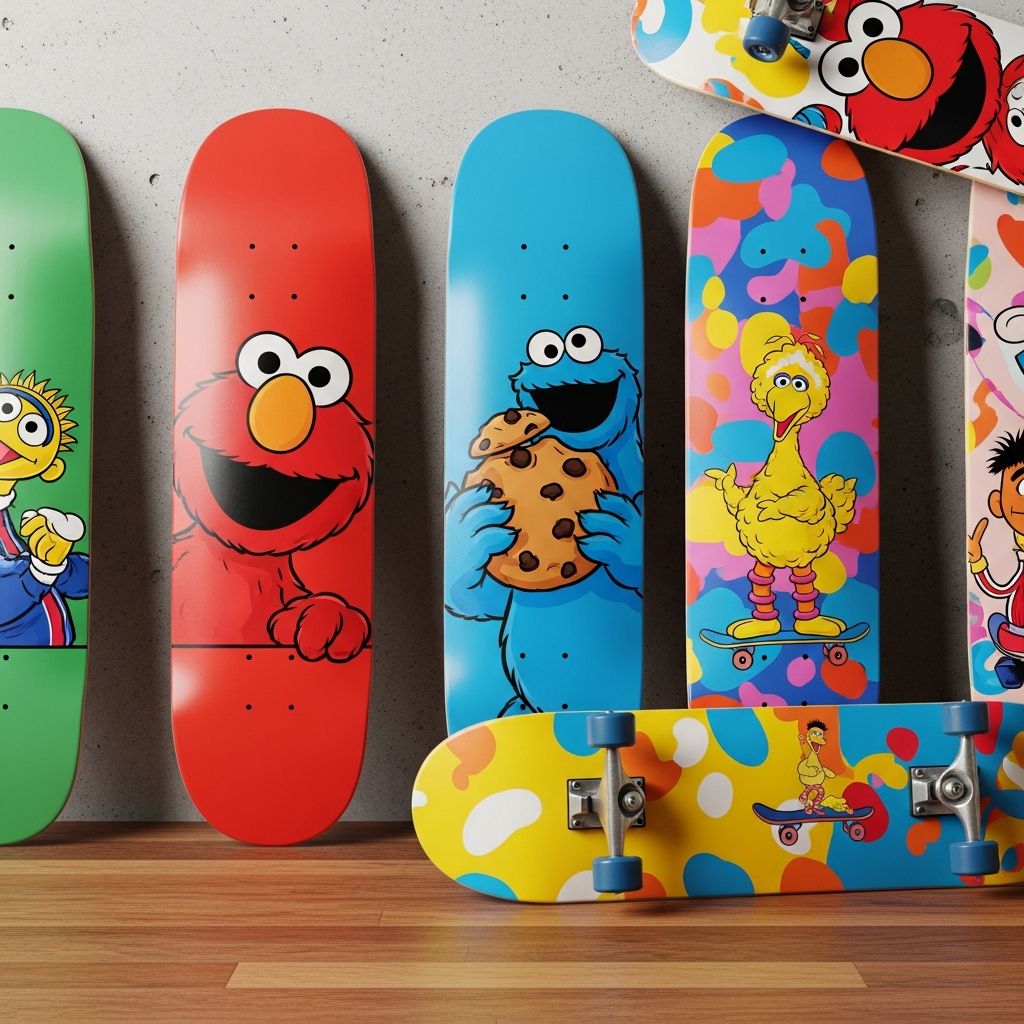
Character-branded toys are everywhere, but every so often one comes along that parents secretly want for themselves. Sesame Street-themed skateboards from quality builders fall squarely into that category: they are fun for kids, surprisingly good-looking in a living room, and built like real boards rather than disposable plastic toys.
Below is a practical guide to what makes these skateboards different, how to judge whether they’re a good fit for your child, and why they may quietly be your favorite piece of kids’ gear in the house.
Why Sesame Street Belongs on a Skateboard
Sesame Street has always mixed learning, kindness, and silliness, which aligns naturally with what skateboarding can offer kids: trial and error, perseverance, and a community vibe that rewards effort over perfection. Skateboarding culture increasingly welcomes younger riders and families, and a familiar face like Elmo or Cookie Monster can make stepping on a deck for the first time a lot less intimidating.
- Instant familiarity: Kids recognize characters and feel excited to try.
- Built-in conversation: Parents can use characters to talk about effort, safety, and taking turns.
- Bridging generations: Many parents grew up with the same muppets, creating an easy shared interest.
From Toy to Real Gear: What Sets These Boards Apart
Many character skateboards on store shelves are more “decorative toy” than actual sports equipment. A collaboration with a real skate brand, however, usually upgrades the construction and components so that the board can handle real riding instead of only hallway pushes.
Key elements that typically separate a genuine kids’ skateboard from a flimsy novelty:
- Wooden deck: Seven-ply maple or similar hardwood offers the flex and strength used in adult boards, just scaled down.
- Metal trucks: Aluminum trucks support turning, carving, and tricks without bending.
- Urethane wheels: Softer wheels grip pavement and roll over small cracks more easily, helpful for less experienced riders.
- Real bearings: Standard skate bearings provide smoother, more predictable speed.
When you add Sesame Street artwork to that level of build quality, the result is gear that feels like part of the family’s active lifestyle, not a short-lived impulse buy.
Design Details Parents Actually Notice
Parents rarely obsess over wheel durometers, but they do care about how something looks in their home and how durable it feels. Sesame Street art gives these boards the advantage of being both display-worthy and approachable.
- Color palettes that age well: Rather than loud, chaotic graphics, many character boards now use well-composed color schemes that look good even after kids move on to more advanced decks.
- Iconic characters, subtle layouts: Think one big Cookie Monster or a pattern of letters and numbers, not a chaotic collage.
- Wall-art potential: A worn deck can be hung in a playroom or hallway as art once it retires from regular use.
Visual Appeal vs. Practical Function
| Feature | Why Kids Care | Why Parents Care |
|---|---|---|
| Sesame Street characters | Fun, familiar, playful | Nostalgia and easy way to encourage outdoor play |
| Compact size | Feels manageable under small feet | Easy to store, less clutter, fits in a car trunk |
| Quality wood deck | Stable ride, less flexy and scary | Longer lifespan, fewer replacements |
| Soft wheels | Quieter, smoother ride on rough pavement | Less noise in the driveway, fewer sudden wipeouts |
Why Skateboarding Is a Smart Activity for Kids
Beyond the graphics, a Sesame Street skateboard is a gateway to a surprisingly beneficial activity. Research and youth sports organizations point to several key advantages when children learn to ride a board.
Physical Benefits
- Balance and coordination: Riding a board trains the body to respond to tiny changes in position and terrain, sharpening motor control and spatial awareness.
- Strength and endurance: Pushing, turning, and stopping give kids a full-body workout—legs, core, and even upper body contribute to stability and propulsion.
- Active alternative to screens: Skateboarding offers moderate-to-vigorous physical activity that can help kids meet movement guidelines and reduce sedentary time.
Mental and Emotional Skills
- Focus and attention: A four-month skateboarding program for children with ADHD was linked to improvements in concentration and balance, showing how the sport can support attention skills when practiced regularly.
- Resilience: Missing a trick, trying again, and gradually improving gives kids a lived experience of perseverance and growth.
- Self-confidence: Landing a new trick or simply riding further than last week can provide genuine pride independent of grades or competition results.
- Stress relief: The combination of physical exertion and focused movement can reduce anxiety and offer a simple outlet for everyday stress.
Social and Creative Upsides
- Community without strict rules: Unlike heavily refereed team sports, skating usually encourages a relaxed, peer-supported environment where kids learn by watching and sharing tips.
- Non-competitive confidence: Progress is measured individually—rolling down a ramp that used to feel scary becomes a personal milestone, not a scoreboard result.
- Self-expression in motion: Kids develop their own style, favorite obstacles, and preferred tricks, using the board as a creative outlet rather than just a piece of exercise equipment.
What Makes a Kids’ Skateboard Truly Child-Friendly?
Parents considering Sesame Street-branded boards still need to apply the same criteria they would to any kids’ skateboard. Branding should never excuse poor construction or unsafe design.
Size and Shape
- Deck width: Narrower decks (often around 7.0–7.5 inches) are easier for smaller feet to control, whereas full-size adult boards can feel unwieldy for young children.
- Wheelbase: A slightly shorter distance between trucks helps kids turn and maneuver without exaggerated movements.
- Kicktail shape: Gentle nose and tail kicks allow basic tricks and better control when lifting the front or back wheels.
Components That Matter
- Trucks: Metal trucks should be tightened enough to prevent speed wobbles but loose enough that kids can lean and turn. You can always fine-tune this with a skate tool.
- Wheels: Softer wheels roll more smoothly on rough sidewalks and help buffer minor bumps and pebbles.
- Grip tape: Full-coverage grip tape gives shoes a strong connection to the deck, increasing stability.
Safety: What Parents Should Put in Place
Skateboarding carries a risk of falls, but thoughtful precautions make it far safer for young riders. Pediatric organizations consistently recommend protective gear and supervision, especially when children are just starting out.
Essential Protective Gear
- Helmet: A properly fitted, skate-rated helmet that covers the back of the head is non-negotiable. Bike-only helmets may not offer the same coverage for typical skate falls.
- Knee and elbow pads: Pads cushion common impact points and reduce the fear of falling, which can help kids learn more comfortably.
- Wrist guards: Beginners tend to catch themselves with their hands; wrist guards can protect against sprains or fractures.
- Closed-toe shoes: Grippy sneakers with flat soles provide stable footing on grip tape.
Choosing Safe Places to Ride
- Flat, open surfaces: Start on driveways, empty tennis courts, or quiet parking lots with good pavement.
- Avoid traffic: Streets and steep hills drastically increase risk and should be off-limits for beginners.
- Beginner-friendly skateparks: Some parks have designated beginner areas or times that are less crowded and less intimidating.
Making Skateboarding a Family Activity
Sesame Street boards make it easy for parents to join the fun, especially if you skate or are willing to learn alongside your child. When families treat skateboarding as a shared hobby rather than a solo distraction, kids often stick with it longer and stay safer.
Ways Parents Can Participate
- Skatewalks: You walk or jog while your child rides beside you on a sidewalk or path, stopping frequently to practice turns and stops.
- Weekend ramp sessions: Small, portable ramps in a driveway can turn short practice sessions into an anticipated weekend ritual.
- Progress check-ins: Ask what your child is working on—turning, balancing longer, or trying a tiny curb drop—and celebrate small improvements.
- Basic maintenance together: Show your child how to tighten trucks or clean bearings, teaching them care and responsibility for their gear.
Choosing the Right Sesame Street Board for Your Child
Not every child needs the same setup, even if the character art is what first catches their eye. A little thought about age, confidence, and goals will help match your child to the right type of Sesame Street skateboard.
Questions to Consider Before Buying
- How old and coordinated is your child? Younger kids may start with smaller, more stable setups or even learner-style boards with extra support handles, then move up to traditional skateboards.
- Where will they ride most? Sidewalk use favors softer wheels and stability, while park use may eventually push you toward more trick-friendly setups.
- Is this their first board? If so, prioritize balance, safety gear, and a pleasant first experience over advanced performance.
- Does the board grow with them? A quality deck can be handed down to siblings or repurposed with new parts as your child grows.
Creative Ways to Use Sesame Street Skateboards Beyond Tricks
Even if your child never becomes a dedicated skater, a well-made Sesame Street board can earn its keep in unexpected ways.
- Rolling toy hauler: Young kids can sit and push themselves while moving stuffed animals or blocks around the house (with helmets on, of course).
- Balance trainer: Stationary balance drills—like stepping on and off on the grass—help kids feel more comfortable before rolling.
- Decorative display: Mounted on a wall, the deck becomes nostalgic art as your child outgrows it.
- Photo prop: Character boards make instantly recognizable backdrops for milestone photos or birthday shoots.
Frequently Asked Questions (FAQs)
Q: What age is a Sesame Street skateboard appropriate for?
A: Many kids can start experimenting around ages 4–6 with heavily supervised, low-speed practice on flat ground, though readiness depends more on coordination, attention span, and ability to follow safety rules than on age alone.
Q: Is a character-branded skateboard safe for real riding?
A: It can be, as long as the board uses quality materials—a wooden deck, metal trucks, and real skate wheels and bearings. Parents should evaluate the build just as critically as they would any unbranded kids’ skateboard.
Q: Do kids still need lessons if they have a child-friendly board?
A: Formal lessons are not required, but beginner classes or skate camps can accelerate progress and improve safety, especially by teaching how to fall, how to stop, and how to share space with other skaters.
Q: How long will a Sesame Street skateboard last?
A: With basic care—storing it indoors, keeping it dry, and occasionally tightening hardware—a well-built kids’ skateboard can last several years, even if the rider outgrows it and passes it down or converts it into wall art.
Q: Can a skateboard really help with my child’s focus or behavior?
A: Research on structured skateboarding programs for children, including those with ADHD, shows improvements in balance, attention, and self-regulation, likely due to the sport’s combination of physical challenge and sustained focus.
References
- The Benefits of Skateboarding For Children — Wimzee Blog. 2023-05-15. https://blog.joinwimzee.com/the-benefits-of-skateboarding-for-children/
- Skateboarding and Education: A Perfect Pairing for Modern Schools — Skate The Foundry. 2023-09-01. https://www.skatethefoundry.com/skateboarding-and-education-a-perfect-pairing-for-modern-schools/
- The effects of a four-month skateboarding intervention on motor and cognitive abilities and symptoms in children with ADHD — Frontiers in Psychiatry (PMC). 2024-06-20. https://pmc.ncbi.nlm.nih.gov/articles/PMC11646773/
- The Top 7 Benefits of Enrolling Your Child in Skate Camp — Champ Camp Kids. 2022-07-10. https://www.champcampkids.com/blog/the-top-7-benefits-of-enrolling-your-child-in-skate-camp
- How Can Skateboarding Benefit My Child? — GoSkate. 2023-02-05. https://goskate.com/top/how-can-skateboarding-benefit-my-child/
- Could Your Home-schooled Child Benefit from Skateboarding? — The Skate Club. 2025-09-17. https://www.theskateclub.com/2025/09/17/could-your-home-schooled-child-benefit-from-skateboarding/
- How Skateboarding Helps Kids Develop a Growth Mindset — Parent.com. 2016-08-12. https://www.parent.com/blogs/conversations/2015-how-skateboarding-helps-kids-develop-a-growth-mindset
- Ookkie Skateboard – Learner Skateboard For Kids — Ookkie. 2024-03-01. https://www.ookkie.com/products/ookkie-skateboard