Mad Libs-style word games turn ordinary stories into giggle-filled adventures while quietly building vocabulary, grammar skills, and a love of language.
Why Silly Story Games Are So Powerful
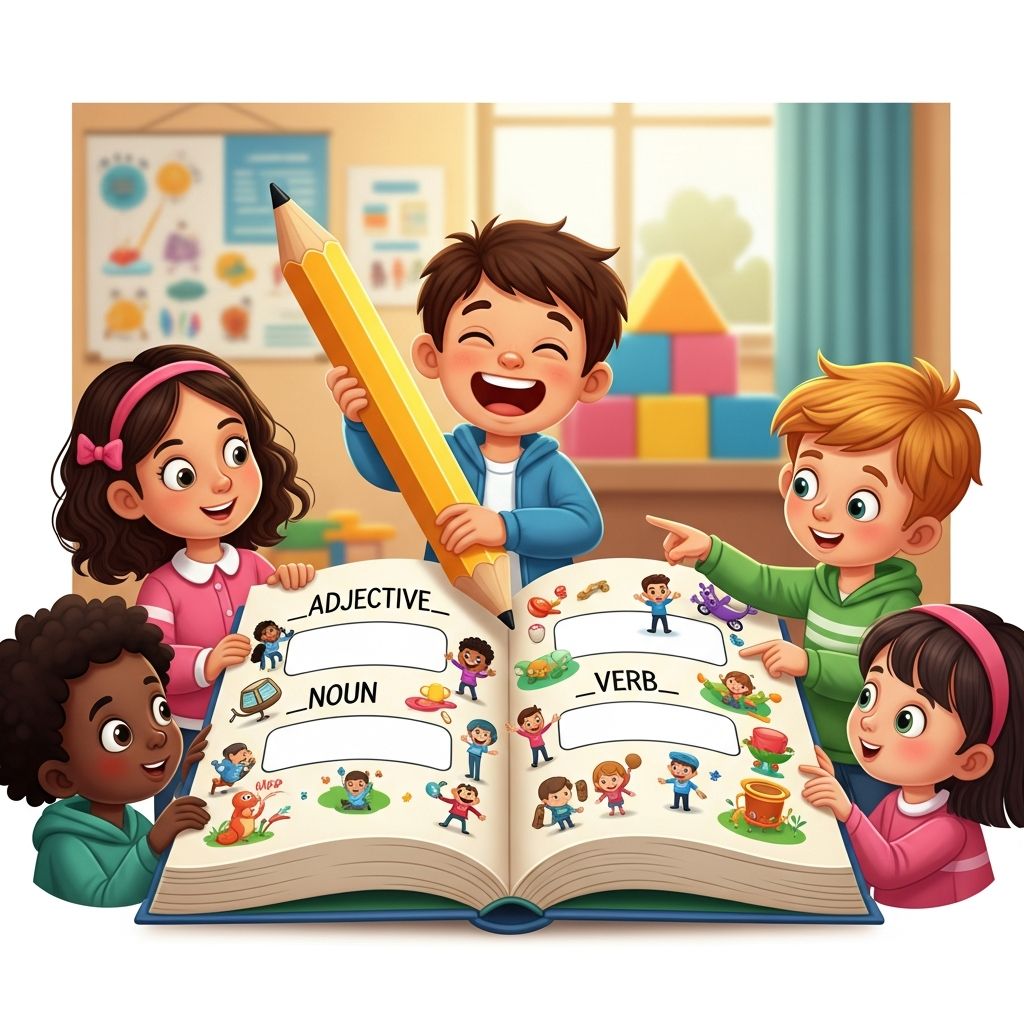
At their core, Mad Libs-style games ask kids to fill blank spaces in a short story with words such as nouns, verbs, adjectives, and more, without seeing the full context until the end. When the story is finally read aloud, the unexpected word choices often create hilarious results that keep children engaged and eager to play again.
Because kids need to think about word types and parts of speech while they play, these games naturally reinforce language skills that are essential for reading and writing success. Laughter lowers pressure and makes learning feel like play, so even reluctant readers are more willing to join in.
Key Benefits for Kids and Families
- Vocabulary growth: Children experiment with new words, synonyms, and descriptive phrases as they search for creative answers to each prompt.
- Grammar practice without worksheets: Repeated exposure to labels such as “noun,” “verb,” and “adjective” helps these concepts stick in a natural way.
- Confidence in reading and speaking: Kids take pride in hearing their own words read aloud in a story, which makes them more willing to read and share out loud.
- Family connection: Because there are no winners or losers, the focus stays on shared laughter and silly storytelling together.
- Flexible for ages and settings: Simple prompts work well for early readers, while older kids can tackle more complex themes and grammar challenges.
How a Classic Mad Libs-Style Game Works
In a traditional version, one person acts as the reader and keeps the story page hidden while asking the other players for words that fit the requested categories. The reader fills each blank with the provided word and then reveals the completed story by reading it aloud to the group.
Stories usually contain a mix of basic grammar labels and imaginative prompts such as “silly sound,” “holiday activity,” or “favorite food,” which encourages kids to be playful with their choices. The end result is often a nonsense paragraph that still follows the structure of a real piece of writing, helping kids see how sentences connect.
Step-by-Step: Creating Your Own Story Game
Designing your own word game version gives you freedom to match stories to your child’s interests, current school topics, or family traditions. You can write about dinosaurs, space travel, sports, favorite foods, holidays, or even a funny version of your daily routine.
- Choose a simple theme. Pick one idea such as “a trip to the zoo” or “the first day of school” to keep the story short and focused.
- Write a short paragraph. Aim for 6–10 sentences with clear, straightforward language so younger kids can follow along easily.
- Remove key words. Replace important nouns, verbs, adjectives, and other details with blank spaces and label each blank with the type of word you want.
- Make a word list page. Create a separate list of prompts (for example, “plural noun” or “funny adjective”) that players will use to supply words before seeing the story.
- Test and adjust. Read the finished story once with your own word choices to check that it flows well and offers good opportunities for silliness.
Suggested Parts of Speech to Include
Using a variety of word categories keeps the game interesting and gives kids a richer grammar workout without feeling like a test. The table below outlines useful parts of speech and creative prompt ideas you can adapt to any theme.
| Word Category | What It Describes | Kid-Friendly Prompt Examples |
|---|---|---|
| Noun | A person, place, thing, or idea. | Animal, favorite toy, place in your town. |
| Verb | An action or something that happens. | Action you do at recess, sport move, chore. |
| Adjective | A word that describes a noun. | Color, feeling word, silly describing word. |
| Adverb | A word that tells how, when, or where a verb happens. | How you move, how you laugh, how you talk. |
| Specific prompt | A themed or guided word request. | Holiday song, snack at a party, sound effect. |
Easy Variations for Different Ages
Mad Libs-style games can be adapted for preschoolers, early readers, and older kids simply by adjusting the length of the story and the complexity of the prompts. Younger children benefit from very short stories with mostly nouns and verbs, while older players enjoy more intricate grammar labels and creative challenges.
- Preschool: Use pictures or simple objects and ask for basic words like “animal” or “color” instead of formal grammar labels.
- Early elementary: Introduce nouns, verbs, and adjectives, and limit each story to one short paragraph.
- Upper elementary and middle school: Add adverbs, prepositions, and specific prompts related to science, history, or literature units.
Turning Game Time into Learning Time
Although the main goal is fun, a few gentle tweaks can transform a simple word game into a powerful literacy activity at home or in the classroom. When adults point out patterns, ask open-ended questions, or invite kids to edit their stories, they highlight key reading and writing skills through play.
- Pause occasionally to talk about why a certain word is a noun or adjective, using kid-friendly explanations instead of technical language.
- Invite kids to read the finished story out loud, helping them practice fluency, expression, and confidence in front of an audience.
- Compare two versions of the same story with different word choices to show how language changes tone and meaning.
Creative Ways to Play in Groups
Mad Libs-style activities work especially well in groups because everyone gets a turn to contribute and then enjoy the shared story. Whether you are playing in a classroom, at a birthday party, or during a family game night, a few simple variations keep the game fresh.
- Round-robin story: Each player supplies one word in turn, moving around the circle until all blanks are filled, then everyone listens to the final story together.
- Team challenge: Divide into small groups, give each group the same set of prompts, and see which team creates the silliest version of the story.
- Performance round: After reading the story, kids act it out using simple gestures or props, turning language practice into a mini drama game.
Card and Board Game Style Adaptations
Some modern versions of the classic game use cards instead of printed stories, turning each round into a quick contest where players compete to build the funniest sentence. A typical format includes a deck of sentence cards with blanks and a separate deck of word cards that list the word along with its type.
During each round, one sentence card is placed in the center, and players secretly choose word cards from their hands to fill in the blanks before revealing the final sentences. Everyone then votes on their favorite version, and the player with the most votes earns a point, with the first to reach a set number of points winning the game.
Tips for Parents and Teachers
Parents and educators can easily weave Mad Libs-style games into regular routines such as bedtime, morning meetings, literacy centers, or holiday celebrations. Short sessions of playful language work can have a lasting impact when they happen consistently over time.
- Keep a folder or binder of printed stories and blank templates ready for rainy days, substitute plans, or quick brain breaks.
- Rotate themes with the seasons or current classroom topics to keep content feeling fresh and relevant for kids.
- Encourage kids to write their own stories for classmates or siblings to complete, giving them authentic reasons to practice writing and revising.
Printable and DIY Ideas
Creating your own printable templates is simple and lets you adjust length, difficulty, and design to match your group. You can make quick versions by hand or design polished pages with a basic word processor and printer.
- Use wide blank lines and large fonts for younger children who are still developing handwriting skills.
- Add small icons or illustrations next to each prompt to help pre-readers and emerging readers participate more independently.
- Store completed stories in a “laugh book” or classroom binder so kids can revisit their favorites or see how their skills improve over time.
Fun Themes Kids Love
Choosing topics that match kids’ passions makes them even more excited to think of creative words and share their stories. Popular themes often mirror the kinds of topics already used in children’s books and classroom units, making it easy to tie games to what they are learning.
- Space adventures, aliens, and imaginary planets.
- Sports championships, school field days, or ninja training.
- Mythical creatures, superheroes, or time travel mishaps.
- Holiday celebrations, family trips, or birthday party disasters.
- Science experiments gone wrong or unusual inventions.
Frequently Asked Questions
Are Mad Libs-style games educational or just for fun?
These games are both entertaining and educational because they require kids to think about how different types of words fit into sentences while they play. Research-informed teaching materials often recommend similar fill-in-the-blank activities to reinforce grammar and vocabulary in a low-pressure way.
What age is best to start?
Children who can recognize basic nouns and verbs, or at least suggest simple words when prompted, are ready for very basic versions of the game. As reading and writing skills develop, you can gradually introduce more complex labels and longer stories to keep the challenge appropriate.
Do kids need to know grammar terms?
Formal grammar knowledge is not required at the beginning; adults can simply describe prompts in everyday language such as “a person” or “a doing word.” Over time, consistently pairing these descriptions with the correct labels helps children become familiar with terms like noun, verb, and adjective.
How long does a typical game take?
A single short story usually takes only a few minutes to complete, which makes these games perfect for quick breaks or transitions. When kids are having fun, they often want to play multiple rounds, which can easily fill a 15–30 minute session.
Can these activities support multilingual learners?
Mad Libs-style stories can help multilingual learners practice new vocabulary and sentence structures in a playful context that reduces anxiety. Teachers sometimes adapt prompts with picture support or translations so that students can participate even if they are still developing fluency.
Mad Libs-style word games transform grammar practice into joyful play, giving families and educators a simple tool to spark laughter and language growth at the same time.