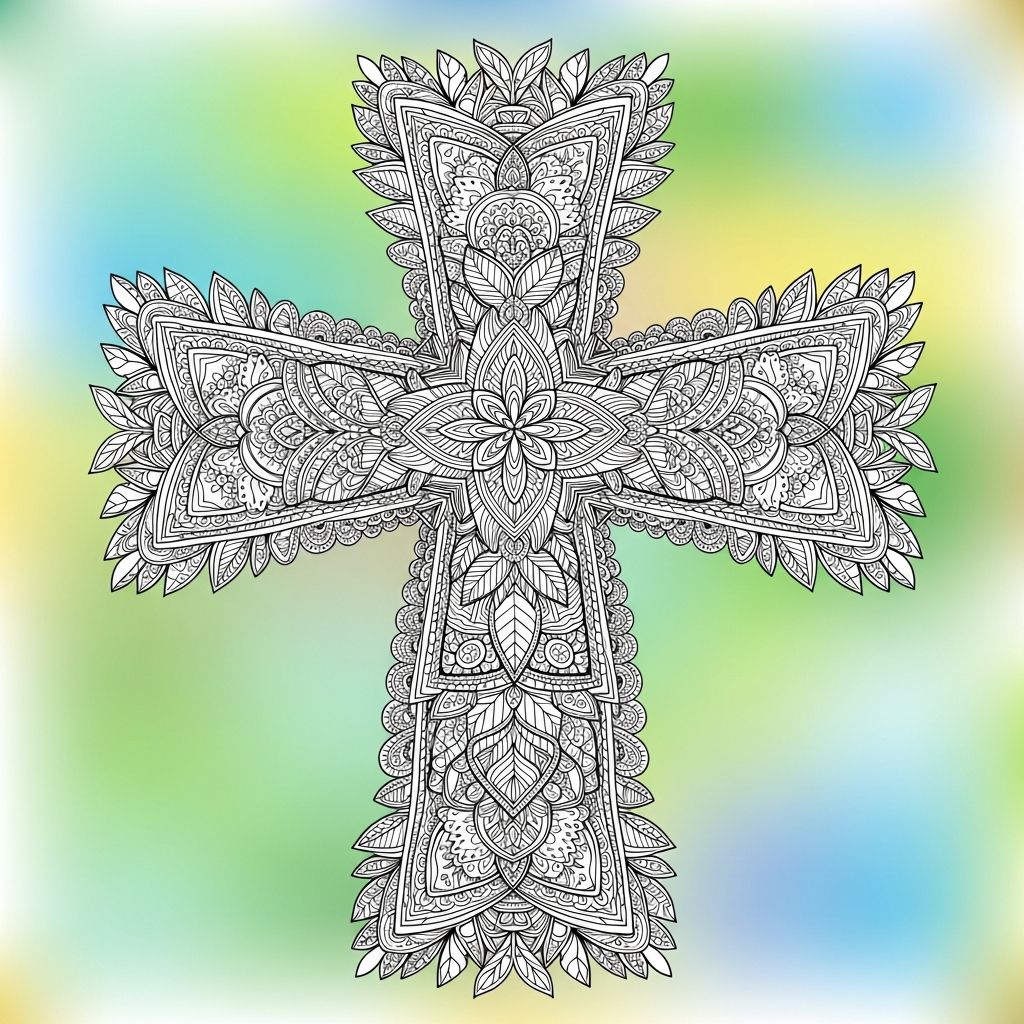
Cross coloring pages are a gentle way to bring together **faith**, **art**, and **relaxation**. Whether you are planning a Sunday school lesson, an Easter activity at home, or a quiet devotional time, printable cross designs offer a low-prep resource that works for a wide range of ages.
Below you will find ideas for using cross coloring pages with children, teens, and adults, plus tips for choosing designs, encouraging learning, and creating a peaceful atmosphere around this simple but meaningful activity.
Why Cross Coloring Pages Appeal to All Ages
Although coloring is often associated with children, research shows that adults also benefit from this creative, repetitive task. When you add the symbol of the cross, the page becomes more than art—it becomes a visual reminder of Christian faith, hope, and sacrifice.
- Children enjoy the simple shapes and bright colors while beginning to recognize the cross as a special symbol.
- Teens often gravitate toward intricate patterns and stained-glass styles that feel more grown-up.
- Adults can use cross coloring pages as part of Bible study, prayer journals, or quiet time for reflection and stress relief.
Because crosses can be drawn in so many different ways—plain outlines, floral designs, geometric patterns, or Scripture-filled frames—you can easily match the page to the age group and occasion.
Benefits of Cross Coloring for Kids and Adults
Coloring combines fine-motor practice, visual focus, and creativity in a way that is both soothing and engaging. Studies on adult coloring suggest that this kind of structured, repetitive art activity can reduce anxiety and improve mood, especially when designs are patterned or symmetrical.
| Benefit | How Coloring Helps |
|---|---|
| Stress relief | Focusing on shapes and colors gives the mind a break from daily worries and promotes calm. |
| Mindfulness | Coloring keeps attention in the present moment, similar to simple mindfulness exercises. |
| Fine-motor skills | Gripping crayons or pencils and coloring within lines strengthens small muscles and coordination. |
| Emotional expression | Color choices and intensity can reflect feelings when words are hard to find. |
| Faith formation | Repeated exposure to the cross and Scripture verses reinforces key Christian beliefs. |
Types of Cross Coloring Pages
Not all cross coloring pages look or feel the same. Choosing the right style makes the activity more meaningful and age-appropriate.
1. Simple Cross Outlines for Young Children
For preschoolers and early elementary kids, the best pages have large shapes and thick outlines.
- Big, open spaces reduce frustration for new colorers.
- Minimal detail lets children focus on basic color recognition.
- Teachers or parents can add a short caption such as “Jesus loves you” to keep the message clear.
These simple outlines are especially helpful during early Easter lessons or when introducing children to the cross for the first time.
2. Stained-Glass and Patterned Crosses
Older kids, teens, and adults often enjoy stained-glass style crosses filled with small sections and geometric patterns.
- Lots of segments make the page feel like a puzzle that slowly comes to life with color.
- These designs naturally encourage careful coloring and fine detail work.
- They pair well with discussions about church windows, light, and symbolism.
Stained-glass cross pages are perfect when you want a project that takes longer and invites deeper concentration.
3. Crosses with Bible Verses or Inspirational Words
Many printable pages include short Bible verses, hymns, or encouraging phrases around or inside the cross.
- Scripture-focused pages make a natural addition to devotionals or family worship time.
- Key verses can be chosen to match a specific lesson or church season.
- Coloring the verse helps with memory and personal reflection.
For readers who struggle with long passages, a single verse wrapped around a cross can be a gentle way to engage with the Bible.
4. Seasonal and Holiday Cross Designs
Cross coloring pages also work well as themed activities throughout the church year.
- Easter: lilies, sunrise scenes, and empty tomb imagery alongside the cross.
- Christmas: crosses combined with stars, nativity silhouettes, or the word “Emmanuel.”
- Good Friday: simpler, more reflective designs that emphasize sacrifice and love.
Using different cross pages across seasons helps children see how the symbol of the cross connects many parts of the Christian story.
How Coloring Supports Faith Learning
Coloring may seem like a quiet, individual task, but it can anchor big conversations about God, forgiveness, and hope. Visual activities are especially valuable for children who learn best through concrete images and hands-on experiences.
Connecting Stories and Symbols
Whenever you use a cross coloring page during a lesson, link it clearly to a story or idea.
- Read a short Bible passage before or after coloring.
- Ask, “Where do you see crosses at church or at home?”
- Invite children to share what colors they chose and why.
This blend of story, symbol, and conversation helps move ideas from the page into memory.
Encouraging Gentle Reflection
For older children and adults, you can pair cross coloring with reflective questions:
- “What do you want to thank God for today?”
- “Is there someone you want to pray for while you color?”
- “Which words or verses stand out to you on this page?”
Because the hands are busy, many people find it easier to think, pray, and talk in a relaxed way.
Educational and Developmental Skills Built Through Coloring
Cross coloring pages are not only spiritually meaningful—they are also educational. Early-childhood experts often recommend coloring and drawing to support school readiness and motor development.
- Fine-motor control: Holding crayons or colored pencils and staying inside lines develop the movements needed for handwriting.
- Hand–eye coordination: The brain must coordinate what the eyes see with how the hands move.
- Color recognition: Naming and choosing colors reinforces vocabulary for younger children.
- Attention and persistence: Finishing a page teaches children to stay with a task from start to end.
- Planning and decision-making: Choosing color schemes and deciding where to start encourage simple problem solving.
Because cross coloring pages feel more like play than work, children practice these skills without the pressure that often comes with worksheets.
Ideas for Using Cross Coloring Pages in Different Settings
Here are practical ways to include cross coloring pages in your week, whether you are at home, in a classroom, or serving in a church ministry.
At Home with Your Family
- Quiet time activity: Set out a basket of cross pages and coloring tools on a coffee table for afternoon or evening wind-down.
- Family devotional: While one person reads a short passage, others color. Share thoughts at the end.
- Holiday traditions: Create an annual Easter or Christmas coloring night and save favorite pages in a binder.
In Sunday School or Children’s Church
- Use a simple cross page as a follow-up to a Bible story for preschool and early elementary classes.
- Offer a choice of two designs—one simple and one detailed—to accommodate mixed ages.
- Display finished pages on a bulletin board as a visual reminder of the lesson theme.
In Christian Schools or Homeschool Lessons
- Pair cross coloring pages with history units about early Christians or church architecture.
- Integrate them into handwriting or reading lessons by adding copywork verses under the design.
- Use them as a calming transition activity between more demanding subjects.
For Adult Groups and Personal Devotions
- Bring printable cross pages to a women’s Bible study, retreat, or small group meeting.
- Use them in hospital or care-home visits to offer a gentle, non-verbal way to focus on hope and comfort.
- Incorporate cross coloring into your personal prayer journal or gratitude practice as a visual element of worship.
Practical Tips for a Smooth Coloring Experience
A bit of preparation can turn a simple coloring page into a meaningful, low-stress activity.
Choosing the Right Materials
- Crayons: Best for young children; sturdy and easy to grip.
- Colored pencils: Ideal for detailed cross designs and older kids or adults.
- Washable markers: Vibrant colors but may bleed through thin paper—use with a protective sheet underneath.
- Cardstock: Prevents tearing and makes finished crosses easier to display.
Keeping the Focus on Enjoyment, Not Perfection
Most of the relaxation benefits of coloring come from the process, not the final picture. Help kids and adults stay focused on enjoyment by:
- Avoiding criticism of color choices or “mistakes.”
- Reminding participants there is no single right way to color a cross.
- Letting people pause and return later if their attention span is short.
Displaying Finished Crosses
When a cross coloring page is complete, displaying it respectfully can reinforce its spiritual meaning.
- Hang children’s pages at eye level in classrooms or hallways.
- Create a seasonal “cross wall” at home or in church that changes with the liturgical calendar.
- Laminate favorite pages for bookmarks, placemats, or prayer cards.
Frequently Asked Questions (FAQs)
From what age can children start cross coloring pages?
Many toddlers can begin scribbling with jumbo crayons around 18–24 months, but simple cross outlines with thick lines are usually best for ages 3 and up. Adjust complexity to match each child’s fine-motor skills and attention span.
Are cross coloring pages appropriate only for Easter?
No. While they are popular during Easter, cross designs are meaningful all year for Sunday school, devotions, memorial services, and general faith formation. Seasonal decorations or verses can be swapped to fit different times of year.
How long should a coloring session last?
For young children, 10–20 minutes is often enough. Older kids and adults may enjoy 30–45 minutes or more, especially with intricate designs. The goal is to stop while participants are still engaged rather than forcing them to finish.
Can coloring crosses really help with stress?
Research on adult coloring, especially with repetitive or patterned designs, indicates that it can reduce anxiety and improve mood by promoting focused attention and a meditative state. When combined with prayer or Scripture, cross coloring can be an especially calming spiritual practice.
How can I include children who dislike coloring?
Offer choices: let them decorate the cross with stickers, torn paper, or stamping instead. Some children prefer building or acting things out; you can still talk about the cross while they work with different materials.
References
- Discover the Benefits of Coloring Pages for Adults: Stress Relief, Unwind and Relax Today — Mind Body FHC. 2023-05-10. https://mindbodyfhc.com/discover-the-benefits-of-coloring-pages-for-adults-stress-relief-unwind-and-relax-today/
- Cross Coloring Pages (Free PDF Printables) — Heavenly Printables. 2023-08-01. https://heavenlyprintables.com/cross-coloring-pages/
- The Therapeutic Benefits of Coloring: Why We Celebrate National Coloring Book Day — DWS Jewellery Blog. 2022-08-02. https://www.dwsjewellery.com/blog/the-therapeutic-benefits-of-coloring-why-we-celebrate-national-coloring-book-day/
- Cross Coloring Pages to Print — Just Coloring Pages. 2023-03-15. https://free.just-coloring-pages.com/religion-coloring-pages/cross-coloring-pages/
- Cross Coloring Sheet — Abeka. 2018-03-27. https://www.abeka.com/blog/cross-coloring-sheet/
- 15 Free Cross Coloring Pages — My Kid Colors. 2023-04-10. https://mykidcolors.com/cross-coloring-pages/
- The Benefits of Coloring as an Adult — Experience Life Magazine (Life Time). 2016-04-01. https://experiencelife.lifetime.life/article/the-benefits-of-coloring-as-an-adult/