Pubic lice, sometimes called “crabs”, are tiny insects that live in coarse body hair, most often in the pubic area. They are common, uncomfortable, and can be embarrassing, but they are treatable with the right approach and do not cause serious long-term health problems when managed properly.
This guide is designed for parents, caregivers, and teens who want clear, practical information about how pubic lice are caught, what symptoms to look for, how they are treated, and how to reduce the chance of them coming back.
What Exactly Are Pubic Lice?
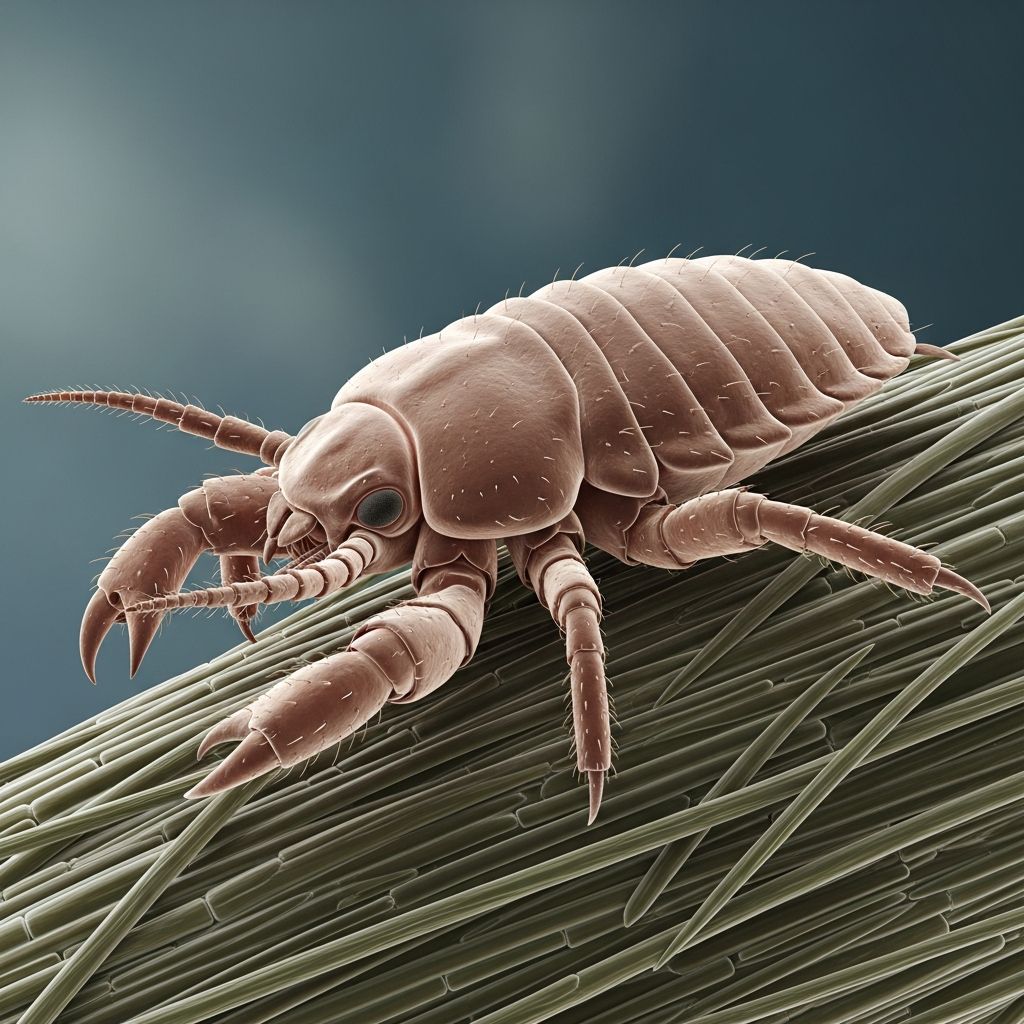
Pubic lice are parasitic insects that feed on small amounts of human blood and live attached to body hair.
- They prefer coarse hair such as pubic hair.
- They can also live in hair on the armpits, chest, abdomen, beard, mustache, and around the anus.
- In children, they may be found on the eyelashes or eyebrows.
Pubic lice are different from head lice and body lice, although all three are related. Finding lice on the scalp almost always means head lice, not pubic lice.
Life Cycle in Brief
Understanding the life cycle helps explain why repeat treatment is often needed.
- Eggs (nits): Tiny, oval, and firmly stuck to the base of hairs.
- Nymphs: Immature lice that hatch from eggs and quickly begin to feed.
- Adults: About the size of a sesame seed; they cling to hair with crab-like claws.
Without a human host, pubic lice usually die within a day or two.
How Do Pubic Lice Spread?
The most common way pubic lice are passed from person to person is through close sexual contact.
- Skin-to-skin contact during sex allows lice to move from one person’s hair to another’s.
- Anyone who has close sexual contact with an infested person is at risk, regardless of gender or sexual orientation.
Less often, pubic lice can be spread by sharing items that contact the pubic area or other coarse hair, such as:
- Underwear
- Bedding
- Towels
- Sleep surfaces or clothing that were recently in contact with pubic hair
Because children do not usually have pubic hair, finding pubic lice on a child’s eyelashes or eyebrows may raise concerns about possible sexual abuse and should be evaluated carefully by a health professional.
Common Signs and Symptoms
Not everyone notices symptoms right away. It can take several days to weeks after catching lice before itching begins.
Typical Symptoms
- Intense itching in the genital or anal area, often worse at night when lice are more active.
- Small red or blue bite marks on the skin where lice have been feeding.
- White or yellowish dots firmly attached to hair shafts (these are eggs or nits).
- Dark specks in underwear – this can be lice feces or dried blood.
What You Might See
- Adult lice that look like tiny tan, gray, or brownish specks moving in the hair.
- Short, coarse hairs with eggs stuck near the skin.
- On eyelashes: crusting, stickiness, and visible nits or tiny insects clinging to lashes.
Heavy scratching can break the skin, which sometimes leads to bacterial skin infections requiring additional treatment.
When to Call a Healthcare Provider
Contact a healthcare provider or sexual health clinic if:
- You see lice or nits in the pubic area, or the itching is persistent.
- Over-the-counter treatment has not worked after you carefully followed directions.
- You notice lice on the eyelashes or eyebrows (eyes require special treatment).
- The skin looks very red, swollen, painful, or has pus – which can signal infection.
- You are pregnant, breastfeeding, or have chronic health conditions and are unsure which product is safe.
Because pubic lice are often spread sexually, many experts recommend testing for other sexually transmitted infections (STIs) when pubic lice are diagnosed.
How Pubic Lice Are Diagnosed
A healthcare professional usually diagnoses pubic lice by examining the skin and hair in the affected areas.
- They may use a bright light or magnifying device to look for lice and nits.
- In some cases, they may remove a louse or nit and examine it under a microscope.
Diagnosis is generally straightforward when live lice or attached nits are seen. Itching alone is not enough to confirm an infestation, since many other conditions can cause genital itching.
Treatment Options: What Really Works
Pubic lice will not go away on their own and regular soap or shampoo does not kill them. Effective treatment requires specific lice-killing products.
First-Line Medications
Most people are successfully treated with over-the-counter (OTC) or prescription medications designed to kill lice.
- Permethrin 1% lotion or cream rinse: Widely used OTC treatment that kills lice when applied as directed.
- Pyrethrins with piperonyl butoxide: Another OTC option available as mousse or shampoo.
These products are generally considered safe and effective when used exactly as the label or healthcare provider instructs.
How to Use Topical Treatments Correctly
Follow product instructions carefully; most treatments recommend steps similar to these (always check the specific label):
- Apply medicine to clean, dry skin and hair in the affected area.
- Cover all hair where lice may be living, not just visible spots.
- Leave the product on for the recommended time (often several minutes to hours), then rinse off thoroughly.
- Change into clean underwear and clothes after rinsing.
- Repeat treatment after about 7–10 days to kill newly hatched lice from surviving eggs, if the label or provider advises it.
Many products also recommend using a fine-toothed nit comb or fingernails to help remove remaining nits from hair.
Prescription Treatments
If OTC treatments fail or cannot be used, a healthcare provider may prescribe stronger medications such as:
- Topical lotions or shampoos with different active ingredients.
- Oral medicine such as ivermectin in specific doses.
- In certain resistant cases, stronger agents like malathion or, rarely, lindane shampoo may be used under close medical supervision because of possible side effects.
Prescription options are usually reserved for infestations that do not respond to safer, first-line treatments.
Special Situation: Lice on Eyelashes or Eyebrows
Do not use standard pubic lice creams or shampoos near the eyes. If lice or nits are seen on eyelashes or eyebrows:
- Seek medical care for safe, eye-specific treatment.
- A provider may recommend manual removal or prescribe an eye-safe ointment applied to the lids for several days.
Home Cleaning and Laundry After Treatment
Because pubic lice cannot survive long away from the body, simple cleaning is usually enough to prevent re-infestation.
Recommended Steps
- Wash clothing, underwear, pajamas, bedding, and towels used in the 2–3 days before treatment in hot water and dry on high heat.
- Items that cannot be washed can be sealed in a plastic bag for at least 72 hours, which is long enough for lice to die.
- Vacuum carpets, mattresses, and upholstered furniture if there has been close skin contact, although this is generally a low-risk source of re-infestation.
Household insect sprays are not recommended for pubic lice, as they do not provide extra benefit and can be harmful if misused.
Possible Complications
When treated appropriately, pubic lice rarely cause serious problems. However, complications can include:
- Secondary skin infections from scratching that breaks the skin, sometimes requiring antibiotics.
- Skin discoloration or pale blue spots at feeding sites in long-standing infestations.
- Eye irritation or conjunctivitis if lice infest eyelashes.
Because of the strong link with sexual activity, many clinicians also consider pubic lice an opportunity to screen for other STIs that may not have obvious symptoms.
Prevention and Protecting Partners
While there is no vaccine or medicine to prevent pubic lice, several habits can reduce risk and prevent them from spreading.
Reducing Risk of Getting Pubic Lice
- Limit the number of sexual partners and avoid overlapping partners.
- Avoid intimate contact with anyone known to have untreated lice.
- Do not share underwear, bedding, or towels with others.
Condoms help reduce the risk of many STIs, but they do not fully prevent pubic lice because lice live on hair and skin outside the area covered by a condom.
Protecting Partners and Household Members
- Anyone who has had sexual contact in the previous month or two with an infested person should be examined and treated if needed, even if they have no symptoms.
- People living in the same household should check for itching or visible lice, especially if they share bedding or towels.
- Avoid sexual activity until everyone who needs it has completed initial treatment.
In many regions, teens can seek confidential diagnosis and treatment for pubic lice and other STIs without parental consent, although specific rules vary by location.
Talking with Teens About Pubic Lice
For parents and caregivers, pubic lice can open a broader conversation about sexual health, consent, and safety. Helpful approaches include:
- Staying calm and nonjudgmental to keep communication open.
- Explaining that pubic lice are common and treatable, but also a sign that safer sex practices should be reviewed.
- Encouraging teens to get tested for other STIs when appropriate and to speak honestly with healthcare providers.
Framing the issue as a health matter rather than a moral one makes it more likely that teens will seek help early if they notice symptoms in the future.
Quick Comparison: Pubic Lice vs. Head Lice
| Feature | Pubic Lice | Head Lice |
|---|---|---|
| Main location | Pubic hair, other coarse body hair | Scalp hair |
| Typical spread | Mostly sexual contact; rarely via shared fabrics | Close head-to-head contact; shared hats/brushes |
| Common age group | Sexually active teens and adults | School-aged children |
| Associated with STIs | Yes, often triggers STI screening | No |
Frequently Asked Questions (FAQs)
Q: Do I have to shave my pubic hair to get rid of pubic lice?
No. Shaving does not reliably remove lice or eggs and is not required for effective treatment. Using recommended lice medications and following instructions is the key.
Q: How long after treatment am I still contagious?
After proper treatment and changing into clean clothes, the risk of passing lice drops significantly within about 24–48 hours. However, partners should still be checked and treated as advised, and a repeat dose of medicine is often needed 7–10 days later.
Q: Can I get pubic lice from a toilet seat?
This is very unlikely. Pubic lice cling tightly to hair and usually cannot survive more than a day or two away from the body, making toilet-seat transmission extremely rare.
Q: If I have pubic lice, does that mean I definitely have an STI?
Pubic lice themselves are not a sexually transmitted infection in the sense of a virus or bacteria, but they are usually spread through sexual contact. Because of that, healthcare providers often recommend testing for other STIs at the same time.
Q: Can pubic lice come back after treatment?
Yes. Re-infestation can happen if eggs survived the first treatment, if a second dose was not used when needed, or if you have close contact again with someone who still has lice. Carefully follow treatment directions, repeat treatment when recommended, and ensure partners are treated.
References
- Pubic Lice — MedlinePlus, U.S. National Library of Medicine. 2023-07-10. https://medlineplus.gov/pubiclice.html
- About Pubic “Crab” Lice — Centers for Disease Control and Prevention (CDC). 2022-04-01. https://www.cdc.gov/lice/about/pubic-lice.html
- Pubic lice (Crabs) — Colorado Department of Public Health and Environment. 2021-09-15. https://cdphe.colorado.gov/child-care-school-settings/pubic-lice
- Pubic Lice (Crabs): Bites, Symptoms, Treatment & Prevention — Cleveland Clinic. 2023-05-12. https://my.clevelandclinic.org/health/diseases/4522-pubic-lice-crabs
- Pubic lice — NHS (National Health Service, UK). 2023-03-20. https://www.nhs.uk/conditions/pubic-lice/
- Pubic lice (crabs) – treatment, symptom and prevention — Healthdirect Australia. 2022-08-18. https://www.healthdirect.gov.au/pubic-lice-crabs
- Pubic lice (crabs): Symptoms & causes — Mayo Clinic. 2022-10-27. https://www.mayoclinic.org/diseases-conditions/pubic-lice-crabs/symptoms-causes/syc-20350300
- Pubic Lice — Cedars-Sinai. 2020-06-01. https://www.cedars-sinai.org/health-library/diseases-and-conditions/p/pubic-lice.html