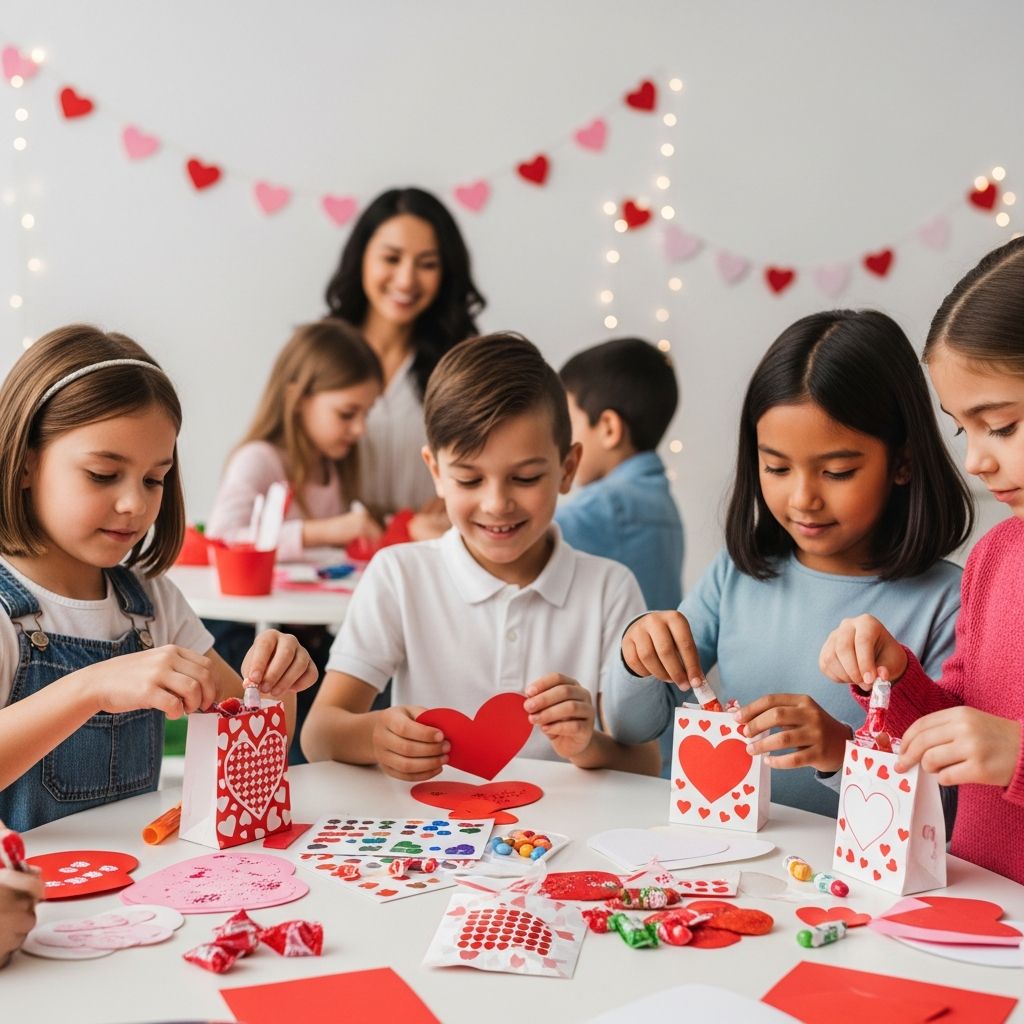
Valentine’s Day brings excitement to classrooms, but coordinating card exchanges can challenge parents and teachers alike. This guide offers fresh strategies to make the day memorable, inclusive, and stress-free, drawing on proven approaches for fostering kindness and creativity among children.
Understanding Classroom Valentine Traditions
School Valentine celebrations typically involve children exchanging cards or small tokens during designated class time. These events aim to build community while teaching social skills like sharing and empathy. However, variations exist by grade level and school policy. Elementary classes often emphasize group exchanges to prevent exclusion, while older students may have more flexibility.
Key elements include decorated collection boxes or bags where cards are deposited anonymously or by name. Parents play a crucial role by preparing materials ahead, ensuring their child participates thoughtfully. Checking school guidelines early prevents misunderstandings and aligns expectations.
Planning Ahead: Essential Steps for Success
Start by reviewing communications from your child’s teacher, such as emails detailing exchange rules, dates, and restrictions like no candy due to allergies. Create a family plan that fits your budget and child’s interests.
- Confirm class size: Purchase enough cards or items for every student, plus extras for teachers or errors.
- Set a budget: Affordable options range from printable templates to store-bought packs.
- Discuss participation: Gauge your child’s enthusiasm to avoid pressure.
Proactively ask about collection containers. If not provided, help your child craft a personalized shoebox or bag with their name clearly displayed for easy identification.
Promoting Inclusion in Every Exchange
Inclusion tops the priority list to shield sensitive young hearts from disappointment. The golden rule: Distribute to all classmates, not just friends, minimizing hurt feelings.
| Grade Level | Inclusion Strategy | Benefits |
|---|---|---|
| Preschool-Kindergarten | Teacher distributes unsigned cards randomly | Reduces personalization anxiety; equal distribution |
| Grades 1-3 | One card per child, signed ‘From [Name]’ | Encourages broad friendships; simple logistics |
| Grades 4-6 | Optional selective giving, discreetly | Respects growing social circles; teaches discretion |
For families facing financial hurdles, teachers often supply extras or suggest free printables. Emphasize effort over extravagance to model values like generosity.
Creative Ideas to Make Valentines Special
Encourage originality to spark joy. Beyond standard cards, consider these engaging alternatives:
- DIY Crafts: Fold construction paper into hearts, add stickers, or draw personal messages. Pair with conversation hearts if permitted.
- Printable Designs: Free online templates allow customization without cost. Kids can color and sign them uniquely.
- Non-Card Tokens: Attach pencils, erasers, or bookmarks inscribed with positive notes. Useful items outlast paper.
- Group Projects: Class chains of paper hearts with compliments foster collective positivity.
For upper elementary, shift to self-reflection activities like writing ‘love letters’ to themselves, listing personal strengths. This builds self-esteem alongside peer interactions.
Navigating Common Challenges
Time constraints during parties lead some teachers to simplify by skipping ‘To’ names, streamlining distribution. Respect these rules to keep events efficient.
Allergy awareness is non-negotiable; stick to nut-free, food-free options unless specified otherwise. Over-the-top gifts like toy-filled bags create imbalance—opt for modest, uniform items to maintain equity.
In higher grades, where selective giving resumes, coach discretion: Slip cards into bags privately or exchange outside class to spare feelings.
Cultural Sensitivity and Diverse Celebrations
Honor varied backgrounds by incorporating global traditions. Have children share family customs, like crafting origami hearts or reciting kindness poems from different cultures. This enriches the experience and promotes respect.
Activities celebrating universal themes—friendship, gratitude—ensure non-participants feel welcome. Optional involvement respects introverted or uninterested children without isolation.
Age-Appropriate Expectations by Grade
- Early Elementary (K-2): Focus on fun, bulk signing. Use themed packs featuring favorite characters for motivation.
- Mid-Elementary (3-4): Introduce personalization limits; emphasize ‘one for everyone.’
- Upper Elementary (5+): Allow choices but discuss empathy. Transition to subtle exchanges.
Adapt based on your school’s culture for seamless integration.
Teacher and Parent Partnerships
Communicate openly: Offer to donate supplies or volunteer for crafts. Leftover cards from prior years can help peers in need. Thank educators for orchestrating inclusive events.
Post-exchange, debrief with your child: What felt good? Who was kind? Reinforce positive behaviors for future holidays.
Frequently Asked Questions
What if my child doesn’t want to participate?
Participation is voluntary. Opt for class treats or crafts instead. Discuss friendship’s value without pressure.
Can we include candy or treats?
Only if school policy allows; prioritize allergy-safe choices like conversation hearts in moderation.
How many valentines do we need?
One per classmate, plus teacher(s) and extras. Boxes often come in sets of 24 or 32—buy accordingly.
What about homemade vs. store-bought?
Both work if inclusive. Homemade adds charm; store-bought saves time. Match class norms.
Should we address cards to specific names?
Follow teacher instructions—some prefer generic for speed, others personalized pre-party.
Elevating the Day with Kindness Activities
Extend celebrations beyond cards. Organize ‘kindness jars’ where students drop notes of appreciation. Read aloud anonymously to boost morale.
Incorporate movement: Heart-themed games like musical hearts or relay passes promote laughter. End with group songs affirming self-love and peer bonds.
These enhancements transform routine exchanges into lessons in empathy, lasting beyond February 14.
References
- Celebrating Valentine’s Day — Responsive Classroom. Accessed 2026. https://www.responsiveclassroom.org/celebrating-valentines-day/
- How do second graders celebrate Valentines at school? — DC Urban Mom. Accessed 2026. https://www.dcurbanmom.com/dev/posts/list/1185430.page
- Valentine’s Day Classroom Parties: Safety and Inclusion Tips — Public School Works. Accessed 2026. https://corp.publicschoolworks.com/resource/valentines-day-classroom-parties-safety-and-inclusion-tips/
- 6 dos and don’ts of Valentine’s in the classroom — Today’s Parent. Accessed 2026. https://www.todaysparent.com/kids/school-age/love-me-love-me-not-valentines-in-the-classroom/
- I’m Kind Of Bummed About This One Classroom Rule For My… — Scary Mommy. Accessed 2026. https://www.scarymommy.com/parenting/no-writing-names-on-valentines