Insect bites and stings are common occurrences during outdoor play, especially in warmer months when kids explore parks, backyards, and campsites. While most reactions are mild and resolve quickly, parents must know how to respond effectively to minimize discomfort and prevent complications. This guide draws from pediatric recommendations to empower you with knowledge on identification, care, and prevention.
Common Culprits Behind Bites and Stings
Understanding which insects pose risks helps in quick recognition. Mosquitoes leave itchy welts from saliva injection during blood meals. Ticks latch on silently, potentially transmitting diseases like Lyme if embedded long-term. Bees and wasps sting when threatened, injecting venom that causes sharp pain. Fire ants deliver burning stings in clusters, while spiders like black widows (rare) cause severe systemic effects. Fleas and chiggers target skin folds, provoking intense itching.12
In urban and suburban areas, mosquitoes and ticks dominate, with disease risks varying by region—West Nile from mosquitoes or Lyme from ticks in the U.S.4 Teaching kids to avoid swatting at buzzing insects reduces sting chances.
Spotting Normal vs. Problematic Reactions
A typical response includes a red bump, mild swelling (up to golf ball size), and itching peaking in 24-48 hours. Pain from stings like bees fades within minutes to hours. These self-limit without intervention.36
Worrisome signs demand attention:
- Increasing redness, warmth, pus, or red streaks signaling infection.
- Swelling worsening after 72 hours or covering large areas.
- Fever, chills, fatigue, or swollen lymph nodes.
- Blisters, yellow crusting, or rash beyond the bite site.3
For facial bites, especially around eyes, expect pronounced swelling in young children, lasting days but usually benign if isolated.4
Immediate First Aid Steps
Act swiftly to limit venom spread and irritation. For stings with visible stingers (bees), scrape horizontally with a credit card edge or fingernail—avoid pinching, which squeezes more venom.16
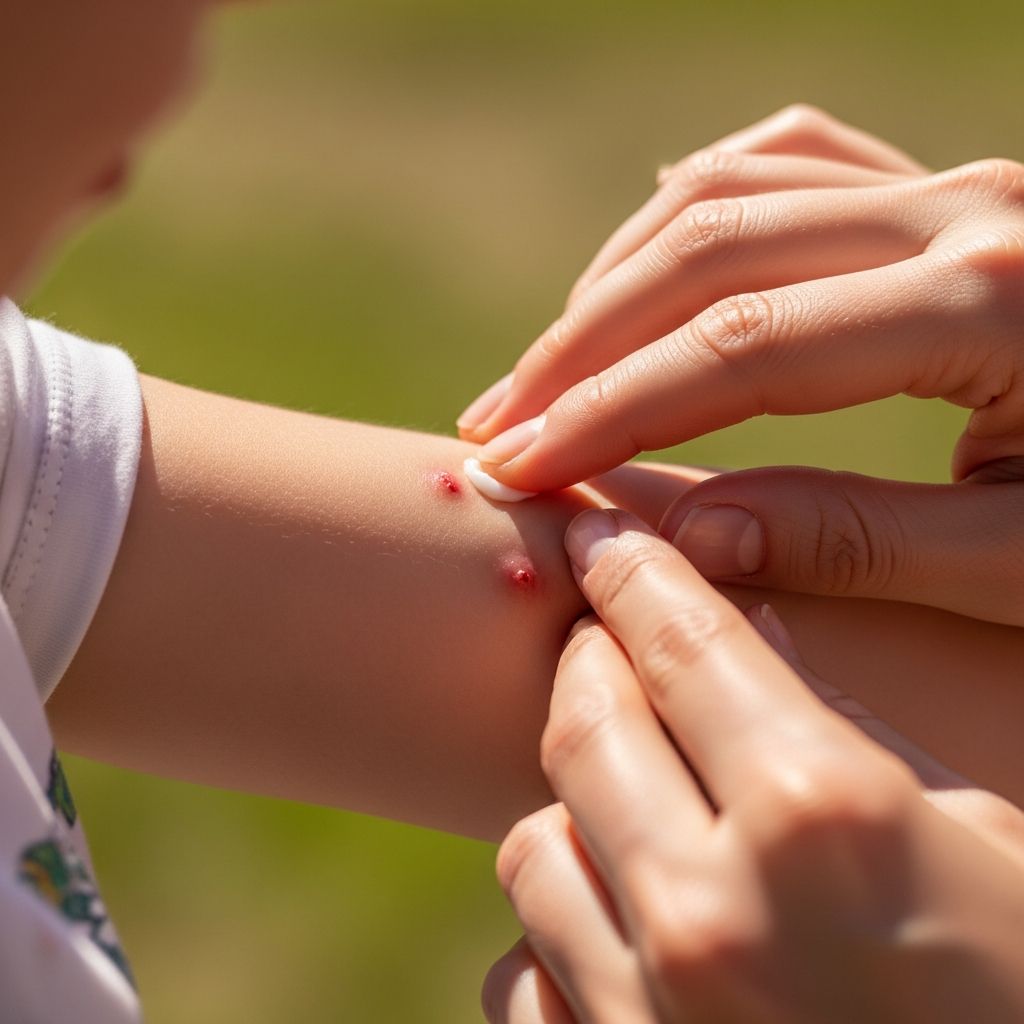
- Wash gently with soap and water to remove debris and bacteria.
- Apply ice wrapped in cloth for 10-20 minutes to numb pain and curb swelling. Elevate limbs if bitten there.12
- For pain, offer age-appropriate acetaminophen or ibuprofen.23
Avoid heat, tight bandages, or squeezing blisters, as these worsen outcomes.
Home Remedies for Itch and Discomfort
Itching drives scratching, risking infection. Proven options include:
| Issue | Remedy | Application | Frequency |
|---|---|---|---|
| Itching | 1% hydrocortisone cream | Thin layer on bite | 3x/day until resolved24 |
| Itching (alternative) | Baking soda paste (3:1 water:soda) | Apply 15-20 min | Once or as needed2 |
| Severe Itch | Oral antihistamine (e.g., diphenadryl, age 1+) | Dose by weight/age | As directed25 |
| Pain | Ice or cold compress | 20 min sessions | Repeat hourly13 |
Pressure technique: Firmly press a fingernail or pen cap on the bite for 10 seconds to interrupt itch signals.24 Trim nails short and distract young ones to prevent scratching.
Handling Infections and Complications
If pus, crusting, or spreading redness appears—often from dirty nails—apply antibiotic ointment like polysporin 3x/day under a bandage until healed.24 Monitor for fever or streaks; seek care if present.3
Ticks require special care: Use fine tweezers to grasp near skin, pull steadily without twisting. Clean and save for identification if disease suspected.14
Allergic Reactions: Know the Red Flags
Most kids have local reactions, but 1-3% face anaphylaxis—life-threatening. Mild allergy: Hives beyond site, widespread swelling. Severe: Lip/tongue/eye swelling, throat tightness, wheezing, vomiting, dizziness. Administer epinephrine auto-injector if prescribed, then call 911.156
Bites inside mouth/eye or multiple stings (10+) warrant immediate medical evaluation, even without allergy history.1
Post-severe reaction, consult an allergist for venom testing and immunotherapy.5
Prevention Strategies for Outdoor Fun
Proactive steps slash bite risks:
- Apply EPA-registered repellents: DEET (10-30% for kids 2mo+) on skin, picaridin, or oil of lemon eucalyptus. Permethrin on clothes.4
- Dress in long sleeves/pants at dawn/dusk; avoid fragrances.
- Check skin nightly for ticks, especially after wooded play.
- Eliminate standing water to deter mosquitoes; keep grass short for ticks.
- Use bed nets in high-risk areas.1
Educate kids: Don’t wander barefoot, shake out shoes/towels, report buzzing insects calmly.
Disease Risks from Certain Bites
Beyond local effects, some transmit pathogens. Mosquitoes: West Nile, Zika (U.S.), malaria (travel).14 Ticks: Lyme (bullseye rash 3-30 days post), Rocky Mountain spotted fever. Monitor 2-4 weeks for fever, rash, joint pain; test if suspected.1
Age-Specific Considerations
Infants under 6 months: Avoid DEET; use barriers. Toddlers swell more dramatically but recover. School-age: Teach self-checks. Teens: Emphasize prevention in sports.3
Always consult pediatricians for underlying conditions like asthma.
Frequently Asked Questions
Can all bug bites be treated at home?
Most yes, but seek help for infection signs, severe swelling, or systemic symptoms like fever.23
How long do symptoms last?
Mild: 1-3 days. Swelling: Up to a week. Watch for worsening.6
Is baking soda safe for all ages?
Yes, but test small area; prefer hydrocortisone for efficacy.2
What if my child is stung 5+ times?
Monitor closely; go to ER if any distress.1
Does calamine lotion work?
Helpful for itch, but steroid creams superior per pediatric guidelines.4
(Word count: 1678)
References
- Treating Bug Bites and Stings in Children — Children’s Health. 2023. https://www.childrens.com/health-wellness/treating-bug-bites-and-stings-in-children
- Insect Bite — Seattle Children’s Hospital. 2024-01-15. https://www.seattlechildrens.org/conditions/a-z/insect-bite/
- Bug bites in children — Society for Pediatric Dermatology. 2022-06-01. https://pedsderm.net/site/assets/files/1028/spd_bug_bites_bw.pdf
- How to Treat Mosquito Bites — St. Louis Children’s Hospital. 2023. https://www.stlouischildrens.org/health-resources/symptom-checker/mosquito-bite
- Insect Stings and Allergic Reactions in Children — Nationwide Children’s Hospital. 2024. https://www.nationwidechildrens.org/conditions/health-library/insect-stings-and-allergic-reactions-in-children
- What to Do About Bug Bites and Stings — Nemours KidsHealth. 2023-05-10. https://kidshealth.org/en/parents/insect-stings-sheet.html