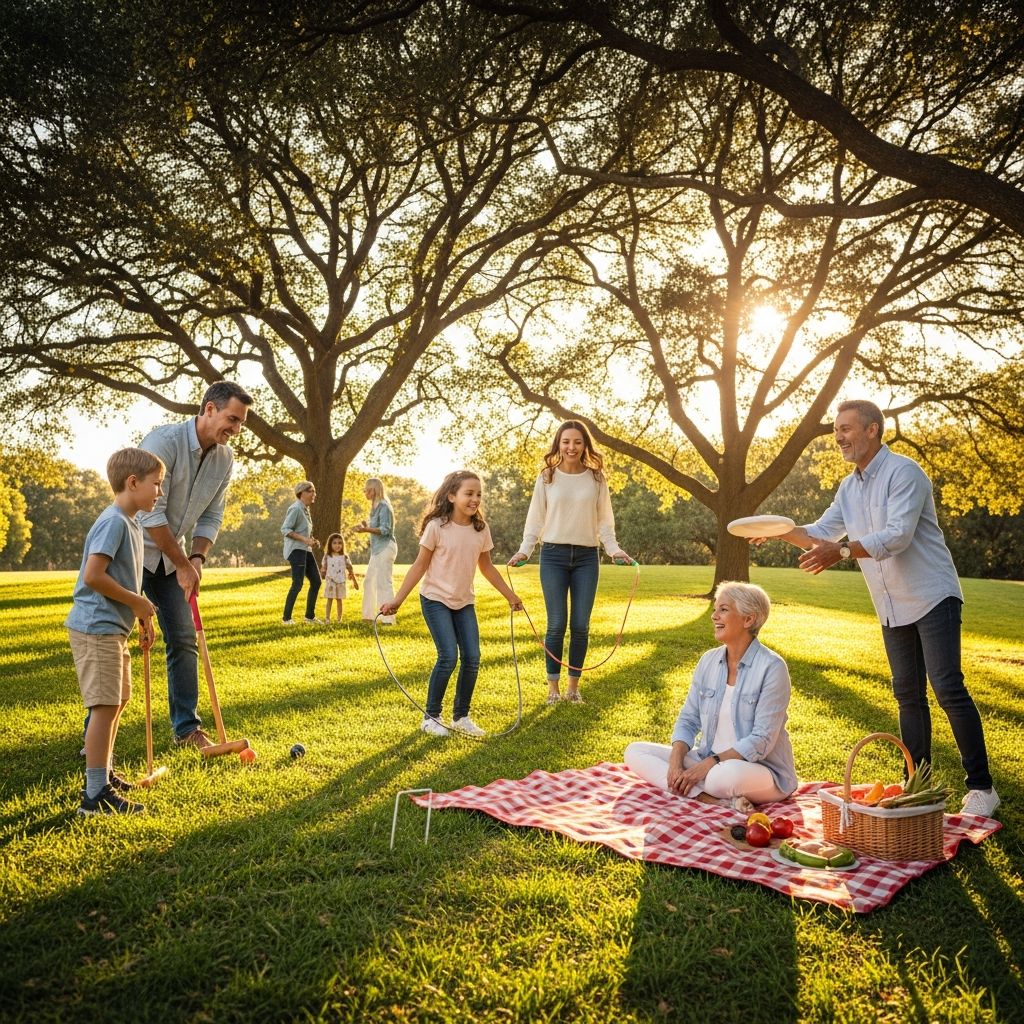
Outdoor games have long served as a cornerstone of childhood development, fostering physical fitness, social skills, and imaginative play without relying on screens or gadgets. These activities, many originating centuries ago, encourage movement, strategy, and teamwork while creating lasting family memories. From simple chalk drawings to basic props like ropes or balls, they require minimal equipment yet deliver maximum enjoyment. This guide dives into popular classics, their origins, setup instructions, and variations to keep everyone engaged.
Why Classic Outdoor Games Matter Today
In an era dominated by digital entertainment, returning to traditional outdoor pursuits offers significant benefits. Studies from health organizations highlight how such games improve coordination, boost cardiovascular health, and reduce obesity risks in children. They also build resilience through friendly competition and negotiation. Parents report stronger family bonds during these sessions, as shared laughter transcends generations. Whether in a spacious yard, local park, or driveway, these games adapt to any space and group size.
Chasing and Hiding Adventures
Games centered on pursuit and concealment tap into primal instincts, making them universally appealing across ages.
Hide and Seek Mastery
One of the oldest recorded games, hide and seek dates back to the 2nd century, as noted in ancient Greek texts describing ‘apodidraskinda.’ To play, select one player as the seeker who counts aloud to a set number, typically 50 or 100, while others scatter to hide. The seeker then hunts, calling ‘ready or not, here I come!’ Found players join the search until the last hider wins and becomes the next seeker. Establish boundaries to prevent wandering too far. Variations include ‘sardines,’ where hiders squeeze into one spot, or adding a safe ‘home base’ for daring dashes back.
Tag Variations for Endless Energy
Tag evolved from medieval chase games and remains a staple for burning energy. In basic tag, one player is ‘it’ and must touch others to pass the role. Themes add excitement: ‘freeze tag’ halts tagged players until freed by a teammate’s touch; ‘blob tag’ chains tagged players together into a growing mass. For larger groups, ‘shadow tag’ requires tagging shadows instead of bodies. These promote agility and quick thinking, ideal for 4+ players on open grass.
Hopping and Jumping Challenges
These solitary or group activities sharpen balance and rhythm, often using just ground markings or ropes.
Hopscotch: Ancient Footwork Training
Hopscotch’s grid, scratched into dirt, traces to Roman soldiers hopping in full armor across massive layouts for endurance training. Modern play uses chalk to draw a 10-square course (single, double, then singles up to heaven). Toss a stone into square 1, hop over it on one foot through the pattern, kick it back without stepping on lines. Retrieve and advance. Misses or faults send you to the end of the line. Play solo or competitively; variations include ‘heaven forbid’ for trickier tosses. Perfect for pavement or patios.
Jump Rope Rhythms and Double Dutch
Skipping rope builds endurance and coordination, with records from 19th-century England. Single rope suits beginners: jump while reciting rhymes like ‘Cinderella, dressed in yellow.’ Double Dutch elevates it—two ropes twirl oppositely while a jumper navigates in, out, and crosses. Speed challenges or teams rotate jumpers. Plastic-beaded ropes create satisfying thwacks. Great for 2-6 players; indoors viable too.
Court-Based Strategy Games
Divided spaces turn simple areas into competitive arenas, teaching rules and sportsmanship.
Four Square Dynamics
Evolving from 12th-century French paume, handball, and tennis into urban ‘boxball,’ four square divides a court into quadrants labeled king, queen, prince, jack. Bounce a ball into another’s square; they must return it underhand without double-bounces or faults. Faults demote players down lines; bottom square rotates out. Variations like ‘cherry bomb’ allow hard smashes or ‘blackout’ bans body contact. Use chalk, tape, or portable lines on any surface.
Large-Scale Connect Four
Oversized versions of the board game thrill with physical drops. Set up a vertical grid (usually 6×7); players alternate dropping discs to form four-in-a-rows horizontally, vertically, or diagonally. Strategy deepens with blocks and setups. Portable sets work on grass or sand, engaging minds and bodies for 2 players.
Tossing and Throwing Classics
Precision games hone aim and patience, suitable for mixed ages.
Bocce Ball Precision
Rooted in ancient Roman and Egyptian bowling, bocce involves rolling balls closest to a target ‘pallino.’ Teams toss alternately, bumping opponents away. Measure with rulers for ties; closest scores points per round (to 13 usually). Kid-sized sets play on varied terrains. Relaxed pace suits picnics.
Frisbee and Disc Games
Frisbee’s flight captivates, from casual tosses to ultimate-style matches. Basic: throw and catch. Add goals like Kan Jam—aim discus into or off cans for points. Dogs join for fetch twists. Imaginative rules emerge naturally.
Racing and Relay Excitement
High-energy sprints foster teamwork and hilarity.
Sack Races and Three-Legged Sprints
Potato sack races hop burlap bags across fields—line up, race to a turn point, return first. Pair for three-legged: tie legs, sync steps for wobbly wins. Relays add batons or obstacles. No gear beyond sacks or bandanas; pure chaos ensues.
Badminton Agility
From Indian ‘poona,’ formalized in England’s Badminton House, this racket sport volleys a shuttlecock over a net. Singles or doubles; score on faults or wins. Lightweight sets suit backyards.
Game Comparison Table
| Game | Players | Equipment | Space Needed | Skill Focus |
|---|---|---|---|---|
| Hide and Seek | 3+ | None | Large yard | Stealth, speed |
| Hopscotch | 1+ | Chalk, stone | Small pavement | Balance, aim |
| Four Square | 4 | Ball, lines | 10×10 ft | Reaction, control |
| Bocce Ball | 2-8 | Balls, pallino | 20-40 ft | Strategy, precision |
| Sack Race | 2+ | Sacks | 20+ ft straight | Coordination, speed |
Setting Up Your Outdoor Game Zone
- Choose the spot: Flat grass, pavement, or beach; mark boundaries clearly.
- Gather basics: Chalk, ropes, balls—most under $20.
- Safety first: Hydrate, sunscreen, no rough play near hazards.
- Adapt for ages: Simplify for toddlers, add challenges for teens.
- Weather-proof: Evening lights or rainy-day indoor shifts.
Frequently Asked Questions
What are the best outdoor games for small spaces?
Hopscotch and four square fit driveways; jump rope needs just a few feet.
Can adults enjoy these with kids?
Absolutely—bocce and badminton level the field for family rivalries.
How do I teach rules quickly?
Demonstrate once, play practice rounds; kids learn by doing.
Are there inclusive variations?
Yes, seated bocce or verbal tag for mobility challenges.
What if we lack equipment?
Improvise: socks for sacks, sticks for boundaries.
Elevating Play with History and Twists
Sharing origins—like hopscotch’s military roots or badminton’s colonial journey—adds depth. Invent house rules: power-ups in tag or themed hops. Track wins on a chart for seasons-long leagues. These games, seen in 1560s paintings by Pieter Brueghel, prove enduring appeal. They evolve, from Roman grids to modern giants, ensuring relevance.
Organize tournaments blending games: hide-and-seek to sack race finals. Benefits extend to mental health—reducing stress via endorphins—and social growth through inclusivity. Communities worldwide play variants, from Ghana’s Ampe to Japan’s elastics. Start small; soon, your yard buzzes with joy.
References
- 14 Old School Backyard Games That Stand the Test of Time — WhatsUpMoms. Accessed 2026. https://whatsupmoms.com/gear/old-school-backyard-games/
- Classic Outdoor Games to Teach Your Kids — Join The Wildlife. Accessed 2026. https://jointhewildlife.com/blogs/news/classic-outdoor-games-to-teach-your-kids
- Let’s Play: The History of Garden Games — Lazy Susan Furniture. Accessed 2026. https://www.lazysusanfurniture.co.uk/blogs/news/let-s-play-the-history-of-garden-games
- List of Children’s Games — Wikipedia (informational, primary sources referenced). Accessed 2026. https://en.wikipedia.org/wiki/List_of_children%27s_games
- Classic Childhood Games Every Generation Loves — Mama Smiles. Accessed 2026. https://www.mamasmiles.com/classic-childhood-games/