From the moment a baby kicks in the womb to the day a teenager sprints down a field, the body’s framework of bones, muscles, and joints works together in an astonishingly coordinated way. Understanding this system helps parents support healthy growth, encourage safe activity, and recognize when something might be wrong.
The Body’s Framework: What Makes Up the Musculoskeletal System?
The musculoskeletal system is the combination of bones, muscles, joints, tendons, ligaments, and connective tissues that gives the body shape and allows it to move. In children, this system is still developing, which makes it both adaptable and vulnerable. Knowing the basic parts makes it easier to understand growth, injuries, and aches your child might experience.
- Bones: Hard structures that support the body, protect organs, and store minerals such as calcium.
- Muscles: Tissues that contract and relax to move bones and maintain posture.
- Joints: Places where two or more bones meet, allowing the skeleton to bend, rotate, and flex.
- Ligaments: Tough bands that connect bone to bone and stabilize joints.
- Tendons: Cords that attach muscles to bones and transmit the force of muscle contraction.
How Children’s Bones Grow and Change
Children’s bones are not just smaller versions of adult bones. They contain special regions of developing tissue near the ends of long bones, often called growth zones, where new bone length is added. Over time, this softer cartilage-like tissue gradually hardens into mature bone as a child approaches the end of puberty.
Because of this unique structure, kids’ bones tend to be more flexible and can sometimes bend instead of cleanly breaking. These differences also mean that fractures, infections, or injuries near a growth area need careful medical attention, since damage there can affect the future length or shape of a bone.
Key Functions of Growing Bones
- Provide support so children can sit, stand, crawl, jump, and run.
- Protect delicate organs, such as the brain, heart, and lungs.
- Store important minerals, especially calcium and phosphorus, for use throughout the body.
- Produce blood cells inside the bone marrow found in larger bones.
| Feature | Children | Adults |
|---|---|---|
| Growth areas | Active growth zones at the ends of long bones that add length. | Growth areas have fully hardened, so bones no longer lengthen. |
| Bone flexibility | More flexible and able to bend slightly under stress. | More rigid and prone to clean breaks under high force. |
| Healing speed | Fractures often heal faster due to active bone remodeling. | Healing is slower and may require more intensive rehabilitation. |
| Injury impact on growth | Injuries around growth zones can affect future length or alignment. | Injuries typically do not alter bone length once growth is complete. |
Muscles: The Power Behind Every Move
Muscles are the body’s engines. They attach to bones through tendons and generate movement when they contract. In childhood, muscle strength and coordination improve rapidly as kids roll, crawl, walk, run, climb, and participate in sports.
There are three main types of muscle in the body, but parents most often think about skeletal muscles—the ones under voluntary control that move arms, legs, and other body parts. These muscles adapt in response to activity, getting stronger with regular use and weaker with too much sitting or inactivity.
Types of Muscles in the Body
- Skeletal muscles: Move the skeleton and allow intentional actions such as walking or lifting.
- Smooth muscles: Line organs such as the intestines and blood vessels and work automatically.
- Heart muscle: A specialized type that keeps the heart beating continuously without conscious effort.
Joints: Where Movement Happens
Joints are the meeting points of bones. They give the skeleton flexibility so kids can bend, twist, and turn. Different joints allow different kinds of motion, from the wide range at the shoulders to the hinge-like movement of the knees.
Cartilage, a smooth and slightly springy tissue, covers the ends of bones at joints and helps them glide over each other with minimal friction. Ligaments hold the bones together, while the joint capsule and surrounding muscles keep everything stable during movement.
Common Types of Joints
- Ball-and-socket joints: Allow movement in many directions, such as at the hips and shoulders.
- Hinge joints: Bend and straighten like a door hinge, as in the elbows and knees.
- Pivot joints: Allow rotation, such as turning the head from side to side.
- Gliding joints: Provide small sliding movements between bones in the wrists and ankles.
How Bones, Muscles, and Joints Work Together
Movement is a team effort. Bones act like levers, joints serve as pivot points, and muscles provide the force. When a child lifts an arm, takes a step, or kicks a ball, many muscles contract and relax in a coordinated pattern, pulling on bones and moving them around joints.
The nervous system coordinates this activity by sending signals from the brain and spinal cord to muscles. With practice and repetition, children refine these signals, which is why skills like riding a bike or handwriting become smoother and more controlled over time.
Everyday Roles of the Musculoskeletal System
- Maintaining posture while sitting in class or standing in line.
- Absorbing impact when jumping, running, or playing on playground equipment.
- Enabling fine motor skills such as drawing, buttoning clothes, and tying shoes.
- Helping with basic tasks like climbing stairs, carrying a backpack, or getting up from the floor.
Common Musculoskeletal Issues in Children
Most kids will experience minor bumps, bruises, and strains as they grow and explore. However, certain patterns of pain, swelling, or changes in movement may indicate a problem that needs medical evaluation. Early attention often prevents long-term complications.
Frequent Problems Parents Might See
- Sprains and strains: Injuries to ligaments or muscles and tendons, often from sports or falls.
- Fractures: Breaks in bones that may cause pain, swelling, and difficulty using the affected limb.
- Overuse injuries: Pain or inflammation from repeated stress, common in kids who specialize in a single sport.
- Growth-related pains: Aching or discomfort, often in the legs, that appears during periods of rapid growth and is usually harmless but can be uncomfortable.
Less commonly, children may develop infections, inflammatory conditions, or bone and joint problems related to underlying medical issues. Persistent or worsening symptoms should always be checked by a health professional.
Warning Signs: When to Call a Doctor
It can be hard to know when a child’s complaint of pain is a routine part of growing or a sign of something more serious. Trusting your instincts and watching for patterns can help. If pain is intense, lasts for several days, or interferes with normal activities, medical advice is recommended.
Red Flags That Deserve Prompt Attention
- Persistent pain or limping that does not improve with rest.
- Swelling, warmth, or redness around a bone or joint.
- Fever along with bone, muscle, or joint pain.
- Refusal to use an arm or leg, or difficulty bearing weight.
- Visible deformity after a fall or injury.
- Pain that wakes a child from sleep repeatedly.
Building Strong Bones in Childhood
Childhood and adolescence are critical years for building bone strength that will last into adulthood. The body stores most of its lifetime bone mass by the end of the teenage years, so habits during this period have long-term consequences. A balanced diet and regular movement are two of the most important tools parents can offer.
Nutrition Essentials for Healthy Bones
- Calcium: Found in dairy products, fortified plant milks, leafy greens, and some fish. It is the primary mineral used to build bone.
- Vitamin D: Supports calcium absorption and can come from fortified foods, supplements when recommended, and safe sun exposure.
- Protein: Helps build muscle and bone tissue and is found in beans, lentils, eggs, meats, dairy, nuts, and seeds.
- Variety of fruits and vegetables: Provides vitamins and minerals that support bone and muscle health.
Daily Habits That Support Bone Strength
- Encourage weight-bearing activities such as walking, running, jumping rope, or dancing.
- Limit sugary drinks and highly processed snacks that can displace more nutritious options.
- Promote regular meals and snacks to avoid chronic under-fueling, especially in very active kids.
- Discuss any restriction of major food groups with a health professional or dietitian.
Supporting Healthy Muscles and Joints
Strong muscles protect joints and bones by absorbing shock and providing stability. Children develop strength naturally through active play, but modern life can make it easy to sit too much. Small changes in daily routines can significantly boost muscular fitness and joint health.
Activity Ideas for Different Ages
- Toddlers: Free play, climbing on safe structures, dancing to music, and supervised playground time.
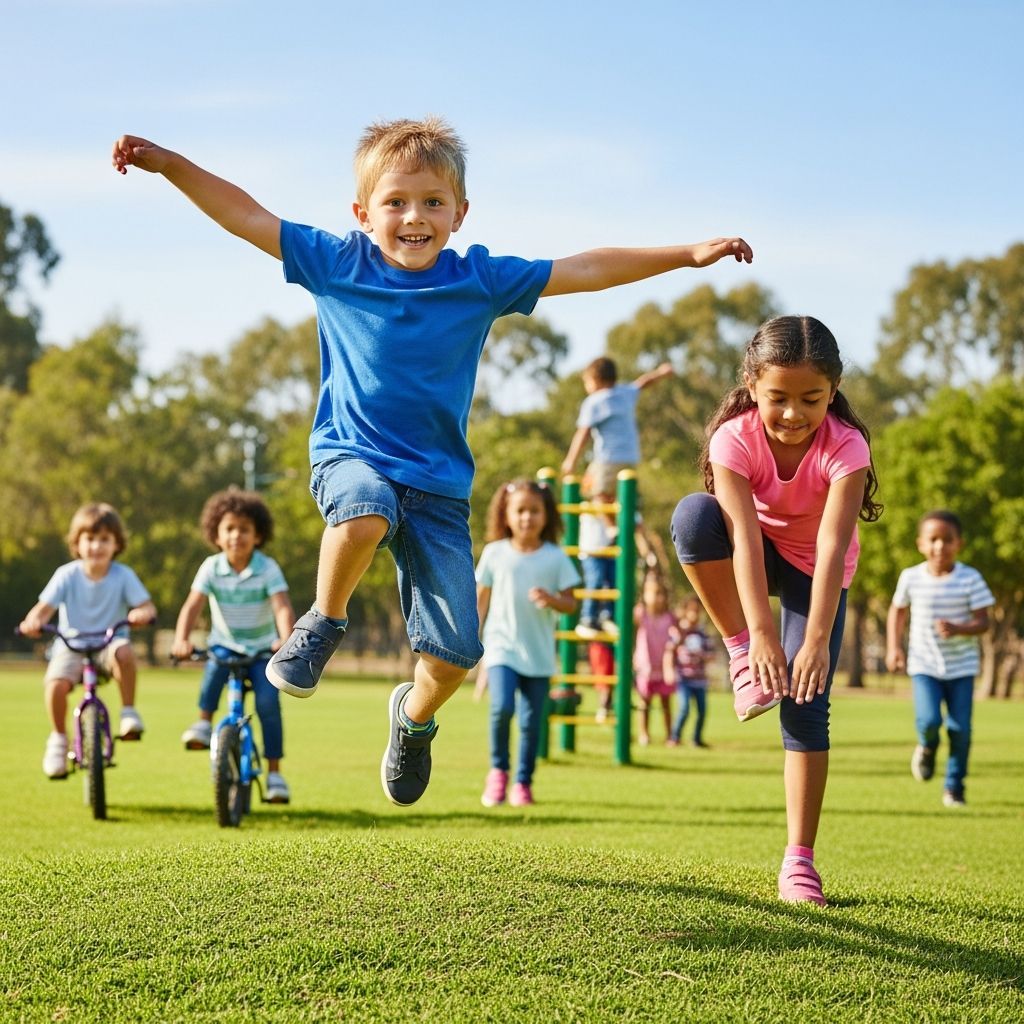
- School-age children: Biking, swimming, team sports, martial arts, and active games like tag.
- Teens: Organized sports, strength training with proper guidance, yoga, or aerobics classes.
Flexibility and balance are also important. Simple stretching after activity, practicing balance poses, or participating in activities like gymnastics or dance can help maintain joint range of motion and reduce injury risk.
Preventing Injuries: Practical Safety Tips
No parent can prevent every scrape or fall, but thoughtful precautions reduce the risk of serious injuries to bones, muscles, and joints. Combining protective gear, safe environments, and realistic expectations about children’s abilities is the most effective approach.
Everyday Prevention Strategies
- Use helmets, pads, and other safety gear for biking, skating, and contact sports.
- Ensure playgrounds have soft surfaces such as wood chips, rubber, or sand under equipment.
- Teach proper techniques and warm-ups for sports, including stretching and gradual increases in intensity.
- Encourage rest days and seasonal breaks to prevent overuse injuries.
- Make sure shoes fit well and provide appropriate support for the chosen activity.
Listening to children when they say something hurts is also a key prevention strategy. Early rest, ice, and evaluation can keep minor problems from turning into chronic issues.
Kids, Screens, and Movement
Digital devices are a part of modern childhood, but long periods of sitting can contribute to weak muscles, poor posture, and joint stiffness. Finding a healthy balance between screen time and physical activity helps protect the musculoskeletal system and supports overall well-being.
Balancing Tech and Activity
- Set daily screen time limits that leave plenty of room for active play.
- Encourage “movement breaks” every 30–60 minutes when using screens for school or entertainment.
- Suggest active alternatives such as family walks, backyard games, or dance breaks during long indoor days.
- Model active habits by choosing movement-based family activities.
Helping Children Cope With Pain and Recovery
Even with precautions, children may experience sprains, fractures, or sore muscles. Recovery is not only physical but also emotional; kids may feel frustrated if they cannot participate in favorite activities. Clear explanations and reassurance help them cope.
Supporting Your Child During Healing
- Follow treatment instructions carefully, including rest, medications, and follow-up visits.
- Encourage your child to ask questions about their injury and treatment.
- Provide age-appropriate explanations about why rest and restrictions are important.
- Find alternative activities—like board games, crafts, or reading—to keep them engaged during recovery.
Frequently Asked Questions
1. Are “growing pains” normal?
Many children experience vague, aching pain in their legs, often in the evening or at night, during periods of rapid growth. These sensations are usually harmless and may come and go without causing lasting problems. However, pain that is severe, persistent, or associated with swelling, redness, or fever should be evaluated by a health professional.
2. How much physical activity does my child need?
Most school-age children and teenagers benefit from at least an hour of moderate to vigorous physical activity on most days. This can include active play, organized sports, walking, or cycling. Shorter bursts of movement throughout the day are also helpful, especially for younger kids who naturally engage in stop-and-go activity.
3. Should kids lift weights?
Strength training can be safe for children when it is supervised, uses proper technique, and focuses on light resistance with higher repetitions rather than heavy weights. Bodyweight exercises such as push-ups, squats, and planks are often a good starting point. Competitive powerlifting or maximal weight lifting should be postponed until growth is more mature and expert guidance is available.
4. What can I do if my child has poor posture?
Gently remind your child to sit and stand tall, but avoid constant criticism, which can be discouraging. Making changes to the environment—such as adjusting chair height, using a footrest, or placing screens at eye level—often helps more than verbal reminders alone. Regular activity that strengthens the core and back muscles, such as swimming or yoga, also supports better posture.
5. When should my child have a medical checkup for sports?
A pre-participation physical evaluation is recommended before children start organized sports or significantly increase their activity level. This visit allows a health professional to identify any risk factors, discuss injury prevention, and answer questions about safe participation. Even for children who are already active, periodic checkups are useful to track growth and address new concerns.
Supporting your child’s bones, muscles, and joints starts with understanding how they grow and work together. With a mix of nutritious food, regular movement, appropriate safety precautions, and attentive care when problems arise, parents can help children build a strong physical foundation for the rest of their lives.