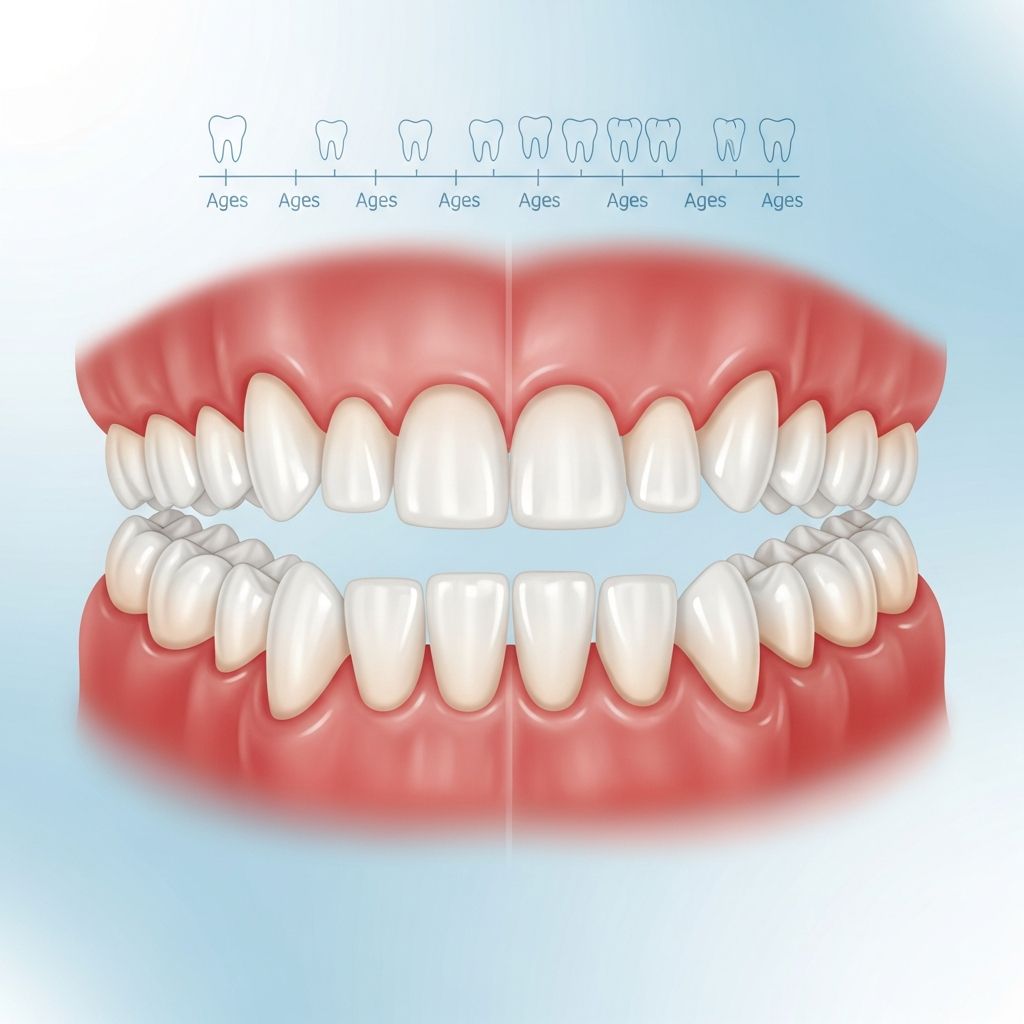
Your child’s smile develops over years, starting before birth and evolving through distinct phases. Understanding this progression helps parents support healthy teeth and gums effectively.
Foundations Before Birth
Dental structures form early in pregnancy. Around six weeks of gestation, initial tooth buds for primary teeth emerge in the jaw. By the third trimester, all 20 primary tooth buds are present, with permanent tooth buds developing beneath them. Maternal health, including nutrition rich in calcium and vitamins, influences this foundational growth.
These early developments set the stage for eruption. Although crowns are nearly formed at birth, teeth remain hidden under gums. Rare cases see natal teeth present at delivery, but most infants start teething postnatally.
Infancy: First Signs of Teething
Between 4-7 months, the initial teeth typically appear, often lower central incisors first. Upper central incisors follow soon after, with 4-8 teeth by the first birthday. This phase, spanning 0-12 months, brings drooling, fussiness, and chewing urges as gums swell.
Teething discomfort peaks during stage 1 (0-6 months) and stage 2 (6-8 months), when incisors push through. Parents notice increased saliva and mild fever. By 12 months, primary dentition advances steadily.
- Gentle gum massage with clean fingers eases soreness.
- Chilled teething rings provide relief without numbing gels.
- Avoid unsafe remedies like amber necklaces due to choking risks.
Toddler Phase: Completing Primary Set
From 1-3 years, molars and canines fill the mouth. First molars erupt at 12-16 months, canines at 16-20 months, and second molars by 20-30 months. Most toddlers have their full 20 primary teeth by age 3.
Stage 3 (10-14 months) introduces molars, heightening drool and crankiness. Stage 4 (16-22 months) sees canines emerge, maintaining similar symptoms. By 33 months, primary teeth are typically complete.
| Age Range | Teeth Emerging | Typical Order |
|---|---|---|
| 12-16 months | First molars | Back of jaws |
| 16-20 months | Canines | Pointed teeth beside incisors |
| 20-30 months | Second molars | Final primary teeth |
Spaces between teeth are normal, accommodating future larger permanents.
Preschool Years: Stability and Preparation
Ages 3-6 feature fully functional primary teeth amid jaw growth. Facial bones expand, widening gaps intentionally for permanent alignment. Primary roots begin resorbing as permanents approach.
Hygiene ramps up: Twice-daily brushing with fluoride toothpaste (smear-sized for under 3, pea-sized after) prevents decay. Floss when teeth touch. Limit sugary drinks to mealtimes.
Mixed Dentition: Transition Begins
Around age 6, permanent first molars erupt behind primaries, marking mixed dentition (6-12 years). Lower central incisors shed first (6-7 years), followed by uppers, laterals (7-8), canines, premolars (9-12), and second molars at 12.
This “tooth fairy” era involves wobbly teeth and new straighter ones. Orthodontic checks are ideal here for alignment issues.
- First permanents: Molars at 6-7 years.
- Incisors: 6-9 years.
- Premolars and canines: 9-12 years.
Teen Years: Full Permanent Arch
By 13, most of the 32 permanent teeth are in place, excluding wisdom teeth. Third molars may appear 17-21, often requiring monitoring for impaction. Jaw growth finalizes, potentially shifting alignment.
Sealants on molars prevent decay; mouthguards protect during sports.
Daily Oral Care Routines
Consistent habits build lifelong health. Infants need gum wiping; toddlers, supervised brushing. Fluoride strengthens enamel—use varnishes if water lacks it.
Diet matters: Crunchy fruits over sticky candies reduce plaque. Nightly brushing before bed is non-negotiable.
- Brush 2x daily, 2 minutes each.
- Floss daily from age 2-3.
- Dental visits every 6 months from age 1.
Handling Common Challenges
Teething pain: Cold washcloths or rings soothe. Thumb-sucking: Harmless until permanents, then intervene gently.
Injuries: Milk teeth chips call for dental eval; save fragments in milk. Avulsed permanents: Rinse, replant if possible, seek urgent care.
When to Consult Professionals
First visit by age 1 or first tooth. Signs needing attention: Delayed eruption, pain, swelling, discoloration.
Orthodontics if crowding or bite issues by 7. Sealants and fluoride treatments boost protection.
Frequently Asked Questions
What is the typical first tooth to erupt?
Lower central incisors around 6 months.
By what age should all primary teeth be present?
By age 3.
When do permanent teeth start replacing baby ones?
Around age 6.
How many permanent teeth do children have?
32, including wisdom teeth.
Is spacing between baby teeth normal?
Yes, it allows room for larger permanents.
Nutrition for Strong Teeth
Calcium from dairy, vitamin D for absorption, phosphorus in proteins—all vital. Avoid bottles in bed to prevent cavities.
Water post-sugars rinses acids. Balanced meals support enamel mineralization.
Preventing Decay and Trauma
Baby bottle tooth decay hits upper fronts from prolonged milk/sugar. Sports: Custom mouthguards cut injury risk.
Monitor grinding (bruxism), often stress-related in mixed phase.
This guide equips parents for proactive care, fostering confident smiles through every stage. Regular dental partnerships ensure optimal outcomes.
References
- The Timeline of Tooth Development: What to Expect from Ages 0-18 — Little Roots Pediatric Dental. 2023. https://www.littlerootspediatricdental.com/blog/timeline-tooth-development-what-expect-from-ages-0-18/
- Stages of Teething and Helpful Hints — Kids Dental Online. 2023. https://www.kidsdentalonline.com/dental-topics/baby-dental-topics/stages-teething-helpful-hints/
- Anatomy and Development of the Mouth and Teeth — Stanford Children’s Health. 2024. https://www.stanfordchildrens.org/en/topic/default?id=anatomy-and-development-of-the-mouth-and-teeth-90-P01872
- The Timeline for Teeth — Delta Dental. 2024. https://www.deltadental.com/us/en/protect-my-smile/life-stages/infants-toddlers/timeline-for-teeth.html
- Baby’s First Tooth: 7 Facts Parents Should Know — American Academy of Pediatrics (HealthyChildren.org). 2023-10-24. https://www.healthychildren.org/English/ages-stages/baby/teething-tooth-care/Pages/Babys-First-Tooth-Facts-Parents-Should-Know.aspx