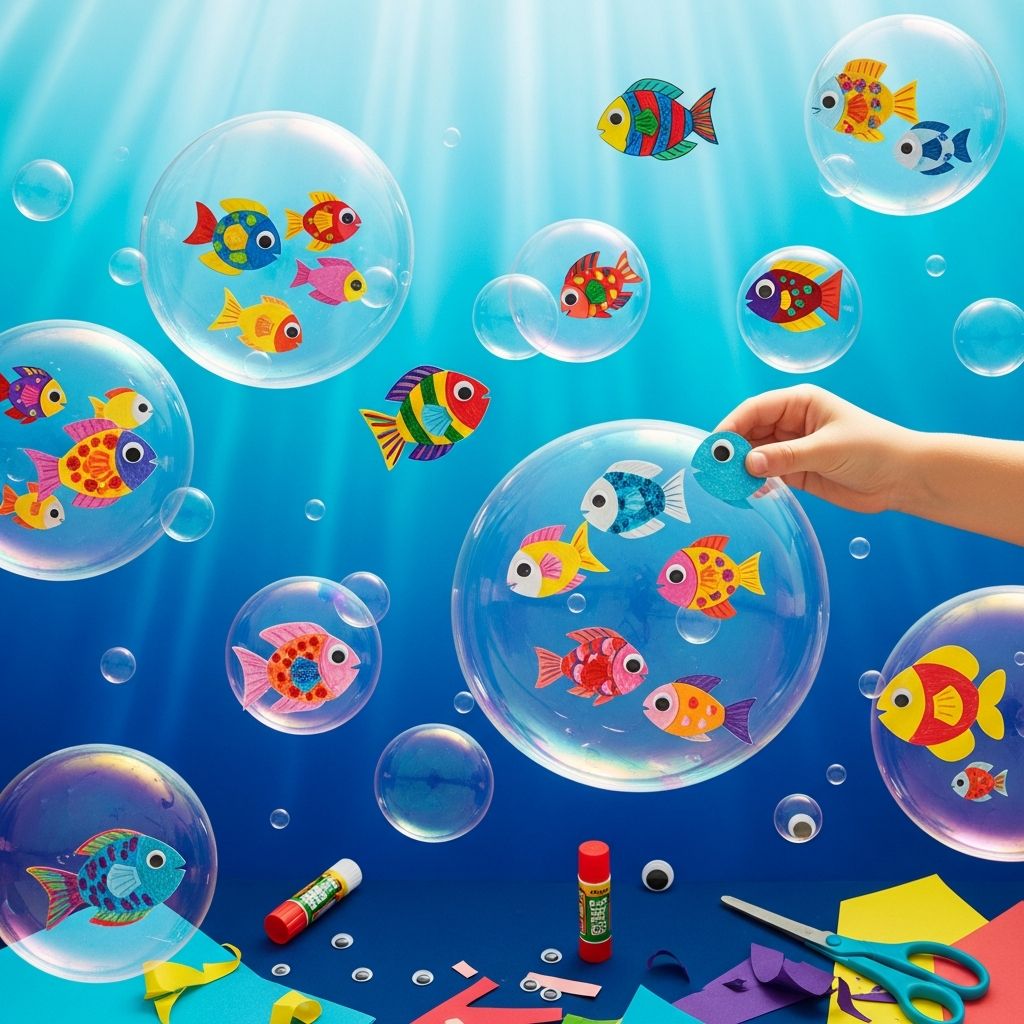
Introduction to Bubble Fish Art
Bubble fish art is a delightful way to introduce children to the world of creative expression. Using everyday materials like bubble wrap and paint, kids can design their own underwater creatures, bringing vibrant colors and textures to life. This craft is not only simple and affordable but also encourages imaginative play and artistic exploration. Whether you’re looking for a rainy day activity or a way to celebrate summer, bubble fish art is a perfect choice for families and classrooms alike .
Why Bubble Fish Art Is Great for Kids
- Encourages creativity and imagination
- Develops fine motor skills through painting and cutting
- Teaches color mixing and texture exploration
- Provides a sense of accomplishment and pride in finished artwork
- Can be adapted for different age groups and skill levels
Children love the tactile experience of working with bubble wrap and the surprise of seeing their designs emerge as they stamp and paint. This hands-on approach helps them connect with their artwork in a meaningful way .
Materials Needed
Creating bubble fish art requires only a few basic supplies, most of which are likely already at home:
- Bubble wrap (various sizes for different textures)
- White cardstock or thick paper
- Blue cardstock or paper (for the background)
- Non-toxic acrylic paints (various colors)
- Paintbrushes or paint sticks
- Scissors
- Glue
- Wiggle eyes or googly eyes
- Red or pink cardstock (for mouths)
- Optional: deco brush pens, bottle caps, or other stamping tools
These materials are easy to find and safe for children to use, making the project accessible for families and educators .
Step-by-Step Instructions
Step 1: Prepare the Bubble Wrap
Use a circular object, such as a bowl or roll of tape, to trace a circle onto the bubble wrap. Cut out the circle carefully, then cut two small fins on either side to create the basic shape of a fish. This will serve as the main body for your bubble fish .
Step 2: Attach the Fish Body
Glue the bubble wrap circle onto a sheet of white cardstock. This will be the base for your fish. Make sure the glue is spread evenly to avoid wrinkles or bubbles in the wrap .
Step 3: Paint the Fish
Use paint sticks or brushes to add color to the top of the bubble fish and its fins. For a more realistic look, paint the underside with white. Allow the paint to dry completely before moving on to the next step .
Step 4: Add Details
Cut out a small mouth from red or pink cardstock and glue it to the front of the fish. Stick on two wiggle eyes above the mouth to give your fish a friendly expression. You can also use deco brush pens to draw spikes, seaweed, and bubbles around the fish for added detail .
Step 5: Create the Underwater Scene
Glue the finished bubble fish onto a sheet of blue cardstock to create an underwater background. Use pens and paint sticks to draw additional seaweed, bubbles, and other sea creatures. Bottle caps can be used as stamps to create more bubble effects .
Design Tips and Variations
- Experiment with different colors and patterns for each fish
- Use various sizes of bubble wrap to create different textures
- Add glitter or sequins for extra sparkle
- Try making a whole school of fish for a group project
- Encourage kids to invent their own sea creatures using the same techniques
These variations keep the activity fresh and exciting, allowing children to express their unique ideas and preferences .
Benefits of Bubble Fish Art
| Benefit | Description |
|---|---|
| Creativity | Encourages imaginative thinking and artistic expression |
| Motor Skills | Improves hand-eye coordination and fine motor control |
| Learning | Teaches color mixing and texture exploration |
| Confidence | Builds self-esteem through creative accomplishment |
FAQs
Can I use other materials instead of bubble wrap?
Yes, you can experiment with sponges, foam sheets, or textured fabrics to create different effects. However, bubble wrap is ideal for its unique texture and ease of use .
Is this craft suitable for toddlers?
Absolutely! With adult supervision, toddlers can enjoy stamping and painting with bubble wrap. Just ensure all materials are non-toxic and safe for young children .
How can I make the activity more educational?
Discuss ocean life, colors, and shapes while crafting. Ask kids to name their fish and describe its habitat to enhance learning .
Can I use this craft for a classroom project?
Yes, bubble fish art is perfect for group activities. It encourages teamwork and allows each child to contribute their own unique design .
Conclusion
Bubble fish art is a fun, creative, and educational craft that brings joy to children of all ages. With simple materials and easy steps, families and educators can inspire young artists to explore their imaginations and create beautiful underwater scenes. This project not only results in colorful artwork but also fosters important skills and lasting memories .