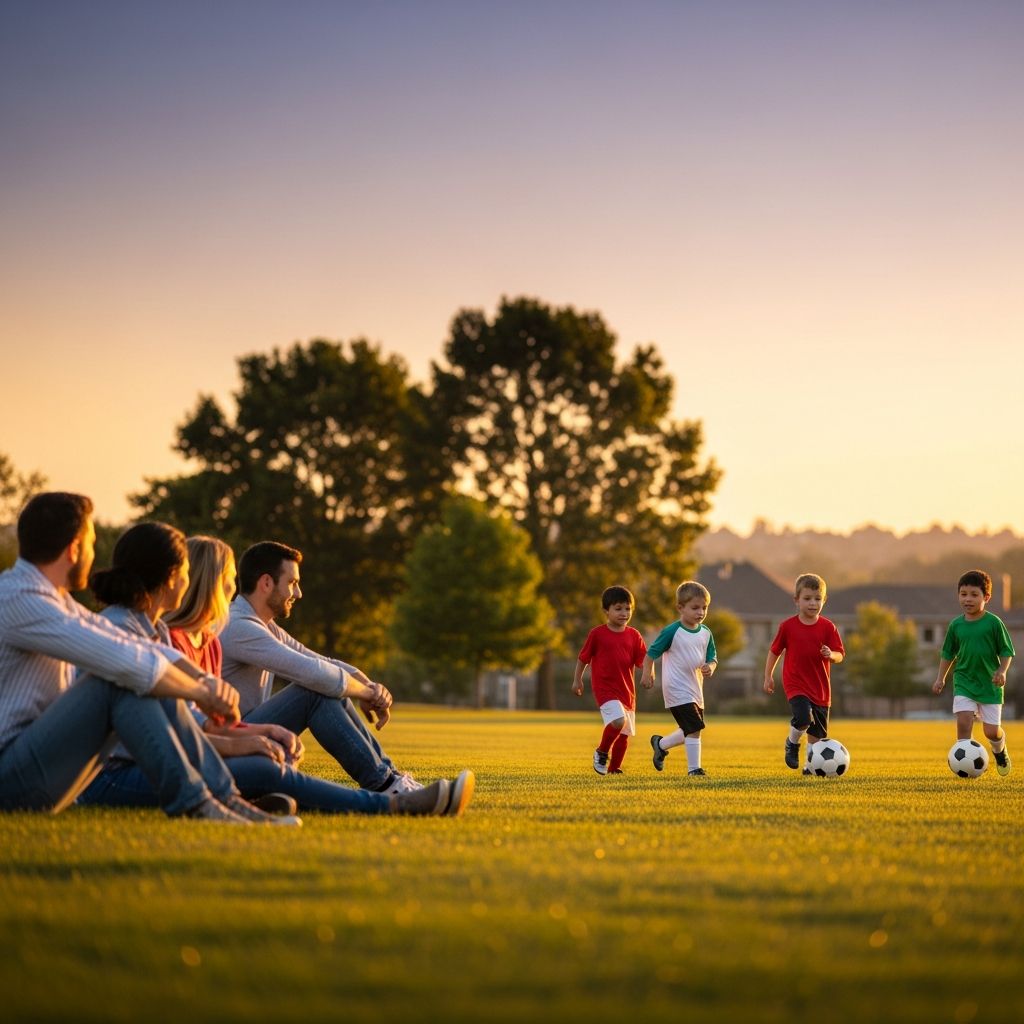
Youth sports offer invaluable opportunities for children to build skills, confidence, and friendships, but the atmosphere at games often hinges on parental conduct. While enthusiasm is natural, excessive sideline interference can transform fun activities into stressful ordeals, leading to reduced enjoyment and higher dropout rates among young athletes. This article delves into the psychological impacts of parental behaviors, contrasts positive versus negative involvement, and provides actionable guidance for fostering healthier sports environments.
The Hidden Costs of Overzealous Parental Support
Parents attend youth sports events with good intentions, eager to cheer their children to success. However, research reveals that intense involvement frequently backfires. Studies show that children experiencing high parental pressure perceive sports as a threatening environment, resulting in anxiety, discontent, and diminished motivation. For instance, young soccer players reported moderate to high levels of unwanted parental pressure, correlating with lower enjoyment and increased amotivation.
Overinvolved parents often project their own aspirations onto their kids, treating games as personal investments or pathways to fame. This manifests in constant attendance at practices, sideline coaching, and an obsessive focus on victories over development or fun. Such actions invade the coach’s domain and heighten stress, with narrative reviews confirming parental pressure’s positive link to athlete stress and negative ties to enjoyment and intrinsic motivation.
Real-world observations echo these findings. Parents yelling instructions, arguing with referees, or confronting opponents create tension that young athletes absorb. Kids with such parents report less sport enjoyment, elevated stress, and a propensity to quit altogether. This overbearing dynamic not only sours immediate experiences but also jeopardizes long-term athletic participation.
Psychological Toll on Young Athletes
The mental health implications of unruly parental behavior are profound. When parents curse, display aggression, or show disappointment over imperfect performances, children internalize these as norms for handling frustration. A child psychiatrist from Baylor College of Medicine notes that such modeling leads kids to mimic disrespect toward coaches, officials, or rivals, hindering healthy competition tolerance.
Moreover, aggressive parental displays evoke shame and embarrassment in athletes, amplifying performance pressure. Evidence from youth hockey and soccer indicates that excessive pressure fosters burnout, low self-esteem, and dropout. Discrepancies between desired and actual parental involvement—where kids crave more praise but receive criticism—exacerbate these issues, particularly in team sports influenced by peer dynamics.
| Negative Parental Behavior | Impact on Child | Supporting Evidence |
|---|---|---|
| Sideline yelling or coaching | Increased anxiety and stress | |
| Criticism of referees/opponents | Modeled aggression, poor sportsmanship | |
| Focus on winning over effort | Reduced enjoyment, higher dropout risk | |
| Emotional over-investment | Burnout, amotivation |
This table summarizes key detrimental behaviors and their consequences, drawn from peer-reviewed analyses and expert insights.
Unlocking the Power of Positive Parental Engagement
Not all involvement is harmful; balanced support yields significant benefits. Positive behaviors like cheering, encouragement, and sportsmanship modeling boost motivation, confidence, and enjoyment. Research by Knight, Boden, and Holt (2010) highlights how focusing on effort, learning, and fun—rather than outcomes—helps children stay engaged and adopt healthy competition attitudes.
Children desire moderate involvement with ample praise and understanding, which enhances enjoyment and sustained participation. Fathers’ balanced engagement, in particular, correlates with peak enjoyment, while extremes from either parent induce stress. Parents who validate emotions, praise hustle, and cheer both teams exemplify respect, fostering resilience and ethical behavior.
- Cheer enthusiastically for effort and good plays, not just scores.
- Model respect by supporting officials and opponents.
- Avoid live-game coaching; trust the professionals.
- Post-game, discuss fun and learning, not errors.
- Encourage participation in multiple sports for well-rounded growth.
Why Parents Cross the Line: Unpacking the Motivations
Several factors drive excessive involvement. Many view youth sports as scholarships or pro-career stepping stones, ignoring that less than 2% of high school athletes go pro. Others relive unfulfilled dreams through their children, leading to emotional over-investment. Social pressures, like competitive leagues or peer parenting, amplify this, turning sidelines into battlegrounds.
Parenting styles play a role too; authoritative approaches with sensitivity to child perceptions work best. Reciprocal influences mean kids’ reactions can escalate parental intensity, creating cycles of pressure. Awareness of these dynamics is crucial for recalibration.
Practical Strategies for Parents to Stay Supportive
Self-regulation is key. Parents should reflect on their motivations: Is cheering for the child’s joy or personal glory? Techniques include:
- Pre-game mindset set: Remind yourself it’s the child’s activity.
- Mute mode: Commit to silence during plays, saving advice for later.
- Positive scripting: Prepare phrases like “Great effort!” instead of critiques.
- Buddy system: Pair with calmer parents for mutual accountability.
Post-event, prioritize connection: Celebrate participation and listen to the child’s perspective without judgment. If tension arises, seek coaching from sports educators on supportive involvement.
Coaches and Leagues: Building Guardrails for Better Games
Organizations must proactively shape environments. Parent orientations, sideline codes, and behavior pledges have proven effective. Harwood and Knight (2015) found that guided parents improve conduct, enhancing athlete experiences.
Enforce policies like designated quiet zones or ejection for violations. Evidence-based education programs, focusing on developmental goals over wins, empower parents. Coaches can reinforce by communicating expectations clearly and involving families in team culture.
Long-Term Benefits of Harmonious Youth Sports
When parents prioritize support over intensity, children gain lifelong skills: resilience, teamwork, and stress management. Enjoyment-driven participation leads to habitual activity, combating inactivity. Positive climates reduce injury risks from tension and promote mental health. Ultimately, these environments produce well-adjusted adults who value effort over perfection.
Frequently Asked Questions
What if my child wants me to cheer loudly?
Balance enthusiasm with respect; loud cheers for good plays are fine, but avoid instructions or negativity. Gauge your child’s cues and adjust.
How can I handle a referee’s bad call without upsetting my kid?
Model grace: Clap politely and focus on the next play. Discuss calmly post-game if needed, emphasizing fairness in sports.
Is it okay to talk strategy with my child during games?
No—leave that to coaches. It confuses kids and undermines authority. Save talks for practice.
What age is sideline pressure most harmful?
It’s risky across ages, but preteens and early teens are vulnerable as they build independence and self-perception.
How do leagues enforce good behavior?
Through codes of conduct, meetings, and penalties like warnings or bans. Education works best proactively.
References
- The Role of Parental Involvement in Youth Sport Experience — National Library of Medicine (NIH). 2021-08-18. https://pmc.ncbi.nlm.nih.gov/articles/PMC8391271/
- The Overbearing Role of Parents in Youth Sports — The East Vision. 2023 (approx.). https://theeastvision.info/8019/opinion/the-overbearing-role-of-parents-in-youth-sports/
- The Role of Parents on the Sidelines in Youth Sports — PTC Hockey. 2023 (approx.). https://www.ptchockey.com/parent-resources/the-role-of-parents-on-the-sidelines-in-youth-sports/100293
- Unruly sports parents’ effect on children’s mental health — Baylor College of Medicine. 2023 (approx.). https://cdn.bcm.edu/news/unruly-sports-parents-effect-on-childrens-mental-health
- The Impact of Evidence-Based Parent Education in Organized Youth Sport — Utah State University. 2015 (authoritative on parent education). https://cehs.usu.edu/families-in-sport-lab/files/publications/youth-sport/publication-11.pdf