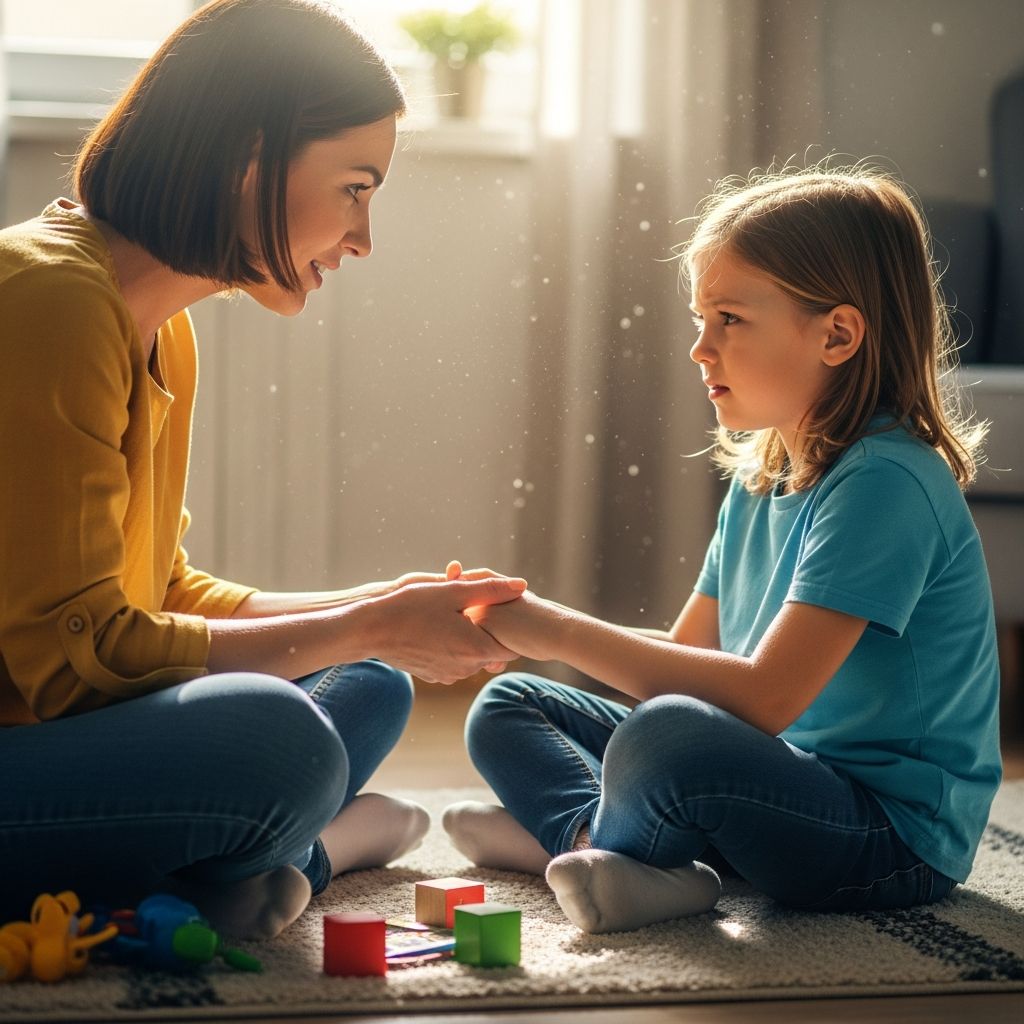
Many loving parents still wonder whether the occasional smack is harmless or even necessary to keep children in line. At the same time, modern research paints a very different picture: spanking is linked to more behavior problems, not fewer, and to higher risks for emotional and social difficulties over time.
This article offers a fresh, practical roadmap for parents who want firm, effective discipline without physical punishment. It combines findings from child development research with day-to-day tools parents can actually use in the heat of the moment.
Why Discipline Matters (And What It Really Means)
Discipline is not the same as punishment; it literally comes from a word meaning “to teach.” The real purpose of discipline is to help children build self-control, empathy, and responsibility, not just to stop a behavior in the moment.
When discipline is grounded in teaching, connection, and clear limits, children are more likely to cooperate long-term and less likely to develop serious behavior problems. This teaching-oriented approach also supports healthier emotional development and family relationships.
What Spanking Actually Teaches
Spanking may sometimes stop a behavior instantly because children feel fear, but research shows it does not improve long-term cooperation or conscience development. Instead, higher levels of spanking are linked to more noncompliance over time.
Studies also consistently associate spanking with increased aggression in children, meaning kids who are spanked are more likely to hit siblings or peers, not less. This pattern appears even after accounting for how aggressive the children were before being spanked.
Hidden Messages Children Receive From Spanking
- “Bigger people can hit smaller people to get what they want.”
- “Feelings should be handled with force, not communication.”
- “I should avoid getting caught rather than learning how to make better choices.”
These unspoken lessons conflict with the values most parents want to teach: respect, self-control, and problem-solving. Over time, this mismatch can undermine trust and increase power struggles.
What Research Reveals About Spanking and Child Development
A large body of research finds that physical punishment is associated with a range of negative outcomes, including more behavior problems, higher aggression, and poorer mental health indicators. These links show up across different cultures and family backgrounds.
Evidence also suggests spanking is not more effective than non-physical techniques such as time-outs and loss of privileges for increasing cooperation, and in many studies it performs worse. This makes it hard to justify physical punishment when safer, equally or more effective options exist.
Key Findings at a Glance
| Outcome | Spanking | Non-Physical Strategies |
|---|---|---|
| Immediate compliance | Sometimes increases briefly, driven by fear; effect fades quickly. | Comparable or better compliance when used consistently and calmly. |
| Long-term cooperation | Linked to less long-term compliance and weaker conscience development. | Supports internal motivation and sense of responsibility. |
| Aggression | Associated with more child aggression across many studies. | Associated with fewer behavior problems when combined with warmth and clear limits. |
| Mental health | Correlated with higher risks of anxiety, depression, and other difficulties. | Linked to better emotional regulation and resilience. |
How Spanking Affects the Developing Brain
Newer studies using brain imaging have found that children who are frequently spanked show altered patterns of brain activity in regions involved in processing threat and regulating emotions. These patterns resemble those seen in children who have experienced more severe forms of maltreatment.
When children repeatedly experience discipline as physically threatening, their brains can become more tuned to danger and less available for learning and reasoning in stressful moments. This can make them more reactive, impulsive, or shut down under stress rather than more thoughtful and self-controlled.
Long-Term Emotional Costs
- Increased sensitivity to perceived rejection or criticism.
- Greater difficulty calming down after conflicts.
- Higher likelihood of using aggression or withdrawal as coping tools.
These patterns do not mean every child who is spanked will have serious problems, but they do show that spanking adds risk without offering unique benefits that safer strategies cannot provide.
Why Many Parents Still Feel Drawn to Spanking
Even after hearing about the research, many parents confess that spanking feels like the only thing that “works” in the moment. Often this sense of effectiveness comes from the short-term silence or compliance that follows a smack, not from sustained behavior change.
Parents are also influenced by how they were raised, cultural expectations, stress, and the fear that being “too soft” will lead to out-of-control children. Without practical tools for firm, non-violent discipline, it is understandable that old patterns resurface under pressure.
Common Fears Behind Spanking
- “If I do not make this stop now, my child will never respect me.”
- “Talking and reasoning are too slow; I need something that works instantly.”
- “This is how my parents disciplined me, and I turned out fine.”
Recognizing these fears is the first step; the next is learning tools that can address behavior firmly while also preserving a child’s dignity and the parent–child bond.
Core Principles of Non-Violent, Effective Discipline
Effective discipline does not mean permissiveness; it combines clear expectations and consistent follow-through with empathy and respect. When children feel safe and connected, they are more able to hear guidance and less likely to escalate into power struggles.
Think of discipline as coaching: instead of trying to control from the outside with fear, parents help children build the inner skills needed to manage strong feelings, make amends, and choose better behaviors next time. This approach takes practice but pays off in more cooperation and less conflict.
Guiding Values to Keep in Mind
- Safety first: No strategy that physically or emotionally harms children can be considered truly effective.
- Connection before correction: Kids learn best when they feel seen and cared for.
- Teach, do not just stop: Aim to build understanding and skills, not only to end the behavior.
- Consistency over intensity: Calm, repeated follow-through works better than dramatic reactions.
Practical Alternatives to Spanking for Everyday Situations
Parents often say, “I get the theory, but what do I actually do when my child is defiant or out of control?” The key is to pair emotional regulation (yours and your child’s) with clear, predictable responses to behavior.
The strategies below can be adapted to different ages and personalities. The goal is not perfection but gradual replacement of physical punishment with calmer, skill-building responses.
1. Calm Pauses for Parents
Most regretted spankings happen when adults are triggered and overwhelmed. Building in a pause helps you choose a response instead of reacting impulsively.
- Step back physically if possible: Walk to another room or turn away for a few seconds.
- Use a grounding routine: Take 3 slow breaths, unclench your jaw, drop your shoulders.
- Repeat a cue phrase: “I can be firm and calm,” or “Pause first, act second.”
2. Clear Rules and Predictable Consequences
Children behave better when expectations are simple, specific, and consistent. Abstract rules like “be good” are hard for kids to follow, but concrete limits make success possible.
- Set 3–5 family rules, stated positively when possible (for example, “Speak respectfully,” “Hands stay to ourselves”).
- Explain ahead of time what will happen if a rule is broken (for example, toy is removed, activity ends early).
- Follow through calmly and briefly, without lectures or shaming.
3. Time-Outs and Time-Ins
Time-outs, when used sparingly and calmly, can give children space to reset and signal that a behavior is not acceptable. Research suggests they can be as effective as spanking, without the physical risk, when implemented properly.
For some children, a “time-in”—a brief break together in a quieter space—works better, because the child borrows the parent’s calm instead of being left alone in intense feelings. Either way, the goal is regulation, not humiliation.
4. Logical and Natural Consequences
Logical consequences are related to the behavior (for example, losing screen time after misusing a device); natural consequences let reality teach safely (for example, feeling cold after refusing to wear a jacket, as long as it is not dangerous). These help children see the link between actions and outcomes.
- Keep consequences immediate and proportionate.
- Avoid sarcasm or “I told you so”—let the consequence speak for itself.
- Follow up with problem-solving once emotions have cooled.
5. Coaching Feelings and Skills
Many so-called “bad” behaviors are actually immature ways of expressing big feelings. Teaching children to name and manage emotions reduces outbursts over time and gives them tools they can use without adult supervision.
- Label emotions: “You are really frustrated that playtime ended.”
- Offer alternatives: “You can stomp your feet on the floor, not on your sister.”
- Practice repair: Guide children to apologize, check on others, or fix what was broken.
Handling High-Stress Behaviors Without Spanking
Tantrums, lying, and open defiance can push any parent to the edge. These challenging moments are where non-violent discipline really proves its value, but they also require planning and realistic expectations.
Understanding what is underneath the behavior—fatigue, overstimulation, developmental limits, or unmet needs—makes it easier to respond wisely instead of explosively. This does not excuse behavior, but it shapes how parents choose to intervene.
When a Child Hits or Bites
- Stop the behavior quickly and firmly: Gently block the hit or move the child away.
- State the limit in few words: “I will not let you hit. Hands are not for hurting.”
- Help repair: Support the child to check on the person hurt and to make amends.
- Teach alternatives later: Practice using words, asking for space, or squeezing a pillow.
When a Child Refuses to Cooperate
- Offer structured choices: “You can brush your teeth first or put on pajamas first.”
- Use brief, boring consequences: Ending play, postponing a treat, or pausing a game.
- Notice and praise even small steps toward cooperation to reinforce progress.
Supporting Yourself as You Shift Away from Spanking
Deciding not to spank can stir up old memories and feelings about how you were raised, especially if you were disciplined harshly. Parents may feel guilt for past choices or shame when they lose their temper.
Change is easier when parents receive support rather than criticism. Compassion for your own learning process makes it more likely you will stay committed to new strategies, even after setbacks.
Helpful Supports for Parents
- Parenting classes or coaching focused on positive discipline.
- Support groups—online or in person—where non-violent approaches are encouraged.
- Talking with a therapist if you feel overwhelmed, angry, or triggered by your child’s behavior.
- Regular self-care routines: sleep, movement, connection with other adults.
Frequently Asked Questions About Spanking and Discipline
Is an occasional light smack really that harmful?
Many studies do not perfectly distinguish between “light” and “severe” spanking, but the overall pattern shows that more physical punishment is associated with more, not fewer, behavior and mental health problems. There is no clear evidence that a mild form of spanking provides unique benefits that cannot be achieved through non-physical strategies.
If I stop spanking, will my child walk all over me?
Firm, consistent limits do not require physical force. Parents who combine warmth, clear expectations, and predictable consequences tend to have children who are both respectful and more emotionally secure. The key is to stay calm and consistent, not to become permissive.
What if my child’s behavior is already out of control?
Shifting away from spanking may not change behavior overnight, especially if patterns have been in place for years. However, research indicates that behavior tends to improve when parents replace harsh punishment with consistent, positive discipline and emotional coaching. Getting professional guidance can speed the process.
My parents spanked me and I turned out fine—doesn’t that prove it works?
Many adults grow into responsible, loving people despite difficult experiences, but that does not mean those experiences were necessary or risk-free. Population-level studies show increased risks associated with spanking even though any individual family may have a different story.
Is spanking ever recommended by modern health or child development organizations?
Major professional and health organizations around the world discourage physical punishment and encourage non-violent discipline, citing evidence of harm and the availability of effective alternatives. Their guidance reflects growing consensus that hitting children is unnecessary and inconsistent with children’s rights.
Moving Toward a More Peaceful Home
Letting go of spanking is not about perfection or judging past choices; it is about aligning discipline with current knowledge of what truly helps children thrive. A calm, connected approach still holds children accountable but does so in ways that build skills instead of fear.
With practice, non-violent discipline reduces conflict, strengthens relationships, and shows children that power can be used to protect and guide rather than to hurt. That lesson may be one of the most valuable gifts a parent can pass on to the next generation.