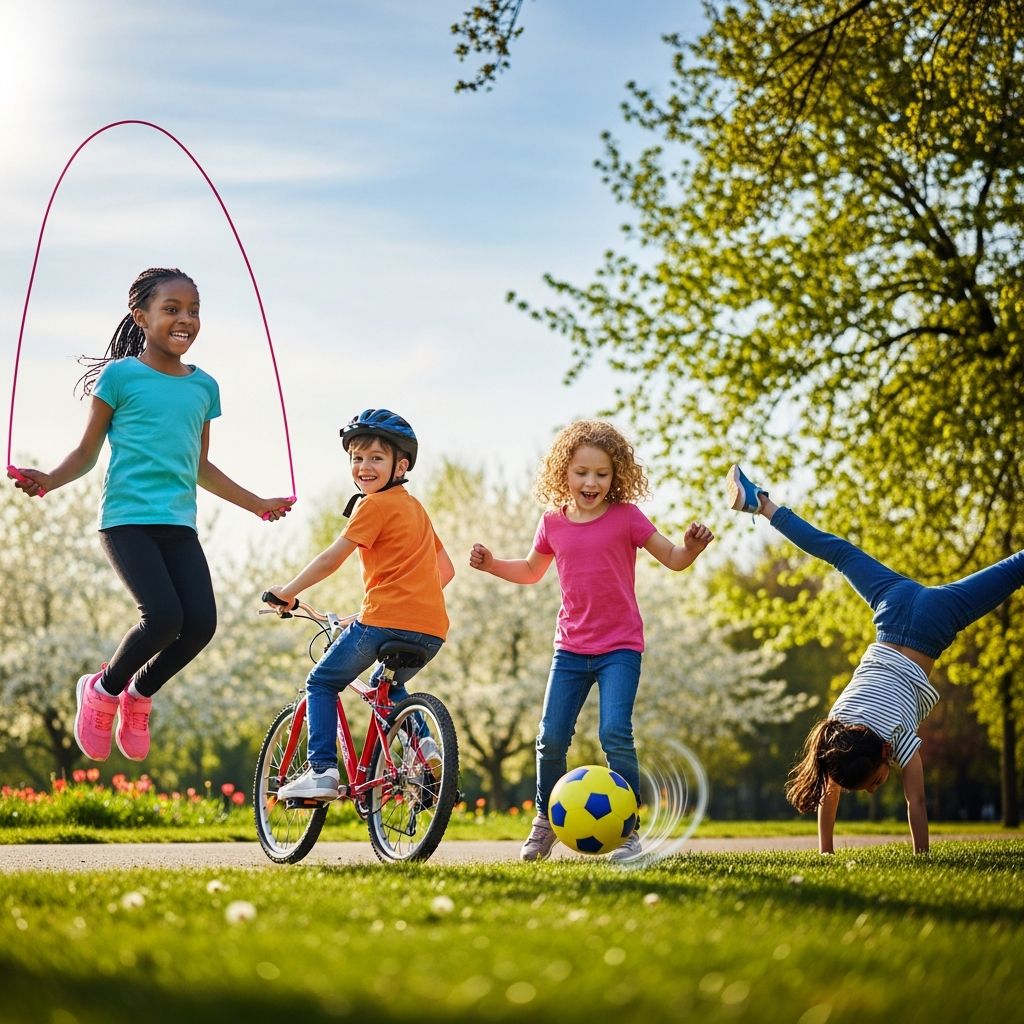
Aerobic activity is any kind of movement that makes your heart beat faster and your breathing deeper for more than a few minutes at a time. For kids, that usually looks a lot like play: running, biking, dancing, jumping, or racing friends at the park. When you move this way most days of the week, you build a stronger heart, healthier body, and a sharper, more focused mind.
What Does “Aerobic” Mean?
The word aerobic means “with oxygen.” During aerobic activity, your body uses oxygen to turn food into energy so you can keep moving. Your heart and lungs work harder to deliver this oxygen to your muscles.
In simple terms for kids: aerobic activity is go-go-go movement that you can keep doing for a while, not just a quick hop or a single jump.
Easy Way to Tell If an Activity Is Aerobic
- Your heart beats faster than usual.
- You are breathing harder, but you can still talk in short sentences.
- You feel warm or sweaty after a few minutes.
- You could keep going for 10 minutes or more without needing a long rest.
Why Aerobic Activity Is So Important for Kids
Health experts recommend that school-age kids get at least 60 minutes of physical activity every day, with most of that time being aerobic activity that gets the heart pumping. Doing this regularly helps your whole body, not just your muscles.
| Body System | What Aerobic Activity Helps | Examples of Benefits |
|---|---|---|
| Heart & Blood Vessels | Cardiovascular fitness | Stronger heart, healthier blood pressure, lower risk of heart disease later in life |
| Lungs | Better breathing | Take in more air with each breath, easier time running or playing sports |
| Muscles & Bones | Strength and endurance | Stronger bones and muscles, better posture, less chance of injury |
| Brain | Thinking skills | Improved attention, memory, and problem-solving, better school performance |
| Mood | Emotional health | Less stress, less sadness, more confidence and energy |
How Aerobic Activity Helps the Body
1. A Stronger Heart and Healthier Blood
Your heart is a muscle. Just like your leg muscles get stronger when you run, your heart gets stronger when you do aerobic activities such as brisk walking, running, swimming, or jumping rope.
- Pumps blood better, sending oxygen to every part of your body more efficiently.
- Helps keep blood pressure and cholesterol levels healthier as you grow up.
- May lower your risk of heart disease and type 2 diabetes later in life.
2. Strong Bones and Muscles
Moving your body puts healthy stress on your bones and muscles, which signals them to grow stronger. Activities like running, jumping, playing tag, and sports all help strengthen bones, especially in childhood when bones respond most to movement.
- Weight-bearing activities such as running or hopping help build bone density.
- Whole-body aerobic games strengthen many muscle groups at once.
- Stronger muscles support joints and improve balance and coordination.
3. Healthy Weight and More Energy
Aerobic activity uses energy (calories), which helps kids keep a healthy body weight.
- Helps balance the energy from food with energy used during play.
- Supports a leaner body with less unhealthy body fat.
- Kids who move regularly often say they have more energy, not less.
How Aerobic Activity Helps the Brain
Moving your body helps your brain work better too. When you do aerobic activity, more blood and oxygen flow to your brain. This supports brain cells and the connections between them.
Sharper Thinking and Better School Skills
Research shows that kids who get regular aerobic exercise often have:
- Better memory and ability to remember instructions and details.
- Improved attention and focus in class.
- Stronger executive functions (skills like planning, self-control, and flexible thinking).
- Improved academic performance, especially in subjects like math.
Calmer Feelings and Better Mood
Exercise triggers chemicals in the brain that help you feel calmer and happier.
- Reduces stress and worry after a busy day.
- Can make it easier to cope with tough emotions.
- May lower the risk of depression and support better mental health.
- Helps kids sleep better, which also supports mood and learning.
Types of Aerobic Activities Kids Can Enjoy
You do not need a gym or special equipment to be active. Many of the best aerobic activities for kids are simple, playful, and free.
Everyday Play That Counts as Aerobic Activity
- Playing tag or chase with friends.
- Brisk walking to school or around the neighborhood.
- Riding a bike or scooter (with safety gear).
- Dancing to your favorite songs in the living room.
- Jumping rope in the driveway or yard.
- Playing follow the leader with jumps, hops, or skips.
Sports and Organized Activities
- Soccer, basketball, or field hockey.
- Swimming or water games that keep you moving.
- Martial arts such as karate or taekwondo.
- Gymnastics or tumbling classes.
- Track and field, running clubs, or school sports.
Indoor Aerobic Ideas for Rainy Days
- Set up a mini obstacle course with pillows and chairs.
- Play movement video games that make you jump, punch, or dance.
- Do a kid-friendly workout video or online dance class.
- Have a step challenge using a simple step counter or pedometer.
How Much Aerobic Activity Do Kids Need?
Public health guidelines for most school-age children recommend:
- 60 minutes or more of physical activity every day.
- Most of those 60 minutes should be moderate or vigorous aerobic activity (breathing harder, heart beating faster).
- Vigorous-intensity aerobic activities (very out of breath, can say only a few words) on at least 3 days each week.
Kids do not have to get all 60 minutes at once. Shorter bursts of 10–15 minutes throughout the day add up.
Safe and Smart Aerobic Activity
Being active is very safe for most kids, but it is still important to move in smart ways.
Safety Tips for Kids and Caregivers
- Warm up with light movement before harder exercise, and cool down after.
- Use proper safety gear, like helmets for biking and swimming with an adult present.
- Drink water before, during, and after activity to avoid dehydration.
- Wear comfortable shoes that fit and clothes you can move in.
- On hot days, play in the shade and take more breaks.
- If you feel dizzy, very short of breath, or in pain, stop and tell an adult.
Making Aerobic Activity Fun (So You’ll Want to Keep Doing It)
Kids are more likely to stay active when it feels like play instead of a chore. Here are ideas to keep things fun:
Turn Movement Into a Game
- Use a timer challenge: How many jumping jacks can you do in 30 seconds?
- Create a movement dice: each number stands for a different activity (run, hop, skip, dance).
- Make a scavenger hunt walk where you have to find certain colors or shapes.
- Try “red light, green light” or “freeze dance” to get hearts pumping.
Family Ideas to Be Active Together
- Take a family walk after dinner.
- Go on weekend hikes or bike rides.
- Plan park days with games like relay races or frisbee.
- Join a community sports league or fun run.
Signs You’re Getting Fitter
When you stick with aerobic activity, you will usually notice changes in how your body feels when you move.
- You can run or play longer without getting as tired.
- Your breathing recovers faster after hard activity.
- You might feel stronger and more confident in games and sports.
- School tasks like focusing, reading, and solving problems may start to feel easier.
- Your mood improves, and you might feel less stressed or worried.
Frequently Asked Questions (FAQs)
Is walking considered aerobic activity for kids?
Yes. A brisk walk that makes your heart beat faster and your breathing deeper counts as aerobic activity. Walking faster, going uphill, or walking longer distances can make it more challenging and heart-healthy.
Can video games ever count as exercise?
Only some do. Active video games that make kids jump, dance, or move their whole bodies can provide aerobic activity if they keep the heart rate up for at least 10–15 minutes. Sitting and pressing buttons does not count as exercise.
What if my child does not like sports?
Sports are just one way to be active. Kids can get aerobic exercise through dancing, biking, playing tag, walking the dog, or doing obstacle courses at home. The key is regular movement that raises the heart rate, not being on a team.
How can busy families fit in 60 minutes of activity a day?
Break it into short chunks: 15 minutes of walking to and from school, 20 minutes of active play after school, and 10–15 minutes of dancing or indoor games in the evening. It does not need to be all at once to count.
When should we talk to a doctor before starting new exercise?
If a child has heart, lung, or chronic health problems, or often has chest pain, fainting, or serious breathing trouble with activity, a health professional should be consulted before starting a new, more intense exercise program. Most healthy children can safely increase active play gradually.
References
- Why Exercise Is Essential for Children’s Development and Orthopaedic Health — Centers for Advanced Orthopaedics summarizing CDC guidance. 2024-08-01. https://www.cfaortho.com/media/news/2024/08/why-exercise-is-essential-for-children-s-development-and-orthopaedic-health
- Kids and Exercise — Nemours KidsHealth. 2023-06-01. https://kidshealth.org/en/parents/exercise.html
- Exercise Benefits for Children – Improved Brain Functioning — UC San Diego CHEAR Center. 2021-09-15. https://chear.ucsd.edu/blog/exercise-benefits-for-children-improved-brain-functioning
- Effects of aerobic exercise on children’s executive function and academic performance: A meta-analysis — Luo et al., Frontiers in Psychology. 2024-01-10. https://pmc.ncbi.nlm.nih.gov/articles/PMC10998207/
- Exercise and Children — Stanford Medicine Children’s Health. 2022-05-10. https://www.stanfordchildrens.org/en/topic/default?id=exercise-and-children-90-P02207
- The Benefits of Physical Activity and Exercise on Mental Health — Children’s Hospital Colorado. 2022-03-01. https://www.childrenscolorado.org/just-ask-childrens/articles/mental-health-benefits-exercise/
- Youth fitness and why it is important — Valley Health System. 2021-07-20. https://www.valleyhealth.com/trending/youth-fitness-and-why-it-important