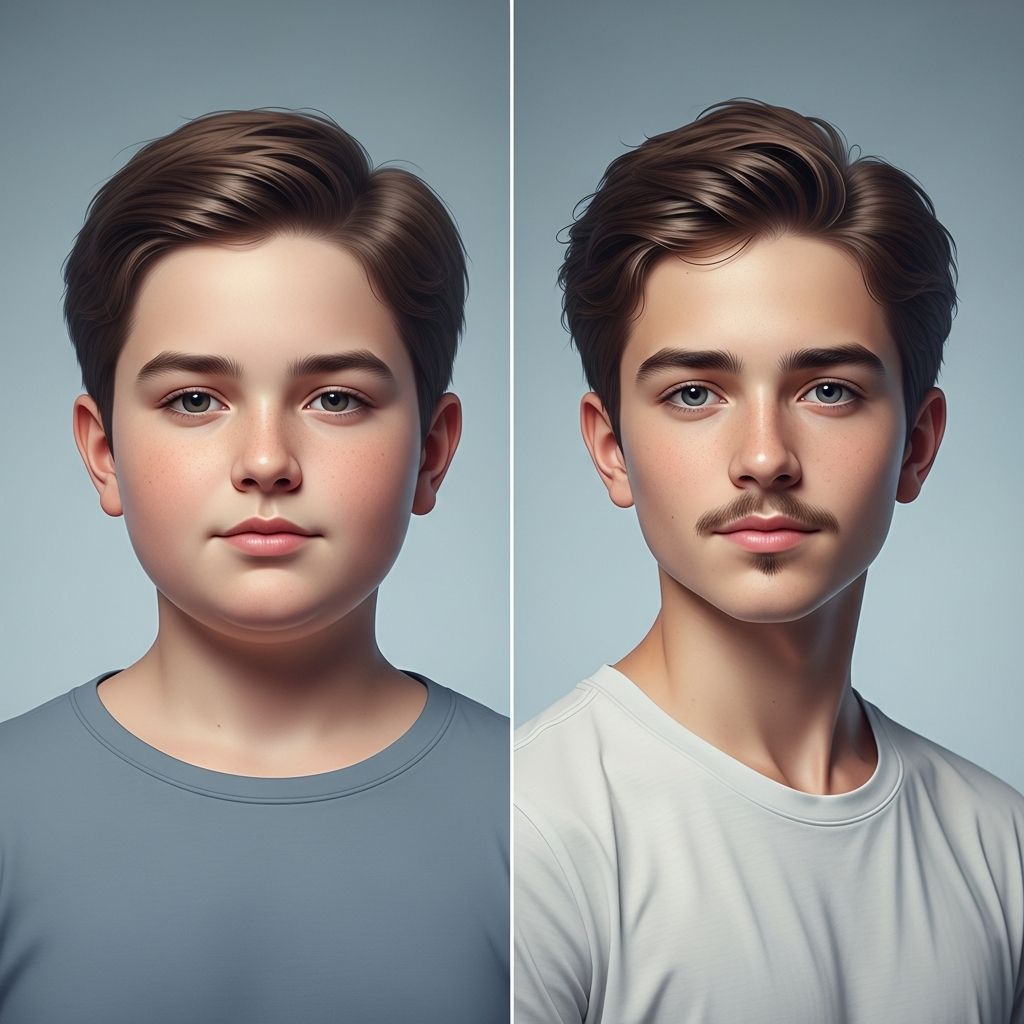
Puberty marks the transition from childhood to adulthood, driven by hormonal surges that trigger physical, emotional, and reproductive changes in boys. Typically starting between ages 9 and 14, this process unfolds over several years, following predictable patterns outlined in the Tanner staging system used by healthcare professionals. Parents play a crucial role in guiding sons through these transformations, offering reassurance amid rapid body changes and mood swings.
Triggers and Timeline of Male Puberty
The brain’s hypothalamus initiates puberty by releasing hormones that prompt the pituitary gland to produce luteinizing hormone (LH) and follicle-stimulating hormone (FSH). These stimulate the testes to generate testosterone, fueling secondary sexual characteristics. Onset varies by genetics, nutrition, and ethnicity; Black and Hispanic boys often start earlier than white peers. The full journey spans 2-5 years, with most boys reaching maturity by age 17, though some continue growing into their early 20s.
- Early starters: As young as 9 years.
- Average range: 10-14 years for initial signs.
- Late bloomers: Up to 15 years without concern, unless accompanied by other issues.
Tracking progress helps identify normal variation from potential delays or precocious puberty, warranting pediatric consultation if stages skip or stall.
Breaking Down the Five Tanner Stages
The Tanner scale assesses genital development and pubic hair separately, providing a standardized framework. Here’s what occurs at each phase:
Prepubertal Phase (Tanner Stage 1)
No visible secondary sex traits appear; testes measure under 4 mL or less than 2.5 cm in length. Adrenal glands mature internally, preparing for changes, but externally, boys resemble children. This stage ends when testicular enlargement signals gonadarche, the puberty kickoff.
Emergence of Changes (Tanner Stage 2)
Ages 9-14: Testes grow to 4-8 mL (2.5-3.3 cm), scrotum thins, reddens, and enlarges. Fine, straight pubic hair appears at the penis base. This subtle onset often goes unnoticed initially.
Acceleration and Growth Surge (Tanner Stage 3)
Ages 10-16: Testes reach 9-12 mL (3.4-4 cm); penis lengthens notably. Peak height velocity hits here, with boys gaining up to 4 inches yearly; shoulders broaden, muscles develop. Pubic hair darkens and coarsens, spreading over the pubic area. Voice may crack as larynx expands; about 50% experience temporary gynecomastia (breast tissue growth), resolving naturally. Spermarche often begins, with first emissions during sleep.
Intensified Maturation (Tanner Stage 4)
Ages 11-16: Testes enlarge to 15-20 mL (4.1-4.5 cm); penis widens and lengthens further, seminal vesicles and prostate mature for ejaculation. Pubic hair thickens, resembling adult texture but not extent. Facial hair starts as sparse mustache; underarm hair emerges. Skin oiliness increases, risking acne. Growth continues but slows post-peak.
Adult-Like Completion (Tanner Stage 5)
Post-16: Testes exceed 20 mL (>4.5 cm); genitalia match adult size and shape. Pubic hair extends to thighs, often with a midline trail to navel. Facial and body hair fully develops; voice stabilizes deep. Most growth plates close by 17-18, halting height increase.
| Stage | Testicular Volume | Key Genital Changes | Typical Age Range |
|---|---|---|---|
| 1 | <4 mL | Childlike | Pre-9 |
| 2 | 4-8 mL | Scrotum enlarges/thins | 9-14 |
| 3 | 9-12 mL | Penis lengthens | 10-16 |
| 4 | 15-20 mL | Penis widens | 11-16 |
| 5 | >20 mL | Adult proportions | Post-16 |
Physical Transformations Beyond Genitals
Puberty reshapes the entire body. Height spurts prioritize limbs first—hands, feet, legs—creating temporary gangly appearances and clumsiness. Shoulders widen, torso lengthens, muscle mass doubles under testosterone’s influence, enhancing strength. Bone density rises, supporting frame expansion.
Hair proliferation follows: pubic (diamond pattern), axillary, then facial (upper lip first). Voice descent accompanies laryngeal growth, often with cracking. Sweating intensifies via apocrine glands, necessitating deodorant introduction.
Skin, Acne, and Hygiene Shifts
Hormones boost sebaceous glands, causing oily skin and acne outbreaks, peaking in stages 3-4. Blackheads, pimples, and cysts may appear on face, back, chest. Gentle cleansing twice daily, non-comedogenic products help; severe cases merit dermatologist input.
- Daily showers to manage sweat and odor.
- Oil-free moisturizers post-washing.
- Avoid picking lesions to prevent scarring.
Reproductive Milestones and Fertility
Spermarche signals sperm production start, typically stage 3-4 via nocturnal emissions—normal, non-sexual events. Full fertility arrives late stage 4 or 5, around 12.5-14 years for ejaculation capability. Educate on semen composition (sperm, fluids from prostate/seminal vesicles) and contraception early.
Emotional and Psychological Dimensions
Testosterone fluctuations spark irritability, aggression, or withdrawal. Body image concerns arise from asynchronous growth—e.g., feet outpacing height, or gynecomastia. Peers at varying stages amplify self-consciousness. Open dialogues foster resilience; normalize variability.
Mood swings mimic hormonal rollercoasters; sleep disruptions from growth or erections common. Encourage journaling, sports for outlet.
Nutrition and Lifestyle for Optimal Development
Caloric needs skyrocket—add 200-300 daily during spurts. Prioritize protein (meats, dairy, legumes), calcium/vitamin D for bones, zinc for testosterone. Limit sugars/junk to curb acne, obesity risks delaying puberty.
- Balanced meals: veggies, fruits, whole grains.
- 9-11 hours sleep nightly for hormone regulation.
- Weight-bearing exercise builds muscle/bone.
When to Consult a Doctor
Normal ranges accommodate variation, but red flags include:
- No signs by 14.
- Stage skips (e.g., hair before testes growth).
- Rapid progression before 9 (precocious puberty).
- Persistent gynecomastia past 1 year, severe acne, or growth cessation.
Endocrinologists assess via exams, blood tests, bone age X-rays if needed.
Frequently Asked Questions About Boys’ Puberty
At what age does puberty typically begin in boys?
Between 9 and 14 years, with averages around 11-12.
Is it normal for one testicle to hang lower?
Yes, usually the left; aids temperature regulation for sperm.
What causes voice cracking?
Larynx growth outpacing vocal cord adjustment in stage 3.
How long do growth spurts last?
1-2 years, peaking in stage 3 with 3-4 inches annual gain.
Are wet dreams a sign of sexual activity?
No, they’re involuntary sperm release during sleep, indicating maturation.
Can puberty be delayed?
Yes, constitutional delay is common; monitor if no changes by 14.
Supporting Your Son Through Puberty
Proactive parenting eases this phase. Stock hygiene supplies discreetly; discuss changes factually sans embarrassment. Model body positivity, healthy habits. Books, apps on puberty demystify processes. School counselors aid peer pressure navigation. Celebrate milestones—deeper voice, strength gains—to build confidence.
Anticipate questions on masturbation (normal stress relief), erections (frequent, involuntary), body odor. Frame puberty as exciting adulthood gateway. Ongoing check-ins track emotional health; therapy if anxiety/depression emerges.
By understanding stages, parents empower sons, turning potential awkwardness into confident strides toward manhood. Variability underscores individuality—no comparisons needed.
References
- Tanner Stages – StatPearls — NCBI Bookshelf, NIH. 2023-07-24. https://www.ncbi.nlm.nih.gov/books/NBK470280/
- Puberty: Tanner Stages for Boys and Girls — Cleveland Clinic. 2023-11-01. https://my.clevelandclinic.org/health/body/puberty
- Navigating Male Puberty: A Comprehensive Guide — Annapolis Pediatrics. 2024-02-15. https://annapolispediatrics.com/parent-resources/navigating-male-puberty
- Puberty in Boys — Merck Manuals. 2025-01-10. https://www.merckmanuals.com/home/men-s-health-issues/biology-of-the-male-reproductive-system/puberty-in-boys
- Understanding the Stages of Puberty for Boys — The Youth Clinic. 2023-09-20. https://youthclinic.com/understanding-the-stages-of-puberty-for-boys/
- Physical Development in Boys: What to Expect — HealthyChildren.org (AAP). 2024-05-05. https://www.healthychildren.org/English/ages-stages/gradeschool/puberty/Pages/Physical-Development-Boys-What-to-Expect.aspx